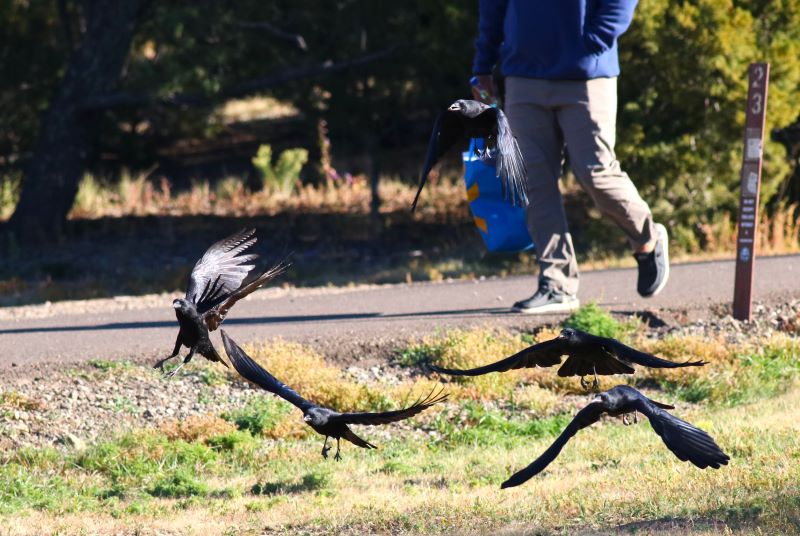
Ending the year on a positive note

I deliberately went in search of natural inspiration and rejuvenation this afternoon as I wanted to end the year on a positive note. And during that time watching and listening to the birds and other wildlife around my home, the grief and anxiety fell away. I was at peace. Here’s a sampling of what I witnessed:

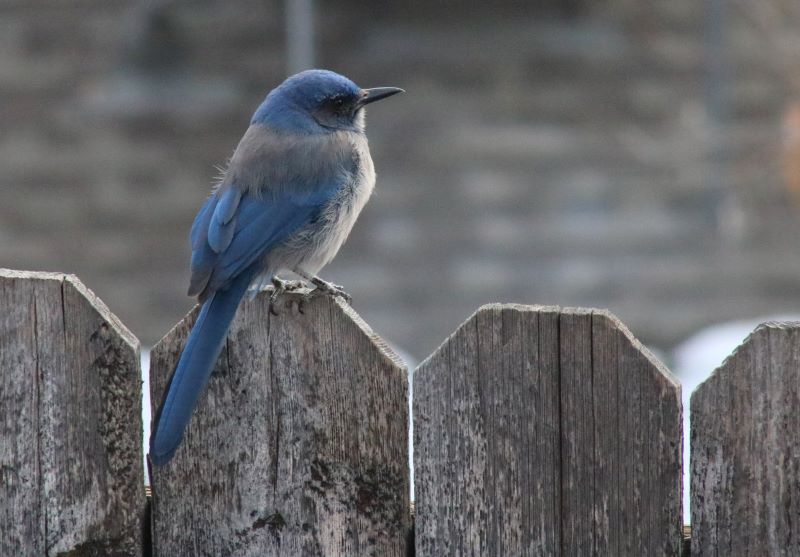
Scrub Jay

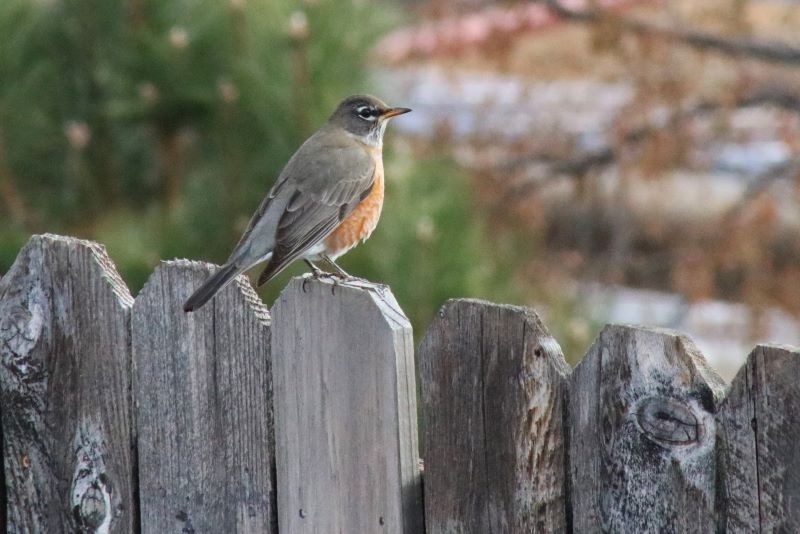
American Robin

White-crowned Sparrow (immature)

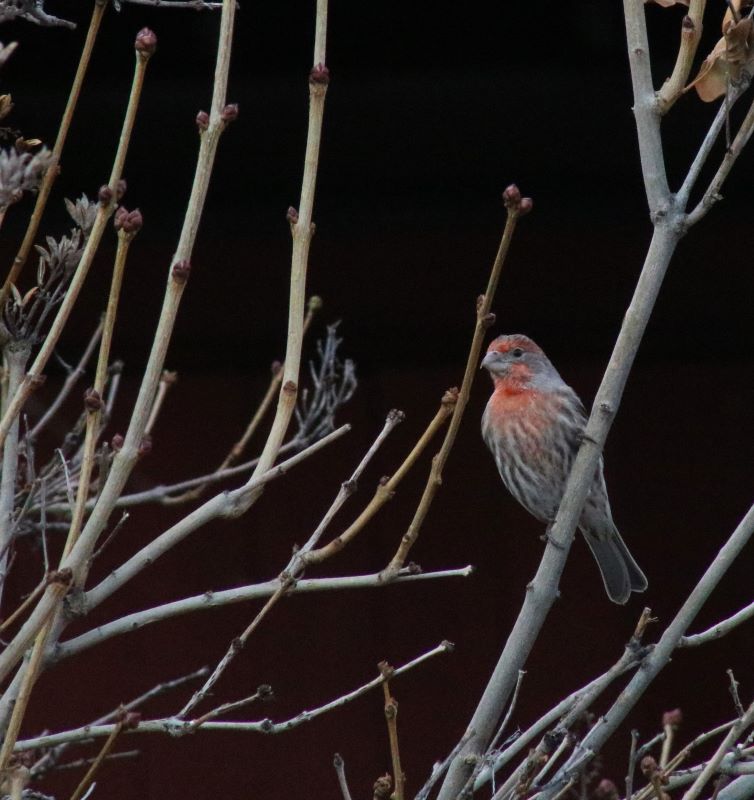
House Finch

Disgruntled Bunny (and yes, that’s a great name for a band!)

Dark-eyed Junco (and no, that’s not their mess)

House Finch

Goldfinch

Squirrel!

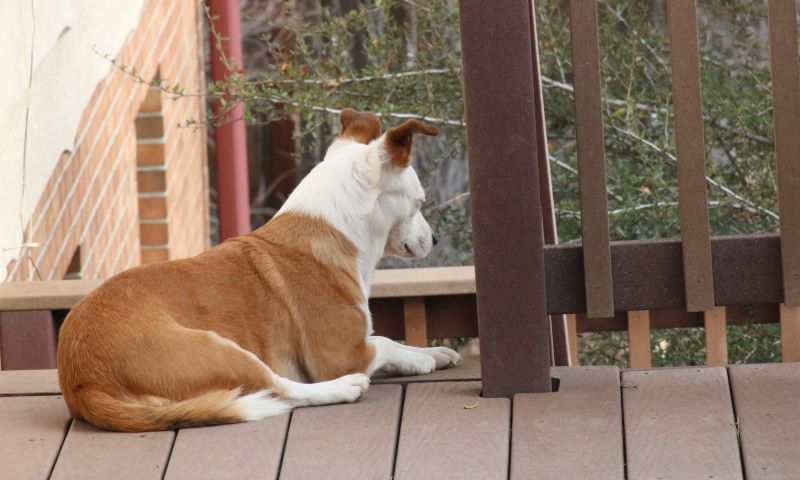
And lastly, Emma Jean-Jean, keeping an eye on things as I photographed yard visitors

I also saw Northern Flickers, a woodpecker, a Red-breasted Nuthatch, Black-capped Chickadee, Mourning Doves, and magpies. It was a bird buffet!

But that’s not all I did to soothe my soul. I also hoop-danced for 10 minutes today which brought my hoop-dancing total for the year to exactly 28 hours! In 2021, I hooped for 24 hours and in 2022 I hooped for just over 27 hours. So, this year is my new record. Woot woot!

Happy New Year to all! May the coming year bring more justice and peace around the globe.

Our shared humanity

When I was a child and learned about the Holocaust, I couldn’t stop wondering how something so depraved and abominable was allowed to happen. Why didn’t people stop the Nazis?! Unfortunately, I now have a much better understanding of that apathy due to the past three months of Israel committing depraved and abominable acts against the Palestinians. A genocide is happening before our eyes as people shop after-Christmas sales and draft their New Year’s resolutions. I’ll exercise more! I’ll quit smoking! I’ll finally get organized! As bombs rain from the skies and Palestinians are literally being rounded up and held in a mass detention camp in a Gaza stadium, we’re unironically exchanging Peace on Earth messages.

How did we get here? One huge piece is that the Covid-19 pandemic laid the groundwork for our current indifference. Despite the deaths of millions and long-term disabling of millions more, life has “returned to normal.” Parents were told it was completely fine for their children to be infected over and over and over again in schools as the infections do untold damage to their immune systems. Society was instructed that it was okay for old people to die because, well, they were old. Same for the immunocompromised and disabled. Survival of the fittest, amirite? We were fed the message that only the weak and vulnerable were at risk, so we should resume our normal lives, namely working/producing and buying/consuming. Our “leaders” were wildly successful in getting us to avert our gaze from the ongoing mass death/disabling event that is Covid-19 (and to make that super-easy and convenient, the world’s governments have mostly stopped tracking infections and deaths!) Aside from Zippy, I do not know anyone else in real life (as opposed to people I engage with on social media) who masks. Despite the fact that the virus continues to mutate and become more contagious. Despite the fact that we’ve already seen how this movie ended during the AIDS crisis. Despite the fact that HIV is transmissible via direct contact with bodily fluids, but we’re now facing an unchecked virus that is airborne. Know what the government tells people to do to avoid HIV/AIDS? Don’t share needles and wear a condom. What’s our government’s main message for avoiding Covid infection? Wash your hands. EDITED TO ADD: I meant to also include climate change in here as another example of how they’ve  normalized mass death and destruction.

So, it’s not a huge surprise that many, many people here in the U.S. are also averting their gaze from the slaughter of Palestinians. They’d rather not think about it. They’ve been groomed to not think about such things. We were taught to think only of ourselves (rugged individualism!) and to believe nothing bad will ever come for us, personally. We’re immune to death and illness, prejudice and racism. We will never, ever be “othered.” We are the exceptional people who live in the United States of America, the greatest democracy on earth! Meanwhile, this so-called democracy is behaving in a very undemocratic fashion as it bullies the United Nations and –against the will of the majority of voters–supplies money, bombs, white phosphorous, and unconditional support to the genocidal, right-wing Israeli government that’s been very upfront about its intentions to displace, injure, kill, starve, etc. as many Palestinians as possible so that it may once and for all take ALL the land for Israel.

It’s overwhelmingly grim. But we aren’t powerless.

Please, keep making noise. Phone calls, emails, rallies, vigils, signage. Refuse to look away. Talk to your family and friends about what’s happening. When a neighbor yells, “How you doing?” let them know this U.S.-sponsored genocide weighs heavy on your heart. Pay attention to what’s happening in Gaza and allow yourself to grieve. Cry. Rage. Dance. Laugh. Sing. Go out into nature and absorb the wonder and beauty. Be fully present in this moment and remember our shared humanity. Extend kindness to yourself and strangers.

We’re at this point because we’ve become disconnected from each other and our surroundings. Our survival depends upon us reconnecting and remembering that we are all threads in the same fabric. We are one.

UPDATE: Just as I got ready to post this, the doorbell rang. It was a man from up the street who stopped by to introduce himself. He said his family is Muslim and that they very much appreciate the CEASEFIRE NOW sign in our front yard. He gave us a beautiful box of cookies and accepted my offer to make them a sign for their yard. The entire exchange brought tears to my eyes and deepened my resolve to forge connections.

Nature’s refuge

I’m in the final stretch of revisions before sending the middle-grade manuscript back to my agent so the book can go on submission in the new year. The work feels both like a blessing and a curse. I’m grateful to be able to focus on something besides the horrific reality of our government’s complicity in the genocide in Gaza, but also sometimes feel selfish for escaping reality. Deep inside, I know that’s silly, and not only because the story I’m revising focuses on righting societal wrongs.

I also realize it’s silly to begrudge myself my creative outlet because we all need a refuge, whether it’s via the art we create or connection to the natural world.

July 20, 2023

In that spirit, I’m offering this Painted Lady on a sunflower. I photographed this in July and gazing upon their interconnectedness replenished my spirit as soon as I found it in my files. Maybe this image will do the same for you.

“On Why We Still Hold Onto Our Phones and Keep Recording” by Asmaa Abu Mezied

This essay is from Light in Gaza: Writings Born of Fire (August 2022) which is available as a free ebook from Haymarket Books. As the U.S. continues to fund and supply bombs for Israel’s genocidal campaign and as the corporate media continues to portray Palestinians as non-persons (even as Israel targets Palestinian journalists for assassination), the images captured by Palestinian civilians often provide the only window into their horrific reality.

Here, though, from Asmaa Abu Mezied, is a powerful explanation for the intent behind those photos and videos.
On Why We Still Hold Onto Our Phones and Keep Recording by Asmaa Abu Mezied

Why would someone running from falling Israeli missiles or huddled together with their family next to the rubble of a neighbor’s destroyed home, surrounded by artillerty shelling, be holding their phones to record the horror around them? (I have often seen these questions on social media, which displays an utter disregard for Palestinian suffering.)

I am writing this for us, not for them.

We hold onto our phones for dear life because we have learned the hard way that documenting what we are going through is very important to ensure that our narrative remains alive and remains ours. Our stories, our struggle and pain, and the atrocities committed against us for more than seven decades are being erased. The Israeli journalist Hagar Shezaf explained how Israeli Defense Ministry teams systematically removed historic documents from Israeli archives, which describe the killing of Palestinians, the demolition of their villages and the expulsion of entire Palestinian communities. (1) This is part of Israel’s attempt to constantly rewrite history in its favor. So, we hold tight to our phones and record.

We record to resist the labeling of our people as unworthy, if not inhuman, by the so-called “objective” Western media, which can barely say our names and tell our stories. We are always portrayed as terrorists, violent people–or as numbers, abstract and formless. We are repeatedly asked to prove our humanity so media channels can give us a few seconds of airtime.

So, we record to document not for their sake but for ours. We have been systematically brainwashed by the media to apologize for demanding justice. There is no gray area in calls for freedom or equality.

We hold onto our phones and leave the camera rolling, recording our tears, our screams at losing our fathers, mothers, sisters, brothers, and children, our anguish, our attempts to run for our lives, our crippling fears, our powerlessness to calm our children when our houses shake with the deafening sound of death delivered by F-35 missiles sent with love by the US government.

We hold onto that phone and leave the camera rolling to preserve our tormented calls to our mothers to stay alive under the rubble of our destroyed homes, our voices crying goodbye to our loved ones at their graves, trying to sound strong but failing, betrayed by our trembling lips and tear-filled eyes.

We must record our prayers to survive, our children’s joy when they find their toys intact and their pets alive. We record our strength and our vulnerability, our disappointment in our leadership, and our rage at the silence of the world. We record the smoke, the blood, the lost homes, the olive trees targeted, and livelihoods stolen. We record how much we aged and how much we continue to love life even though life doesn’t love us back.

We record for future generations, to tell them this is what truly happened. That we stood here, demanded our rights, fought for them, and were annihilated. We record not to humanize ourselves for others, but so that future generations will remember who we were and what we did . . . to warn them against all attempts at erasing our existence.

We record our plea for humanity’s help to end this horror, which is more than our cameras can bear.

————————————————–

(1) Hagar Shezaf, “Burying the Nakba: How Israel Systematically Hides Evidence of 1948 Expulsion of Arabs,” Haaretz, July 5, 2019.
Forest tableau

From the moment I woke this morning, a heavy fog has hung in the air. We never saw the sun, not even a glimpse. The entire day has been cold, damp, gray. Utterly dreary. So I went in search of an image to remind myself it’s not always a monochromatic world.

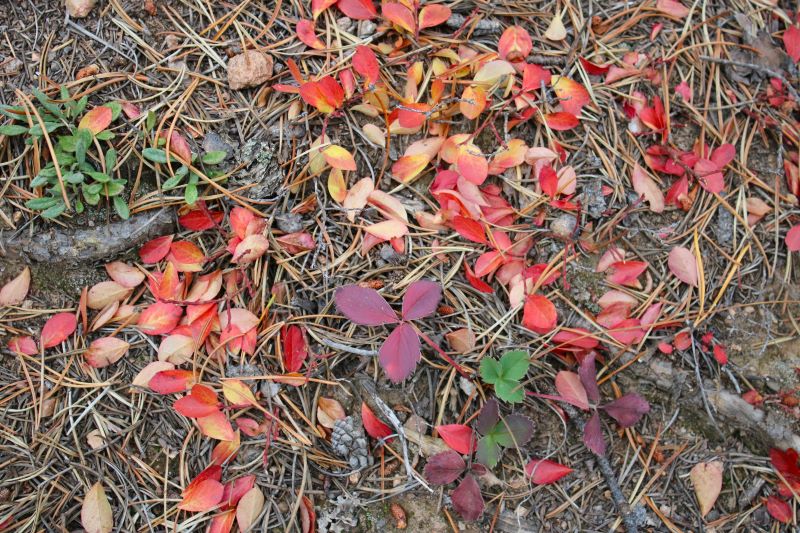
Here’s a still life from our hike in Pike National Forest. I remember being charmed by the bursts of color that day and today the vibrant foliage warms my heart even more.

October 3, 2023

And to quote Raveena Tandon: Anywhere which is in a forest, that’s my zen place.

Climate Movement Monday: Dakota Access Pipeline (DAPL)

Welcome back to Movement Mondays in which we discuss all things climate. Today, I’m reverting to the original format in which I share information on a frontline community being adversely affected by climate change/fossil fuels and then offer a quick action you can take on behalf of that community. Note: this comment deadline is December 13, two days from now.

Today, we’re focusing on the Dakota Access Pipeline. The following info is the result of collaboration between People vs Fossil Fuels, NDN Collective, and the Sierra Club. (Full document HERE) First off, what is DAPL and why is the Army Corps of Engineers accepting public comment? (click on image to enlarge).

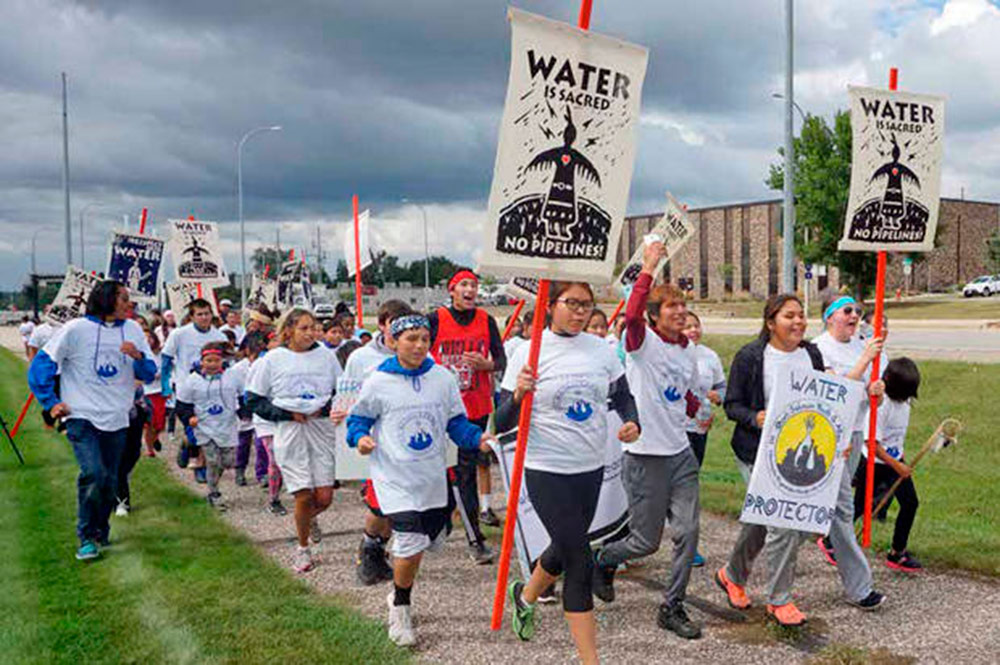
Some of my courageous friends were there, resisting the project as they fought to protect the water. Unfortunately, the pipeline was built. But we have the opportunity to support the Cheyenne River Tribe’s legal efforts by submitting comments. And what is the Cheyenne River Tribe’s recommendation for our comments?

The Army Corps needs to hear that the Draft EIS is not adequate and that the best alternatives are the ones that shut DAPL down. [Specifically, Alternative 2]

What options (“alternatives”) is the Army Corps considering?
1. Deny an easement under Lake Oahe and require restoration of federal lands to pre-pipeline conditions, including removal of the pipeline
2. Deny an easement under Lake Oahe and abandon the pipeline in place
3. Grant an easement under Lake Oahe as it was previously granted when DAPL was built
4. Grant an easement under Lake Oahe but with more conditions
5. Deny an easement under Lake Oahe, with the pipeline rebuilt in a different location TBD, such as further north and near Bismarck, and the existing pipeline abandoned

What should you write in your email? Here are five basic tips for writing testimony:
• Any length is OK – a few sentences are fine, or longer if you like. There is no length limit.
• Keep it unique – link to a personal story, talk about a topic that matters to you in your own words – the U.S. Army Corps of Engineers may consider very similar comments as duplicates and not weigh them as heavily. Do not just read talking points.
• Specifically address the adequacy of the Draft EIS – it is not adequate
• Specifically address the proposed alternatives – the Army Corps should select No Action Alternative 2
• Specifically address the risks of the section of pipe that runs under Lake Oahe

EMAIL ADDRESS for your public comments: NWO-DAPL-EIS@usace.army.mil
SUBJECT LINE: Comments on the DAPL DEIS

I was on a letter-writing call last week in which we heard from two young Standing Rock Sioux leaders, Maya and Memphis. They’ve been in the DAPL struggle since they were in their teens and are so grateful for the support of our letters. They emphasized the importance of not getting tripped up with worries about what our letters say, but to focus on the personal connection you have with this issue and to make our letters UNIQUE so they stand out. After Maya explained that even a pinhole leak in the pipeline would result in 11,000 barrels of oil spillage per day, I wrote about my gratitude for a clean water supply and how I couldn’t imagine living with the daily traumatic threat of an oil spill in my drinking water. Because it’s not a matter of if there’s a spill, it’s only a question of when the pipeline will break. The pipeline runs under the water, so once it ruptures, it’s already too late. In my letter, I also pointed out DAPL flies in the face of Biden’s climate reduction goals and that scientists have made it very clear we must keep fossils fuels in the ground if we are to have a livable planet.

The most important thing is to write a letter today and submit it by the December 13 deadline. DO NOT WORRY ABOUT PERFECTION! Again, here is the full document with further information.

Thank you in advance for standing with the people for clean water and against the polluting Dakota Access Pipeline. Solidarity! ✊🏽

Refaat Alareer: rest in power and peace

Today I learned that Dr. Refaat Alareer, along with his brother, sister, and her four children, were targeted and murdered in an Israeli airstrike. Refaat was a translator, academic, and writer who also reported on life in Gaza. These last two months I got to “know” him on Twitter/X as he shared specific details of the violence and horrors inflicted upon Gazans. Despite the death and destruction, he was funny and hopeful. He struck me as a human being comfortable in his own skin.

At the end of October, I posted a glimpse into LIGHT IN GAZA, an anthology of Palestinian writers and artists sharing their lived experiences under military occupation. But it wasn’t until today that I made the connection that the Refaat from social media was the same man with an essay in LIGHT IN GAZA. Refaat wrote “Gaza Asks: When Shall This Pass?” (Note: You may download the anthology for free from Haymarket Books). I highly recommend reading the entire piece yourself in order to better understand the gift that Refaat was to this world.

In “Gaza Asks,” he shared memories of the random violence he experienced over the years, along with that of friends and family members, and how in each instance they comforted themselves with “It shall pass.” When Refaat was older, teaching world literature and creative writing at the Islamic University in Gaza (IUG), he told stories to his three children to distract them from the twenty-three-day onslaught by Israel’s military (Operation Cast Lead). He told stories as bombs and missiles exploded in the background. Refaat wrote “As a Palestinian, I have been brought up on stories and storytelling. It’s both selfish and treacherous to keep a story to yourself–stories are meant to be told and retold. If I kept a story to myself, I would be betraying my legacy, my mother, my grandmother, and my homeland.”  He went on to say “Telling stories was my way of resisting. It was all I could do. And it was then I decided that if I lived, I would dedicate much of my life to telling the stories of Palestine, empowering Palestinian narratives, and nurturing younger voices.” 

When that particular onslaught ended, Refaat returned to the classroom where he told his students “Writing is a testimony, a memory that outlives any human experience, and an obligation to communicate with ourselves and the world. We lived for a reason, to tell the tales of loss, of survival, and of hope.” He began assigning and training his students to write short stories based on their realities. Those stories were collected and edited by Refaat and published as GAZA WRITES BACK.

But that wasn’t all Refaat did in the classroom. As so succinctly expressed by his friend Dan Cohen, Refaat “used English-language literature and poetry to teach his students the difference between Judaism and Zionism, equipping them with the mental tools to resist Zionist propaganda that seeks to conflate the two.” You can read more about those classroom experiences in “Gaza Asks.”

Later in the essay, in regards to Israel later destroying the administration building at IUG, Refaat wrote “. . . to me, IUG’s only danger to the Israeli occupation and its apartheid regime is that it is the most important place in Gaza to develop students’ minds as indestructible weapons. Knowledge is Israel’s worst enemy. Awareness is Israel’s most hated and feared foe. That’s why Israel bombs a university: it wants to kill openness and determination to refuse living under injustice and racism.”

I’ll stop there because I can’t do justice to the eloquence of Refaat’s essay, and I hope you’ll forgive me for already revealing so much. It’s just that this entire essay touched my heart and I felt compelled to share.

I do want to highlight this poem that follows his essay in LIGHT IN GAZA. Refaat also posted the poem on his Instagram account one week ago:

I’ll end with this poem he’d pinned at the top of his Twitter/X account on November 1: “If I must die, let it be a tale.”

Rest in power and peace, Dr. Refaat Alareer.

Just say NO to more military aid to Israel

I just personalized a quick letter to my two Senators and one Representative using the  CODEPINK template, demanding they NOT approve $14.5 BILLION in military aid to Israel. (scroll to bottom of page for the letter). Here’s the summary info CODEPINK sent me after I submitted my letter, info they want me to share with friends:

The United States House of Representatives has passed a Republican plan providing $14.5 billion in military aid for Israel. The package includes $4 Billion to replenish Israel’s Iron Dome and military equipment transferred from US stocks. Our Congress is blatantly prioritizing the genocide of Palestinians over providing Gazans with the aid they need desperately. This bill will likely pass on top of the already massive $886 billion war budget. It will fund Israel’s genocide in Gaza despite protests across the country in support of Palestine. Tell Congress to vote NO to arming genocide in Palestine!

We need to act now.

In my letter, I pointed out how people in the U.S. are struggling to afford rent, food, healthcare, etc. and that it’s disgusting for them to send BILLIONS of dollars to enable a nuclear power to commit genocide and mass displacement. PLEASE join me in writing a quick letter. Click HERE to write your letter.

Thank you in advance for acting upon our shared humanity. Solidarity! ✊🏽

Climate Movement Monday: COP28

Welcome back to Movement Mondays in which we discuss all things climate. In these posts, I share information and typically offer an action you can take on behalf of people and planet, with a focus on frontline communities that are enduring the worst effects of the climate crisis. Today, I’m not offering an action but am sharing information that’s just as much for me as my readers. The topic is “COP28” which I’ve been avoiding learning about because the particulars make my head want to explode. We’ll get into those specifics, but first: what is COP28?

The United Nations Climate Change Conferences are the world’s highest decision-making body on climate issues and one of the largest international meetings in the world. The 28th United Nations Climate Change Conference, or Conference of the Parties (COP28) is happening right now, hosted by be the UAE (United Arab Emirates).

Okay, I mentioned avoiding this whole topic because it stressed/angered me. Why? Well, as climate writer Emily Atkin points out [COP28 is ] “being run by a literal fossil fuel baron: Sultan Ahmed Al Jaber, the head of the state-run Abu Dhabi National Oil Company (Adnoc), which also happens to have one of the biggest oil and gas expansion plans in the world.”

Atkin further writes: “. . . Al Jaber’s self-proclaimed “game-changing plan” to achieve progress at COP28 is to give oil and gas companies more influence over the climate change summit, despite warnings from the U.N.’s former climate chief that the approach is “dangerous” and “a direct threat to the survival of vulnerable nations.”

Atkin shares other more damning conflicts of interest and I encourage you to read the entire piece from Atkin: COP28 sucks. Pay attention anyway. The fossil fuel interests attempting to corrupt the high-stakes summit would love nothing more than for us to look away.

Why should we pay attention? Because whenever we avert our gaze from the climate crisis, it most dramatically affects those in the Global South. People living in that part of the world have been facing the effects of climate change for decades already and they cannot afford to look away –think low-lying islands and rising sea levels– and their very survival depends on what’s decided at COP28. As Atkin writes: “For the nations most threatened by that future, negotiations over how to structure a Loss and Damage fund to compensate for damages, as well as negotiations over how to mend previously broken climate finance pledges by the Global North, are too consequential to be ignored.” Go here for the opening plenary statement delivered by the Indigenous Peoples’ Caucus.

International Indigenous Peoples Forum on Climate Change Opening Elder Ceremony. Photo by Willi White for NDN Collective.

It might not feel meaningful to learn about COP28 via Atkin’s piece or this by Bill McKibben, but knowledge is power. Even if there’s no direct action connected to our reading, by educating ourselves we’re forging a connection with the planet’s most vulnerable populations. We’re acknowledging their worth and implying our solidarity with their struggles.

Thank you for being here. I appreciate and welcome all thoughts, so please share in the comments. Until then, solidarity! ✊🏽

Please remain in the struggle

I’m writing this post for myself as much as anyone else. These are incredibly dark days on the planet and on some mornings, the grief of all we’re facing weighs so heavily it’s hard to get out of bed. But once I’m up, I always feel, if not better, then at least a shift in my emotions. And despite the fact that Biden and my three so-called representatives in the federal government refuse to heed our call for a permanent ceasefire in Gaza and, instead, continue to unconditionally support sending more money and bombs to Israel, I do feel a tiny bit better after calling their offices to voice my horror at the blood on their hands because my call equals me adding my voice to the chorus. How much worse would I feel if I remained silent and complicit as my tax dollars enable genocide and the displacement of millions?

So, from where I sit, it’s well worth it to make phone calls. Even better? Attending a rally in which I always, always learn something from the speakers (and always, always weep, which is also cathartic). Zippy and I did this yesterday. It was cold and the wind was biting, but we bundled up to join a whole lot of folks at the capitol for a rally before marching to the convention center in protest of the Jewish National Fund Conference. Here’s a good article explaining JNF and the protest.

It feels good to stand in solidarity with others. It feels good to remember there are MANY people working so very hard on behalf of the Palestinians. It feels good to be in company with people who recognize the connection between struggles, here and around the world. It feels good to share space with people who acknowledge the heartbreak of other ongoing genocides in Congo, Sudan, India, Armenia. All of that feels good, even in the biting cold.

Basically, it feels better to take action on behalf of the oppressed than to remain in bed, curled up in the fetal position. Again, I’m writing this reminder as much for myself as anyone else. And in case your energies and attention are flagging, PLEASE remain in the struggle. Please keep calling and sending emails. Go to ceasefiretoday.com for ALL help in taking action, whether it’s making calls and writing emails, learning how to arrange a visit to your rep’s office, or finding a rally or action where you live.

The powerful elites are counting on us getting tired, distracted, or overcome by despair. (But as Mariame Kaba says: “Let this radicalize you rather than lead you to despair.”) They want us to look away from the ugly truth. PLEASE do not avert your gaze. If you haven’t yet taken action on behalf of the Palestinian people, please know it’s never too late to add your voice to the chorus. Hello and welcome to the struggle!

Okay, this is me publicly vowing to remain in  the struggle. I hope you’ll do the same. Solidarity! ✊🏽

Hamza by Fadwa Tuqan, the “Poetess of Palestine”

Hamza
by Fadwa Tuqan

Hamza was just an ordinary man
like others in my hometown
who work only with their hands for bread.

When I met him the other day,
this land was wearing a cloak of mourning
in windless silence. And I felt defeated.
But Hamza-the-ordinary said:
‘My sister, our land has a throbbing heart,
it doesn’t cease to beat, and it endures
the unendurable. It keeps the secrets
of hills and wombs. This land sprouting
with spikes and palms is also the land
that gives birth to a freedom-fighter.
This land, my sister, is a woman.’

Days rolled by. I saw Hamza nowhere.
Yet I felt the belly of the land
was heaving in pain.

Hamza — sixty-five — weighs
heavy like a rock on his own back.
‘Burn, burn his house,’
a command screamed,
‘and tie his son in a cell.’
The military ruler of our town later explained:
it was necessary for law and order,
that is, for love and peace!

Armed soldiers gherraoed his house:
the serpent’s coil came full circle.
The bang at the door was but an order —
‘evacuate, damn it!’
And generous as they were with time, they could say:
‘in an hour, yes!’

Hamza opened the window.
Face to face with the sun blazing outside,
he cried: ‘in this house my children
and I will live and die
for Palestine.’
Hamza’s voice echoed clean
across the bleeding silence of the town.

An hour later, impeccably,
the house came crumbling down,
the rooms were blown to pieces in the sky,
and the bricks and the stones all burst forth,
burying dreams and memories of a lifetime

of labor, tears, and some happy moments.

Yesterday I saw Hamza
walking down a street in our town —
Hamza the ordinary man as he always was:
always secure in his determination.