ample evidence
nature’s engineers were here
damn, missed them again
your turn
hit me with a haiku
please
On the evening of our first night at Lodgepole Campground in Pike National Forest last week, we walked on the surrounding trails and drank in the natural beauty (while slapping at pesky insects). There are many beaver ponds in the area and we were happy to see a young moose in one.
Unfortunately, I didn’t have my long lens so the images are weak but am posting these because I love moose and was so excited to see one. I was spoiled by daily moose sightings when we lived in Alaska. (Sometimes they’d come in the yard to eat the raspberry canes and the crunching sound was loud enough to be heard through the walls.)
As we stood admiring this youngster, Zippy quietly said, “Um, where is the mom?” And with that, we quickly walked away. Because all those Alaska moose sightings had also taught us the danger of getting between a calf and cow moose. (In fact, one day when I was skate-skiing on the Coastal Trail, pulling Wildebeest in the pulk that was attached to my waist, I saw a calf on one side of the trail and a cow on the other. I stopped and while somewhat frantically attempting to turn us around, tipped the pulk on its side. Fortunately, the pulk had a six-point harness that prevented my son from falling out and I was able to get the sled upright again so that we could head away from the protective mother moose. Whew!)
Our second ungulate sighting of the trip was on the day we left as we drove back out to the highway. These pronghorn were standing at the fence, staring as we went by. (Zippy calmly remarked, “Hello, fellas.”) I stopped and slowly reversed to get a photo but by the time I got my camera up, they were moving away to safety.
I regret not getting a photo of their inquisitive faces, but there’s still a lot of personality in the way pronghorn walk away. A combination of nonchalance and hypervigilance. Either way, it was a lovely final image.
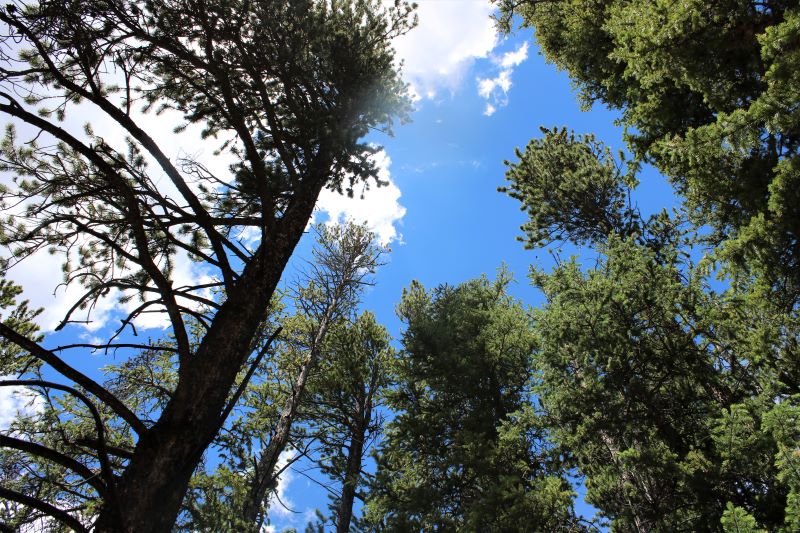
Welcome back to Movement Mondays! Last week I was out in nature, refilling my well as we camped in Pike National Forest. We hiked the West Jefferson Trail through many lodgepole pines, marveling at the way the trees worked in community to support each other. Massive trees leaning on smaller trees that continue to grow as they support the weight of others. Witnessing that felt sacred and brought tears to my eyes.
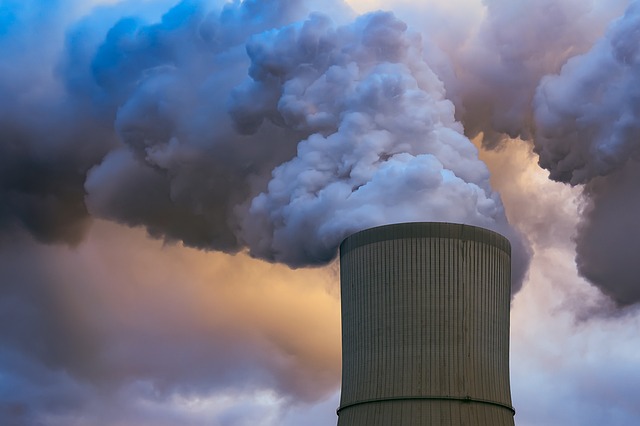
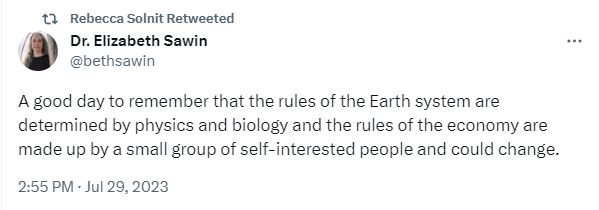
Our trip was a much-needed respite from the realities of our quickly changing climate and today I’d like to offer some thoughts and hope from the frontlines of the fight for a stable climate and just transition off fossil fuels to renewable energies. The good news is that we have the answers and technology, and only lack the political will. Also? Many, many people are speaking up and more are joining the fight each day. But we need people to understand that we do, indeed, have the power to avert the worst of the climate crisis. As Rebecca Solnit tweeted: We spent a lot of time trying to convince people climate is real and urgent; that has mostly been accomplished. Now we have to convince people that we can do something about it, that we have the solutions, that most people already take climate seriously and support action, that doing what the climate demands could produce an era of abundance, not austerity, that the main obstacles are political, that civil society has overthrown regimes and status quo and changed the world before and can again.
The status quo is not permanent! However, the powers-that-be want to normalize this extreme weather and are feeding us headlines like this:

Tomorrow we’re leaving for higher elevation and cooler temperatures. For this, I am very grateful and know we’re exceedingly privileged to be able to avoid the heat. My confession? I’d hoped to have written and scheduled a Climate Movement Monday post (and possibly a couple other posts with some of the photos I’ve been taking), and that’s not going to happen. But if you do have anything to share, climate-wise, I’d love to hear (especially if it’s good news!), so please leave a comment.
In the meanwhile, I extend wishes for a good week, moderate weather, and lots of smiles and laughter.
Feeling a kinship with this Spotted Towhee and its red eyes.
Just spent the last couple hours staring at my manuscript on my laptop as I made revision notes in the margins. My agent sent me a whopping seven pages of editorial thoughts/questions at the beginning of the week and after spending several days mulling over her email, I’m now plotting how to implement the changes I want to make. I’ll be honest: today’s session was harder than yesterday’s when optimism was high and I actually allowed myself to think “This isn’t going to take as long as I’d thought!”
But the cool thing about the writing process is that none of the emotions I feel last forever. Not the positive or the negative. So, I’m going to step away from the manuscript and rest my eyes, knowing that tomorrow will bring its own set of emotions. Whatever they are, I’ll be ready (but hopefully, not reddy). Sorry, not sorry. 🙂
Hello, again! Before going any farther, I want to ask you to PLEASE keep up the pressure on Biden to declare a Climate Emergency under the National Emergencies Act (which unlocks all sorts of executive powers–scroll down for specifics). Personally, I cannot get a call through to the White House Comment Line (202 456 1111) so I email Biden and now have a daily plan to call my two Senators and one Representative to implore that they use ALL their power to pressure Biden to declare a climate emergency. If you don’t know your Senators, look here. To find your Representative, look here. Personalize your communication by letting them know what climate-induced extreme weather you’re experiencing. THANK YOU IN ADVANCE!
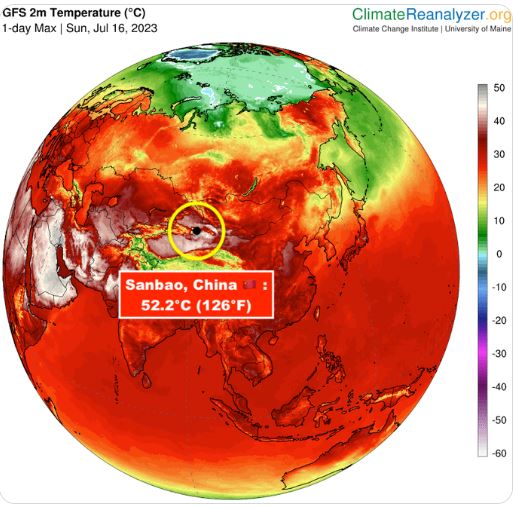
Okay, so it’s another Movement Monday post in which I typically highlight a frontline community enduring the immediate effects of the climate crisis then offer ways to support that community. Today my focus is on helping those impacted by flooding, specifically in the northeastern U.S. (However, horrific flooding is also happening all around the globe while deadly heat waves affect other regions. For instance, a region in northwest China just hit a record-breaking 126 degrees.)
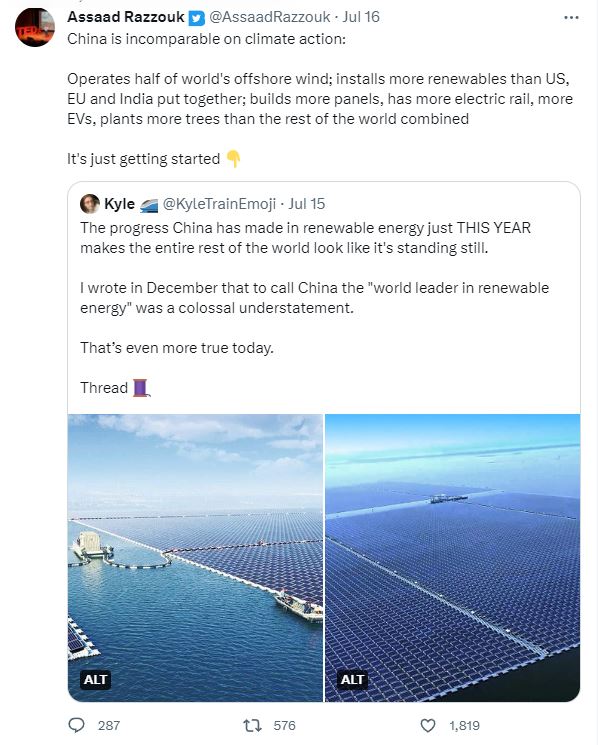
The GOOD NEWS is that China is leading the world in taking aggressive climate action to implement renewable energy. The link to Kyle’s twitter thread with its many articles on what China is accomplishing can be found here. Read it and expand your vision of what is possible! There’s plenty of reason for hope!
Related to that good news, while Texas endures weeks of deadly temperatures that strain its power grid, solar power and battery storage played a huge roll in preventing blackouts. (See what’s possible?) You can read about that here.
Okay, now here are some organizations helping out those in the northeast.
NEW YORK & VERMONT:
VERMONT:
There was also flooding in Pennsylvania, New Hampshire, and Massachusetts (and possibly other places I’m missing?), but I’ve been unable to find organizations accepting donations. PLEASE let me know if you come across any reputable places to donate and I will update this post.
Thank you for reading and caring for others in their time of need. We’re all in this together and collective action is what will save us!
Solidarity! ✊🏽
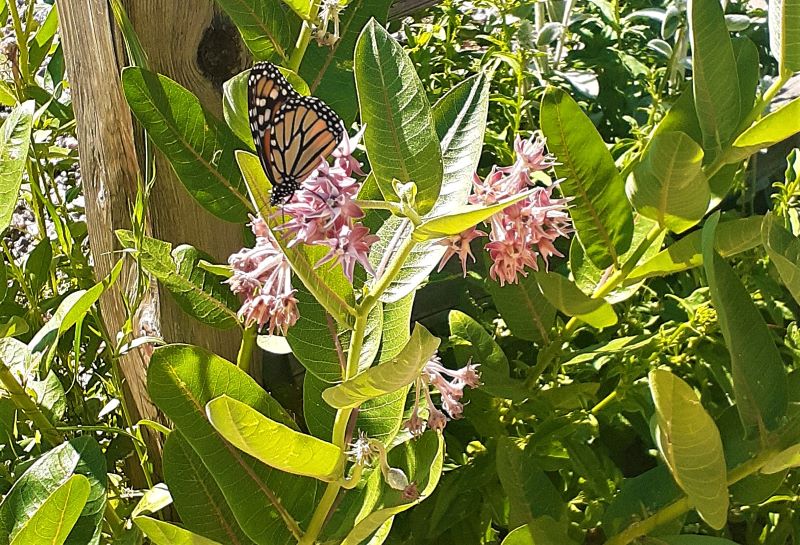
I have many memories of milkweed plants and monarch butterflies from my childhood in Wisconsin, but haven’t seen a living monarch in quite some time. Years and years and years, to be (in)exact. There’ve been some sightings of no-longer-living monarchs, one in Florida and another here on a neighborhood street a looong time ago, along with increasingly frequent milkweed sightings that make me happy because the plant is crucial to monarchs’ survival, which is why I got upset when a patch of milkweed on the corner got hammered by hail last month. I was able to restore one plant to an upright and stable, position, but then a couple weeks later noticed someone had chopped it down. *sob*
Well, I’m thrilled to report an update. As we finished our neighborhood walk this morning, we stopped three houses up the street from our home to admire a patch of milkweed in bloom. Sharp-eyed Zippy whispered, “Look.”
My heart soared as we silently watched that delicate beauty move about the bloom. I reminded Zippy of his phone which he slowly and carefully took out to document the moment. I’m so grateful for this photo and will return to it again and again. It’s hard times on the planet these days, but the magnificent collaboration between this butterfly and plant gave me a much-needed boost. May it do the same for you.
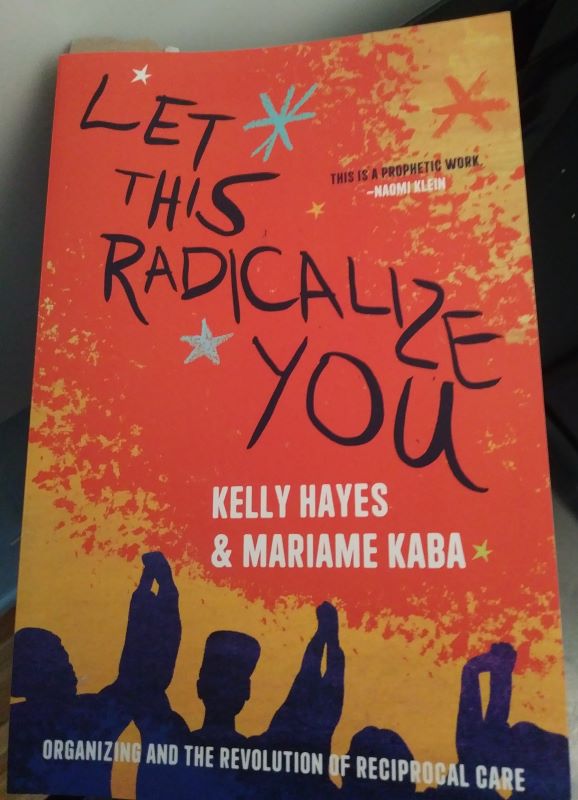
Welcome back to Movement Mondays! Today’s post isn’t focused on a specific frontline community, but is instead a collection of resources you might be interested in perusing. The intensifying climate-related weather around the world made me feel a bit wobbly about my role on the planet this morning, so I’ve been reading the excellent LET THIS RADICALIZE YOU: ORGANIZING AND THE REVOLUTION OF RECIPROCAL CARE by Kelly Hayes & Mariame Kaba.
The title comes from something Mariame Kaba has said over the years, “Let this radicalize you rather than lead you to despair,” a sentiment that resonates deeply with me. The book is about building community and organizing for the collective good. Here’s one snippet that made me feel a whole lot less wobbly this morning:

That quote is a good reminder that the smallest action can be revolutionary. The example that came to mind as I read was masking. Every time I wear a mask I’m saying “Our govt may not care about us, but I refuse to abandon you or you or you.”
I admire both authors immensely, not only for their ongoing efforts on behalf of people and planet, but for their graciousness in welcoming others into the fight. Let This Radicalize You isn’t only for aspiring organizers, but also for anyone wanting stronger connections in their communities, along with those who might need a little pep talk to get them out of bed in the morning. 🙂 Haymarket Books is offering the book for 40% off right now (only $10.77 for the paperback!) and you can get that here.
My second resource recommendation is also new to me and I wanted to share while it’s on my radar. INHERITED is a storytelling podcast about young climate activists from around the world. They’ve produced two seasons of episodes and Season 3 will drop later this month. You can access episodes here.
Third, an op-ed from Christiana Figueres who is a Costa Rican diplomat who served as Executive Secretary of the United Nations Framework Convention on Climate Change 2010-2016. The title of her piece: I thought fossil fuel firms could change. I was wrong. The piece opens with this:
“More than most members of the climate community, I have for years held space for the oil and gas industry to finally wake up and stand up to its critical responsibility in history.
I have done so because I was convinced the global economy could not be decarbonised without their constructive participation and I was therefore willing to support the transformation of their business model.
But what the industry is doing with its unprecedented profits over the past 12 months has changed my mind.
Let’s remember what the industry could and should be doing with those trillions of dollars: stepping away from any new oil and gas exploration, investing heavily into renewable energies and accelerating carbon capture and storage technologies to clean up existing fossil fuel use. Also, cutting methane emissions from the entire production line, abating emissions along their value chain and facilitating access to renewable energy for those still without electricity who number in their millions.
Instead, what we see is international oil companies cutting back, slowing down or, at best, painfully maintaining their decarbonisation commitments, paying higher dividends to shareholders, buying back more shares and – in some countries – lobbying governments to reverse clean energy policies while paying lip service to change.
On top of that, the industry as a whole is making plans to explore new sources of polluting fossil fuels and, in the United States, intimidating stakeholders who have been moving towards environmental, social and governance responsibility.”
You can read the piece in its entirety here. I wasn’t aware of Christiana Figueres or her willingness to give fossil fuel corporations the benefit of the doubt, but I’m glad she’s seen the light and is now using her substantial platform to voice her opinion. Good news!
As always, I’d love to hear what’s happening in your part of the world + any good news/bad news + book/article/podcast recommendations you might have. Basically, I want to feel more connected with YOU.
Solidarity! ✊🏽
I just spent a whole bunch of time at my laundry room window with my camera, watching the House Wren family. In mid-April, I sent a wish into the universe for wrens to nest in the box Zippy put up beneath the deck (a nest box he found while cleaning out his mother’s home) and then in early June I noted wrens had moved into the nesting box!
For the past week or so, there’s been a clamor coming from that box. A frenzied wall of sound that prompted me to tell Zippy “Sounds like 16 babies in there!” The noise level goes WAY up when a parent arrives with food, causing many spontaneous smiles on our faces. But it wasn’t until today that I went down with my camera and, oh my goodness, what fun! Not only fun, but educational.
First off, all those sounds appear to come from just two babies. (I never saw more than two beaks poking out.)

Second, those wren parents work their butts off.

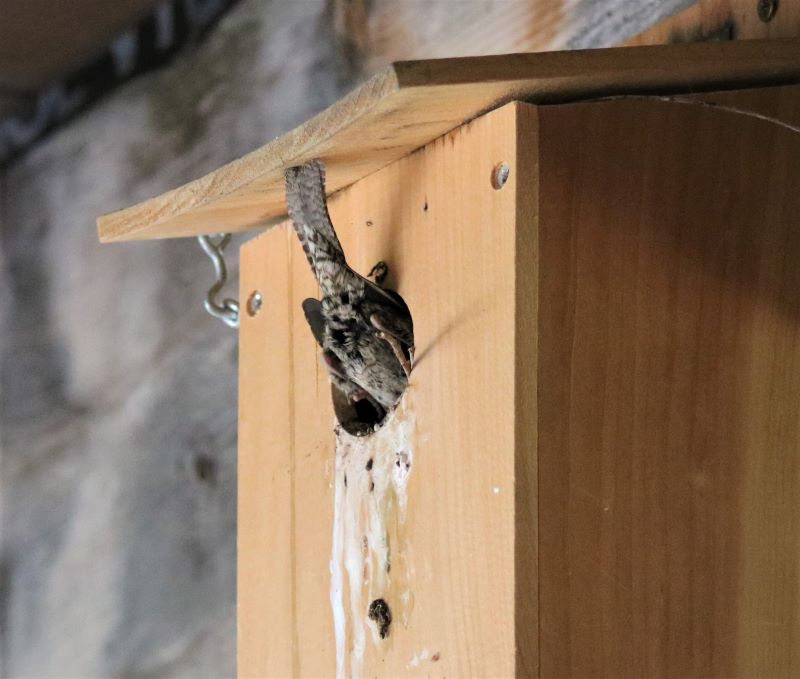
Not only does a parent bring food every food minutes, but they also remove poop after each feeding. (That was my guess after watching for a while, but I had no idea how it was done.) Per Wikipedia, the nestling produces a fecal sac within seconds of being fed, which the parent removes. The below image isn’t great (click to enlarge), but it does show the sac in the parent’s beak.
However, the poop saga doesn’t end there! If the nestling doesn’t produce a fecal sac, the parent will prod around the little one’s hind end (no, that’s not the correct anatomical term) to stimulate excretion. Which explains the next image.
After the nestling(s) took the insect, the adult waited a bit and then dove into the nesting box. This only happened the one time, so I’m guessing the little ones were doing a pretty good job of pooping right after eating. Probably not fun having Mom up in their business.
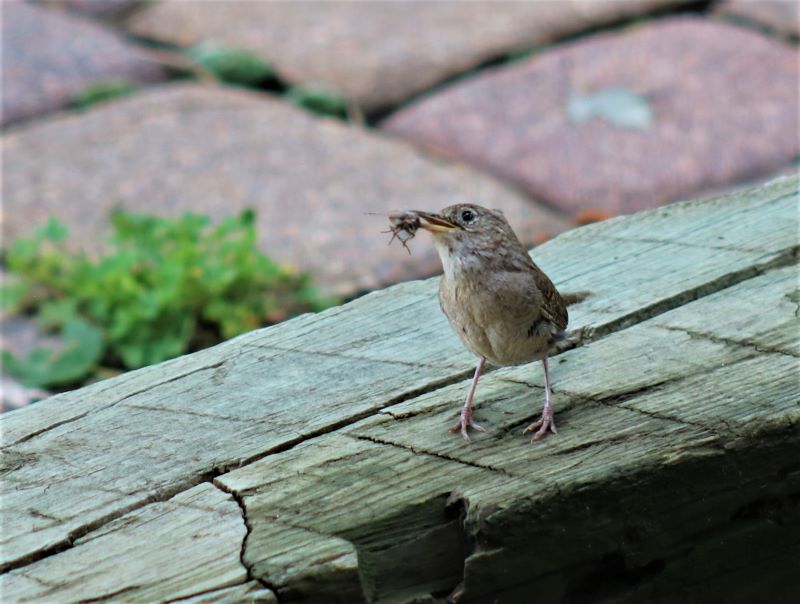
At one point, I was baffled by all the sounds I was hearing because neither nestling was visible at the hole. Who was so agitated? And where was the sound coming from? I stared and stared at that hole in the box. Then movement caught my eye and I noticed an adult with a moth in its beak on a timber below the nesting box. It made no sense, but it was clearly the one singing the song because I could see their throat move. Weird, I thought, singing with its mouth full. What’s up with that? And the dancing?
When I described what I’d seen, Zippy suggested that maybe the adult was trying to entice the youngsters to leave the nest. That made perfect sense to me, but a quick online search didn’t turn up any info to support or deny that theory. Either way, it was so delightful watching that tiny bird dance around with an enormous moth in its beak, all the while singing a beautiful song.
That was the most enjoyable laundry room experience I’ve ever had! Thank you, universe, for granting my wish. This wren family is balm for my soul.
Welcome back to Movement Mondays in which I typically highlight a frontline community enduring the worst effects of climate change and then offer an action you can take on their behalf. However, today’s post is mainly intended to raise awareness about a deadly issue. Before going further, I need to say that I am a PIC abolitionist. Per criticalresistance.org: prison industrial complex (PIC) abolition is “a political vision with the goal of eliminating imprisonment, policing, and surveillance and creating lasting alternatives to punishment and imprisonment.”

Image by Fifaliana Joy from Pixabay
Okay, one of the aspects of climate change is how it affects people and planet in ways we might not have considered. I include myself in that statement. Because even though I’m active in the climate community and have done tons of reading on abolition and social justice, I hadn’t truly made the connection between climate and incarceration. But then an incarcerated friend wrote to me, mentioning how he was worried not only about the unhealthy air due to the Canada wildfires but also about the coming oppressive heat in the prison that doesn’t have air conditioning. My friend is not being whiny. Climate change poses a unique threat to the incarcerated and the insanely high temperatures around the country are literally killing people in prisons. (By the way, climate-induced flooding is another deadly threat to the incarcerated.)
The New Republic reported that in the last several weeks, at least nine people died heat-related deaths in Texas prisons (although the Texas Department of Criminal Justice has not acknowledged the deaths as such). “But only last month, Texas senators killed a bill that would have established a prison temperature standard of 65 to 85 degrees, as well as funding of $545 million for the first two parts of a four-phase air-conditioning installation plan. Despite a $32.7 billion budget surplus this year, the legislature allocated no funds specifically for prison air conditioning.”
Then there’s Louisiana. Taproot Earth created a May 2023 policy report on climate and incarceration, and in that introduction states: “The rate of incarceration in Louisiana is higher than anywhere else in the world. Black people are 33% of the state’s population, but make up 52% of people in jail and 67% of people in prison.” (Note: The state relies on pretrial incarceration which means that people who can’t afford bail are incarcerated until trial.) The introduction also says this: “Louisiana is also particularly vulnerable to the climate crisis, due to its geographic location on the Gulf South and its production of the fossil fuels that drive the climate crisis and poison nearby communities. Louisiana is at high risk for sea level rise, coastal loss and flooding, increased heat waves, and storms that are increasing in frequency and intensity.”
So what can be done? The report makes many recommendations (including that Biden must Declare a Climate Emergency) and from page 19 of the report: “As the climate crisis worsens disasters and increases their frequency, these carceral facilities and the beds within them will become only more cruel and dangerous, leading to premature death of incarcerated people. To release people from the disaster within the disaster, all environmentally vulnerable carceral facilities must be closed–and when a disaster strikes them, they must not be rebuilt or reopened. This requires a state-wide study of carceral infrastructure and its vulnerability, especially in the context of climate-exacerbated disasters.” No more new prisons!
The good news is that people are organizing around this issue and there’s an increased urgency to that work as climate-induced extreme weather continues to hit every part of the globe. Texas Prisons Community Advocates (TPCA) is rallying at the state capitol on July 18th and they will gratefully accept a donation.
If you’ve read this far, thank you thank you thank you. Please keep your eyes and ears open to what’s happening in your own states. Maybe there’s a group organizing around climate and incarceration or maybe proposed legislation that would help keep the incarcerated alive. Or maybe you’ve seen a story or two in the news about prisons. No matter what it is, I’d love to converse with you about it because climate and abolition are two issues close to my heart.
Solidarity! ✊🏽
After talking (in very general terms) with a friend/critique partner today about my work-in-progress, I had an epiphany. I realized it was possible to slightly expand the primary setting for my story in a way that will allow me to more deeply explore some elements/themes I’d like to include. And yes, I realize that last sentence is pretty cryptic, but until I have a complete first draft I always err on the side of “keep your mouth shut, Tracy.”
But now I’ve now got a whole bunch of questions I must answer before implementing that change in the setting. As in, I need to know the how and why behind the expansion of the setting. Does the property I want to add belong to the protagonist’s family or a neighbor? Is that property already in good shape or is it in need of restoration? Would money change hands or could it be a barter system?
I’m very excited about this new idea. I’m also feeling bombarded by the many possibilities bouncing around my brain. Overwhelm alert!
Here, in solidarity on this #Caturday, is Marcel looking equally overwhelmed (although I’m pretty sure he’s not drafting a novel and is merely plotting how to move that heavy brick currently sitting on top of the kibble bin ). May the two of us settle down and find clarity in the not-too-distant future. Well, one of us, at least.
For a whole lot of reasons (*gestures widely*), my climate anxiety is elevated today, so I picked up my copy of Not Too Late: Changing the Climate Story from Despair to Possibility and opened it in search of some grounding wisdom. I found that in Gloria Walton’s essay “Shared Solutions Are Our Greatest Hope and Strength.”
Capitalistic values have promoted individualistic mindsets and made us believe our resources are finite and competitive. But that doesn’t have to be our reality. We have the power to tap into abundance and collaboration. It’s our collective responsibility to envision and create the world we want together. We need bold, sustainable solutions that benefit many, not just the few. We can also hold community and grassroots values that nurture a regenerative, healthy, and equitable planet–the values that connect us to our family, our communities, and ultimately to each other.
Yes, yes, and yes!
And now I’m off to continue drafting my middle grade novel centered on a bold and sustainable solution that will benefit many, not just the few.
Welcome back to Movement Mondays in which I typically highlight a frontline community enduring the worst of the climate crisis and then offer an action you can take on their behalf. Today, I’ll be asking you to contact President Biden on behalf of ALL of us. But first, I want to update you on the Mountain Valley Pipeline (MVP). I most recently wrote about the MVP here (and that post includes links to the five previous posts about MVP), when Biden included it in the debt ceiling “negotiations.” Unfortunately, as noted in my June 5 update: [. . .], despite the overwhelming pushback on making Appalachia a sacrifice zone, Biden and the Democrats refused to vote for Senator Kaine’s amendment to remove all text related to Mountain Valley Pipeline from the Fiscal Responsibility Act. According to that legislation, ALL permits must be passed without judicial review within 21 days.
Senator Joe Manchin insisted MVP be included in the Fiscal Responsibility Act because “The Mountain Valley Pipeline is a crucial piece of energy infrastructure that will help balance global supply and demand while strengthening our energy and national security.” Secretary of Energy Jennifer Granholm repeated that same national security fear-mongering in her letter to the Federal Energy Regulatory Commission (FERC), also writing, “. . . I request that if there is any further Commission-related action on this project, it proceeds expeditiously.”
Guess what? An independent analysis of the Mountain Valley Pipeline reported last week that MVP will only be able to operate at 35% capacity.
The contentious Mountain Valley pipeline will likely operate at an average of only 35 percent capacity once built, resulting in a “limited impact” on Appalachian gas production, according to an energy analytics firm.
East Daley Analytics, a company that monitors operational risk across the oil and gas industry, predicted the pipeline would carry far below its capacity of 2 billion cubic feet per day, citing the limits of the Transco gas pipeline system.
Including MVP in the Fiscal Responsibility Act had zero to do with debt ceiling issues and zero to do with national and energy security. The Mountain Valley Pipeline is and always was about further enriching fossil fuel companies at the expense of people and planet.
Okay, now for taking action on behalf of ALL of us who are enduring extreme weather events around the country whether that be wildfire smoke from Canada, life-threatening heat waves, flooding, hail, tornados, etc. It is clear this is a Climate Emergency and we need to push Biden to declare a climate emergency under the National Emergencies Act and use his executive powers**.
**That would give us the ability to reinstate the crude oil export ban, end new fossil fuel projects and drilling, redirect disaster relief funds toward distributed renewable energy construction in frontline communities, and marshal companies to fast-track renewable transportation and clean power generation. All while creating millions of high-quality union jobs.
Biden also has the power to deny approvals for any new fossil fuel projects, and mandate a phase out of fossil fuel production on federal lands and waters — two actions which scientists have stated are essential to staying under the global warming limit necessary to avoid the very worst of the climate catastrophes.
Thank you for reading this far! I wish you healthy air, water, and temperatures, wherever you are. Solidarity! ✊🏽
I photographed the neighbors’ glorious poppy on June 8 which is good because even if it had bloomed this long, it would be no-more.
Last night we had heavy hail that shredded leaves and plants around the neighborhood and today we had another round of very heavy rain** and more hail. While I do appreciate the moisture (my perspective is “as long as we’re soggy, we won’t start on fire”), there’s such a thing as moderation. We’re clearly experiencing extreme weather all around the globe, but I won’t go into the depressing realities of the climate crisis.
Instead, today I give thanks that I took the time to document this gorgeous flower so that it could be enjoyed forever. May it bring you a smile!
** 1.5 – 2.5″ of rain in 1-2 hours in our neighborhood
Last night we returned from three days in southwest Colorado where we visited son Wildebeest, his girlfriend, and their new cat (shout-out to adorable Franklin!) Halfway through the six-hour drive home, we stopped for gas in Del Norte. I pulled Moby the campervan next to a pump before noticing a sign that said if we used that pump, pre-payment was required inside. Zippy asked me to move to another pump.
I pulled forward and began circling another pump island so that the gas tank would be on the correct side. A truck was parked at the neighboring pump which meant that because I hadn’t made a wide turn, I had to back up a bit. I did so using the side mirror, watching as the rear of the van remained clear of the pump island guardrail. Plenty of space! Then I put Moby in DRIVE and moved forward.
CRUUUNCH
Immediate expletives from Zippy
Nonsensical panicked embarrassment from me that also included expletives
While I remained frozen in the driver’s seat, awash in a sea of excruciating déjà vu, Zippy got out to assess. He quickly reported that I’d somehow hit this guardrail so that Moby’s left rear tire was pushed against it, leaving no room to move forward.
As Zippy examined the situation, a man using the opposite pump came over to see what was going on. I wanted to disappear. Instead, I sat there behind the steering wheel, talking to myself and bowing my head in shame. The man with the truck I’d backed up to avoid hitting, noticed my angst and assured me everything was okay, that it was only a vehicle. Then he joined the other two men’s discussion about the best strategy for getting Moby unstuck. Truck Man had me put Moby in park while the three of them tried rocking the van to get it free. But they weren’t strong enough and no one else joined the effort, so Truck Man instructed me to crank the steering wheel ALL the way and then sloooooowly back up.
LIBERATION!
As I shouted my thanks and gratitude to them, Truck Man grinned and said, “Now you have a good story about that first blemish.” He got in his truck and drove away while the other man talked with his friend who’d just come outside, pointing to Moby and mimicking the rocking motion. Apparently, he’d also gained a good story. My face burned with the knowledge that my carelessness was at the core of his retelling.
See, this wasn’t my first experience getting stuck like that. Many years ago when I was in high school, my boyfriend worked at a gas station/garage and one afternoon I went there to borrow his beloved Camaro. After going inside to get the keys from him, I got in the car that was parked between two white gas tanker trucks, and backed out.
CRUUUNCH
The car was wedged up against one of the tanker trucks. My boyfriend LOVED that car and I had to walk back inside to let him know what I’d done. Not only that, I had to tell him in front of his co-workers who hooted and hollered before following us outside to witness my humiliation. There was no best approach in that situation–going forward would scrape the car and going backward would scrape the car–so my boyfriend chose to back it out.
SCRAAAPE
Thanks to me, there was blue paint on the white tanker truck and white paint on the blue Camaro. Over the years, the sting of that humiliation lessened as it turned into a memory of me being young and foolish. And because nothing like that had ever happened again, it morphed into a funny story from my early driving years. Until yesterday.
Except, while yesterday’s embarrassment came on fast, this time it faded relatively quickly. Zippy was nothing but kind. Truck Man was not only kind, but also funny. And the other guy? Well, he now has a story to tell about his role in freeing a cargo van. To be clear, my high school boyfriend had also been pretty chill about his Camaro and it would be easy to blame my flaming red embarrassment on his co-workers. But I’m pretty sure what I’m feeling right now is the result of being decades beyond where I was when backing up that dark blue Camaro. Also?
There’s no blue paint/evidence on Moby. Just some faint red smears.
Heck, they could be ketchup.
Thanks for the memories, Del Norte!
We are a rabbit-rich neighborhood this year. It’s typical for us to see at least one rabbit per yard as we walk our two-mile loop. Fortunately, Emma has gotten blasé about their presence and doesn’t go bonkers when she sees them. Often, she doesn’t notice them but Zippy and I have fun saying, “There’s one there and another over there and two babies hiding by the bush.”
But we don’t have to take a walk or even leave the house in order to see them. There are always (and I mean always) bunnies in our front yard.
The elders are wise and stay in the front where Emma can’t get to them. But last week we spotted one of the youngsters in the fenced backyard which I photographed through the window.
Zippy went out to open the gate so it could go back in front, but it went farther into the back. We kept Emma inside and checked to make sure the little bunny was gone before letting her out again.
Silly bunny. Why go into a space where a dog frequently roams? And why leave the grassy front for the mulch-covered back? And while we’re at it, do you rabbits really believe flattening your ears against your head makes you invisible?
Doesn’t matter. Bunnies are always welcome here.