Geese for Gaza

We’re heading into a very rainy week here on the Olympic Peninsula due to atmospheric river conditions. Knowing this, yesterday we took advantage of the quiet before the storm to walk along the water via the Olympic Discovery Trail. However, weather wasn’t the only factor in our decision: we also desperately needed a dose of nature to counteract the negative mental health effects of the current regime’s fascism a go-go plus the non-stop slaughter of Palestinians live-streamed before our eyes. The “ceasefire” that was supposed to terminate Israel’s genocidal war on Gaza has allowed Israel to violate those terms over 500 times, resulting in the murder of hundreds of men, women, and children. (NOTE to the Zionist from Tel Aviv: your racist, supremacist rants are blocked from this site which means no one but you will ever know the depths of your depravity. You’re welcome.)

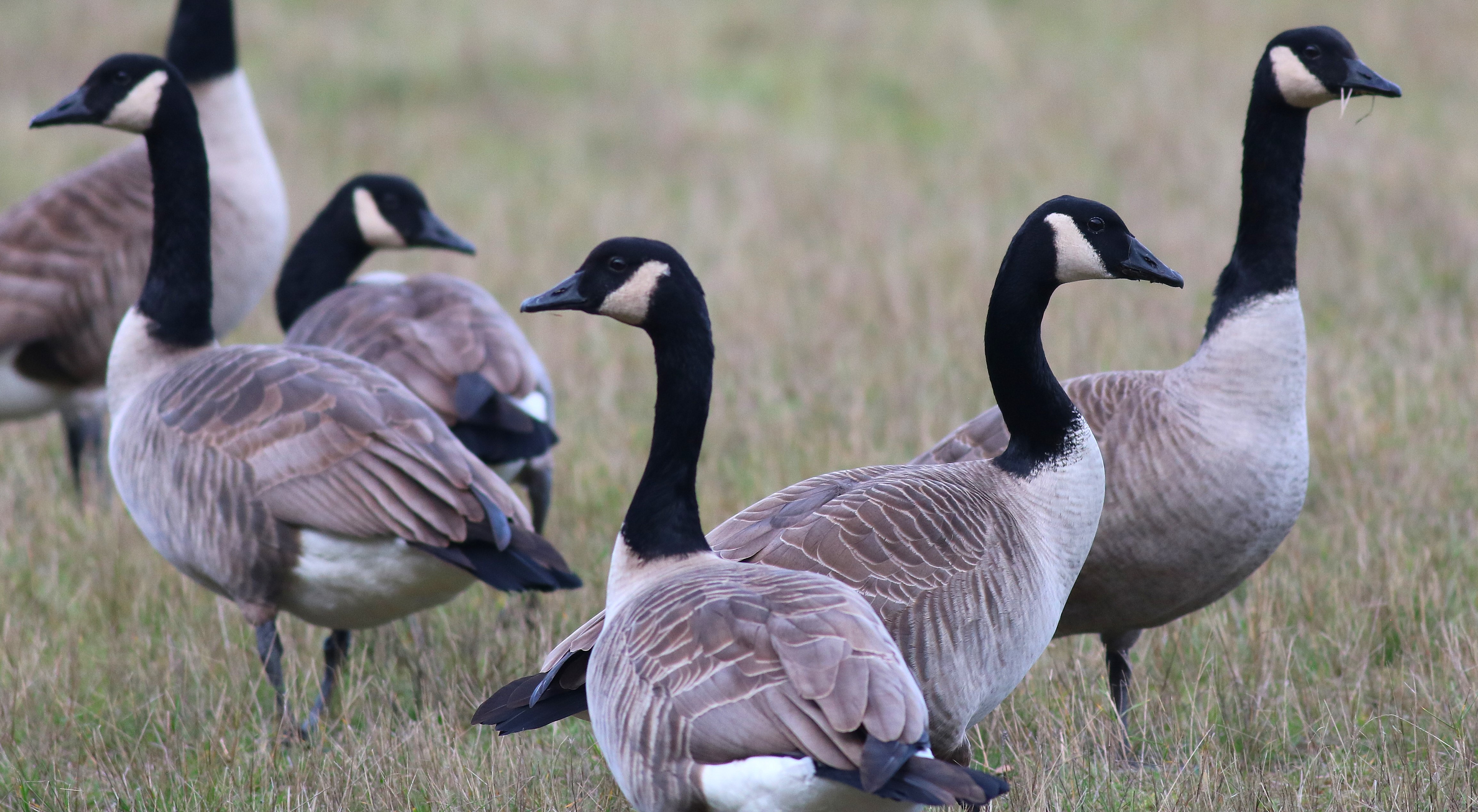
As Zippy, Emma, and I began our walk, we saw a large flock of Canada Geese. I smiled while taking photos and happily captured more images when we returned an hour later to find them in a different spot alongside the trail.

Today when I found myself repeatedly thinking about these geese, it felt like a sign. As in, time for another Geese and Gaza post. Why?

Canada Geese on December 6, 2025

Because seeing other living, breathing creatures–such as this flock of geese that works together to keep each member safe–always reminds me of the interconnectedness of life on this planet. We are all in this together, and that most definitely includes Palestinians. I’m pretty sure every “silly goose” understands this basic concept.

They are Geese for Gaza.
From the river to the sea, Palestine will be free.

Unruffled calm of nature

August 4, 2025 Olympic Discovery Trail

Surely there is something in the unruffled calm of nature
that overawes our little anxieties and doubts:
the sight of the deep-blue sky, and the clustering stars above,
seem to impart a quiet to the mind.
~ Jonathan Edwards

Balm for the soul

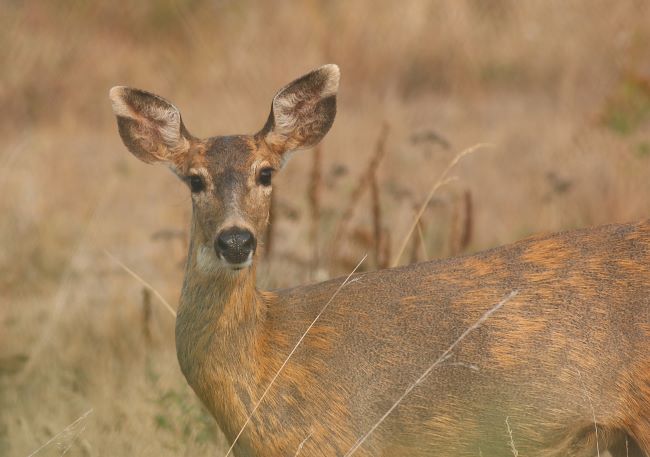
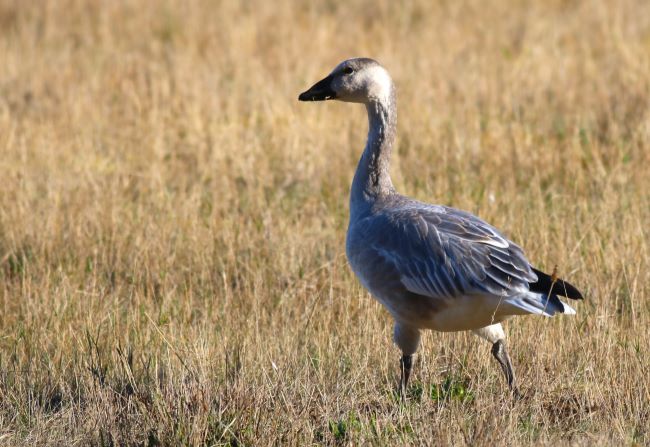
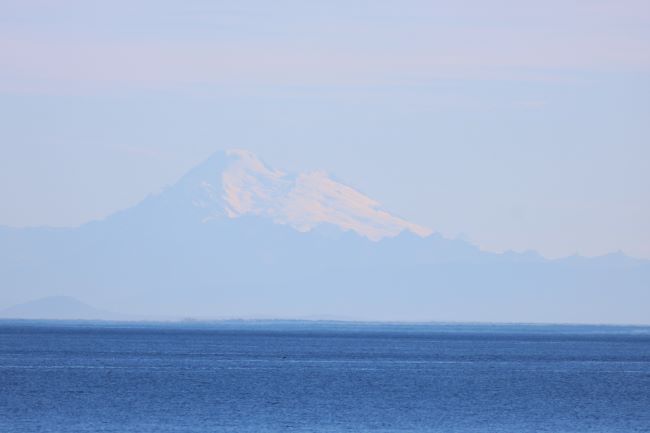
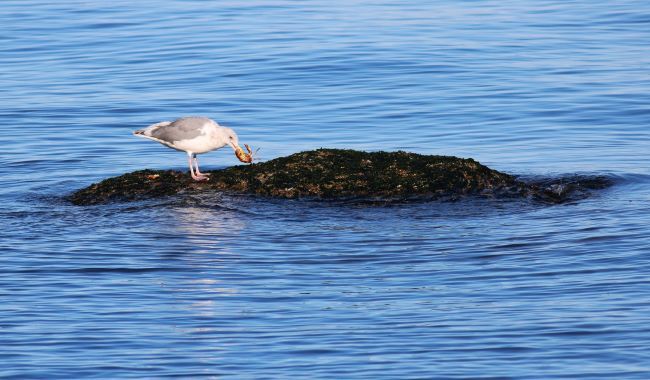
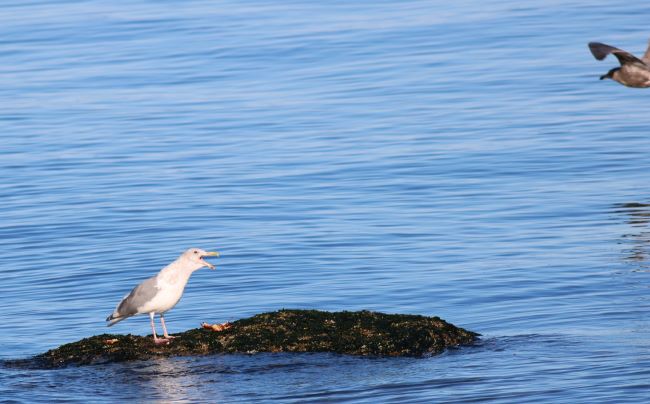
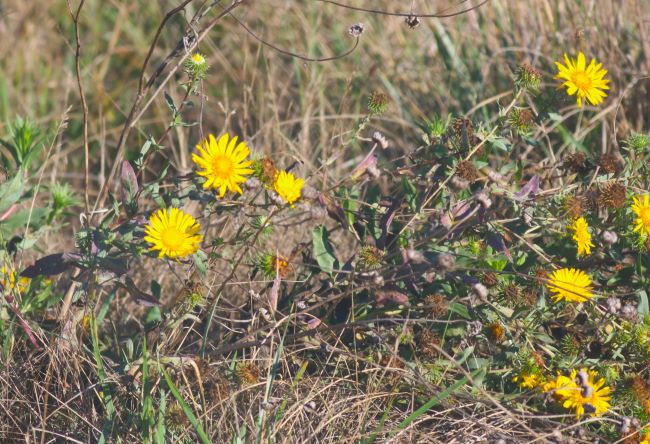
This morning during a short walk on the Discovery Trail where I haven’t been for weeks due to a foot issue that may or may not be a mind-body issue, we  were gifted with all sorts of beauty. In the order in which those gifts presented themselves:

Black-tailed deer

Immature Snow Goose

Belted Kingfisher

Mount Baker

Black-tailed Deer

Horned Grebe

Glaucous-winged Gull and crab

Same gull pauses to make clear guests are not welcome at crab feast

After taking many photos of this delightful gull, we turned around and headed back to the trailhead. I was pleased to see the Belted Kingfisher was still in the tree and a bit further on, spotted this wild bouquet:

Thank you for taking the walk with me. May these glimpses of beauty be balm for your soul during these very hard days.

Today’s project: a GOP ransom note

Mariame Kaba is soliciting submissions for a zine she’s creating (deadline extended to July 15!) which will be a collection of ransom notes from the GOP, and I highly recommend you check it out. I just finished creating my ransom note and had so much fun!

That last line is a tribute to stone-hearted Senator Joni Ernst (R-Iowa) who, during a town hall meeting with constituents at the end of May, didn’t even pretend to care.

Appearing at a town hall on Friday, Ernst was pressed on cuts to Medicaid – the health care program for low-income Americans – in House Republicans’ budget plan. One audience member shouted that “people will die.”

The usual politician thing would have been to take issue with that premise – or to, as other Republicans have strained to do, cast the Medicaid cuts as merely cutting waste and abuse. (That’s not the full story, of course; the Congressional Budget Office recently projected that House Republicans’ changes to Medicaid, including work requirements for some recipients, would leave 7.6 million Americans uninsured by 2034.)

But Ernst decided to go in a different direction.

Well, we all are going to die,” said Ernst, who’s facing reelection in 2026.

When hostile portions of the crowd balked at the response, she said: “For heaven’s sakes, folks.”

In researching this to provide links, I just found out that Ernst doubled down on her lack of compassion in that town hall by making a follow-up “apology” video in a cemetery and saying this [emphasis mine]:

“… I made an incorrect assumption that everyone in the auditorium understood that yes, we are all going to perish from this earth,” Ernst said. “So I apologize. And I’m really, really glad that I did not have to bring up the subject of the tooth fairy as well.

The condescension is grotesque. I don’t know how much money Ernst has, but I do know she’s paid a whopping $174,000 per year to represent her constituents in the Senate and is much more likely to weather a medical emergency than the typical U.S. citizen. Many of her constituents are rightfully worried about the proposed massive cuts to the social safety net, including Medicaid, that would hit them hard. The good news is that Ernst is up for reelection and is now more vulnerable as a result of that open contempt for her constituents. NOTE: If you’re in Iowa or have friends or family in Iowa, please know it’s very worth time and effort to push Ernst on the massive bill the Republicans are trying to ram through. Vulnerable Republicans like Ernst are more likely to peel off and cause further discord in the negotiations. Let Ernst know what you think of those proposed cuts and how they’d affect you.

Again, I hope you’ll check out Kaba’s call for submissions and have some fun cutting up old magazines! I found it to be cathartic and the perfect use of my time on a rainy Saturday. If you do make a ransom note, please share yours here!

Thankful Thursday: holding onto my JOY

These are incredibly hard days on the planet and today I want to give a shout-out to the JOY in my heart, something the fascists will never, ever take from me. They want us cowering in fear and apathy, quietly sinking into dark and joyless pits of despair, but it’s vital to stay connected to all the good stuff in this world. Here’s a list of some things bringing me joy today:

  • Running for the first time in months (not to mention at sea level!) and even though my joints were creaky and my pace pretty darned slow, it made me SO freaking happy. Joyous, even!
  • Singer/songwriter Valerie June‘s new release aptly titled “Joy, Joy!” which is catchy and uplifting (check it out here).
  • Watching the rain fall as the sun shines.
  • Putting on jeans still warm from the dryer.
  • Leaving on my walk to the library after posting this, knowing I’ll get answers to my questions because librarians rule! They take care of patrons and books alike!

I’d love to hear about what’s bringing you joy these days so please share in the comments!

Sunday Confessional: dance drought

The past year was incredibly difficult on a personal and global level and, unfortunately, it continues into this new year. I’ve unintentionally dropped many good habits–running, hoop dancing, posting here–as a result of the grief and sheer exhaustion of bearing witness to the suffering of so many. Today, however, I finally summoned the energy to do something I’ve dearly missed: hoop-dancing. For twenty minutes, I danced and spun in my hoop, singing along with the music. Emma was happy to see my dancing again and we howled together for several minutes, me grinning as her tail wagged and wagged.

A dancing Sandhill Crane at Monte Vista National Wildlife Refuge. March 12, 2024

Today I reclaimed my joy. My intention is to dance again tomorrow . . . and to continue dancing in the days and months to come.  Dance as a revolutionary act!

Wild gift

I’ve been scarce around here, largely due to overwhelm on a global and personal level. Today got off to a good start and then quickly went south with the news that my son was in a (heightened) health crisis. A while later, I was on the phone with my spouse for the umpteenth time, updating him on our son’s condition, when I glanced out the window.

Such a gorgeous fox, possibly the same one who visited my neighbor in June? Either way, I was delighted by the sighting. I quickly grabbed the nearby camera and captured this one image through the deck railing before it jumped on the back fence and went to the other side. Foxes must have incredibly keen senses because this one immediately knew my camera and I were at the closed window.

A brief interaction, but that fox lifted my spirits immensely. For that, I’m grateful.

Take good care, everyone.

Twofer Tuesday: Clear Creek edition

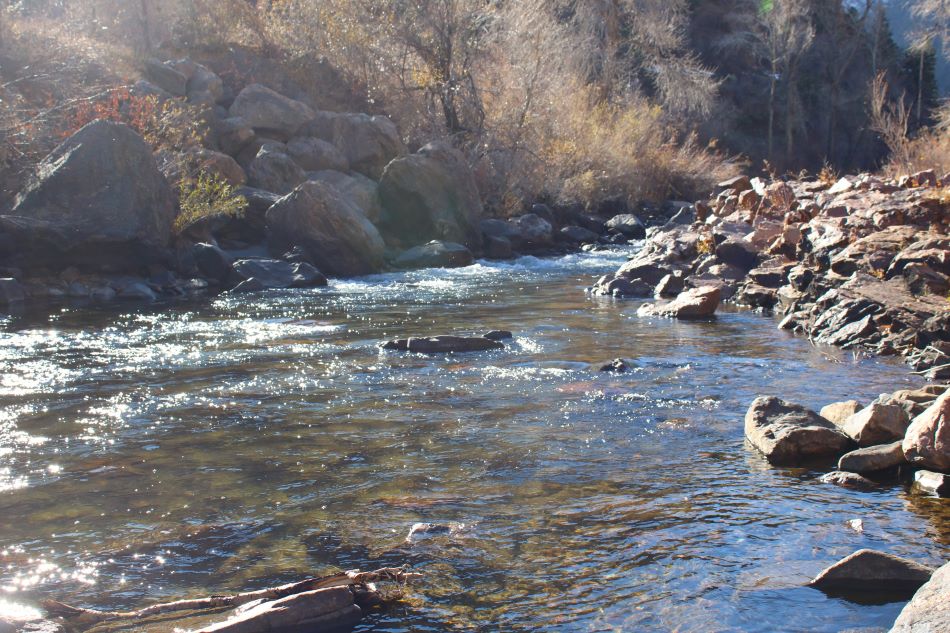
As mentioned, I celebrated yesterday’s birthday at Clear Creek. It was a good choice: lots of sunshine plus the peace of moving water. As we walked in search of a sunny place to picnic, we saw a man running behind his dog carrying a frisbee. I was disappointed that I didn’t have my camera ready to snap a pic. Well, a few minutes later, they ran past again and this time I was prepared. Such a happy doggie!

Then we found our spot in the sun.

After selecting flat-ish boulders near the water’s edge to sit on, Zippy and I ate lunch while watching leaves gently sway beneath the water’s surface and bubbles move along on top as they cast star-shaped shadows below. Despite people crossing on the nearby bridge, it felt like we had the creek to ourselves. Too soon, the sun dropped below the canyon cliff, and our sun-filled location was shady and cold. Time to head back home.

Though our outing was brief, it soothed my soul. I highly recommend sunshine and water for late November birthday celebrations.

Climate Movement Monday: turning the fossil fuel narrative on its head

Welcome back to Movement Mondays in which we discuss all things climate. Today I’m returning to Not Too Late: Changing the Climate Story from Despair to Possibility (edited by Rebecca Solnit & Thelma Young Lutunatabua) in order to offer my readers another lens to look at our climate reality while also imagining a better world.

At the start of the chapter “Different Ways of Measuring: On Renunciation and Abundance” (a conversation between Solnit and Lutunatabua), there’s this quote from Dr. Elizabeth Sawin:

“It is some very effective marketing that has convinced so many of us that getting off of fossil fuels is a sacrifice as opposed to a money-saving, peace-promoting, water-protecting, health-improving, technological leap forward.”

This jumped out at me because whenever I (foolishly) read comments about various climate actions (and it doesn’t matter if it’s folks politely demanding better of their government or Climate Defiance interrupting fossil fuel executives as they’re being celebrated), there are always people who ridicule the activists for imagining a world without fossil fuels. Those naysayers insist the many negative consequences  we’re experiencing in real-time are a given and that there’s no way forward that doesn’t include fossil fuels. A frequent commenter “gotcha” is “Did you drive your car to that action?” which reveals a complete lack of imagination in regards to our woefully inadequate public transportation, connected biking routes, etc.

Directly following Sawin’s quote, Solnit eloquently presents a different perspective that I’d love to copy and paste in reply to those cynical comments.

What if the climate crisis requires us to give up the things we don’t love and the things that makes us poorer, not richer? What if we have to give up the foul contamination around fossil-fuel extraction, the heavy metals people inhale when coal is burned around them, the oil refineries that contaminate the communities of color around them from the Gulf of Mexico to California? What if the people of Richmond in my own home region, the Bay Area, didn’t have emergency alerts where they were supposed to seal their homes because of a refinery leak? What if the incidence of asthma in kids went way down, and we stopped losing almost nine million people a year to pollution worldwide? What if that moment when the pandemic shut down so much fossil-fuel burning that people in parts of northern India saw the Himalayas for the first time in decades became permanent?   

I don’t know about you, but reading those words expanded my mind and heart, while reaffirming my belief in a better world. Kicking our fossil fuel addiction won’t set us back, but will instead liberate us to live healthier, happier lives.

If you’re interested, here’s an article about the visible Himalayas, including grateful social media posts:  Peaks of Himalayas visible from parts of India for first time in decades as pollution drops amid lockdown. And if these quotations resonated with you and you’re interested in reading more, Not Too Late is available through Haymarket Books and is currently offered at a discount.

Thank you for reading this far and please know I welcome all thoughts and comments below (spoiler: no, I did not drive my car to this post). Until next time, solidarity! ✊🏽

PSA: Novavax Covid Vaccine

But first, a word from our sponsor:

Adult and young blue Jay.    July 13, 2024.    Photo by Zippy.

Only kidding. Another Day On the Planet has no sponsor which is why you never see any strategically-placed cans of Pringles or bottles of Dos Equis on this blog. But if there was a sponsor, BIRDS would be a great choice!

I actually just wanted to offer information and resources on the updated Covid vaccines, specifically the Novavax vaccine. Why? Because I’m realizing not many people know about it, in large part because the government is pushing Pfizer and/or Moderna. (Despite Novavax being submitted for approval in July before the other vaccines, the FDA approved Novavax last, and only after much public pressure via emails and phone calls.)

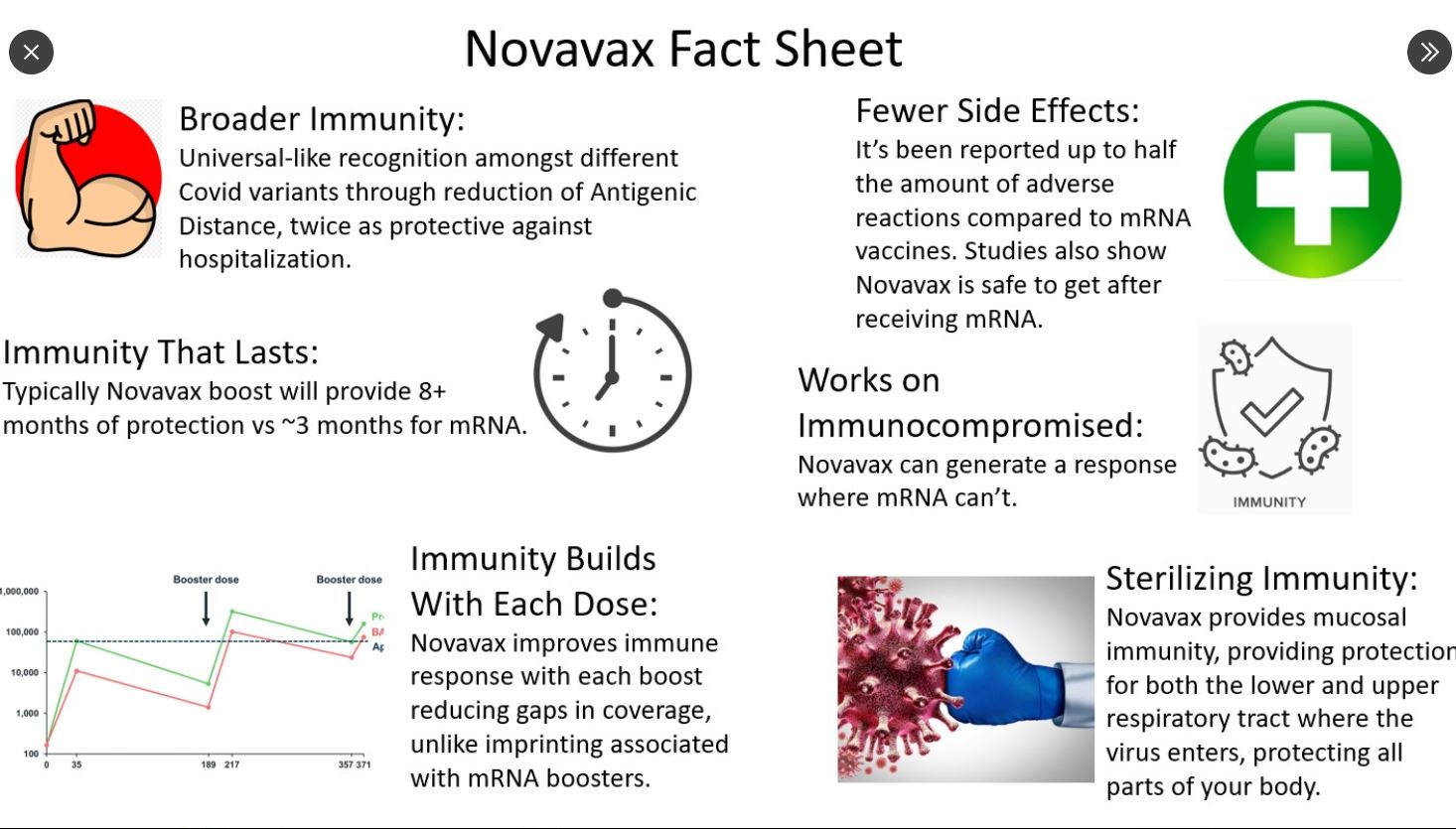
A recent study (on a previous strain) showed that while Moderna reduced the viral load by 100x, Novavax reduced the viral load by 600x.  Novavax also provides protection for both the upper and lower respiratory tracts. Many (including Zippy and me) also like Novavax because there are fewer side effects. The two times I’ve gotten Novavax were much easier than my previous Pfizer and Moderna shots. Here’s a handy graphic explaining the other benefits of Novavax.

I follow many Covid-aware people on Twitter such as virologists and immunocompromised people, and the consensus is that Novavax is the superior vaccine that offers the greatest protection. If you’re interested, the Novavax locator site will help you find the vaccine close to you.

NOTE: if you do opt for Novavax, be very clear about that when you go into the pharmacy because there are many anecdotal instances right now of people requesting Novavax and having the pharmacist instead offer Pfizer (because they see it as the default) or grabbing a syringe of Pfizer or Moderna out of habit. When I showed up for my appointment (in which I’d requested Novavax in the online form), I said I was there for Novavax (as opposed to “Covid vaccine”) to make sure we were all clear on my intentions from the outset. It’s also a very good idea to ask to see the label on the syringe just to be absolutely sure. The pharmacy I visited was very busy and those workers have LOTS on their minds, so it’s totally fine to clarify.

Please let me know if you have any other questions because I can probably point you to the answers.

Remember, the more we can do to curb the mutation and spread of the SARS-CoV-2 virus, the healthier and happier we will be. 🙂

Edited to add: BonaFide Masks is where I get KN-95 masks (ear-loops) which I mostly give out to others who want to mask but don’t want to wear a mask with head-straps. Use code BFM25 for 25% off your order through October 1. Free shipping!

Sunday Confessional: saying goodbye

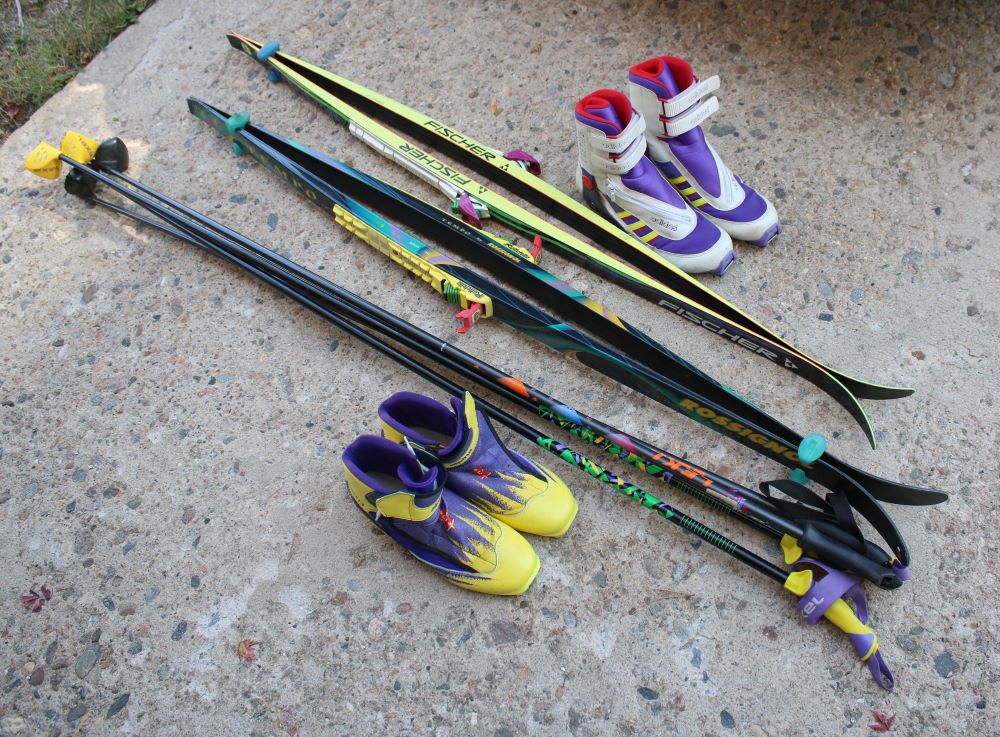
As mentioned before, I’m in the process of cutting ties with some of my stuff** which is bringing up all sorts of feelings. Some giveaways via a local Buy Nothing page are easier than others, such as saying goodbye to the boys’ old bunkbed, exercise balls, and a couple bulletin boards. Those transactions leave me feeling purely liberated. But the other day, I offered up our two sets of skate skis, boots, and poles. Zippy and I brought that ski equipment with us from Alaska 28 years ago and used it exactly one time since. Clearly, it was time to let go of those belongings. Zippy thought it was a waste of time to post such outdated gear, but multiple people expressed interest within an hour or two. And when it came time to set the skis, boots, and poles outside for pick-up, all sorts of emotions arose. With tears in my eyes, I photographed my yellow-sided skis alongside the purple-and-white boots that’d transported me into a new way of living in Anchorage.

I happened to look out the window when the person came to pick up the stuff and I couldn’t refrain from stepping outside. I don’t remember exactly what I called out to him, something to the effect of “Happy skiing!” and “I have so many memories of those skis!” I’m sure I sounded emotional because he quickly assured me they’d be put to good use. Tears in my eyes, I went back inside and closed the door.

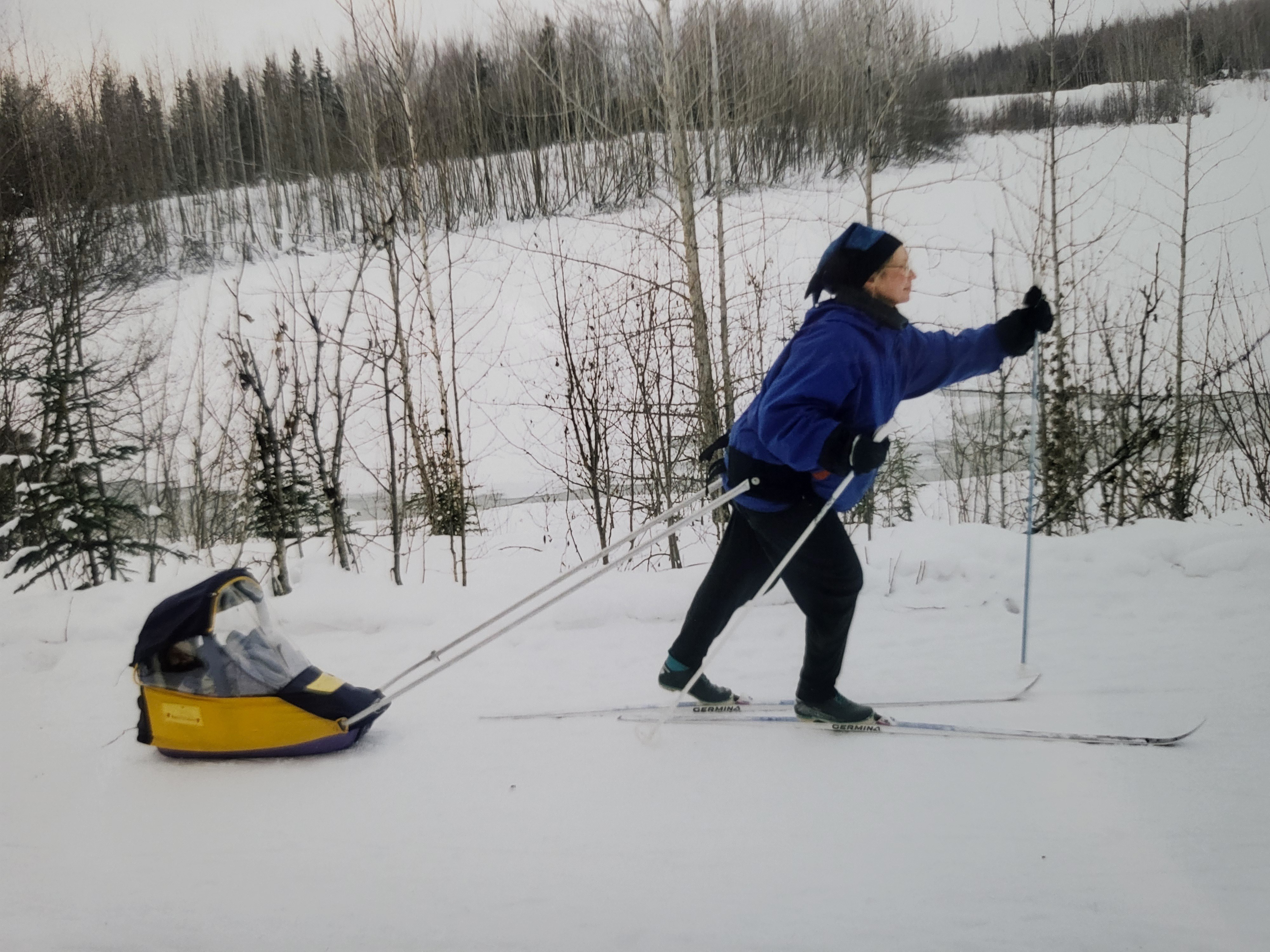
It wasn’t until later that I remembered experiencing those same emotions years ago. Not only that, I’d written an essay about it (see FREEDOM RIDE below). And when I looked up the file today, I was reminded that a parenting magazine had expressed interest in publishing the essay. Unfortunately, they ultimately passed, but the good news is there were photos in the file. Because I’d mostly skied alone, there were no photos of me in action, and I’d given the magazine pictures of a friend with her son.

This photo isn’t a perfect representation of my experience because she’s skiing on longer, diagonal skis rather than my short skate skis. Also, the pulk is a different color. But in the absence of authentic images from my days on the groomed trails (and you can bet I regret that deeply), this gives you a good idea of the set-up.

So, here is that essay. Note: The original version included my sons’ real names, but I’ve switched them to their “blog identities.”

FREEDOM RIDE

I recently said good-bye to a piece of my son’s childhood and symbol of my early years as a mother: I sold my ski pulk.

Wildebeest was born in Alaska and his arrival highlighted the necessity of getting outside during the long, dark winters. Every Alaskan knows that a daily dose of the outdoors prevents the sluggishness and depression of sun-deficient winters, but this tactic is especially crucial when sharing a home with a little person. Cabin fever is not some scenario hallucinated by Jack London; it manifested itself in a creeping inertia that left me on the couch in a stained robe with an unwashed face at four in the afternoon. For the record, the blahs never overcame me to the point I neglected brushing my teeth. However, those blahs did foster an environment in which my energetic son began tapping at everything with a meat tenderizer. When that everything included me, I hauled myself upright and bought a ski pulk.

The pulk was a plastic sled converted into what looked like a green and purple space capsule. Completely enclosed in nylon and clear plastic, it had a rollbar, three-point harness, and backrest. Wildebeest could recline or sit and look through the windows at the scenery and occasional wildlife along the cross-country ski trail.

Now the following may sound like a pitch from an infomercial, but it’s true: buying the pulk transformed my life. My days were no longer defined by the tedium of scattered toys and messy diapers but instead included exercise, clean air and, if we were lucky, sunshine.  As long as temperatures weren’t too frigid, I strapped my well-bundled son inside, hooked the long aluminum poles to the sled, and fastened the attached belt around my waist. I was often reluctant to leave the couch’s familiar sag and warmth, but no matter the depth of my gloom, just a few lungs-full of the sharp winter air was enough to make me grateful to be outside.

I didn’t feel gratitude that first day, however. In my excitement to go on our maiden voyage, I hurriedly hooked up the pulk and took off skiing. Within minutes I was exhausted; it felt as if I were dragging a set of bleachers behind me. I turned around to assess the situation and realized I was pulling the sled backwards. My cheeks, already warm from exertion, flushed with embarrassment as I unhooked and got on the right end of the pulk.

From that moment forward, my outings were filled with the smooth side-to-side glides of skate skiing. On my ultra-short skis, I skated along the groomed trails with a fluidity that felt like poetry in motion after being cooped up in a house filled with stale air and dark corners. I became so comfortable pulling the pulk that the only difference between skiing with and without it was the added weight.

But I was always aware of my cargo. While the distance separating Wildebeest from me created a sense of solitude, he was still close enough to share the experience. Sometimes his loud exclamation at a passing image caught my attention and I’d look back to smile and wave. We shared laughs at the sight of kids tossing snowballs or a dog running loose. Mostly, though, he was my silent co-pilot, watching and processing information from his sliding cocoon. I’d point out a squawking raven on an overhanging limb, only to turn and discover him sleeping.

Fellow skiers reminded me of the unique aspect Wildebeest and the pulk brought to my skiing. Most were amused or expressed admiration for my strength, and those exchanges gave me a boost when my energy was fading. But when the super-fast skiers swished by with obvious pity for my burden, averting their gaze as if my pace was contagious, I longed to chase them down and tell them to stuff their sympathy since I was moving pretty damn fast considering the extra thirty-five pounds I was hauling, thank you very much.

Skiers weren’t the only ones using the trails, though. Each day I scanned for moose that sometimes become agitated and trample people, and often saw them bedded down beneath trees. Once I spotted a calf just off the trail to my right. My heart hammered as I looked to the left, praying its mother wasn’t there to put Wildebeest and me in the middle. I poled a rapid getaway on a rush of adrenaline, and never did see the cow.

Another time a moose foraging alongside the trail spun around and stepped in our direction. Even though it was a lone male, I chose to turn back instead of possibly startling him into defensive action. In my hurry to reverse direction, I flipped Wildebeest and the pulk onto its side. Throughout my panicked efforts to right the sled, I was hyper-aware of the moose’s movement. At last, I sped away. But when I glanced back, it was clear the moose hadn’t been charging closer and was merely browsing tree to tree. Still, I kept up my frantic pace until it felt safe to stop, at which point all my energy went into fighting the urge to vomit. My little guy babbled and gestured about our exciting wipeout, oblivious to my moose anxiety and the escape routes I routinely plotted along the trails.

Several years have passed since that encounter, and our family has grown by another son. We left Alaska and now live in suburban Colorado. Because my heart prevailed over my head, we brought the pulk with us. Anchorage has miles of groomed trails within minutes of our former residence but the weather at our new home is fickle; snow doesn’t stick around long enough to warrant grooming. Lack of childcare for my elder son and the long drives to ski areas prevented me from sharing the pulk experience with my younger child, Zebu.

The pulk collected dust for a year. And then I sold it.

As I closed the door behind the family who bought the sled, I cried. I wept for the cold, crisp air and the exhilaration of swooping down a hill, for the personal strength I’d discovered, and the adventures that were forever in Wildebeest’s and my past. But mostly I wept for Zebu and how he’d never know the thrill of gliding along the trail, searching out moose amidst clusters of birch trees. As my husband hugged me, I wondered if my tears were silly.

“No,” he replied. “That was your freedom ride.”

He was right: the pulk had liberated me from the mundane and sometimes claustrophobic life of an Alaskan stay-at-home mom and, in the process, I’d transformed into a strong, confident, and emotionally stable mama. But we’d moved on, and I had to accept those times were behind me. I had to find new ways to stay healthy while mothering two young children.

So Zebu and I found other winter-time activities to fill the void. Granted, step aerobics in front of a television don’t hold the same magic as skiing alongside the Cook Inlet with the Alaska Mountain Range framing the background, but this is something I do with my youngest son. He smiles up at me, marching in place while imitating my arm movements. We count out steps, his numbers often tripping up my own, and then afterward sit side-by-side on the floor, stretching our muscles as the family dogs sniff and lick our faces.

Sometimes I suffer pangs of regret that ours is a tamer experience than his brother and I shared. But then I remind myself that mom and son aerobics are completely valid, even if there is no adrenaline rush. Zebu and I are creating our memories, and the only significant difference is I traded moose for dogs. And polar fleece for spandex.
_____________________

**do yourself a favor and have some laughs as the brilliant George Carlin discusses “Stuff”
They say it’s his birthday

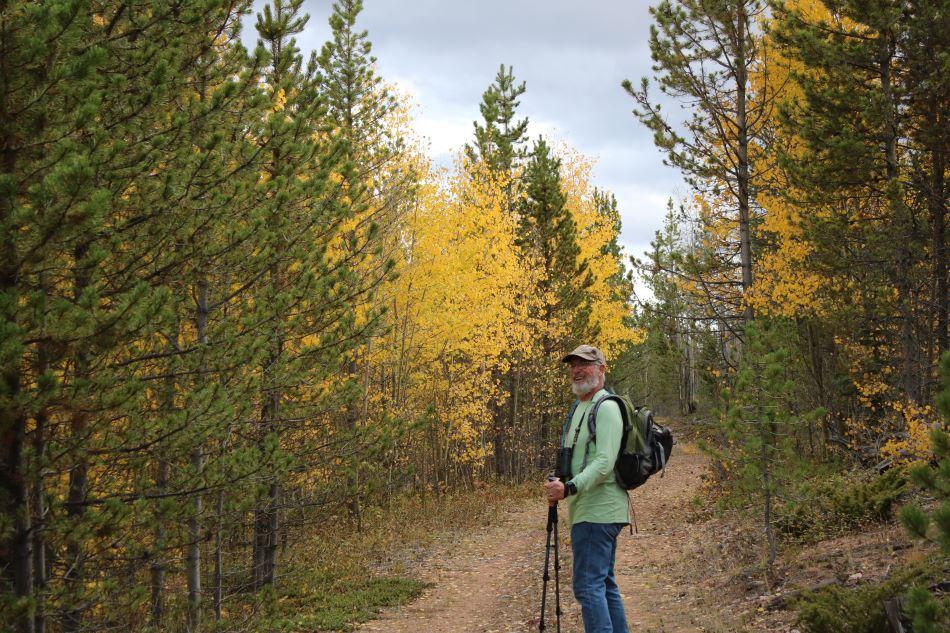
Today is Zippy’s birthday and he celebrated by going on a 30-mile bike ride. Another thing he likes to do? Hike. Here he is hiking in Pike National Forest last October. See that happy, relaxed smile?

Well, here’s the cut paper card I made for him this year in honor of those hikes and our “forest bathing.”
May we share many more moments of forest-induced peace in the coming year. Happy birthday, Zippy. ❤️

Thankful Thursday: the common

Life feels difficult the last few days–personally, professionally, and globally–and now more than ever, I’m grateful for nature’s gifts. Today I’ve taken solace in the presence of many magpies (my next door neighbor just confirmed her dog–again— spread kibble in their backyard) as they fly to-and-fro, pause to snack on Rainbow’s offerings, and bathe in my bird bath.

Magpies are common around here yet they never fail to lift my spirits. Equally common are the bright, cheery sunflowers smiling in my yard and throughout the neighborhood. These, too, always bring a smile. And when that sunflower sighting includes a Common Checkered-Skipper?

Backyard. August 12, 2024

Well, then my gratitude knows no bounds. Even when I gaze upon the image nearly a month later, it’s like bottled Balm for the Soul.

When the big picture is too much

Nature is always, always my refuge, and never more than during hard times. When the world feels too cruel and feelings of overwhelm engulf me, I know to put my focus on the little things. Yesterday I grounded myself by watching these Japanese Beetles on my in-laws’ raspberry plant.

Yes, I know Japanese Beetles are very destructive because they destroy leaves and crops. However, it’s hard to hold a grudge while belonging to the most destructive species on the planet. Humans do a lot more damage than these stunning, iridescent beetles, and yesterday I was grateful to gaze upon their splendor.

This morning as Zippy and I walked Emma around the neighborhood, I paused at a clump of Russian Sage to check out the bee situation. As expected, there were honey bees, but I was especially tickled to notice three grasshoppers perched in various places throughout.

They all seemed to be just chillin’ amongst the purple blooms. I’m in awe of grasshoppers’ intricate bodies and can’t stop looking at this image. How do all those pieces fit together? What percentage of the total body mass are those two enormous eyes? And do their joints ever get tired from all that hopping?

Once again, nature for the win.

Climate Movement Mondays: public utility commissions (PUCs)

Welcome back to another Movement Monday. I hadn’t planned on posting anything today (kinda low energy as I hunker down inside my home to avoid the bad air from the wildfires in Canada), but then came across a very cool resource on the Earthjustice site.

Here’s the page where you can access all the info about Public Utility Commissions (PUCs), but I’ll highlight a bit of the introduction:

In a conference room somewhere in your state, a small, largely unseen group of people is casting votes that could make or break the clean energy transition.

You’ve probably never heard their names, and you might not even know the name of the agency they’re running: the state public utility commission (PUC). Fossil fuel interests would love to keep it that way.

PUCs regulate utilities. (In some states, they have other names, like public service commissions, or PSCs.) They determine the cost of your gas and electricity bills and where your power comes from, whether it’s fossil fuels, hydroelectricity, or renewables like wind and solar.

Grief is the opposite of indifference

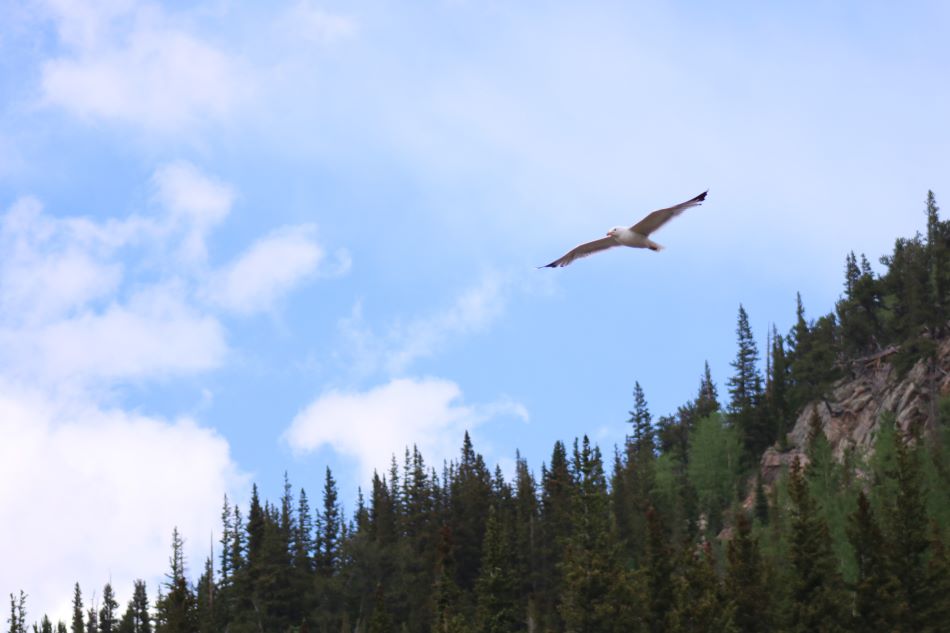
Gull gliding above Jefferson Lake, July 1, 2024

Becoming aware of grief gives us more choices about how to respond to grief and opens up possibilities to approach grief not only with compassion for self and others, but also with joy. Joy is not the opposite of grief. Grief is the opposite of indifference. Grief is an evolutionary indicator of love — the kind of great love that guides revolutionaries.
~ Malkia Devich-Cyril 

Note: I found that quote in Let This Radicalize You: Organizing and the Revolution of Reciprocal Care by Kelly Hayes & Mariame Kaba (it comes from this essay) and wanted to share it in response to my grief on many fronts: genocide in Gaza, climate collapse, political cowardice, abandonment during a global pandemic, etc. It also feels like a worthy companion to the excerpt shared in Rosaliene Bacchus’s post: Sighting the Storm which resonated with me.

On this Independence Day

On this Independence Day, I suggest we in the United States think about liberating ourselves from one of our most harmful and destructive practices:

MONEY AND WEAPONS TO ISRAEL
“Israel has been the largest cumulative recipient of U.S. foreign aid since its founding, receiving about $310 billion (adjusted for inflation) in total economic and military assistance.” (source). Since October 7, 2023, the U.S. has sent at least 14,000 of its 2,000-pound bombs to Israel for a grand total of 28 million pounds of bombs raining down on Palestinians. And that only accounts for the BIG bombs. Who knows how many more pounds of death have dropped on Gaza.

Image by segobou from Pixabay

On this Independence Day, the thought utmost in my mind is declaring independence from genocide.  No one is free when others are oppressed.

From the river to the sea, Palestine will be free.

Twofer Tuesday: house wren edition

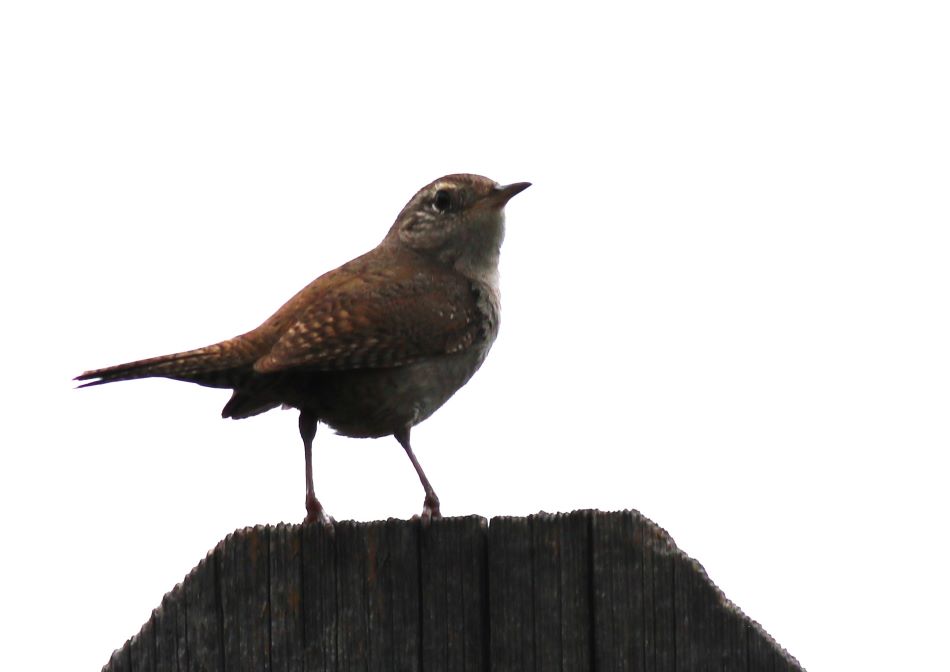
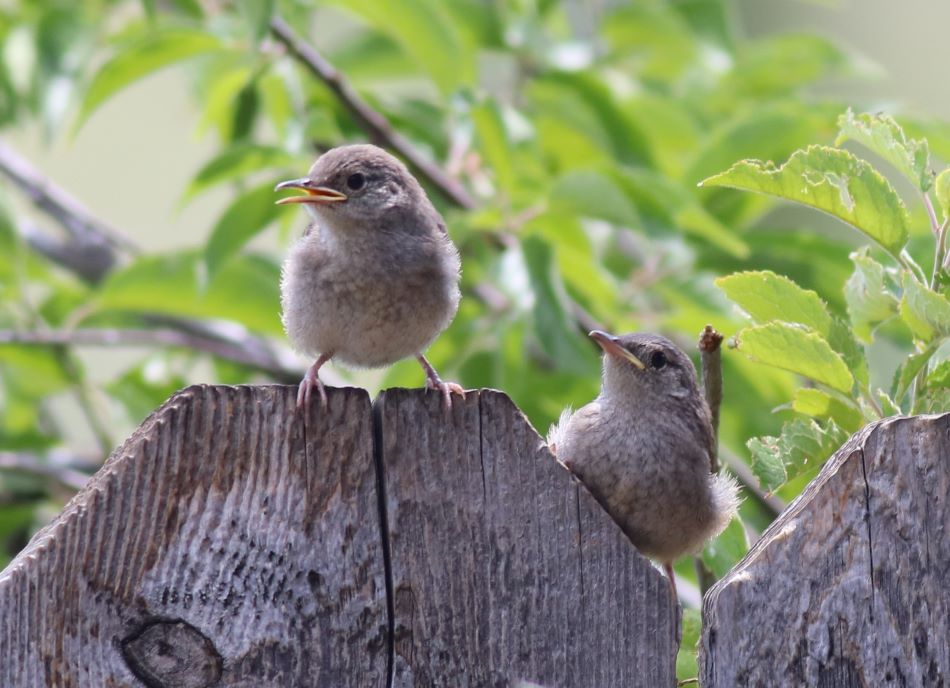
Earlier, I was feeling loads of anxiety about the state of the world and planet, and so wisely went outside to sit below the deck for a hit of nature. The lamb’s ear are abuzz with bees and a painted lady butterfly landed on the plant closest to me. A swallowtail butterfly floated past. Various birds sang and then went silent for a while. As I petted Emma who was curled up on the bench next to me, a house wren began singing again. I aimed my camera into the light to capture the songster.

Didn’t catch the wren mid-note, but they were singing their little heart out.

And then I became aware of another wren, this one making the churring sound. That bird was a little farther down the fence.

I took a few more photos, grinning as the first wren continued the melodious song while this one stuck to its churring call. I lowered the camera then squinted, wondering if I was seeing things. No, I wasn’t imagining it!Two wrens, side-by-side. Two fluffy wrens. The baby wrens that’d been very vocal on Saturday as their parents worked tirelessly to feed them. The baby wrens that’d left the nest on Sunday, leaving Zippy and me to wonder where they’d gone. Just minutes before they showed up on the fence, I’d asked him whether young wrens stick around or head to a whole new area on their own. Zippy said he didn’t know.

But now we do know: they stick around!For a while, at least. To learn their calls and songs, and to practice flying.


Sunday Confessional: the mundane soothes me

Zippy and I’ve lived in the same home for 28 years, the longest either of us has stayed in one place. We came here with two young children, two large dogs, and two cats. We needed/wanted space. Our sons now live their lives elsewhere and the household is just us plus one small dog and two cats. We no longer need all this house or the big yard.

I dream of living in a smaller dwelling. The problem is, I don’t know where I want to go. Should we stay in Colorado? Should we venture somewhere new? Can I find a location that doesn’t have extreme temperatures or mosquitoes? I’ve been pondering this a while, but those questions still bounce around my head unanswered. So, for the time being, we’re still here.

But! Last Sunday I set my eyes on the future and began taking steps. I started divesting of stuff, specifically Zippy’s stuff. Why his? Because I knew the keep-or-toss decisions would be easier. Our basement storage room contained about ten boxes he’d put down there when he lost his engineering job nearly nine years ago. The boxes were filled with technical books and files, things he’d used over the course of his career and planned to use again. Except he was never able to get another job and, as the years went by, the info contained in those boxes was no longer current. Keep-or-toss decisions would be a whiz!

As I shuttled boxes up to him, one at a time, Zippy decided what he wanted to keep and what could go. As he went through the minutiae, I took the discarded files and books to the garage where I began filling bins and then boxes with paper to be recycled. The files were easy to handle, the books a little harder. I experimented with an xacto knife and cut pages from book spines before realizing I preferred tearing out the pages. Zippy thought that approach was tedious and way too time-consuming, but I loved it. After I got into a rhythm, I felt my mind empty. My thoughts were no longer on Gaza or climate collapse or the pandemic or the peeling paint in the bathroom or the bindweed strangling my yarrow plants or the health issues facing various loved ones or the fact that I still hadn’t found anyone to deliver mulch for the backyard. All my focus was on reaching down with my right hand to gather a number of pages–not too many and not too few–and then tearing them along the spine in one smooth motion before dropping the pages into a neat pile in the box next to me and then reaching for more.

Photo by cottonbro studio at pexels.com (A Person Wearing White Long Sleeves Tearing the Pages of a Book while Soaking in the Lake)

I destroyed books and workbooks for most of the afternoon and not only felt a deep sense of peace, but also accomplishment. I was–FINALLY–kinda, sorta taking steps toward a move.

The next day, we drove our Subaru filled with all those bins and boxes of paper to the city recycling center where we unloaded my hours of labor. While I was dismayed to learn our paper had to go into the same roll-off that contained cereal boxes and egg cartons (degrading the paper quality), the sense of accomplishment rose up in me again. It wasn’t only the car that was lighter as we drove away.

We didn’t get through all the boxes last week and today we finished up. As Zippy sorted through his belongings, keeping some things and discarding others,  I returned to my post in the garage and began tearing pages from books. The same calm returned with each successful rrrriip.

I realize not everyone will resonate with this approach to mental health, but you might be surprised. Never in a million years thought these words would come from me but
I absolutely, with no reservations, recommend tearing pages from books!

Climate Movement Monday: human composting

Welcome back to Movement Mondays in which we discuss all things climate. Today also happens to be Earth Day which, to be honest, I’d like to ignore rather than get caught up in overly-optimistic and/or downright dishonest rhetoric (I’m looking at you, Biden, as you supply tens of thousands of tons of explosives so that Israel may continue blowing up Palestinians, their residences, infrastructure, and farmland). Those in power are not honoring the earth and its inhabitants, and they should all keep “Earth Day” out of their mouths. Okay, Tracy. *deep breaths*

Instead, let’s talk about human composting, otherwise known as Natural Organic Reduction! I’m interested in this topic for two reasons: (1) I plan to be composted upon my death and (2) because my work-in-progress is a middle grade novel about a girl and her family’s funeral home that pivots from conventional death care (embalming, burial in ornate coffins, flame cremation) to green burial and natural organic reduction. Fortunately for me, in March of 2023, I was able to (virtually) attend the very first human composting conference ever (organized by Seth Viddal of The Natural Funeral)! I learned so much and could talk your ear off about all this, but today will only provide a brief overview along with some resources.

Recompose vessel

In early 2021, Recompose became the first human-composting funeral home in the U.S. Katrina Spade is the founder of Recompose, and the person most responsible for spearheading the human composting  movement. Thanks to her efforts and those of advocates around the country, human composting is now legal not only in Washington, but also Colorado, Oregon, Vermont, California, New York, Nevada, and Arizona. Legislation has been introduced in another sixteen states (scroll down for list/links).

Why is human composting a climate matter? For every person who chooses Recompose over conventional burial or cremation, one metric ton of carbon dioxide is prevented from entering the atmosphere. In addition, our approach to human composting requires 1/8 the energy of conventional burial or cremation. Recompose allows you to choose an end-of-life option that strengthens the environment rather than depleting it. (This info came from Recompose, but the same applies for human composting via any funeral home’s process.)

From that same page: Current funerary practices are environmentally problematic. Each year, 2.7 million people die in the U.S., and most are buried in a conventional cemetery or cremated. Cremation burns fossil fuels and emits carbon dioxide and particulates into the atmosphere. Conventional burial consumes valuable urban land, pollutes the soil, and contributes to climate change through resource-intensive manufacture and transport of caskets, headstones, and grave liners. The overall environmental impact of conventional burial and cremation is about the same.

Not only does human composting avoid those environmental costs, the process produces soil! Why does that matter? Again, from Recompose: The breakdown of organic matter is an essential component in the cycle that allows the death of one organism to nurture the life of another. Soil is the foundation of a healthy ecosystem. It filters water, provides nutrients to plants, sequesters carbon, and helps regulate global temperature.

Human composting produces about a truck-bed full of soil. Families of the deceased are given the option of taking some or all of that soil OR donating it to land conservation and restoration sites. I’m not sure about other states, but know that here in Colorado the law prohibits the sale of the soil or using it on plants grown for food. The Colorado Burial Preserve in Florence, CO, accepts human composting soil for land restoration (in addition to being a green burial site).

I learned during the conference that many who choose human composting don’t make that choice based on climate concerns, but because it just feels right to be returned to the earth after death. One of the other human composting vendors said that people want more choice for their deaths and that natural organic reduction appeals to them on a “freedom” level. A while back, I wrote about death and how my decision to be composted has given me incredible peace of mind. Everyone should have the freedom to make a death-care choice that speaks to their values. There’s much more to be said about the grief process and how natural organic reduction allows for participation by family and friends, along with a timeline that supports gentle grieving as opposed to an abrupt “that’s-that” burial practice, but I’ll save that conversation for another post.

In the meanwhile, I’d like to offer resources:

  • Go here to learn more about pending legislation and how you can get involved in bringing human composting to your state
  • Visit “The Order of the Good Death” for lots of information about death care, including Calls to Action in support of a “good death” (Note: Founder Caitlin Doughty is an incredibly smart, funny, and compelling speaker/writer on this issue)

I’ll stop here, but PLEASE don’t hesitate to ask questions! As stated, I love talking about this issue and if I don’t have answers, I can point you in the right direction. It’s an exciting development in death care and I hope by sharing this information, some of you might experience a ping of recognition (as in, that’s what I want for me!)

Thank you for reading. Solidarity! ✊🏽

Climate Movement Monday: COP28

Welcome back to Movement Mondays in which we discuss all things climate. In these posts, I share information and typically offer an action you can take on behalf of people and planet, with a focus on frontline communities that are enduring the worst effects of the climate crisis. Today, I’m not offering an action but am sharing information that’s just as much for me as my readers. The topic is “COP28” which I’ve been avoiding learning about because the particulars make my head want to explode. We’ll get into those specifics, but first: what is COP28?

The United Nations Climate Change Conferences are the world’s highest decision-making body on climate issues and one of the largest international meetings in the world. The 28th United Nations Climate Change Conference, or Conference of the Parties (COP28) is happening right now, hosted by be the UAE (United Arab Emirates).

Okay, I mentioned avoiding this whole topic because it stressed/angered me. Why? Well, as climate writer Emily Atkin points out [COP28 is ] “being run by a literal fossil fuel baron: Sultan Ahmed Al Jaber, the head of the state-run Abu Dhabi National Oil Company (Adnoc), which also happens to have one of the biggest oil and gas expansion plans in the world.”

Atkin further writes: “. . . Al Jaber’s self-proclaimed “game-changing plan” to achieve progress at COP28 is to give oil and gas companies more influence over the climate change summit, despite warnings from the U.N.’s former climate chief that the approach is “dangerous” and “a direct threat to the survival of vulnerable nations.”

Atkin shares other more damning conflicts of interest and I encourage you to read the entire piece from Atkin: COP28 sucks. Pay attention anyway. The fossil fuel interests attempting to corrupt the high-stakes summit would love nothing more than for us to look away.

Why should we pay attention? Because whenever we avert our gaze from the climate crisis, it most dramatically affects those in the Global South. People living in that part of the world have been facing the effects of climate change for decades already and they cannot afford to look away –think low-lying islands and rising sea levels– and their very survival depends on what’s decided at COP28. As Atkin writes: “For the nations most threatened by that future, negotiations over how to structure a Loss and Damage fund to compensate for damages, as well as negotiations over how to mend previously broken climate finance pledges by the Global North, are too consequential to be ignored.” Go here for the opening plenary statement delivered by the Indigenous Peoples’ Caucus.

International Indigenous Peoples Forum on Climate Change Opening Elder Ceremony. Photo by Willi White for NDN Collective.

It might not feel meaningful to learn about COP28 via Atkin’s piece or this by Bill McKibben, but knowledge is power. Even if there’s no direct action connected to our reading, by educating ourselves we’re forging a connection with the planet’s most vulnerable populations. We’re acknowledging their worth and implying our solidarity with their struggles.

Thank you for being here. I appreciate and welcome all thoughts, so please share in the comments. Until then, solidarity! ✊🏽

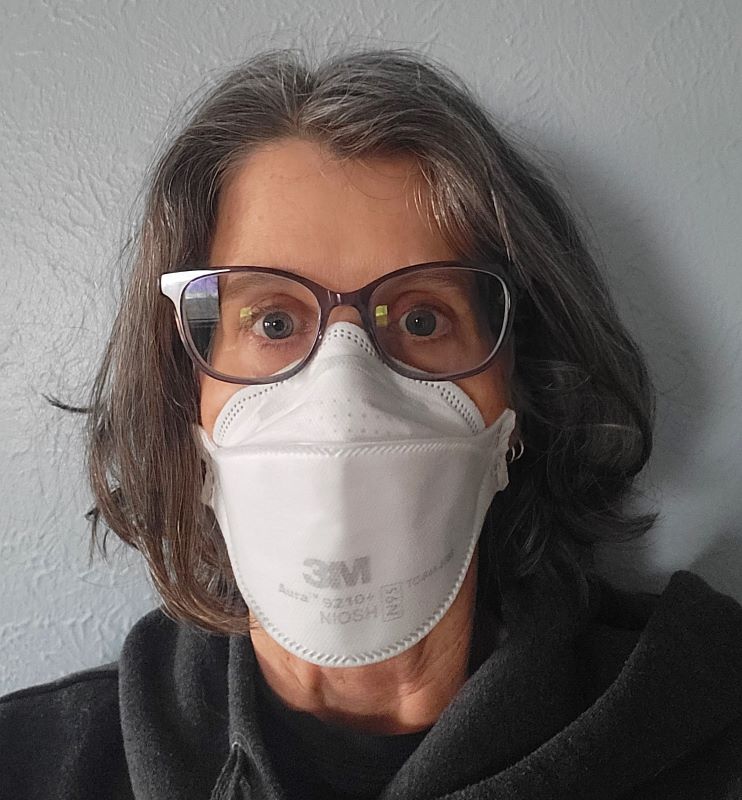
Why I continue to mask

I do not mask because I’m afraid or paranoid. I continue to mask to protect myself, my household, and my community from a mass disabling event. I mask in solidarity with the most vulnerable, the disabled and immunocompromised, the very young and very old, the millions who already have Long Covid. My mask is a raised middle finger to the capitalist system that happily grinds people down to nothing because it sees each person as replaceable. My mask is a signal to the powerful elites that I’m not buying what they’re selling, which is “it’s okay to keep getting infected with Covid-19.”

Guess what? It’s NOT okay to keep getting infected.  “… findings suggest that SARS-CoV-2 infection damages the CD8+ T cell response, an effect akin to that observed in earlier studies showing long-term damage to the immune system after infection with viruses such as hepatitis C or HIV.”

In the early 90s, I helplessly watched as my childhood friend’s body was destroyed by HIV that became full-blown AIDS. Scott was able to officiate over my wedding ceremony, but died four months later, less than two weeks before his 30th birthday. No one should have to experience that agony.

So, how is our government able to peddle the message that it’s okay to keep getting infected? For one, they’ve stopped collecting data. This makes it easier to gaslight us into thinking everything is “back to normal.” Fortunately, a group called the People’s CDC, “a coalition of public health practitioners, scientists, healthcare workers, educators, advocates and people from all walks of life, is working to reduce the harmful impacts of COVID-19.” You can access lots of information and resources HERE.

We need the People’s CDC because the CDC does not prioritize public health and safety. When it became clear that Covid-19 is an airborne virus (picture how smoke lingers in the air after a smoker’s exhale), the logical outcome would’ve been for our government to quickly invest in air filtration systems, right? Instead, people were told their children needed to return to classrooms where there’d been no upgrades of HVAC systems. It wasn’t until the day after the U.S. Department of Health and Human Services ended the federal Covid-19 health emergency on May 11, 2023, that the Centers for Disease Control (CDC) upgraded their site to include information on the importance of air filtration. 

You can access the full page HERE.

They did not include the above info on the site when the emergency order was in place because the government would’ve been expected to invest in filtration systems. Instead, they waited until after the emergency order was ended to include the information. Why? To release them from liability.

So, why am I writing about this today? Because on Friday, three of the four households Zippy and I delivered food to were sick (households that have all experienced previous Covid infections). And because this past weekend my elderly mother died while Covid-positive. She had suffered health issues over the last several months and was in a rehab facility to receive therapy. On Thursday, she was admitted to a hospital with pneumonia and on Friday was diagnosed with Covid-19. She died early Saturday morning. Because of the “let ‘er rip” attitude, I don’t even know where she became infected. The rehab facility? The hospital? To be clear, I’m not saying Covid killed her. What I am saying is that it’s appalling we’ve given up on masking and testing in hospitals (!) and facilities filled with elderly people who are incredibly vulnerable to illness. It’s equally appalling that we haven’t made provisions for the young people in schools who are now being infected over and over again, doing damage to their immune systems in ways that may not show up until years later.

In the meanwhile,  the U.S. is one of the wealthiest nations in the world and yet our health system ranks last among eleven high-income nations. They refuse to give us universal healthcare. Our so-called representatives have access to the best medical support and treatments while the rest of us are forced to spend hours on the phone arguing with our health insurance companies that charge us high premiums only to constantly deny us care. Do you really believe this system would take care of you if you develop Long Covid? Remember, the U.S. can’t afford universal healthcare, but we can afford to spend billions of dollars to kill people in other countries!

Again, I do not mask out of fear.