nature
Friday Haiku
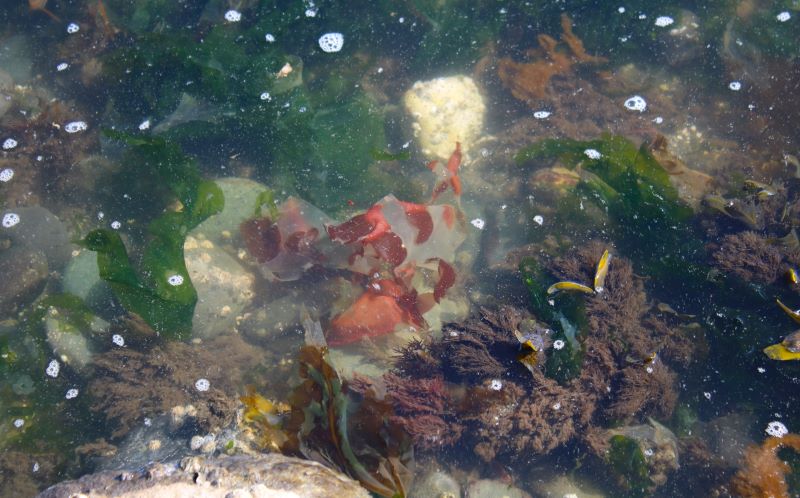
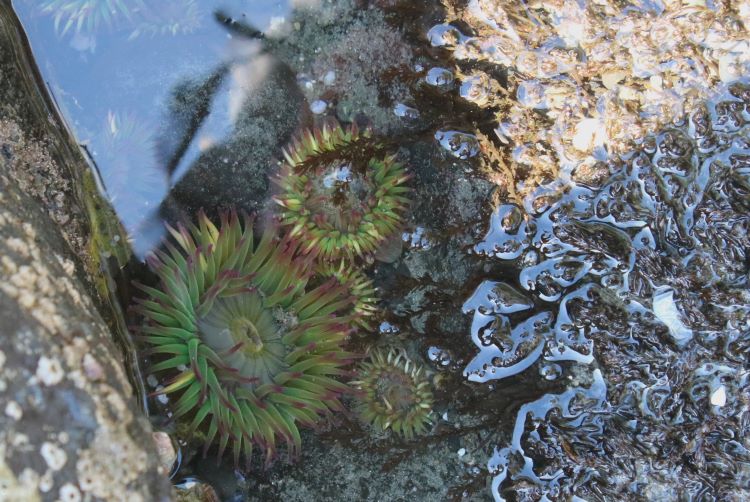
incoming tide
undulating seaweed
aquatic still life
Wordless Wednesday: Brant edition

Thankful Thursday: Olympic National Park
It’s almost two weeks since we reached the Olympic Peninsula and because we’ve been busy with all sorts of tasks related to moving and relocation, we hadn’t yet visited the Olympic National Park. This morning, Zippy suggested a walk in the sunshine (!) to the Visitor’s Center to check it out. Kind of a recon mission. Well, before reaching the Visitor’s Center, we came upon a trail just off the street.
We stepped into the forest.
Oh my goodness. It was immediately like being in a whole different world. The sounds and smells of traffic disappeared, along with the stress I carried. Below you can see my spouse and our dog Emma, seemingly tiny beings against the backdrop of magnificent trees.
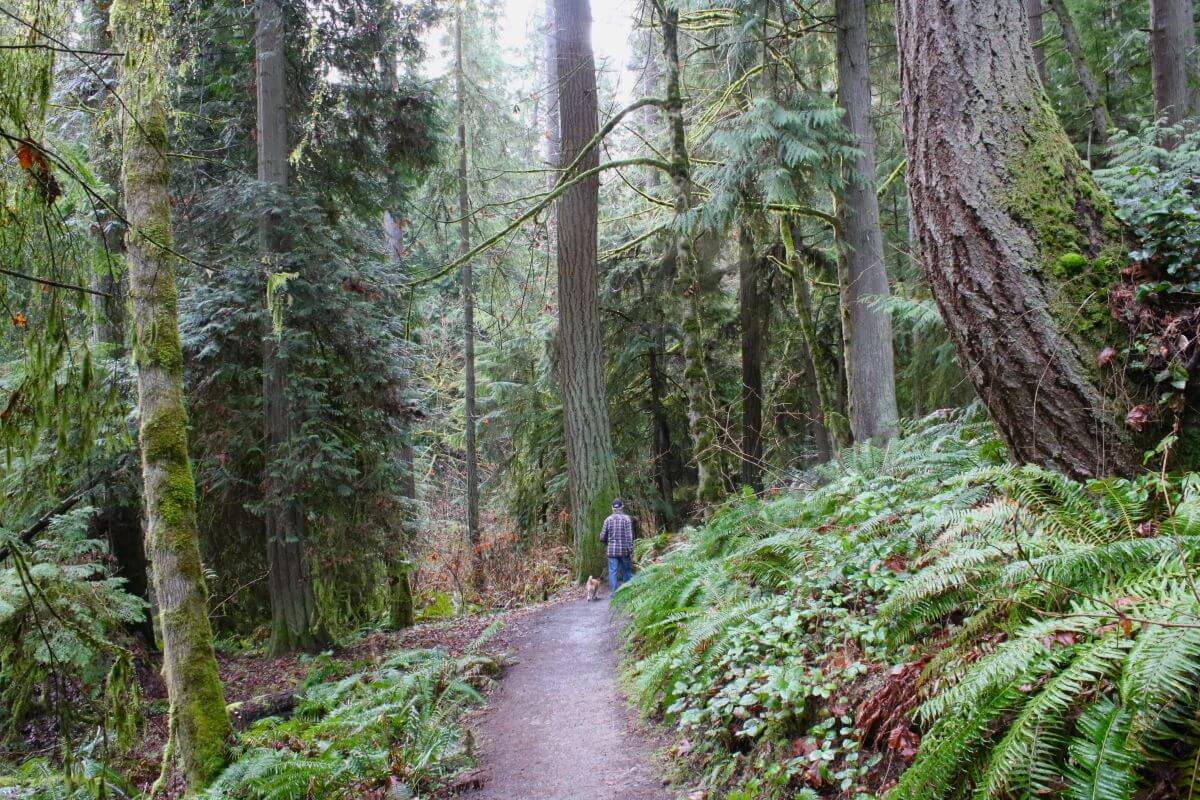

I’ve already developed a bit of a crick in my neck/shoulders from constantly tilting my head back in an attempt to see the tops of trees here and I’m not sure I’ll ever get tired of admiring moss-covered trunks and limbs.

Here’s Zippy working on his own neck crick while checking out these two trees growing from a cedar stump.
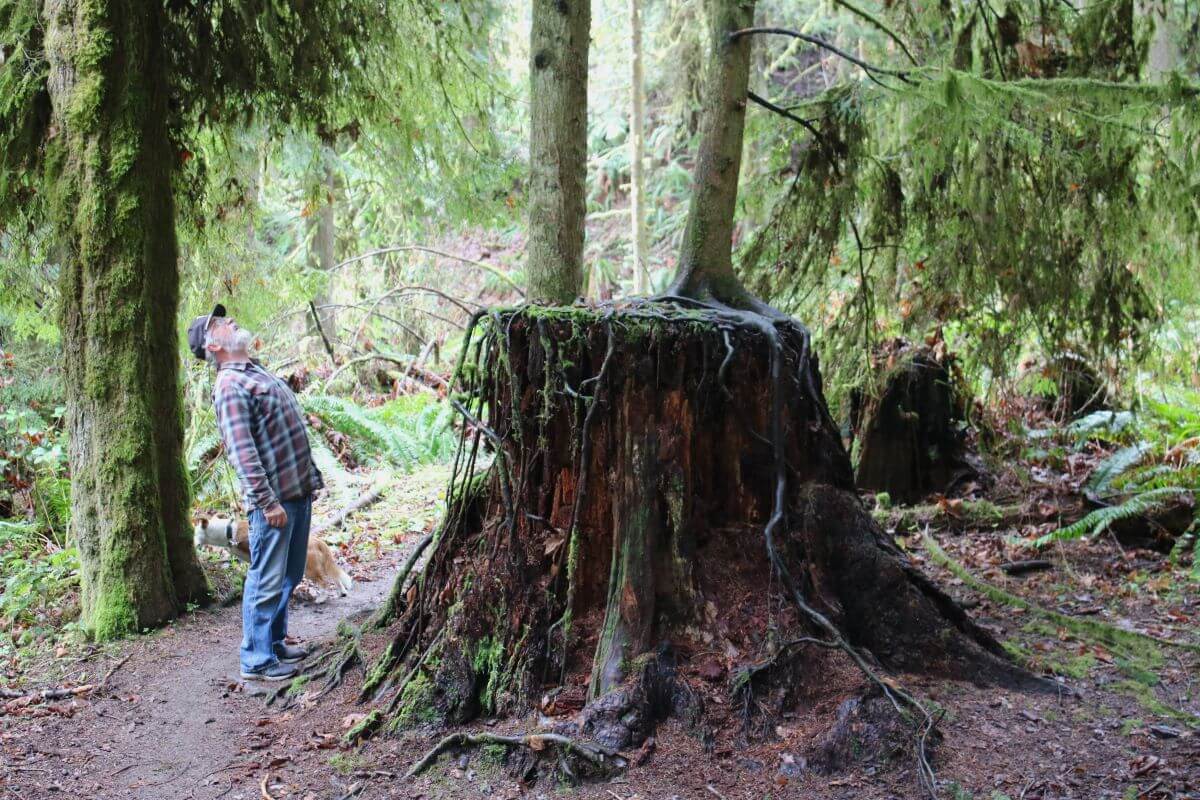
We had plans to hike another few miles but when the trail got so slick it took down Zippy, we decided to turn around for the day.

Today I give thanks for the Olympic National Park, its proximity to our rental home, and the rejuvenating properties of time spent in the natural world.
I receive these gifts.
Wordful Wednesday: travel edition
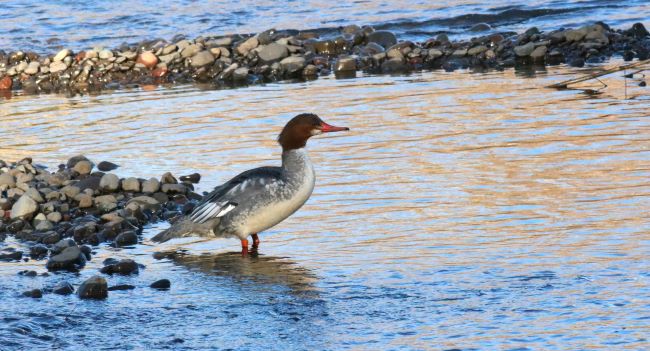
Common Merganser in Umatilla River. Echo, Oregon. March 7, 2025
On our drive from Colorado to Washington, our second night’s stay was at a campground in Echo, Oregon. We arrived in the dark so it wasn’t until morning that I realized we were next to the Umatilla River. There was lots of bird song and movement, and I first grabbed the binoculars then the camera. The above photo was the first I took. I also saw a Belted Kingfisher, Greater Yellowlegs, California Scrub Jay, Mallards, Dark-eyed Juncos, and Eurasian-collared Doves. Zippy had to gently remind me that we had a full day’s drive ahead of us and so should leave.
I reluctantly said goodbye to everyone and everything there, thanking them for the gift of their presence. Echo was a lovely place to begin the day.
Friday Haiku
look closely
who-who do you see
one great horned owl
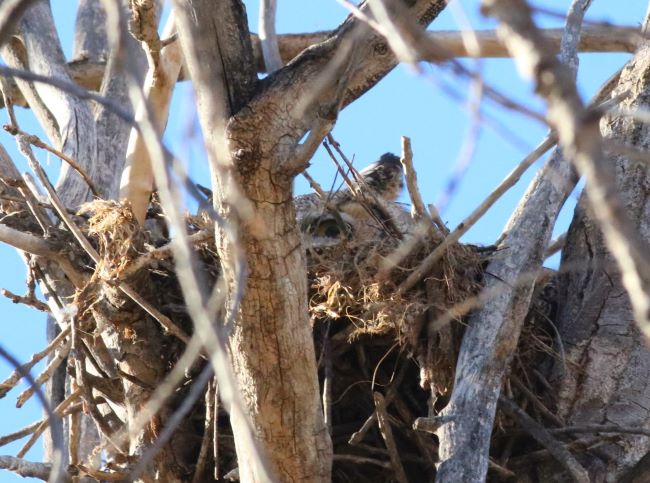
Bear Creek Greenbelt Park. February 28, 2025
Thank you, Amy Law, for showing me the owl nest. While we didn’t see American Dippers, it was still a lovely walk and talk.
Wordless Wednesday: timeline cleanse

House Finches. January 15, 2024
Sunday Confessional: dance drought
The past year was incredibly difficult on a personal and global level and, unfortunately, it continues into this new year. I’ve unintentionally dropped many good habits–running, hoop dancing, posting here–as a result of the grief and sheer exhaustion of bearing witness to the suffering of so many. Today, however, I finally summoned the energy to do something I’ve dearly missed: hoop-dancing. For twenty minutes, I danced and spun in my hoop, singing along with the music. Emma was happy to see my dancing again and we howled together for several minutes, me grinning as her tail wagged and wagged.

A dancing Sandhill Crane at Monte Vista National Wildlife Refuge. March 12, 2024

Today I reclaimed my joy. My intention is to dance again tomorrow . . . and to continue dancing in the days and months to come. Dance as a revolutionary act!
On this Winter Solstice

August 12, 2022
Here’s to more daylight and less gloom!
Here’s to more joy and less doom!
Here’s to more sunflowers in glorious bloom!
FREE PALESTINE!
Climate Movement Monday: in support of Native Village of Hooper Bay
Welcome back to Movement Mondays in which we discuss all things climate and then typically take action on behalf of a frontline community facing immediate effects of the climate crisis. Today’s information and TAKE ACTION come from Earthjustice, the nonprofit environmental law organization representing Native Village of Hooper Bay in southwest Alaska.
The federal government is proposing a land swap and road through the Izembek National Wildlife Refuge despite the fact that, as the name says, it’s supposed to be a refuge. Per the U.S. Fish & Wildlife Service website, this refuge located between the Bering Sea and the Gulf of Alaska, is [emphasis mine] “home to one of the world’s largest eelgrass (Zostera marina) beds. Hundreds of thousands of waterfowl, including virtually the entire population of Pacific black brant, visit the lagoon to feed on eelgrass and rest during migration. From brown bears to Pacific salmon, more than 200 species call this refuge home.” Call me alarmist, but it seems really stupid to negatively interfere with the feeding ground and resting place for an entire species.

Aerial view of black brant in flight over Izembek National Wildlife Refuge. Photo by Kristine Sowl/USFWS
What does all this have to do with Native Village of Hooper Bay? The proposed road would cut through the refuge which provides, you know, refuge for migratory bird species that Native Village of Hooper Bay tribal members rely on for food and cultural practices.
“Any loss of these species in the Yukon-Kuskokwim Delta could have devastating impacts on communities already stressed by climate change, the salmon crisis, and by significant socio-economic and health challenges, including high rates of poverty and the highest suicide rates in the nation. Western science and Indigenous knowledge agree that preserving subsistence and traditional practices is key to combating these impacts in Alaska Native communities.”
A 45-day comment period is now open that allows the public to weigh in on the draft supplemental environmental impact statement (SEIS). The federal government needs your input. PLEASE request the federal government withdraw the project OR at least choose the “no action alternative” which is the compromise proposed by Native Village of Hooper Bay and other tribes.
As always, a personalized message carries more weight. However, I realize this issue can seem complicated as you read about it (due, in part, to the use of “alternative” in its many permutations), so it’s completely fine to briefly express your support for the tribal people and the migratory birds, and then request that the federal government withdraw the project entirely OR choose the “no action alternative.” Your message doesn’t need to be long. All the background information is included here where you also take action via your brief personalized message.
Thank you for reading this far. Thank you for speaking up on behalf of Native Village of Hooper Bay and other tribes in that frontline community, along with the 200 species that call the Izembek National Wildlife Refuge home. Solidarity! ✊🏾
Elk for a Free Palestine
Popping in quickly to share this image Zippy captured from our deck yesterday.
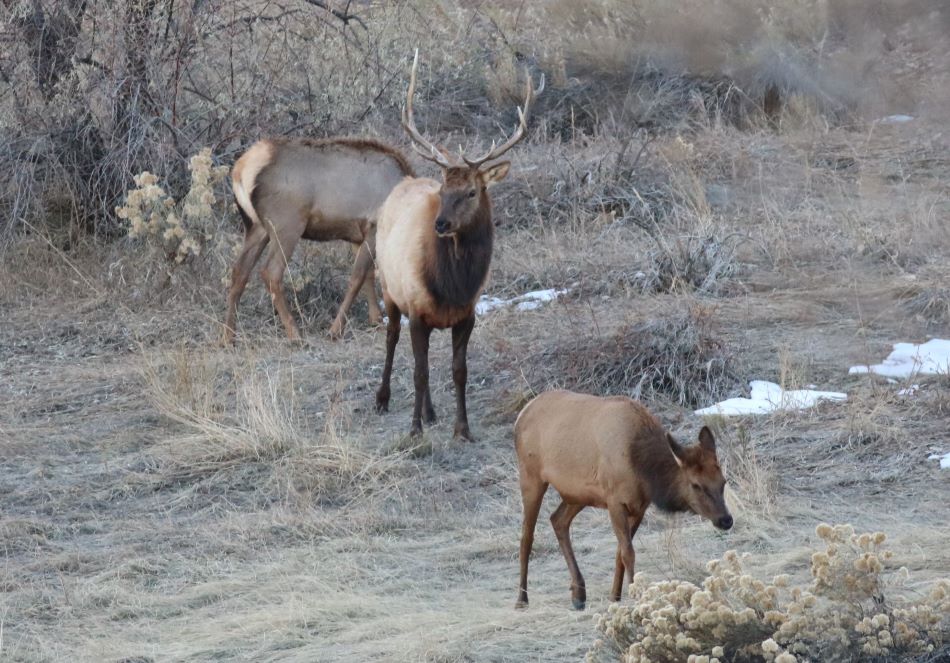
Elk! While we’ve seen them in the open space several times over the years we’ve lived here, this was our first sighting from our home. A neighbor said she recently saw about 30 in the open space.
I also wanted to share links to articles from The Intercept that I read today, detailing the increasingly oppressive crackdown on those standing up for Palestinian rights.
- At George Mason University, Police Raid Pro-Palestine Students’ Home in FBI-led Graffiti Investigation. Yes, you read that correctly. They raided a home (for six hours!) because of graffiti.
- Three teachers at a Philadelphia middle school who supported Palestinian students at their school and lost their jobs as a result, have filed a federal civil rights complaint. Philly Teachers Tried to Give Palestinian Students a Safe Haven–And it Cost Them Their Jobs.
The Intercept also wrote about the release of Amnesty International’s new 300-page report that adds the human rights organization to a growing chorus of legal scholars and activists describing Israel’s assault on Palestinians as genocide.
The United States is funding and enabling genocide as they increase police forces around the country and build Cop Cities to train police in how best to bash in our heads. We’re all we’ve got, and it’s imperative we hold onto our shared humanity.
From the river to the sea, Palestine will be free!
Wild gift
I’ve been scarce around here, largely due to overwhelm on a global and personal level. Today got off to a good start and then quickly went south with the news that my son was in a (heightened) health crisis. A while later, I was on the phone with my spouse for the umpteenth time, updating him on our son’s condition, when I glanced out the window.

Such a gorgeous fox, possibly the same one who visited my neighbor in June? Either way, I was delighted by the sighting. I quickly grabbed the nearby camera and captured this one image through the deck railing before it jumped on the back fence and went to the other side. Foxes must have incredibly keen senses because this one immediately knew my camera and I were at the closed window.
A brief interaction, but that fox lifted my spirits immensely. For that, I’m grateful.
Take good care, everyone.
Twofer Tuesday: Clear Creek edition
As mentioned, I celebrated yesterday’s birthday at Clear Creek. It was a good choice: lots of sunshine plus the peace of moving water. As we walked in search of a sunny place to picnic, we saw a man running behind his dog carrying a frisbee. I was disappointed that I didn’t have my camera ready to snap a pic. Well, a few minutes later, they ran past again and this time I was prepared. Such a happy doggie!

Then we found our spot in the sun.
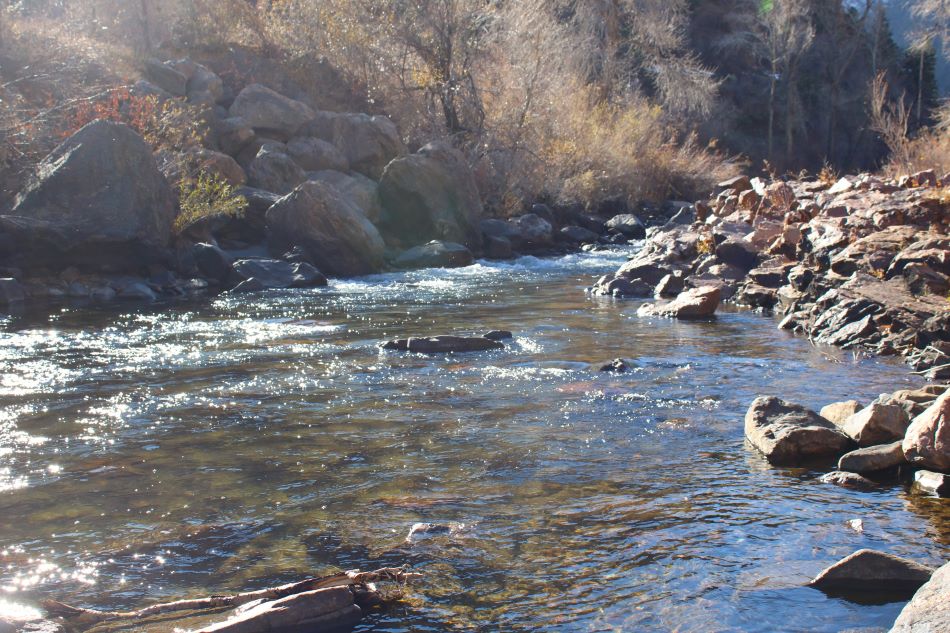
After selecting flat-ish boulders near the water’s edge to sit on, Zippy and I ate lunch while watching leaves gently sway beneath the water’s surface and bubbles move along on top as they cast star-shaped shadows below. Despite people crossing on the nearby bridge, it felt like we had the creek to ourselves. Too soon, the sun dropped below the canyon cliff, and our sun-filled location was shady and cold. Time to head back home.
Though our outing was brief, it soothed my soul. I highly recommend sunshine and water for late November birthday celebrations.
Coming in for a landing
I’ve been losing myself in revisions of my middle grade novel–grateful for the distraction from this brutal reality–and am close to being finished.
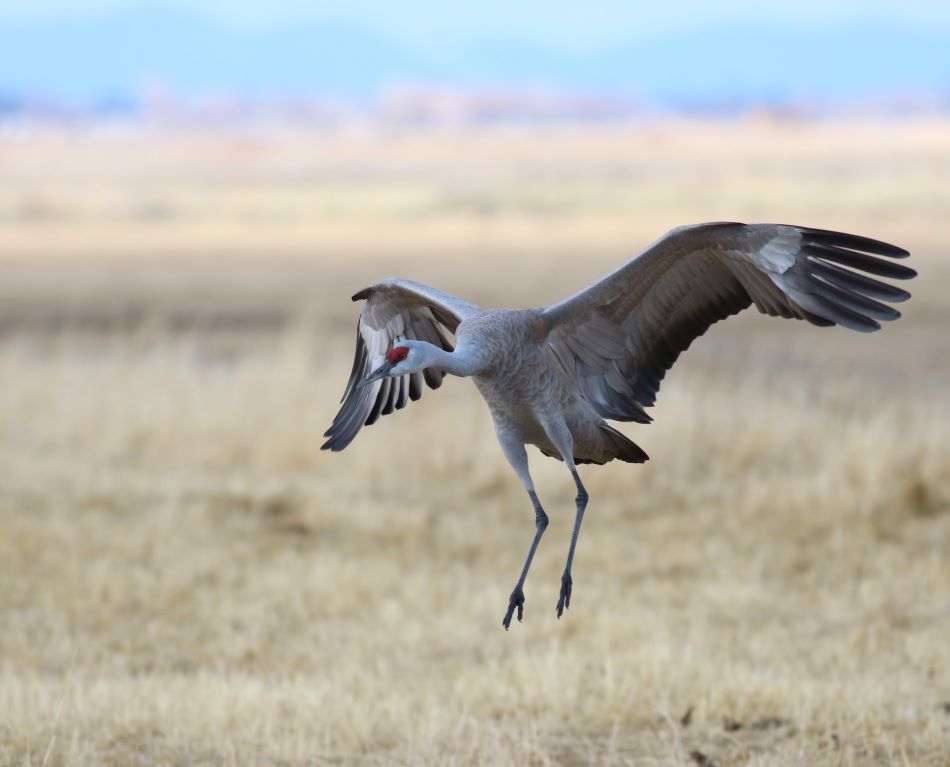
Sandhill Crane at Monte Vista National Wildlife Refuge. March 12, 2024
While I’m still a day or two away from being done, I believe in celebrating every step along the way. So, today I celebrate myself and this project as I prepare for the final landing. Yay!
Snowy palette
Hallelujah! The snow has stopped falling. Our muscles are sore from all the shoveling over the past several days, and now I can rest in the beauty of this cotoneaster.

By the time I finished my shoveling shift yesterday I was exhausted, but couldn’t resist getting the camera and tromping around the front yard to take photos. The leaves and berries of the various shrubs were so vibrant against the snow, like a gorgeous collision of seasons. In fact, the burning bush was almost blindingly bright.

And now the melting begins . . .
Wordless Wednesday: out my window
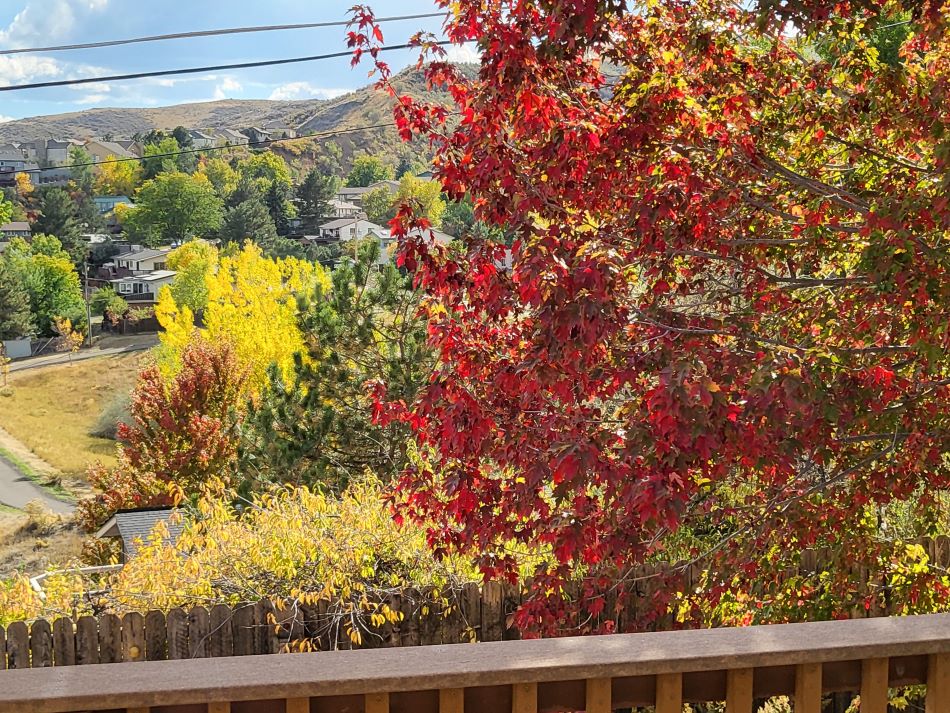
Climate change: we’re the cause but we can also be the solution
It’s a Wednesday, but I’m offering what would usually be a Climate Movement Monday post because the synchronicity of the two elements contained here was just too perfect to pass up. Below, I offer information on hurricanes and then a quick action.
As Hurricane Milton bears down on Florida while millions struggle to recover from Helene (mutual aid links here), I received two connected emails. The first, from HEATED which is billed as “a newsletter for people who are pissed off about the climate crisis,” was their latest article titled “How fossil fuels mutated Milton: Climate scientists tell HEATED the historic storm represents “the profound irresponsibility and culpability” of polluters.”
I highly recommend reading the entire piece which begins: For scientists who study the effects of climate change, the scariest thing about Hurricane Milton is not simply its historic strength. It’s the fact that Milton grew so strong so quickly—mutating from a pipsqueak into a monster.
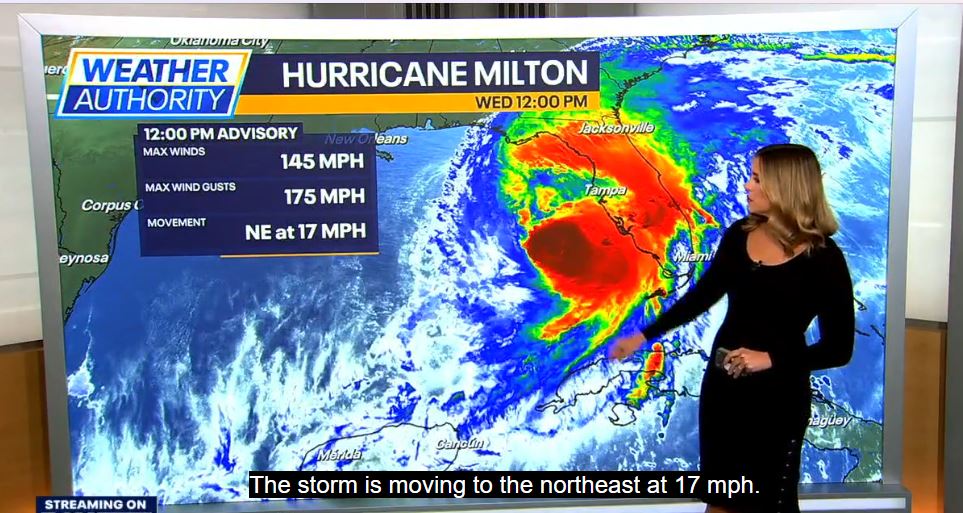
screen grab from a news broadcast
Milton’s rapid intensification from a tropical storm to a Category 5 hurricane left meteorologists speechless, with one veteran NBC6 Miami scientist tearing up on air. On X, hurricane scientists described Milton’s sudden explosion as “unprecedented,” “terrifying,” and “jaw-dropping,” as the storm’s wind speeds grew from 60 mph to over 180 mph in only 36 hours—one of the fastest intensifications on record.
A similarly rapid hurricane intensification happened just weeks earlier with Hurricane Helene, which transformed from a relatively weak tropical storm into a historic Category 4 hurricane within two days.
The article goes on to quote climate scientist Michael Mann who points the finger at the fossil fuel industry which is responsible for 76 percent of greenhouse gas emissions. “ExxonMobil’s own scientists warned that continued fossil fuel burning would lead to “potentially catastrophic events,” Mann said. That those catastrophes are playing out today represents “the profound irresponsibility and culpability of a fossil fuel industry that knowingly hid evidence of the tremendous danger of their product—not just danger to individuals … but danger to humanity and the planet. A whole higher category of crime.”
The article continues, including an explanation of how warmer sea temperatures contribute to the strength and size of tropical storms. Then the article ends with this quote from hurricane scientist Andra Garner (emphasis mine):
“The bad news here is that we know that human-caused climate change is driving these kinds of extremes to be more deadly,” said Garner. “But the good news is that we are the cause, and so we can also be the solution.”
That bears repeating: We are the cause of climate change which means we can also be the solution.
Right after reading that HEATED article, I returned to my inbox to find an email from Stand.earth. That email opened with: “Exciting news! Late last month, Philadelphia, PA, became the latest city to join the growing chorus of municipal and sub-national governments to officially call for a Fossil Fuel Non-Proliferation Treaty. Not only is Philadelphia one of the largest cities in North America, it’s also located in Pennsylvania, a state dominated by fracking. It’s proof that our movement is even reaching areas where the fossil fuel industry is most powerful.”
The email then offers a link to send a message to your local city council, asking for them to call for a Fossil Fuel Non-Proliferation Treaty. What are the principles of such a treaty?
- Non-proliferation: Stop building out the problem by ending the expansion of coal, oil and gas production
- A fair phase-out: An equitable plan for the wind down of existing fossil fuel production, where nations with the capacity and historical responsibility for emissions transition fastest, providing support to others around the world
- Just transition: Fast-track the adoption of renewable energy and economic diversification away from fossil fuels so that no worker, community or country is left behind
It was SO easy to send a message to all my city council members and mayor. I personalized (and shortened) the letter to make my point which I must say felt extra personal since one of those council members lives right down the street from me. We’ve seen horrific climate policy on the federal level and the Democrat’s presidential nominee, Kamala Harris, now contradicts her earlier campaign vow to ban fracking, but local communities offer a greater chance for citizens to make an impact. Please take a moment to reach out to your city council to let them know how you feel about the role of fossil fuels in these catastrophic hurricanes which are destroying lives and property.
Thank you for reading this far! I appreciate you being here. Solidarity! ✊🏾
Friday Haiku: sandhill crane edition
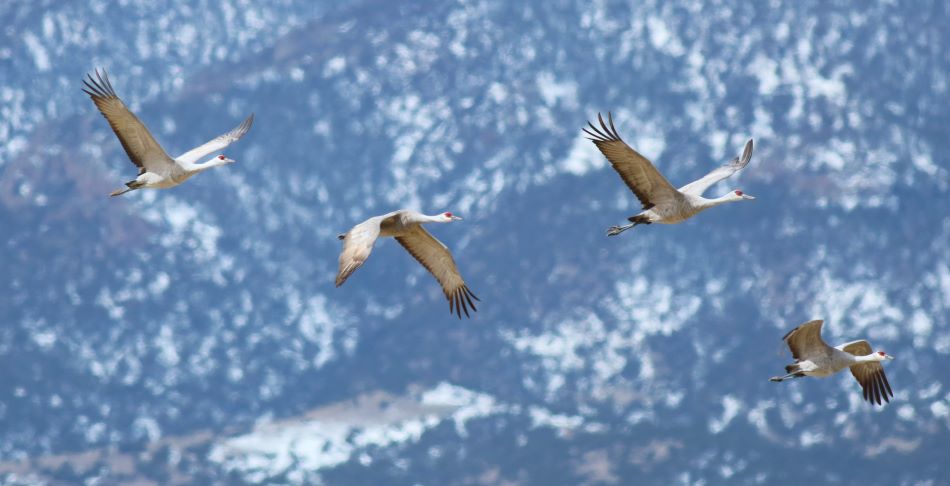 synchronized flight
deceptively effortless
sky ballet
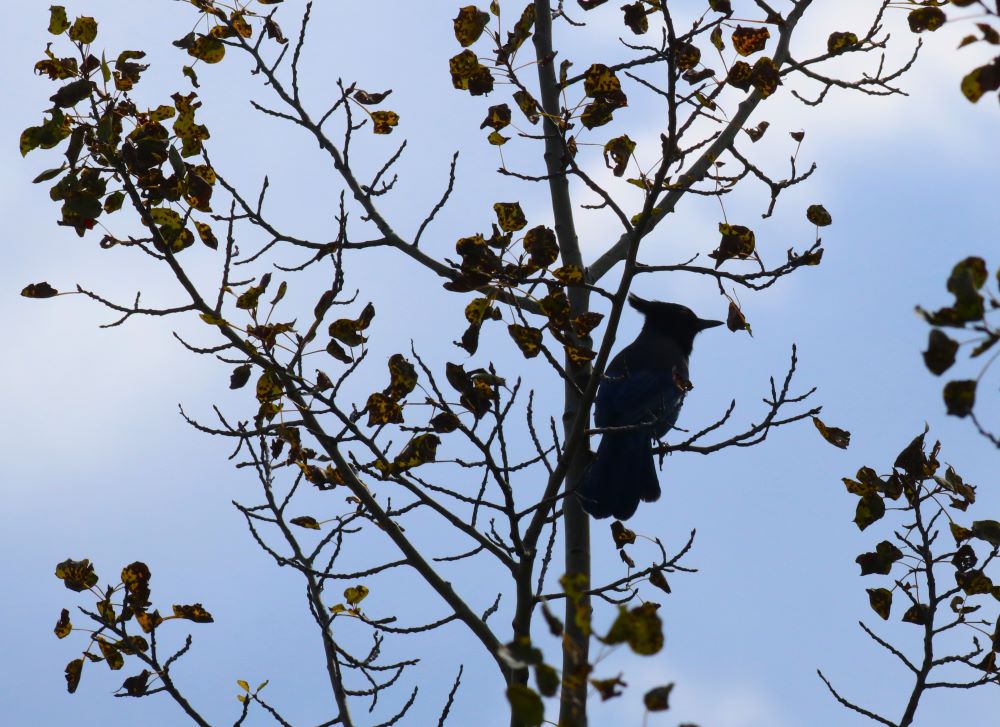
Wordless Wednesday: stellar Steller’s Jay
Climate Movement Monday: turning the fossil fuel narrative on its head
Welcome back to Movement Mondays in which we discuss all things climate. Today I’m returning to Not Too Late: Changing the Climate Story from Despair to Possibility (edited by Rebecca Solnit & Thelma Young Lutunatabua) in order to offer my readers another lens to look at our climate reality while also imagining a better world.
At the start of the chapter “Different Ways of Measuring: On Renunciation and Abundance” (a conversation between Solnit and Lutunatabua), there’s this quote from Dr. Elizabeth Sawin:
“It is some very effective marketing that has convinced so many of us that getting off of fossil fuels is a sacrifice as opposed to a money-saving, peace-promoting, water-protecting, health-improving, technological leap forward.”
This jumped out at me because whenever I (foolishly) read comments about various climate actions (and it doesn’t matter if it’s folks politely demanding better of their government or Climate Defiance interrupting fossil fuel executives as they’re being celebrated), there are always people who ridicule the activists for imagining a world without fossil fuels. Those naysayers insist the many negative consequences we’re experiencing in real-time are a given and that there’s no way forward that doesn’t include fossil fuels. A frequent commenter “gotcha” is “Did you drive your car to that action?” which reveals a complete lack of imagination in regards to our woefully inadequate public transportation, connected biking routes, etc.
Directly following Sawin’s quote, Solnit eloquently presents a different perspective that I’d love to copy and paste in reply to those cynical comments.
What if the climate crisis requires us to give up the things we don’t love and the things that makes us poorer, not richer? What if we have to give up the foul contamination around fossil-fuel extraction, the heavy metals people inhale when coal is burned around them, the oil refineries that contaminate the communities of color around them from the Gulf of Mexico to California? What if the people of Richmond in my own home region, the Bay Area, didn’t have emergency alerts where they were supposed to seal their homes because of a refinery leak? What if the incidence of asthma in kids went way down, and we stopped losing almost nine million people a year to pollution worldwide? What if that moment when the pandemic shut down so much fossil-fuel burning that people in parts of northern India saw the Himalayas for the first time in decades became permanent?

Image by 🆓 Use at your Ease 👌🏼 from Pixabay
I don’t know about you, but reading those words expanded my mind and heart, while reaffirming my belief in a better world. Kicking our fossil fuel addiction won’t set us back, but will instead liberate us to live healthier, happier lives.
If you’re interested, here’s an article about the visible Himalayas, including grateful social media posts: Peaks of Himalayas visible from parts of India for first time in decades as pollution drops amid lockdown. And if these quotations resonated with you and you’re interested in reading more, Not Too Late is available through Haymarket Books and is currently offered at a discount.
Thank you for reading this far and please know I welcome all thoughts and comments below (spoiler: no, I did not drive my car to this post). Until next time, solidarity! ✊🏽
You should have joy and pleasure
When reading this week’s newsletter “Organizing My Thoughts” from Kelly Hayes this morning, a quote jumped out at me. It came via the linked piece from Lewis Raven Wallace “The Right Wants Us to Submit to Nihilism. Here Is Where I’m Searching for Hope.”
“You should have joy and pleasure from being on the right side of history,” [ . . ], “not anguish and despair. Let the other people have that.”
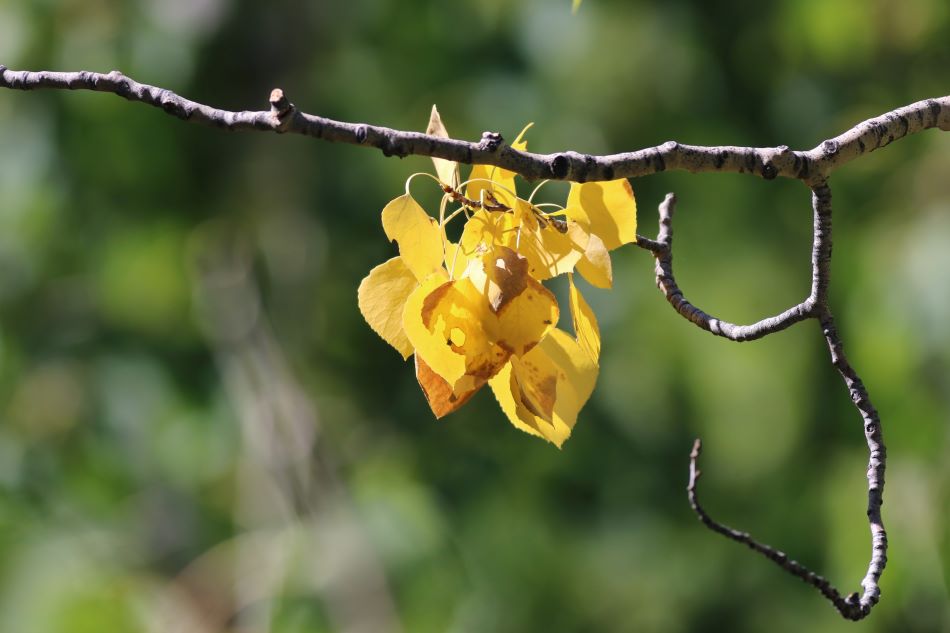
My first yellow leaves of the season. Golden Gate Canyon State Park. August 30, 2024
Wallace continues with this:
Joy is not just icing on the cake or the purview of the privileged. It is an exercise in hope that has always been rigorously practiced by people facing impossible situations of oppression. Laughter, pleasure and small acts of connection are precisely where we find our power — and the soul fuel that makes it possible to go on.
Anyway, that sentiment helped me a lot today–helped me remember who and what I am–and I wanted to share in case it could help someone here. Let’s hold onto our shared humanity and refuse to let the horrors and ugliness turn us into shells of ourselves. Let’s rejoice in nature and each other, and laugh as much as possible.
The fear-based, mean-spirited people can keep all that ugly for themselves.
PSA: Novavax Covid Vaccine
But first, a word from our sponsor:

Adult and young blue Jay. July 13, 2024. Photo by Zippy.
Only kidding. Another Day On the Planet has no sponsor which is why you never see any strategically-placed cans of Pringles or bottles of Dos Equis on this blog. But if there was a sponsor, BIRDS would be a great choice!
I actually just wanted to offer information and resources on the updated Covid vaccines, specifically the Novavax vaccine. Why? Because I’m realizing not many people know about it, in large part because the government is pushing Pfizer and/or Moderna. (Despite Novavax being submitted for approval in July before the other vaccines, the FDA approved Novavax last, and only after much public pressure via emails and phone calls.)
A recent study (on a previous strain) showed that while Moderna reduced the viral load by 100x, Novavax reduced the viral load by 600x. Novavax also provides protection for both the upper and lower respiratory tracts. Many (including Zippy and me) also like Novavax because there are fewer side effects. The two times I’ve gotten Novavax were much easier than my previous Pfizer and Moderna shots. Here’s a handy graphic explaining the other benefits of Novavax.
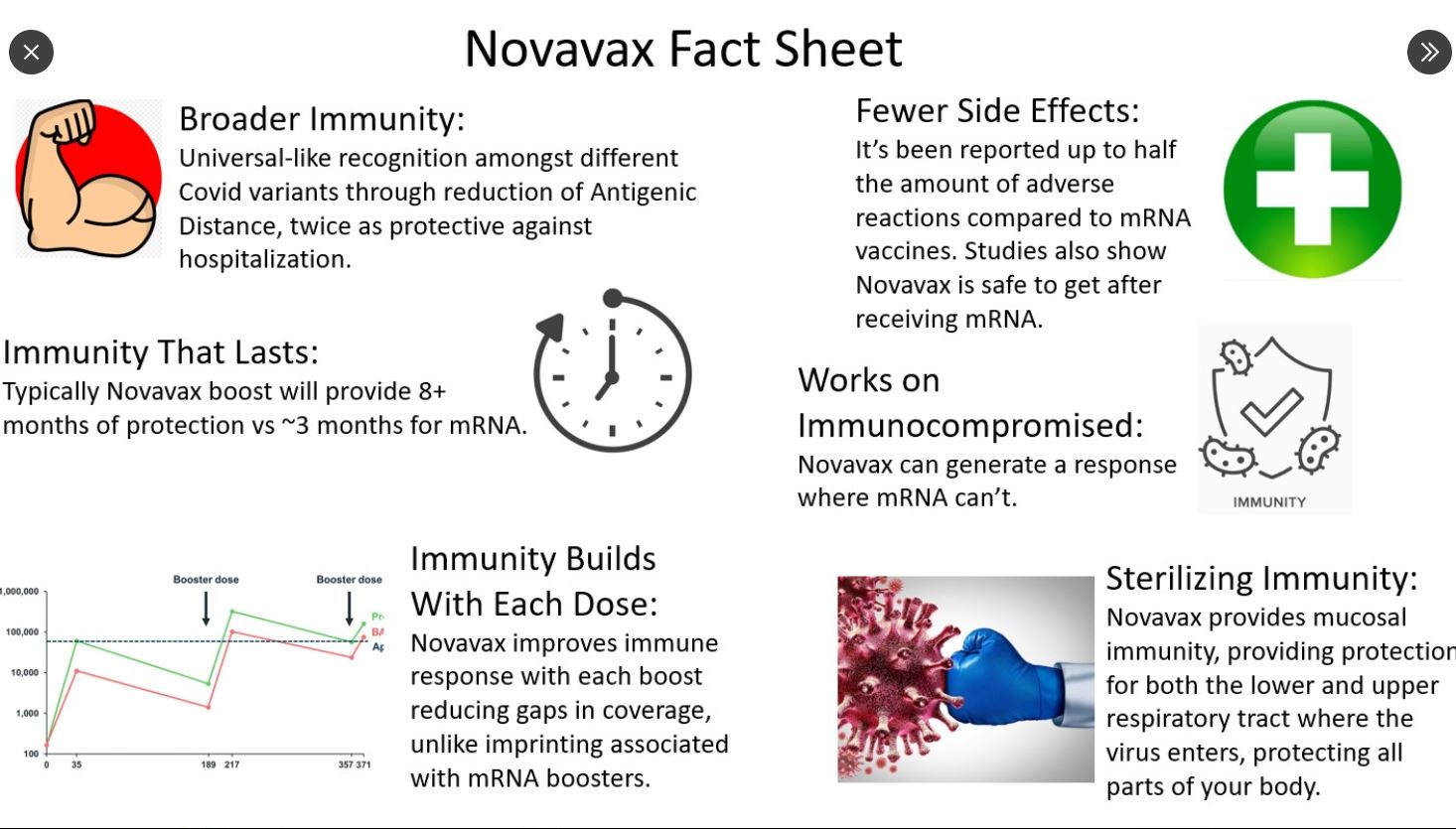
I follow many Covid-aware people on Twitter such as virologists and immunocompromised people, and the consensus is that Novavax is the superior vaccine that offers the greatest protection. If you’re interested, the Novavax locator site will help you find the vaccine close to you.
NOTE: if you do opt for Novavax, be very clear about that when you go into the pharmacy because there are many anecdotal instances right now of people requesting Novavax and having the pharmacist instead offer Pfizer (because they see it as the default) or grabbing a syringe of Pfizer or Moderna out of habit. When I showed up for my appointment (in which I’d requested Novavax in the online form), I said I was there for Novavax (as opposed to “Covid vaccine”) to make sure we were all clear on my intentions from the outset. It’s also a very good idea to ask to see the label on the syringe just to be absolutely sure. The pharmacy I visited was very busy and those workers have LOTS on their minds, so it’s totally fine to clarify.
Please let me know if you have any other questions because I can probably point you to the answers.
Remember, the more we can do to curb the mutation and spread of the SARS-CoV-2 virus, the healthier and happier we will be. 🙂
Edited to add: BonaFide Masks is where I get KN-95 masks (ear-loops) which I mostly give out to others who want to mask but don’t want to wear a mask with head-straps. Use code BFM25 for 25% off your order through October 1. Free shipping!
Thankful Thursday: people who reach out
Over the years, I’ve had friends from my distant past find me via this site which is always a happy surprise. And strangers have reached out after reading something I posted. For example, after writing about Aaron Bushnell on Memorial Day, a friend of his wrote to me. Their message touched me deeply and I wrote back to thank them for taking the time to contact me in solidarity.
But I’m not always successful in responding to people and so today I’m using this space to let LR know that I received their message. Thank you! I tried to respond via the email provided but there’s an error with that address and it doesn’t go through. I did an online search and was able to find an edu email address for you, and sent my message there. Because I haven’t heard anything back, I’m wondering if that’s also a bad address. PLEASE, if you see this, use the contact form again and leave a different return address. I very much appreciated your message and would like to converse some more!
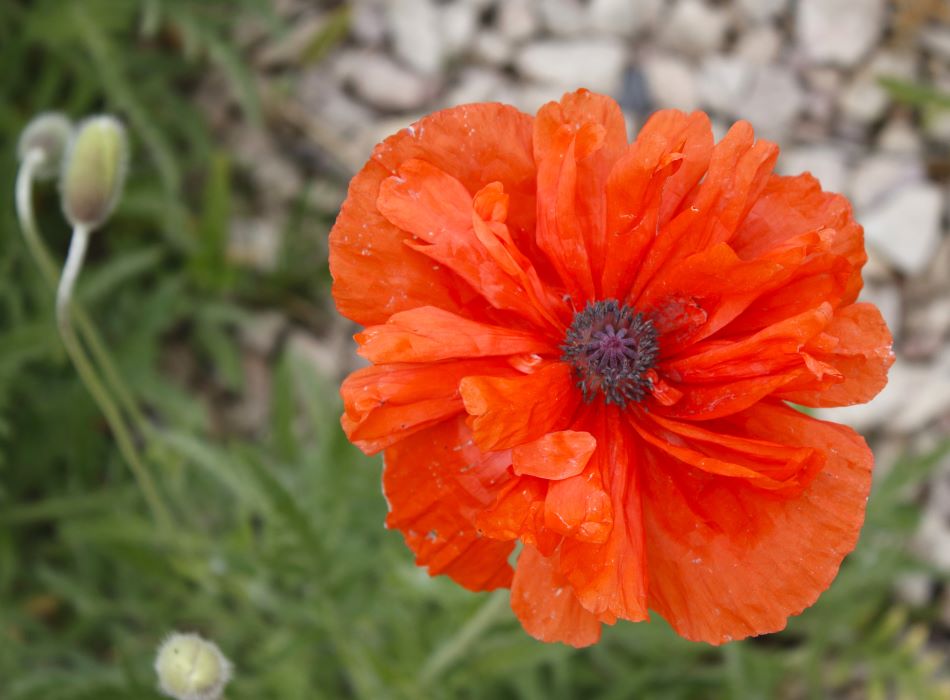
May 29, 2019
Solidarity!
Wordless Wednesday: breathe

Golden Gate Canyon State Park. August 28, 2024
They say it’s his birthday
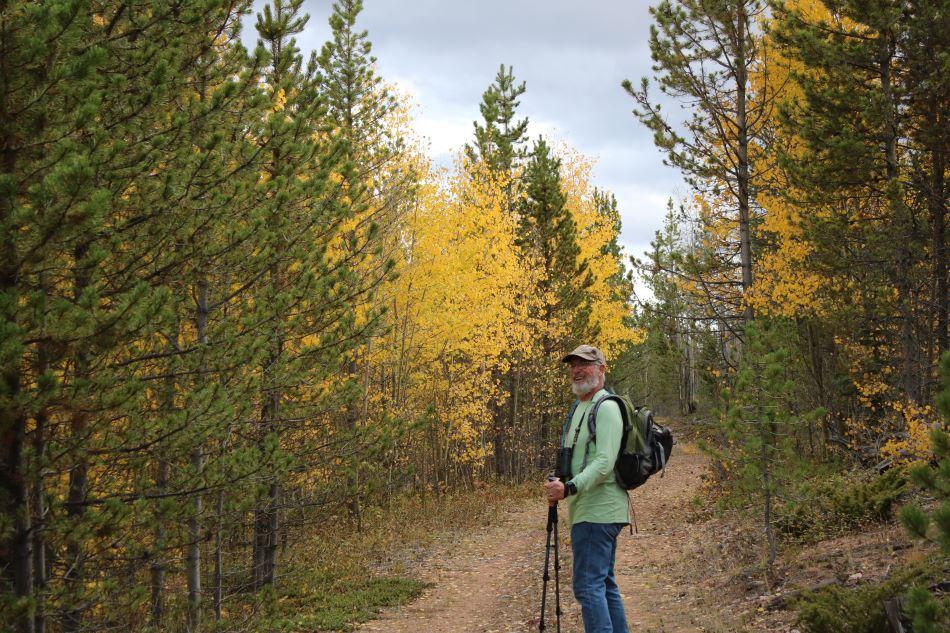
Today is Zippy’s birthday and he celebrated by going on a 30-mile bike ride. Another thing he likes to do? Hike. Here he is hiking in Pike National Forest last October. See that happy, relaxed smile?
Well, here’s the cut paper card I made for him this year in honor of those hikes and our “forest bathing.”

May we share many more moments of forest-induced peace in the coming year. Happy birthday, Zippy. ❤️
 Tracy Abell