
towhee conundrum
abundance of insects
but only one mouth
your turn
hit me with a haiku
please
towhee conundrum
abundance of insects
but only one mouth
your turn
hit me with a haiku
please
Life feels difficult the last few days–personally, professionally, and globally–and now more than ever, I’m grateful for nature’s gifts. Today I’ve taken solace in the presence of many magpies (my next door neighbor just confirmed her dog–again— spread kibble in their backyard) as they fly to-and-fro, pause to snack on Rainbow’s offerings, and bathe in my bird bath.
Magpies are common around here yet they never fail to lift my spirits. Equally common are the bright, cheery sunflowers smiling in my yard and throughout the neighborhood. These, too, always bring a smile. And when that sunflower sighting includes a Common Checkered-Skipper?

Backyard. August 12, 2024
Well, then my gratitude knows no bounds. Even when I gaze upon the image nearly a month later, it’s like bottled Balm for the Soul.
I had a lovely solo camping trip in Golden Gate Canyon State Park last week. The weather was pleasant and my site was level, plus there was a peaceful little Nature Trail right across the road that I wandered a couple times. Oddly enough, there weren’t many birds and it was mostly quiet except for the occasional Mountain Chickadee and Common Raven (which I heard several times but never spotted). I had high hopes for bird sightings since on the first afternoon I saw a White-breasted Nuthatch on a tree trunk near the restroom. That was my one and only nuthatch sighting although I had two encounters with a pair of Gray Jays. I’m not sure it was the same pair both times, but one flew directly at me near my campsite then landed in the tree right next to me, followed by another jay. And the next morning as I paused outside the restroom to put on my mask, a Gray Jay flew right (like, right) in front of me and into the building wall as if it thought it could perch there. Then it flew back into the closest tree where another jay waited. I never saw them again, but spent some time pondering whether they were trying to tell me something or maybe thought I was a kindred spirit in my gray fleece jacket that’s the same shade as their feathers.
On my first morning there, I suited up to run on the Raccoon Trail which is a 3.5 mile loop (including spur from campground) that includes Panorama Point and a view of the Continental Divide. Because I was starting at 9100 feet elevation and would gain several hundred feet more, I knew water was essential. And while I never run with my phone, I knew it would be wise to have it, so wore my small hiking pack that holds a camel back for water. After some stretches to warm up, I took off. The pack bouncing on my back didn’t bother me, but I was very aware of the water as it sloshed with every step. The trail starts out in forest and soon opens up to aspen groves. Five minutes into the run, I sloshed my way around a curve and was startled by a large crashing in the brush. A moose! Heart hammering, I immediately stopped and spoke quietly while glancing around for a calf. I only saw the one moose, but my heart still pounded at the sight of all those skinny aspen trees that weren’t big enough to hide behind if the moose decided to charge. Fortunately, we both calmed down and it soon went back to browsing. As it moved farther from the trail, I slowly and silently (no sloshing!) continued on my way. A few minutes later I came upon a hiker and as she stepped off the trail to let me pass, she asked if I’d seen the moose. I said I had.
“That calf was so cute,” she replied.
Calf?
Turned out, this woman had been about ten feet away from the juvenile moose and she’d taken photos. Yikes! Fortunately, all was well with the mama and everyone moved on without incident.
The rest of my run/scramble up rocky slopes was uneventful. I stopped to check out the view at the top and then kept going. It wasn’t until I was back at my camp site doing my cool-down stretches that I had my favorite wildlife encounter of the trip.

This ground squirrel calmly perched a few feet from me, drinking up the warm sun. Moments later, the squirrel was flat on their tummy in an obvious display of fearlessness.

I’ll confess that I took loads of photos of this squirrel and their many poses. It made my heart so happy to share the space together, that morning and throughout my stay. This squirrel was a very gracious host and I’m grateful both for the companionship and also for the fact my heart didn’t practically leap out of my chest at our encounters. Moose are amazing creatures but my time in Alaska taught me they can be very volatile and extremely dangerous. Unlike this little ground squirrel.

This squirrel was pure chill which was exactly what I needed on my trip.
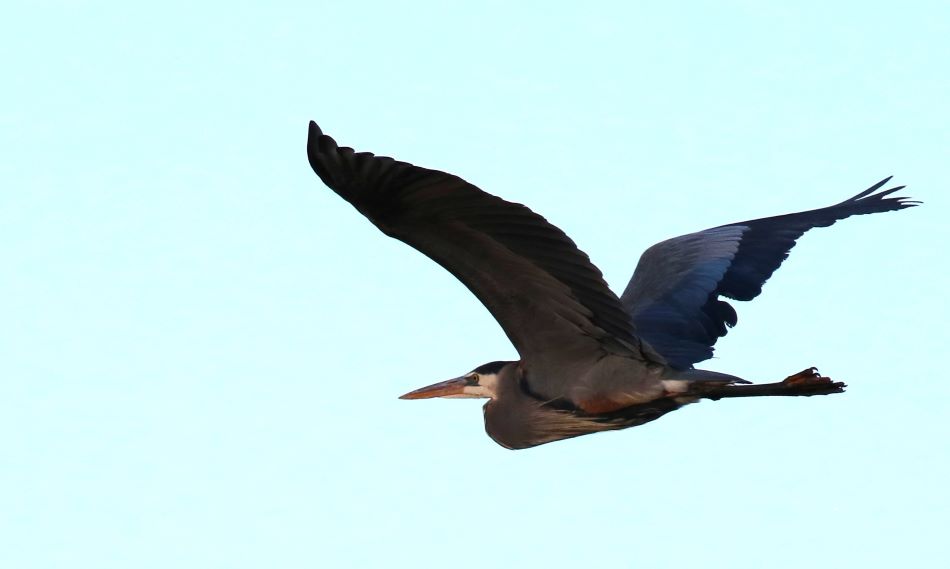
Today I offer a majestic Great Blue Heron I had the honor of seeing last April, along with a link to Sarah Kendzior’s latest essay which, in addition to featuring sobering insights about our political reality, references a Great Blue Heron.
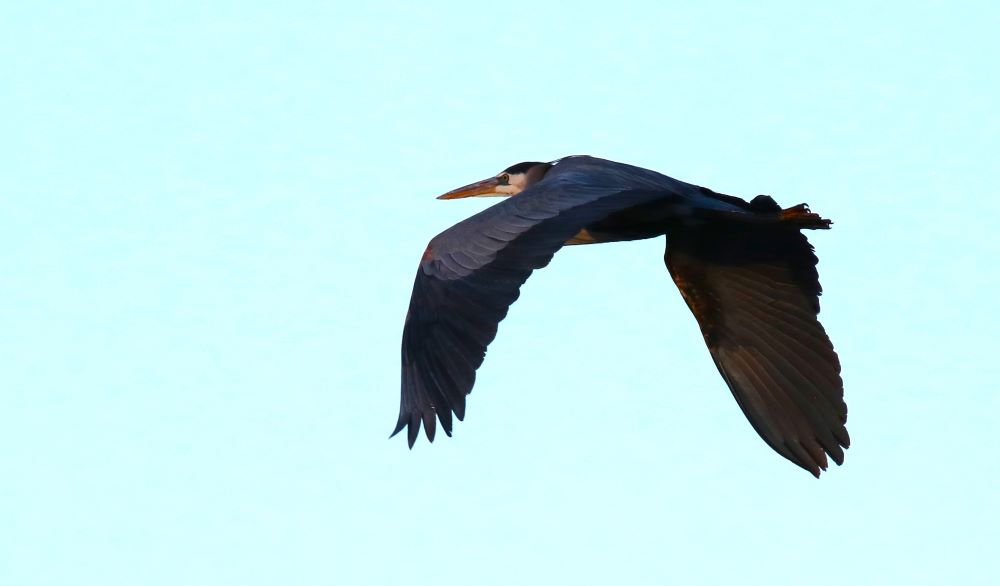
Lake Hasty on the evening of April 3, 2024
I’ve never met Sarah, but she feels like a kindred spirit. Sarah also escapes to nature when the world overwhelms and her heart aches. Tomorrow I’m heading off solo in our campervan to spend a few days in nature where I will revel in the flora and fauna. I hope to capture other images that will ground me and bring calm each time I look at them, visual mental health talismans on-call for whenever I’m in need.
I’m grateful for my privilege that makes it possible to escape into nature, and I wish the same for everyone everywhere. Someone in Sarah’s comments posted a very apt Wendell Berry poem which I’ll include here:
The Peace of Wild Things
When despair for the world grows in me
and I wake in the night at the least sound
in fear of what my life and my children’s lives may be,
I go and lie down where the wood drake
rests in his beauty on the water, and the great heron feeds.
I come into the peace of wild things
who do not tax their lives with forethought
of grief. I come into the presence of still water.
And I feel above me the day-blind stars
waiting with their light. For a time
I rest in the grace of the world, and am free.
Again, here is the link to Sarah Kendzior’s piece: Birds of a Feather
I’ll note that I’ve been reading Sarah’s work for the past few months and today, finally, upgraded to a paid subscription. Her eloquence and humanity are always on display, but Birds of a Feather hit me especially hard (in a good way).
Wishing everyone a good week that, I hope, includes some interactions with the natural world.

Guanella Pass. August 1, 2024
When asked to describe insect species that can pollinate flowers, most people think of bees, butterflies, moths, and hummingbirds. However, flies are critical pollinators in both natural and agricultural systems. A recent analysis of crop species found that flies visited 72% of the 105 crops studied (bees visited 93%). ~ Penn State Extension
Confession: I’ve often said mean things about flies buzzing around me and am going to try to remember this the next time one enters my orbit. Flies are critical to the planet. Me? Not so much. (Note: click on image to get a better look at those eyes!)
The other day, I went outside to sit with my camera. Just in case something interesting presented itself. I focused on the zinnias that are finally blooming from the seeds I planted months ago.

Right after taking that photo, the camera still held to my eye, something interesting happened.

A Broad-tailed Hummingbird flew into the frame! Fortunately, the camera speed was fairly high and, four images later, I captured this which was the best of the bunch:
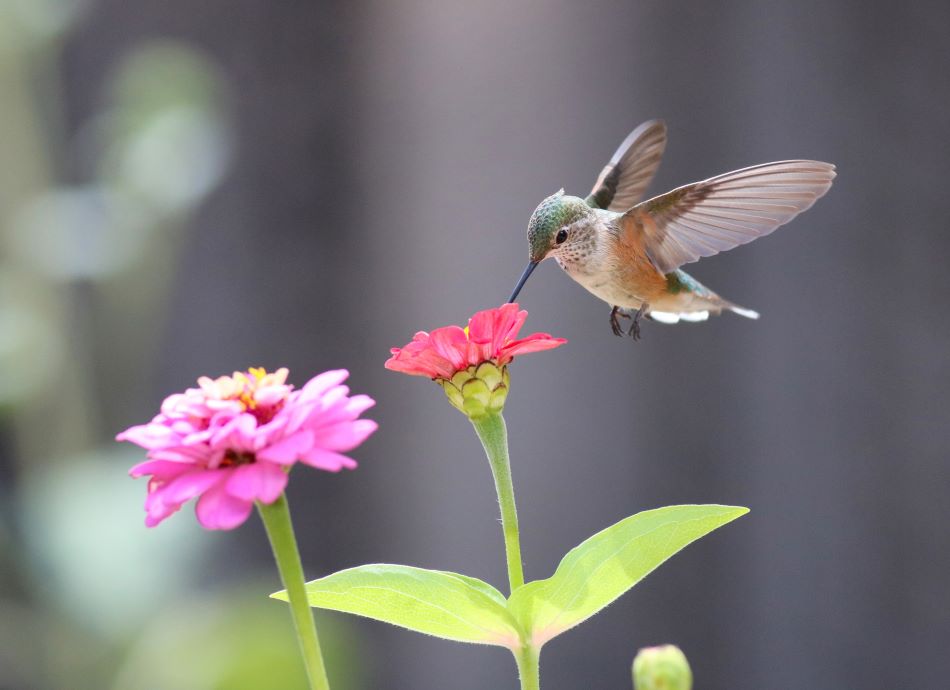
In that brief span of time, all felt right with me and the world. Thank you, little Miss Hummingbird, for the gift of your presence.
Nature is always, always my refuge, and never more than during hard times. When the world feels too cruel and feelings of overwhelm engulf me, I know to put my focus on the little things. Yesterday I grounded myself by watching these Japanese Beetles on my in-laws’ raspberry plant.

Yes, I know Japanese Beetles are very destructive because they destroy leaves and crops. However, it’s hard to hold a grudge while belonging to the most destructive species on the planet. Humans do a lot more damage than these stunning, iridescent beetles, and yesterday I was grateful to gaze upon their splendor.
This morning as Zippy and I walked Emma around the neighborhood, I paused at a clump of Russian Sage to check out the bee situation. As expected, there were honey bees, but I was especially tickled to notice three grasshoppers perched in various places throughout.

They all seemed to be just chillin’ amongst the purple blooms. I’m in awe of grasshoppers’ intricate bodies and can’t stop looking at this image. How do all those pieces fit together? What percentage of the total body mass are those two enormous eyes? And do their joints ever get tired from all that hopping?
Once again, nature for the win.
Earlier today, movement outside the window caught my eye. I turned and saw:
Emma running along the fence + a Red-tailed Hawk sitting on the wire + a squirrel jumping into the maple tree right next to the wire + another Red-tailed Hawk landing in that maple tree.
I sent up a prayer for the squirrel as I ran for the camera in the other room. By the time I returned, all I could see were the two hawks. The squirrel must’ve escaped and Emma was elsewhere in the yard, oblivious to having chased that squirrel right toward the hawks.
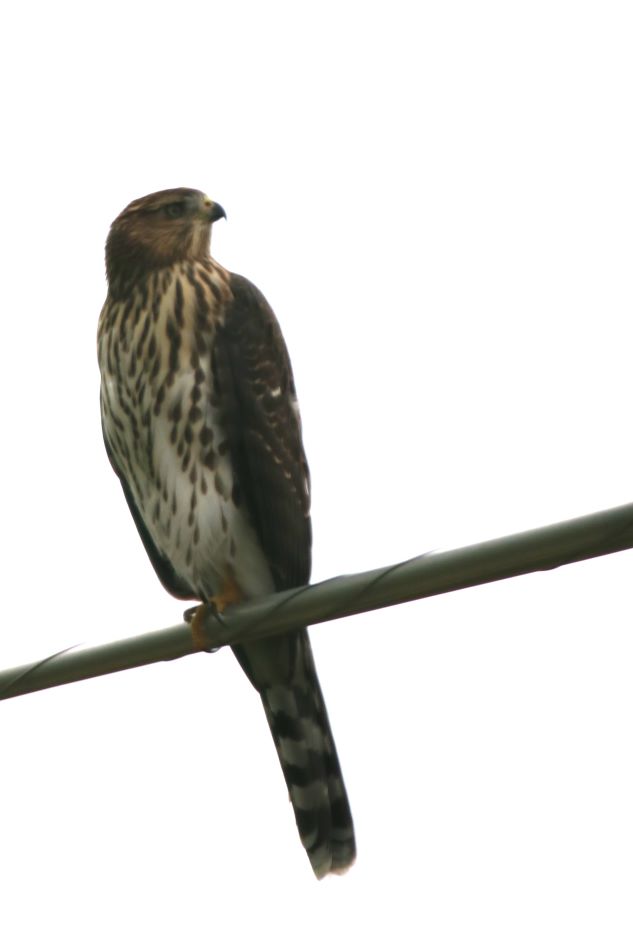

I photographed the one on the wire through the kitchen window and captured the hawk in the tree by sneakily pushing my big lens through the mini-blinds in Zippy’s office. I was grateful they didn’t startle at my movements and even more grateful they hung around as long as they did. Just moments after getting photos of the tree-sitter, the hawk took off from the wire and the other followed.
I receive these gifts.
Hello, again. I took an unscheduled break from my blog because everything felt like too much. Everything still feels like too much, but I want to continue offering information, perspectives, and ways to take action on behalf of people and planet. Because the WordPress community is spread around the world, these Monday climate posts dedicated to specific issues and communities could be viewed as unrelated to your own life and experience, but because I firmly believe we are ALL connected–everyone and everything–I also believe there’s no such thing as an unrelated issue (climate or otherwise). Anything that negatively affects the climate halfway around the world from where you live will eventually have negative consequences for your community. Okay, so let’s get to today’s issue. 🙂

Pearl River at Rosemary by J.G.W.Blakeney (wikimedia)
In September of 2022, I highlighted the flooding in Jackson, Mississippi, that happened when the Pearl River overflowed its banks due to heavy rains. As a result of that flooding, the water treatment plant failed in Jackson which is 82% Black, leaving 150,000 people without clean drinking water. Nearly two years later, Jackson residents are still dealing with low pressure and brown water.
There are plans to address the flooding issues, but the solution being pushed–One Lake–is environmentally devastating. From Healthy Gulf:
Instead of levee improvements, the Rankin-Hinds Pearl River Flood and Drainage Control District, in charge of levees, is sponsoring an Environmental Impact Statement (EIS) to study dredging and widening 9 miles of the river to create a lake, primarily to please developers and mayors who see an urban waterfront as a money maker for Hinds and Rankin Counties. The cities of Jackson and Flowood will “share” the lake and the Drainage District has taxing power to create bonds to finance it. The plan is to dredge the river wider, remove 1860 acres of riverside wetlands and swamps, set back some levees and construct a new low-head dam below the I-20 Pearl River Bridge. The resulting 1900 acre lake is promised to tame the river’s backwater flooding during large releases.
The problem is that the wetland and wildlife habitat destruction resulting from this much dredging of banks and riverbed make the “One Lake” project the most environmentally damaging of the three alternatives (lake, levees, and floodplain buyouts) for solving the flooding, according to the U.S. Fish and Wildlife Service.
So what can we do to help support the environment and people of Jackson? Submit comments to the Army Corps of Engineers TODAY! (tomorrow is the deadline for public comments and I apologize for the last-minute notice). As always, personalized letters have the most impact. But you don’t have to put tons of effort into your letter: just make your points and sign off! Here’s the letter template in which I’ve highlighted points to hit:
As someone who cares deeply about our country’s birds, wildlife, and habitats, I ask that you reject all flood relief plans for Jackson, Mississippi, that would dam or dredge the Pearl River. Instead, prioritize and expand on a proposal that can provide effective non-structural and nature-based flood solutions to benefit Pearl River communities and wildlife. Specifically, I urge you to pursue and bolster the Corps’ Draft Environmental Impact Study (DEIS) Alternative A1 and deny Alternatives C, D, and E.
The Pearl River runs from Choctaw Tribal lands in Neshoba County, Mississippi, to Lake Borgne and the Rigolets in coastal Louisiana. It connects nearly 500 miles of ecology, communities, and economies across Mississippi and Louisiana. I urge you to oppose any flood relief plan that would dam or dredge this natural treasure.
The One Lake project and related proposals are all ecologically devastating plans. They would dredge river banks and wetlands, depositing the spoil behind levees to create broad terraces for commercial development. This would destroy thousands of acres of wildlife habitat and worsen Jackson’s flooding and drinking water crisis. It would also expose local and downstream communities to toxic contamination and reduce freshwater flows critical to the region’s seafood and tourism economies.
The DEIS is incomplete and missing sections required by law for adequate public and scientific review. It lacks a full analysis of wildlife habitat impacts, toxic sites, and downstream flows. However, it makes clear that One Lake and all related dam/dredge plans should be rejected. Federally mandated habitat protection areas for two endemic turtle species and the Gulf sturgeon are within the project area and LeFleur’s Bluff State Park would lose 63 acres of hardwood forest, changed to lake bottom. These are just two examples of the damage that the One Lake Project would cause.
Instead, I urge you to pursue effective, environmentally sustainable flood relief proposed in Alternative A1. This includes home elevations and flood-proofing buildings. Expand on this plan to consider restoring floodplains, raising roads, and incorporating levee setbacks and protections for vulnerable Jackson neighborhoods.
Please protect the Pearl River for this and future generations. Reject One Lake and all similar plans. Employ nature-based and non-structural flood solutions that benefit all Pearl River communities and species.
Again, here’s the link for writing a letter. Thank you in advance for reading this far and taking action on behalf of the people and environment in Jackson, Mississippi. Solidarity! ✊🏽
 self-conscious youngster
hiding in shadow
bad hair day
eta: photo by Zippy, July 7, 2024
As mentioned, I spent part of yesterday in the backyard. However, my attention wasn’t solely aimed at birds, bees, and butterflies. I also found beauty in the bindweed blooming at the base of a clump of lamb’s ear.

Backyard. July 2, 2024
Don’t get me wrong: I’m no fan of the invasive bindweed that wraps itself around other plants, choking them off. But the flowers are pretty. I still remember my neighbor’s horror years ago when I’d said as much. The funny thing is, the neighbor who now lives in that house also thinks bindweed flowers are pretty. Still, we both try to keep it at bay. And we’re both wildly unsuccessful.
In addition to the lovely blooms, I have to admire the weed’s tenacity. Bindweed and cockroaches, man. Survival instincts like no other.
Earlier, I was feeling loads of anxiety about the state of the world and planet, and so wisely went outside to sit below the deck for a hit of nature. The lamb’s ear are abuzz with bees and a painted lady butterfly landed on the plant closest to me. A swallowtail butterfly floated past. Various birds sang and then went silent for a while. As I petted Emma who was curled up on the bench next to me, a house wren began singing again. I aimed my camera into the light to capture the songster.
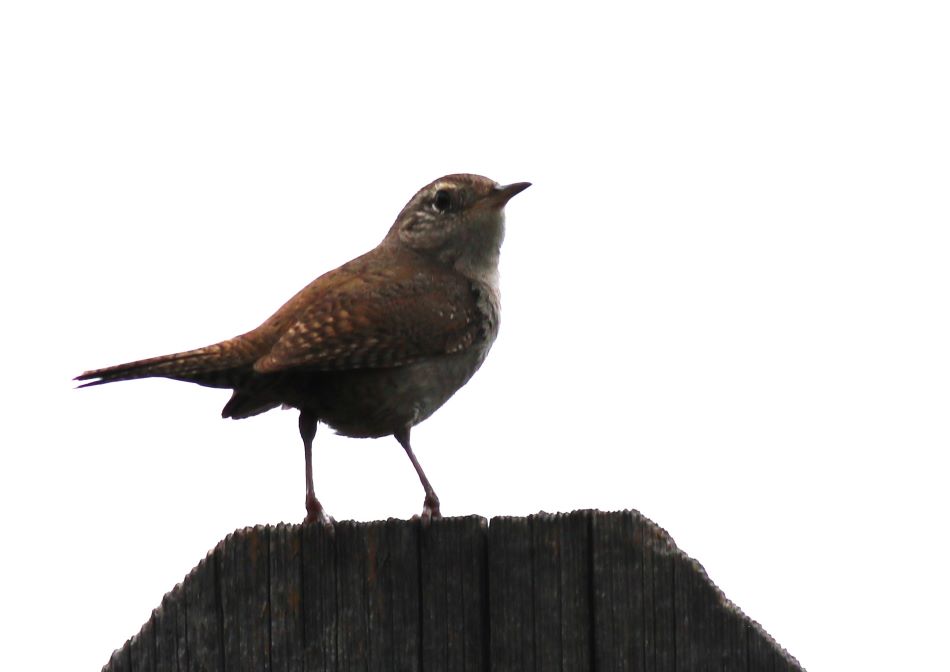
And then I became aware of another wren, this one making the churring sound. That bird was a little farther down the fence.
 I took a few more photos, grinning as the first wren continued the melodious song while this one stuck to its churring call. I lowered the camera then squinted, wondering if I was seeing things. No, I wasn’t imagining it!
 Two wrens, side-by-side. Two fluffy wrens. The baby wrens that’d been very vocal on Saturday as their parents worked tirelessly to feed them. The baby wrens that’d left the nest on Sunday, leaving Zippy and me to wonder where they’d gone. Just minutes before they showed up on the fence, I’d asked him whether young wrens stick around or head to a whole new area on their own. Zippy said he didn’t know.
But now we do know: they stick around!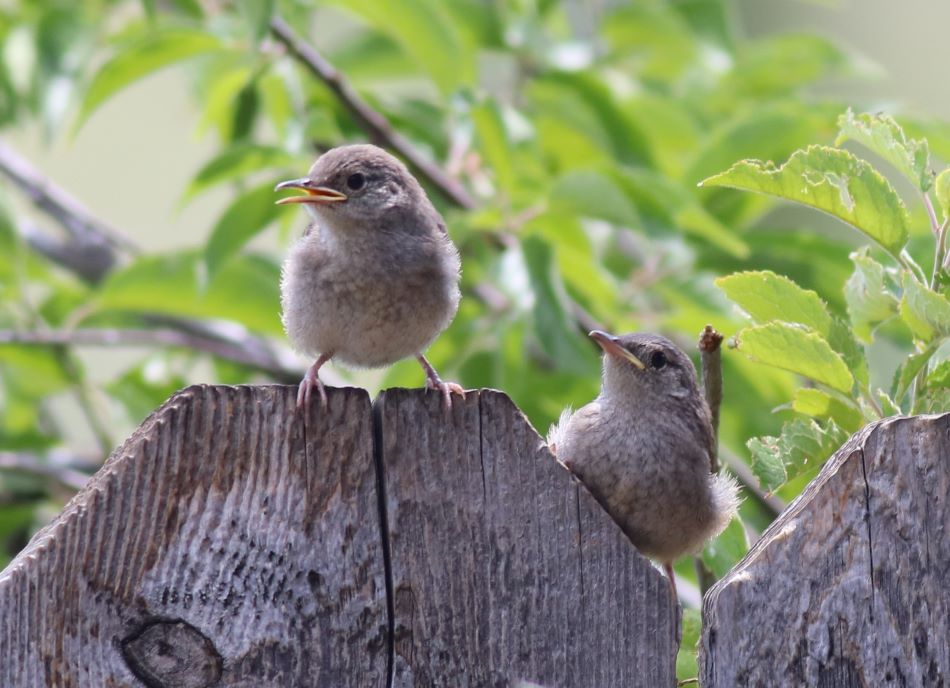 For a while, at least. To learn their calls and songs, and to practice flying.
This morning I went into the backyard with the camera and came away with this image from one of our blooming Apache Plumes.
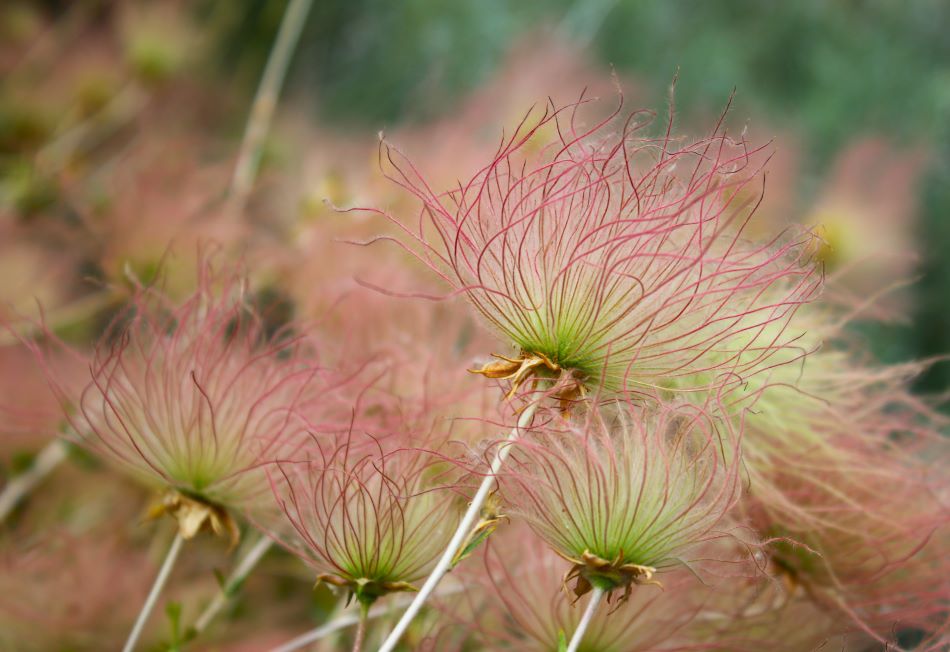
The image reminded me of dancing fairies, delicate and airy. Later, I received an update and thank-you email from a fundraising campaign, sponsored by the Gaza Poets Society, to evacuate two young children from Gaza. The email update stated that due to the continued closure of the Rafah border, the campaign is shifting from evacuation to sustainability (food and basic supplies), and donations of any amount are gratefully accepted. The thank-you portion of the email was a PDF of the Gaza Poets Society Anthology.
As I read through the poems, Dance with Me made me think of my blooming Apache Plume, and I wanted to share the pairing here. His poetry and my photo, connected across the miles, in honor of our shared humanity.
Dance with Me – Mohammed Moussa
I’ll dance with you
under the rain
in love and pain;
on the seashore of hope
we will sing for life and joy.
We’ll dance
on behalf of absence
in the streets, and
on the outskirts of our city
we’ll flap our wings
lift joy and love
and sing
and sing
Today I’m grateful for all the activity that’s viewable from my windows. Just a while ago, I paused my laundry duties to watch house wrens at the nesting box hanging outside the window. Nothing like a little avian activity to lighten the drudgery of dealing with dirty sheets and towels.
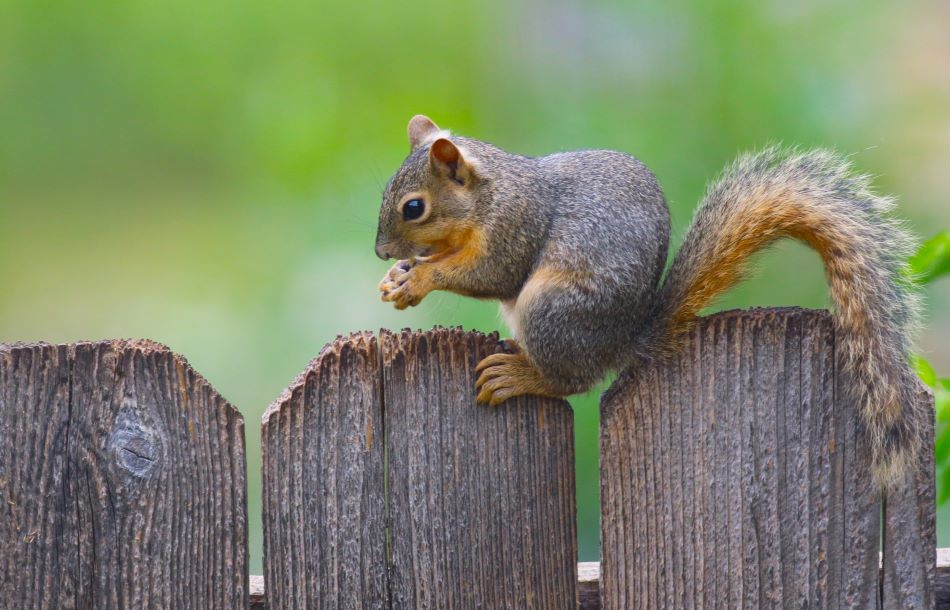
Last week, I photographed this youngster eating the nut munch we provide for neighborhood squirrels. I smiled the entire time.
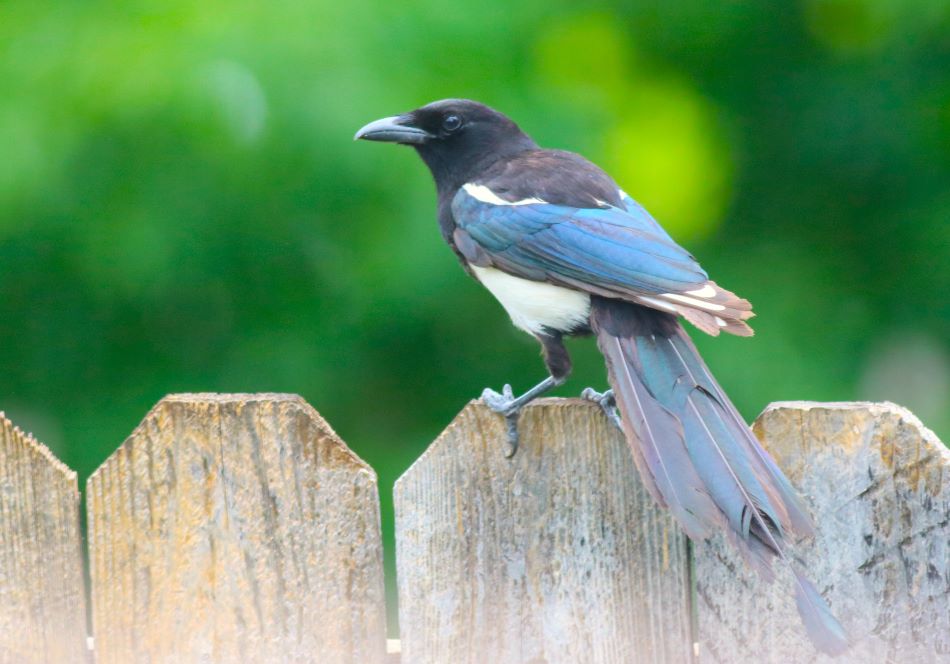
A few minutes later, I was gifted the sighting of this magpie and its colorful plumage. It wasn’t until looking at the photos that I realized a tail feather is damaged. That imperfection doesn’t detract from its beauty, but instead adds to its mystique.
It’s currently 95 degrees and I’m hunkered down inside, grateful for the swamp cooler keeping the house cool-ish and for the windows that allow glimpses of our wildlife visitors.

This morning as I did my daily “bed stretches,” it finally registered in my brain that the magpies were being unusually loud and persistent outside my window. I got up and looked out.
A fox!
I ran to the other end of the house to grab the camera from the dining room table, updating Zippy on the way. When we got back to the window, the magpies were still chastising the fox and I started taking photos through our screen. Unfortunately, the shutter clicks disturbed the fox (s/he turned to look directly at me), so I stopped.

But I texted my neighbor to let him know he had a visitor. He quietly stepped out onto his deck and the fox ran for the back fence where it leapt up onto the same section where a bobcat had sat nearly two years ago, and then disappeared on the other side. A beautiful gift from the universe! And a very, very nice way to begin the day.
Note to self: when you hear incessant magpie calls, investigate!

I don’t know about you, but it’s increasingly difficult for me to get out of bed in the morning. So far, I’ve been able to rally my energy rather than remain curled in the fetal position with the covers pulled over my head, but today I feel the need to return to one of my favorite resources, LET THIS RADICALIZE YOU (mentioned earlier here).

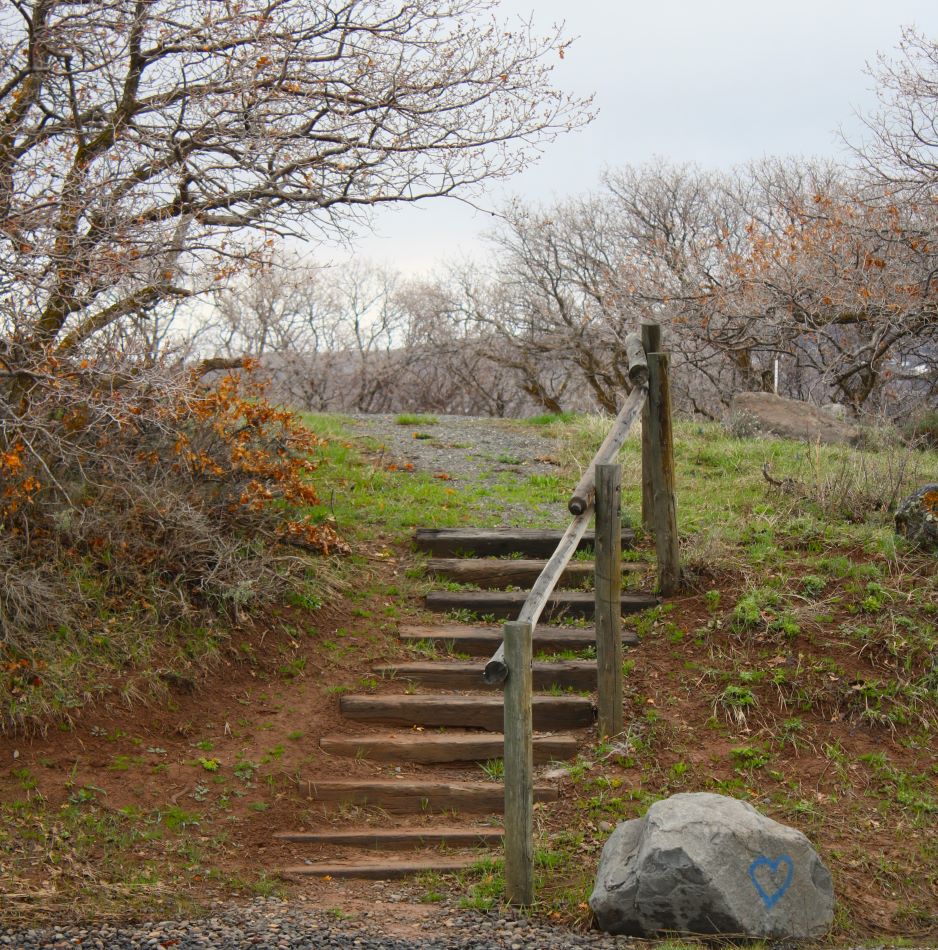
Sandhill Cranes from March 11, 2024, here representing Hope and Grief
The wise Kelly Hayes and Mariame Kaba wrote a chapter titled “Hope and Grief Can Coexist” which is filled with wisdom from their decades of organizing. The following was written in conjunction with paragraphs about climate collapse, but also applies to our broader experience (emphasis mine):
We feel deeply for those who are suffering and for the young people who have inherited this era of catastrophe. We share in their heartbreak and fury.
We also know this: hope and grief can coexist, and if we wish to transform the world, we must learn to hold and to process both simultaneously. That process will, as ever, involve reaching for community.
In a society where fellowship and connection are so lacking, where isolation and loneliness abound, we are often ill equipped to process grief. [ ] Grief can also lead us to retreat and recoil and, too often, to abandon people to suffer in ways that we cannot bear to process and behold.
. . . we, as people, do have power. Depending on our choices, we can turn away from injustice and let it continue, or we can confront our grief and move forward to shift the course of societal action in the face of a massive failure of leadership and institutional abandonment. Grief, after all, is a manifestation of love, and our capacity to grieve is in some ways proportional to our capacity to care. Grief is painful, but when we process our grief in community, we are less likely to slip into despair.
Personally, it helps to view my grief as a manifestation of love, maybe because it’s a reminder of my sense of humanity and connection to others, which makes the pain feel almost welcome. Maybe this perspective does the same for you. Later in the chapter, Hayes and Kaba write:
When we talk about hope in these times, we are not prescribing optimism. Rather, we are talking about a practice and a discipline–what Joanna Macy and Chris Johnstone have termed “Active Hope.” As Macy and Johnstone write,
Active Hope is a practice. Like tai chi or gardening, it is something we do rather than have. It is a process we can apply to any situation, and it involves three key steps. First, we take a clear view of reality; second, we identify what we hope for in terms of the direction we’d like to see expressed; and third, we take steps to move ourselves or our situation in that direction. Since Active Hope doesn’t require our optimism, we can apply it even in areas where we feel hopeless. The guiding impetus is intention; we choose what we aim to bring about, act for, or express. Rather than weighing our chances and proceeding only when we feel hopeful, we focus on our intention and let it be our guide.
Hayes and Kaba continue: This practice of hope allows us to remain creative and strategic. It does not require us to deny the severity of our situation or detract from our practice of grief. To practice active hope, we do not need to believe that everything will work out in the end. We need only decide who we are choosing to be and how we are choosing to function in relation to the outcome we desire and abide by what those decisions demand of us.
This practice of hope does not guarantee any victories against long odds, but it does make those victories more possible. Hope, therefore, is not only a source of comfort to the afflicted but also a strategic imperative.
Whew. Just typing out those words helped center me in my grief and to feel those stirrings of hope all over again. My wish is that they do the same for you. Solidarity, friends!
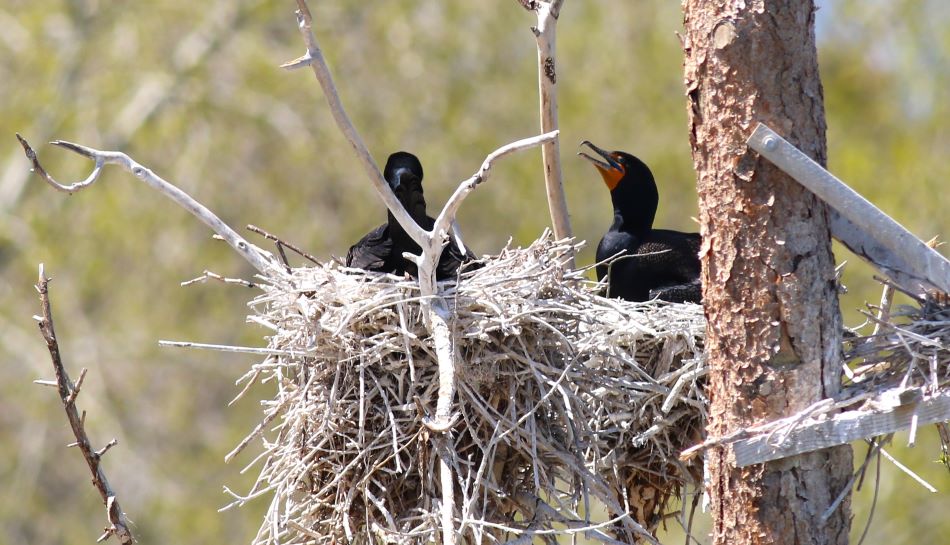
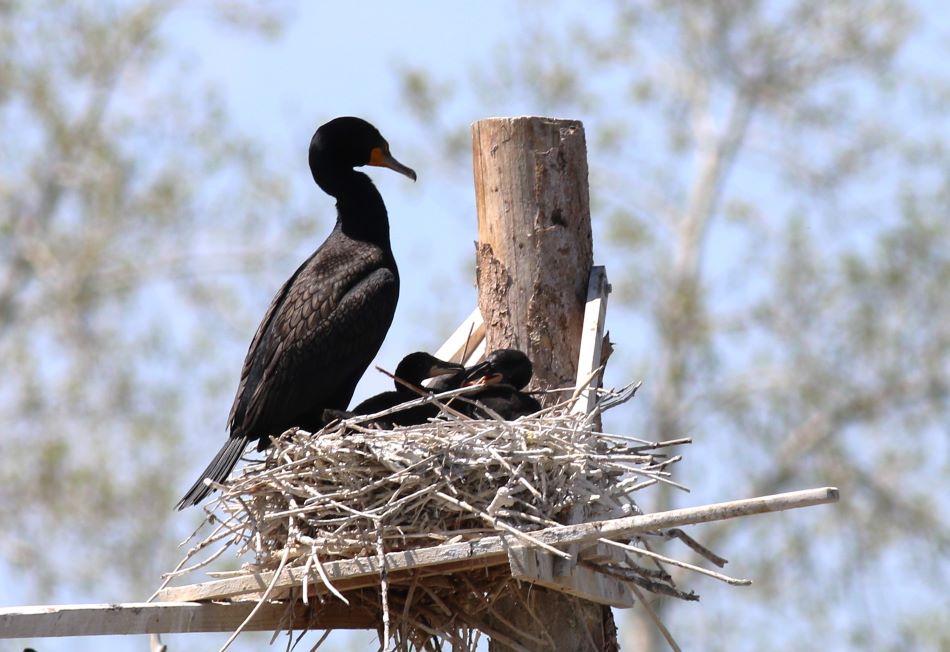
This afternoon Zippy and I went to Belmar Park for an infusion of nature, and it was just what we needed. The Double-crested Cormorants were nesting and their grunting, pig-like sounds cracked me up.
I also enjoyed the Canada Geese and after downloading my pics was pleasantly surprised to discover this photo also includes an array of sunning Painted turtles.
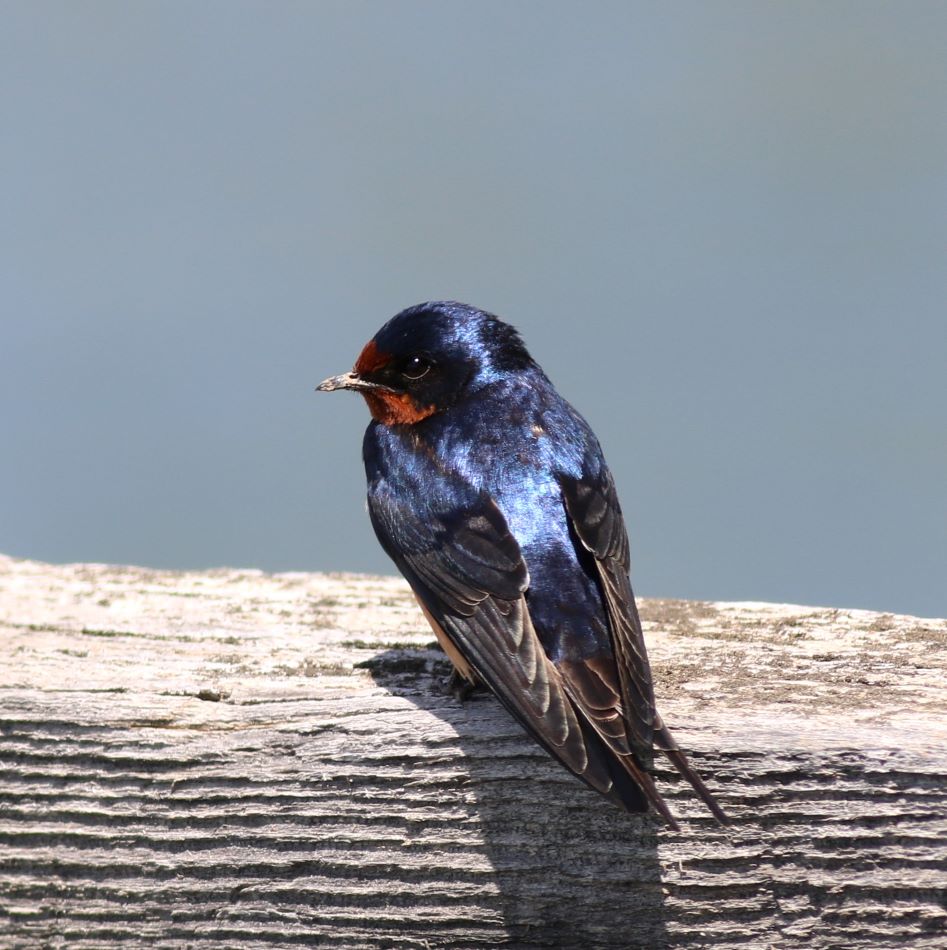
We also saw a whole lot of Barn Swallows flying above the water, catching insects. A couple times we startled at whirring sounds as they flew inches from our heads. Here’s one taking a break.
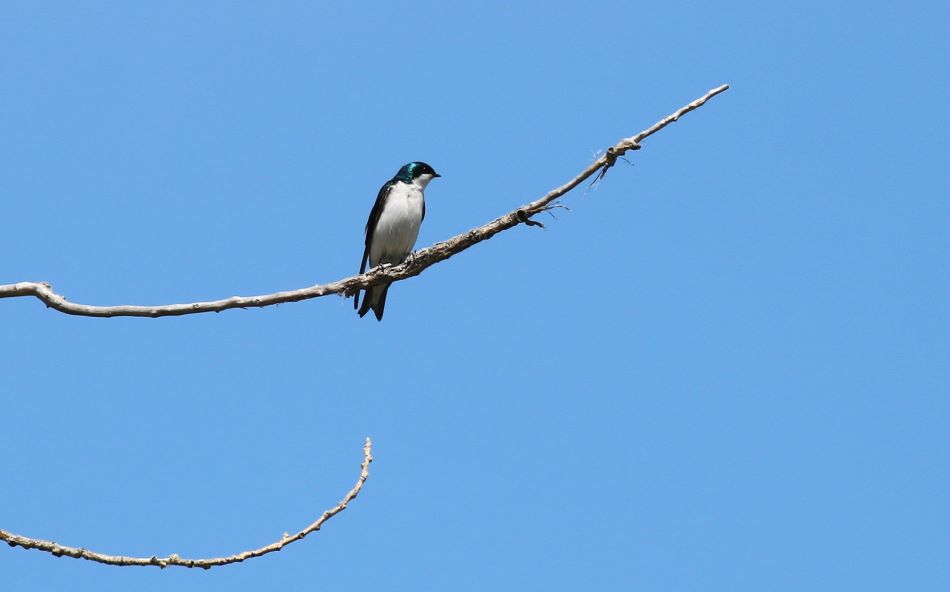
Later, I saw this Tree Swallow perched in a tree. Always a thrill when swallows (or any bird, for that matter!) sit still long enough for identification and a decent photo.
There were other sightings (Red-winged Blackbirds, American Robins, Common Grackles), but I’m losing steam so will close with this fellow:

Although I had no idea what I was seeing, Zippy informed me this is a Greater White-fronted Goose. I was particularly taken by the orange feet and legs which is quite a dapper look. However, when Zippy walked past the second time there was some hissing.

But no biting, so all was well. No harm, no fowl!

Maybe we are all prospective migrants.
The lines of national borders on maps are artificial constructs,
as unnatural to us as they are to birds flying overhead.
Our first impulse is to ignore them.
~ Mohsin Hamid
Welcome back to Movement Mondays in which we discuss all things climate. Today also happens to be Earth Day which, to be honest, I’d like to ignore rather than get caught up in overly-optimistic and/or downright dishonest rhetoric (I’m looking at you, Biden, as you supply tens of thousands of tons of explosives so that Israel may continue blowing up Palestinians, their residences, infrastructure, and farmland). Those in power are not honoring the earth and its inhabitants, and they should all keep “Earth Day” out of their mouths. Okay, Tracy. *deep breaths*
Instead, let’s talk about human composting, otherwise known as Natural Organic Reduction! I’m interested in this topic for two reasons: (1) I plan to be composted upon my death and (2) because my work-in-progress is a middle grade novel about a girl and her family’s funeral home that pivots from conventional death care (embalming, burial in ornate coffins, flame cremation) to green burial and natural organic reduction. Fortunately for me, in March of 2023, I was able to (virtually) attend the very first human composting conference ever (organized by Seth Viddal of The Natural Funeral)! I learned so much and could talk your ear off about all this, but today will only provide a brief overview along with some resources.

Recompose vessel
In early 2021, Recompose became the first human-composting funeral home in the U.S. Katrina Spade is the founder of Recompose, and the person most responsible for spearheading the human composting movement. Thanks to her efforts and those of advocates around the country, human composting is now legal not only in Washington, but also Colorado, Oregon, Vermont, California, New York, Nevada, and Arizona. Legislation has been introduced in another sixteen states (scroll down for list/links).
Why is human composting a climate matter? For every person who chooses Recompose over conventional burial or cremation, one metric ton of carbon dioxide is prevented from entering the atmosphere. In addition, our approach to human composting requires 1/8 the energy of conventional burial or cremation. Recompose allows you to choose an end-of-life option that strengthens the environment rather than depleting it. (This info came from Recompose, but the same applies for human composting via any funeral home’s process.)
From that same page: Current funerary practices are environmentally problematic. Each year, 2.7 million people die in the U.S., and most are buried in a conventional cemetery or cremated. Cremation burns fossil fuels and emits carbon dioxide and particulates into the atmosphere. Conventional burial consumes valuable urban land, pollutes the soil, and contributes to climate change through resource-intensive manufacture and transport of caskets, headstones, and grave liners. The overall environmental impact of conventional burial and cremation is about the same.
Not only does human composting avoid those environmental costs, the process produces soil! Why does that matter? Again, from Recompose: The breakdown of organic matter is an essential component in the cycle that allows the death of one organism to nurture the life of another. Soil is the foundation of a healthy ecosystem. It filters water, provides nutrients to plants, sequesters carbon, and helps regulate global temperature.
Human composting produces about a truck-bed full of soil. Families of the deceased are given the option of taking some or all of that soil OR donating it to land conservation and restoration sites. I’m not sure about other states, but know that here in Colorado the law prohibits the sale of the soil or using it on plants grown for food. The Colorado Burial Preserve in Florence, CO, accepts human composting soil for land restoration (in addition to being a green burial site).
I learned during the conference that many who choose human composting don’t make that choice based on climate concerns, but because it just feels right to be returned to the earth after death. One of the other human composting vendors said that people want more choice for their deaths and that natural organic reduction appeals to them on a “freedom” level. A while back, I wrote about death and how my decision to be composted has given me incredible peace of mind. Everyone should have the freedom to make a death-care choice that speaks to their values. There’s much more to be said about the grief process and how natural organic reduction allows for participation by family and friends, along with a timeline that supports gentle grieving as opposed to an abrupt “that’s-that” burial practice, but I’ll save that conversation for another post.
In the meanwhile, I’d like to offer resources:
I’ll stop here, but PLEASE don’t hesitate to ask questions! As stated, I love talking about this issue and if I don’t have answers, I can point you in the right direction. It’s an exciting development in death care and I hope by sharing this information, some of you might experience a ping of recognition (as in, that’s what I want for me!)
Thank you for reading. Solidarity! ✊🏽

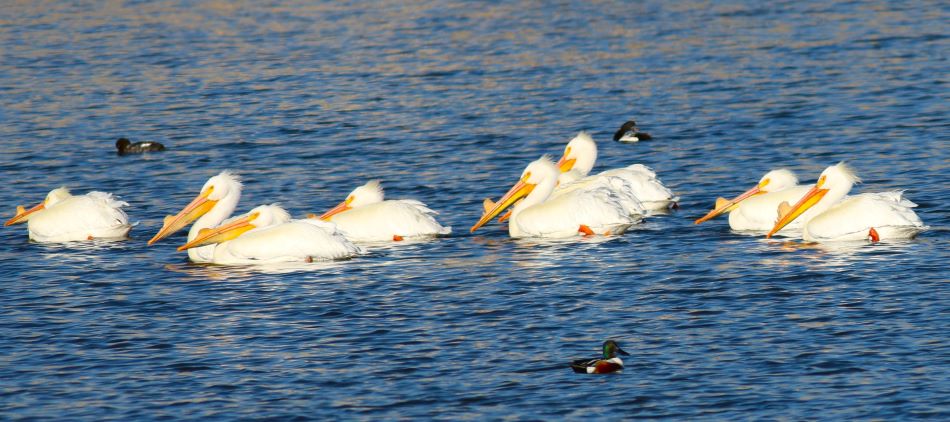
momentary roost
six-foot wings softly rustle
off to recycle
your turn
hit me with a haiku
please
 Tracy Abell