Death and war. War and death.

Every day, my inbox is populated with emails about Gaza. Those messages come from people and organizations that refuse to cede ground to apartheid Israel. Today’s emails include updates from fundraisers for Palestinian families and UNRWA (United Nations Relief and Works Agency for Palestine Refugees) whose subject line read: 800 killed in Gaza just trying to get food. Yes, starving people assassinated by Israel and its chief sponsor, the United States taxpayer, for the crime of needing food for their families.

Heartbroken and enraged, I turned to If I Must Die: Poetry and Prose by Refaat Alareer. Refaat was murdered by Israel on December 6, 2023, and his work published posthumously with support from the global community.


The following excerpt is from “In Gaza, We Have Grown Accustomed to War” (October 19, 2023):

Death and war. War and death. These are two persona non grata, yet we can’t force them to leave. To let us be.

Palestinian poet Tamim Barghouti summarizes the relationship between death and the Palestinians that war brings (my translation):

It was not wise of you, Death, to draw near.

It was not wise to besiege us all these years.

It was not wise to dwell this close,

So close we’ve memorized your visage

Your eating habits

Your time of rest

Your mood swings

Your heart’s desires

Even your frailties.

O, death, beware!

Don’t rest that you tallied us.

We are many.

And we are still here

[Seventy] years after the invasion

Our torches are still alight

Two centuries

After Jesus went to his third grade in our land

We have known you, Death, too well.

O, Death, our intent is clear:

We will beat you,

Even if they slay us, one and all.

Death, fear us,

For here we are, unafraid.

Here’s a link to buy If I Must Die (paperback is also available for pre-order).
Here’s a link to donate to UNRWAUSA.org (and yes, they’re still operating in Gaza). This from their email: Our 12,000 UNRWA colleagues in Gaza are still distributing food, water, and medical care, as best they can, every day, under unimaginable circumstances.

Even after more than 320 of our UNRWA colleagues have been killed. Even after dozens of UNRWA shelters have been hit. Even after borders are blocked and bombs continue to drop.

Thank you for reading. Thank you for caring.
From the river to the sea, Palestine will be free.

Independent journalism: some recommendations

Our reality is very chaotic and bleak right now, and one of the best defenses against what’s happening is to expand our horizons so we’re not relying on the corporate media’s acquiescence to fascism but, instead, seeking information from independent outlets that are, by definition, independent from corporate influence. I’ve linked to a number of these before and decided it would be helpful to have them all in one place.

Image from wearethecity.com

In no particular order, here are some individuals and organizations I value:

  • Marisa Kabas at The Handbasket. Kabas broke the story about the Office of Management and Budget (OMB) memo earlier this week.
  • Sarah Kendzior has pretty much predicted everything we’re living right now and expresses herself in incredibly beautiful language that includes observations of our natural world. Sarah is a very smart and decent person. She has a Substack newsletter and published books.
  • The Lever, founded by David Sirota in 2020, “holds accountable the people and corporations manipulating the levers of power” and broke some of the biggest stories of 2024, including their Master Plan podcast series which traces the decades-long efforts to legalize corruption. These journalists dig deep to root out the truth.
  • Truthout focuses on social justice issues. Kelly Hayes writes for Truthout and also has her own newsletter called Organizing My Thoughts. Kelly is an incredible organizer who never fails to lift my spirits with her wisdom and insights. Highly recommend.
  • Drop Site News, founded by Jeremy Scahill and Ryan Grim, focuses on politics and war. This organization has a more international reach and offers solid insights on what’s happening in the Middle East.
  • The Real News Network‘s mission statement is to make media connection you to the movements, people, and perspectives that are advancing the cause of a more just, equal, and livable planet. We broaden your understanding of the issues, contexts, and voices behind the news headlines.  
  • Adam Johnson contributes to The Real News Network and The Nation, and also has his own newsletter: The Column (Note: he’s working on a project so won’t be posting much until April)
  • Ken Klippenstein‘s focus is to shine a light on the national security state. He has a newsletter on Substack. I also recommend following him on Bluesky (@kenklippenstein.bsky.social) where he publishes LOTS of government info people send from the inside such as yesterday’s tip from a pilot stating that starting February 1, there will be no air traffic control at San Carlos Airport which hosts two flights schools and is only 10 miles from San Francisco International airport, which means inexperienced pilots will be taking off into airspace shared by planes landing at SF airport.
  • Al Jazeera offers breaking news with an international overview.
  • Rolling Stone and Teen Vogue both cover politics, and aren’t pulling any punches regarding what’s happening.
  • For news and perspectives on Palestine, I recommend The Wire from Jewish Voice for Peace and Shalom Rav: A Blog by Rabbi Brant Rosen.
  • Heated is a climate-focused newsletter from Emily Atkin.
  • Erin Reed reports on trans and queer news and legislation at Erin in the Morning: “I summarize it all complete with links to source documents.”
  • Wired is doing a stellar job reporting on Elon Musk’s efforts to dismantle the federal government.
  • Reader Frank J. Peter recommends The Young Turks.
  • Reader Rosaliene Bacchus recommends Tom Dispatch and The Conversation.
  • Reader Mara at The Dirty Sneaker recommends Consortium News, Black Agenda Report, Scheerpost, and Counterpunch.

I welcome any thoughts and insights you have in regard to this list, as well as further recommendations. While I’m not a big fan of Thomas Jefferson, I do agree with this sentiment: “A well informed citizenry is the best defense against tyranny.”

Let’s Turn Refaat Alareer’s “If I Must Die” into a Bestseller

One year ago today, Palestinian writer, poet, and educator Refaat Alareer was targeted and murdered by an Israeli airstrike. I wrote about him here. Today, I received a text message from Ryan Grim and Jeremy Scahill of independent Drop Site News regarding the posthumous publication of Refaat’s poetry and prose collection on December 10. Here is that message:

Today marks one year since Israel assassinated Palestinian Poet, Writer, and Educator Refaat Alareer in a targeted airstrike. On December 10th, Refaat’s book, “If I Must Die,” a collection of his poetry and prose compiled by his friend and former student, Yousef Ajamal, will be published by OR Books.

We’re asking all of our readers, if they can, to pre-order the book in an effort to drive it on to the best seller rankings. Not only is it a truly magnificent piece of writing, a book you’ll be glad to own and/or gift, seeing Refaat’s book at the top of the charts will be a small sign to Palestinians facing genocide that the world has not forgotten them – and it will send a message to his assassins that we haven’t forgotten them either. For our part, we will be buying 535 copies and hand-delivering them to each member of the House and Senate.

Pre-order Refaat’s book here: https://bookshop.org/p/books/if-i-must-die-poetry-and-prose/21530923?ean=9781682196212

UPDATE 12.17.24: DO NOT order from Amazon as scammers took note of the situation and are selling non-authentic books. PLEASE order from bookshop.org at above link.

Tracy here again: I’m editing to add that you can also request your library system purchase the book. In my system, “Suggest a purchase” tab is located under SERVICES. In “additional information we might need,” you can include EAN/UPC 9781682196212 and “the book will be released on December 10, 2024.”

Edited to add: all proceeds will go to Refaat’s remaining family.

UPDATE: see my December 29 post for good news!!!

When I read that message, so many emotions came up. Grief over Refaat’s death, outrage that the genocide continues, and gratitude for this plan to show the besieged Palestinian people that we care. If you’re able, I hope you’ll consider helping this effort by pre-ordering the book. Just yesterday, I wrote about the orchestrated efforts to shut down pro-Palestinian speech and actions. Elevating “If I Must Die” to the bestseller list would be a huge middle finger to those desperately trying to normalize genocide, starvation, destruction, and land theft.

Drop Site also sent a lengthier, more detailed email about Refaat, the targeting of poets and intellectuals, and the ins and outs of the publishing industry’s bestseller “process.” The following is that email:

Today marks one year since Israel assassinated Palestinian writer, poet and educator Refaat Alareer with a targeted airstrike on the second floor apartment where he was taking refuge with extended family. The strike also killed his brother, his brother’s son, his sister and her three children.

Israel’s targeting of poets and intellectuals was not new, but his killing struck a chord around the world, as Refaat had committed his life to the study and practice of the English language, believing it to be a tool of liberation and empowerment. Through his work and his interviews, he gathered a global audience of admirers.

After he was killed, his poem “If I Must Die” became a worldwide viral sensation, a window into the soul of the man who’d been ripped from the world.

On December 10, Refaat will posthumously publish a book“If I Must Die,” a collection of his poetry and prose, which also includes excerpts of important interviews he gave, compiled by his friend and student Yousef Aljamal.

As a small measure of justice, we want to turn Refaat’s book into what it desperately deserves to be: an international bestseller. We need your help and we have just five days to make it happen.

First, sign this pledge to buy the book this coming TuesdayWe’ll send you an email to remind you to do it that day. Enter your phone number if you want a text reminder too, but it’s not necessary. We won’t sell or share your contact info. The royalties from the book go to Refaat’s family. But more importantly, pre-order it now at bookshop.org or Amazon.

SIGN THE PLEDGE TODAY!

Here’s the background: The publishing industry cares most about the Amazon ranking and the New York Times best seller list. Depending on the day, a book can hit the top of the charts on Amazon with as few as 10,000 copies sold. But they cannot be bulk orders: Anything more than nine probably gets flagged as a bulk order. If you do want to make a bulk order, do it from an independent bookstore online, not from Amazon. (Amazon will certainly flag it as bulk.)

The NYT list is an opaque combination of in-person and online sales from Amazon, big retailers like Barnes and Noble, and indie stores.

Paid pre-orders count toward the rankings.

So here’s what to do: If you can only buy one book, pre-order it either from bookshop.org or Amazon, whichever is your preference. If you can buy three, buy one from each.

Initially, we had urged people to buy it on the date it comes out, and not pre-order, but so many people have pledged that OR Books, which is a small publisher, is now worried it will sell out on Tuesday. The way around that problem is to get your pre-order in now.

If you can throw a few hundred dollars at this effort, buy up to nine from each of those platforms and give them away. (That would cost you about $650.)

If you really want to do a bulk order of more than nine and maximize the chance it gets counted in the rankings, do it through an independent bookstore and not Amazon (which will flag it as a bulk order).

If you buy it from a bookstore in person on Tuesday, ask the manager if they report sales to the bestseller lists. Most stores do, but if they don’t report sales, then your purchase won’t get counted.

The poem “If I Must Die” is addressed to his daughter Shaymaa Refaat Alareer, and is a plea to her and all of us to keep hope for a better world alive. “If I must die/you must live/to tell my story/to tell my story/to sell my things/to buy a piece of cloth/and some strings/(make it white with a long tail)/so that a child, somewhere in Gaza/while looking heaven in the eye/awaiting his dad who left in a blaze—and bid no one farewell/not even to his flesh/not even to himself—sees the kite/my kite you made/flying up above/and thinks for a moment an angel is there/bringing back love.”

He then concludes:

If I must die
let it bring hope
let it be a tale

In April, Israel struck and killed Shaymaa, her husband, and their two-month-old son. It is up to us to let Refaat’s life be a tale. We at Drop Site have nothing to do with his book, which is published by OR Books, but we want to help make it a bestseller. It is, on the one hand, a true masterwork, and a rich and poignant read you will return to again and again.

Yet we want you to purchase it for another reason, too: To let it fly to the top of the rankings like a kite. Seeing Refaat’s book flying there will be a small sign to Palestinians facing genocide that the world has not forgotten them – and it will send a message to his assassins that we haven’t forgotten them either. Nothing can bring back Refaat or his family but this is one small dose of justice we can dole out.

At Drop Site, we’ll be buying 535 copies and distributing them to each member of Congress after they’re sworn-in in January.

If you live in the Washington, DC area and can help be part of the hand-out effort, please email contact@dropsitenews.com with the subject line “I will help hand out Refaat’s book.” (The publisher is giving us a bulk discount, and our readers were tremendously generous to us on Giving Tuesday, so thank you for helping make this happen.)

Collectively, we have the capacity to do this. Let it be a tale.

Sign the pledge! Let it be a tale.

If you’ve read this far, thank you thank you thank you. Free Palestine!
Zionism doesn’t only harm Palestinians

Although I am not Jewish, I wanted to share two recent pieces focused on the generational and political fractures forming in the Jewish community (specifically, institutions such as synagogues and schools). It makes me sad on multiple levels to see the damage being done to longstanding communities and those with lifelong commitments to Jewish professional life because of the clash between Zionism and anti-Zionism.

The first article, “U.S. Jewish Institutions Are Purging Their Staffs of Anti-Zionists: A months-long investigation found even the smallest hints of dissent are often met with unemployment” was published by Shane Burley on

On October 18, 2023, protesters with the anti-Zionist organization Jewish Voice for Peace and other progressive Jewish groups staged a sit-in in the Cannon House Office Building at the U.S. Capitol in Washington, D.C., to protest the Israeli assault on Gaza.
Photo by Alex Wong/Getty Images

Countless Jewish progressives and youth have answered the call for solidarity with Palestine, and the community’s entrenched political, religious, and cultural institutions are determined to punish them for it.

This attitude has long-term consequences for Jewish institutions. Per Shane Burley (emphasis mine): “… this is happening across the Jewish world at the same time that there’s a leadership vacuum, or people are retiring from these jobs and they can’t get them refilled. It’s harder to hire rabbis, less people are becoming rabbis. It’s harder to hire Jewish educators. It’s harder to hire these people. And so at the same time as they’re having trouble reproducing these organizations, they’re kicking out the people that are often the most tied in, the people that are most involved in it.

Burley goes on to say: I think history is very clear that Jewish life flourishes when Jewish diversity and Jewish freedom of conscience flourishes as well. And also in a cosmopolitan, multicultural society where difference is respected and all communities are protected. Historically, Jewish communities are often safest when partnering with other communities who have been threatened by the far right or by the state or things like that.

So we’re undermining exactly that history with this very isolationist, nationalist narrative. And we’re cutting out the very forces, activists, community organizers, anti-fascists, that have protected us in the past. So we’re breaking that continuity really distinctly.

Near the end, host Marc Steiner says this:
Well, I think that the voices that you allowed us to hear in your article are the voices that need to be heard. [   ]  Because their stories are important for the world to hear. And I really do look forward to more conversations with you, but also with some of the folks that you interviewed in your article that we can do together to bring their voices out because they need to be heard. They’re the ones who were attacked. They’re the ones who are fighting for their beliefs. They’re the ones who are going to be the engine that pushes the revolution of change inside the Jewish world, I think.

I stand on the side of those speaking truth to power. Solidarity with the courageous people risking their livelihoods to speak out against apartheid, settler colonialism, and genocide!

Climate Movement Monday: turning the fossil fuel narrative on its head

Welcome back to Movement Mondays in which we discuss all things climate. Today I’m returning to Not Too Late: Changing the Climate Story from Despair to Possibility (edited by Rebecca Solnit & Thelma Young Lutunatabua) in order to offer my readers another lens to look at our climate reality while also imagining a better world.

At the start of the chapter “Different Ways of Measuring: On Renunciation and Abundance” (a conversation between Solnit and Lutunatabua), there’s this quote from Dr. Elizabeth Sawin:

“It is some very effective marketing that has convinced so many of us that getting off of fossil fuels is a sacrifice as opposed to a money-saving, peace-promoting, water-protecting, health-improving, technological leap forward.”

This jumped out at me because whenever I (foolishly) read comments about various climate actions (and it doesn’t matter if it’s folks politely demanding better of their government or Climate Defiance interrupting fossil fuel executives as they’re being celebrated), there are always people who ridicule the activists for imagining a world without fossil fuels. Those naysayers insist the many negative consequences  we’re experiencing in real-time are a given and that there’s no way forward that doesn’t include fossil fuels. A frequent commenter “gotcha” is “Did you drive your car to that action?” which reveals a complete lack of imagination in regards to our woefully inadequate public transportation, connected biking routes, etc.

Directly following Sawin’s quote, Solnit eloquently presents a different perspective that I’d love to copy and paste in reply to those cynical comments.

What if the climate crisis requires us to give up the things we don’t love and the things that makes us poorer, not richer? What if we have to give up the foul contamination around fossil-fuel extraction, the heavy metals people inhale when coal is burned around them, the oil refineries that contaminate the communities of color around them from the Gulf of Mexico to California? What if the people of Richmond in my own home region, the Bay Area, didn’t have emergency alerts where they were supposed to seal their homes because of a refinery leak? What if the incidence of asthma in kids went way down, and we stopped losing almost nine million people a year to pollution worldwide? What if that moment when the pandemic shut down so much fossil-fuel burning that people in parts of northern India saw the Himalayas for the first time in decades became permanent?   

I don’t know about you, but reading those words expanded my mind and heart, while reaffirming my belief in a better world. Kicking our fossil fuel addiction won’t set us back, but will instead liberate us to live healthier, happier lives.

If you’re interested, here’s an article about the visible Himalayas, including grateful social media posts:  Peaks of Himalayas visible from parts of India for first time in decades as pollution drops amid lockdown. And if these quotations resonated with you and you’re interested in reading more, Not Too Late is available through Haymarket Books and is currently offered at a discount.

Thank you for reading this far and please know I welcome all thoughts and comments below (spoiler: no, I did not drive my car to this post). Until next time, solidarity! ✊🏽

Twofer Tuesday: Sarah Kendzior + Great Blue Herons

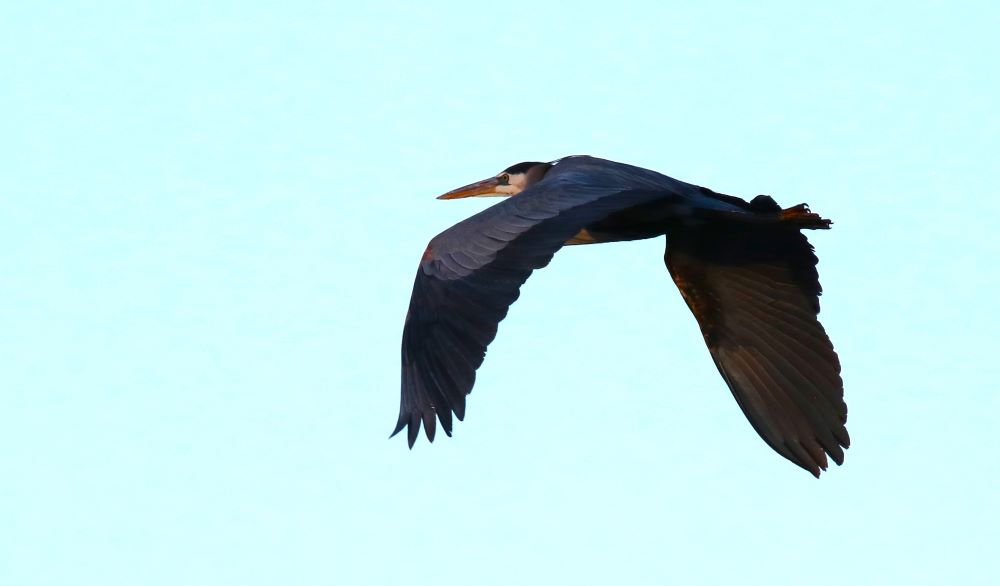
Today I offer a majestic Great Blue Heron I had the honor of seeing last April, along with a link to Sarah Kendzior’s latest essay which, in addition to featuring sobering insights about our political reality, references a Great Blue Heron.

Lake Hasty on the evening of April 3, 2024


I’ve never met Sarah, but she feels like a kindred spirit. Sarah also escapes to nature when the world overwhelms and her heart aches. Tomorrow I’m heading off solo in our campervan to spend a few days in nature where I will revel in the flora and fauna. I hope to capture other images that will ground me and bring calm each time I look at them, visual mental health talismans on-call for whenever I’m in need.

I’m grateful for my privilege that makes it possible to escape into nature, and I wish the same for everyone everywhere. Someone in Sarah’s comments posted a very apt Wendell Berry poem which I’ll include here:

The Peace of Wild Things
When despair for the world grows in me
and I wake in the night at the least sound
in fear of what my life and my children’s lives may be,
I go and lie down where the wood drake
rests in his beauty on the water, and the great heron feeds.
I come into the peace of wild things
who do not tax their lives with forethought
of grief. I come into the presence of still water.
And I feel above me the day-blind stars
waiting with their light. For a time
I rest in the grace of the world, and am free.

Again, here is the link to Sarah Kendzior’s piece: Birds of a Feather

I’ll note that I’ve been reading Sarah’s work for the past few months and today, finally, upgraded to a paid subscription. Her eloquence and humanity are always on display, but Birds of a Feather hit me especially hard (in a good way).

Wishing everyone a good week that, I hope, includes some interactions with the natural world.

Some timely reading

The Democratic National Convention has begun in Chicago and I’d like to share links to a couple pieces that resonated with me.

The first is from the incomparable Sarah Kendzior who writes a newsletter on Substack. It was published yesterday and is titled Distant Vibes: Welcome to the era of the No Information Voter.

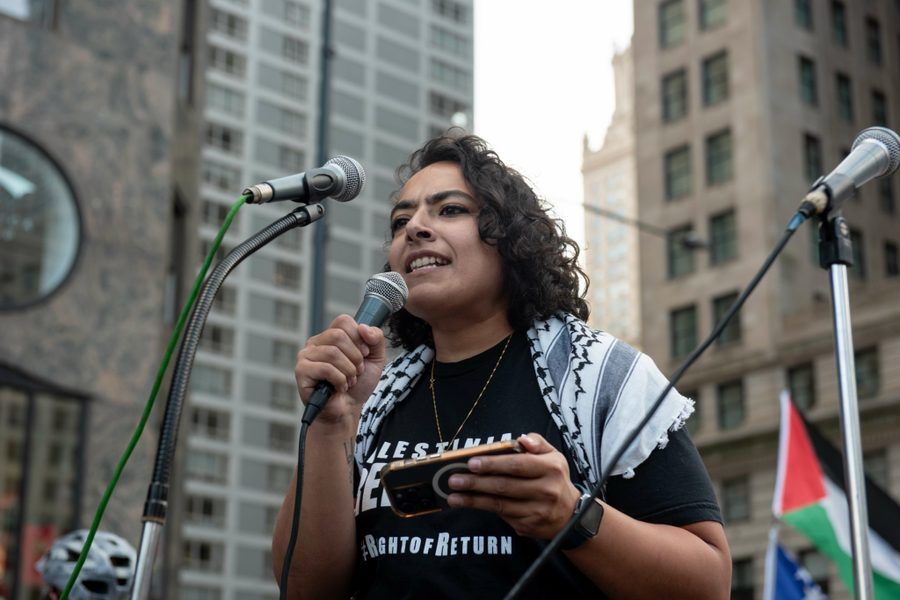
The other is the speech delivered by Eman Abdelhadi (“And now they want our votes”) at the massive demonstration in Chicago yesterday.

Eman Abdelhadi speaks at the Bodies Against Unjust Laws march in Chicago on Sunday, August 18.
Photo by Steel Brooks

If you’re interested in independent coverage of the DNC, I highly recommend signing up for emails from In These Times / The Real News Network. You can do that HERE.

Please leave a comment if you have other reading/sources to recommend!

Grief is the opposite of indifference

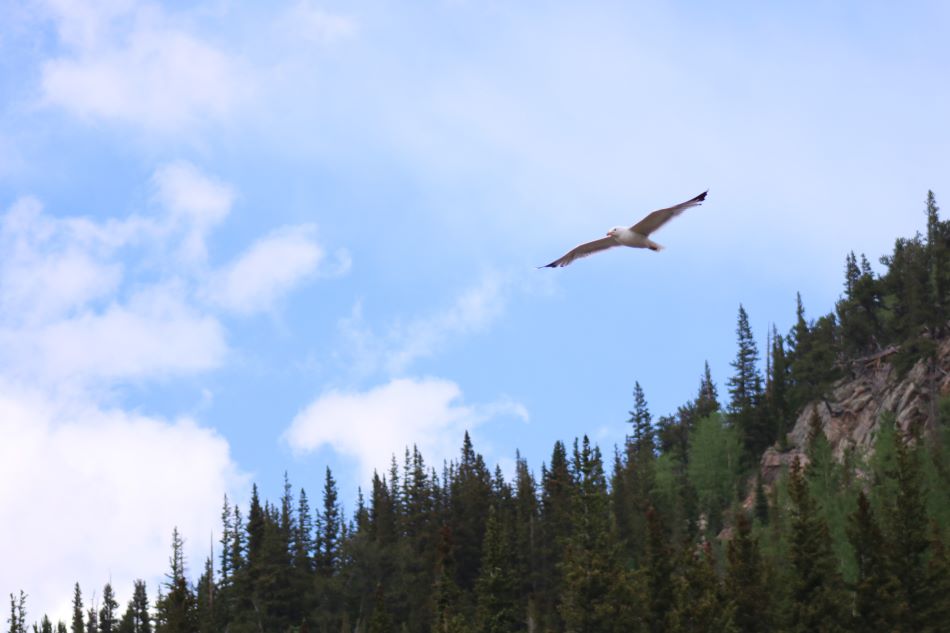
Gull gliding above Jefferson Lake, July 1, 2024

Becoming aware of grief gives us more choices about how to respond to grief and opens up possibilities to approach grief not only with compassion for self and others, but also with joy. Joy is not the opposite of grief. Grief is the opposite of indifference. Grief is an evolutionary indicator of love — the kind of great love that guides revolutionaries.
~ Malkia Devich-Cyril 

Note: I found that quote in Let This Radicalize You: Organizing and the Revolution of Reciprocal Care by Kelly Hayes & Mariame Kaba (it comes from this essay) and wanted to share it in response to my grief on many fronts: genocide in Gaza, climate collapse, political cowardice, abandonment during a global pandemic, etc. It also feels like a worthy companion to the excerpt shared in Rosaliene Bacchus’s post: Sighting the Storm which resonated with me.

Day 261: it’s all connected, we’re all connected

On this 261st Day of Genocide in Gaza, I admit to being stunned that the carnage has not only not ceased, but has become increasingly depraved. I won’t go into details as the words and images are easily found due to IOF soldiers proudly documenting their depravity/lack of humanity on social media sites. To counteract the sadism, I decided to offer a poem by a Palestinian, and so went in search of something that resonated.

I landed on a poem by Mahmoud Darwish (1941-2008) who is “feted as Palestine’s national poet for his words expressing the longing of Palestinians deprived of their homeland, which was taken by Zionist militias to make way for present-day Israel. His poetry gave voice to the pain of Palestinians living as refugees and those under Israeli occupation for nearly a century.” And because this morning I began reading the Pulitzer Prize-winning Blood in the Water: The Attica Prison Uprising of 1971 and Its Legacy by Heather Ann Thompson, the Darwish poem I chose is “The Prison Cell.” Because just as the United States incarcerates more people than any country on earth (currently about 2 million people), Israel incarcerates thousands upon thousands of Palestinians and holds them without filing charges. It’s all connected. We’re all connected. And just as the incarcerated in the U.S. are treated as less-than and subjected to brutal conditions, so are the Palestinians. It doesn’t matter who we are or where we live on this planet: It’s all connected. We’re all connected.

In this spirit, I offer:

The Prison Cell
by Mahmoud Darwish
(Translated by Ben Bennani)

It is possible . . .
It is possible at least sometimes . . .
It is possible especially now
To ride a horse
Inside a prison cell
And run away . . .

It is possible for prison walls
To disappear,
For the cell to become a distant land
Without frontiers:

What did you do with the walls?
I gave them back to the rocks.
And what did you do with the ceiling?
I turned it into a saddle.
And your chain?
I turned it into a pencil.

The prison guard got angry.
He put an end to the dialogue.
He said he didn’t care for poetry,
And bolted the door of my cell.

He came back to see me
In the morning.
He shouted at me:

Where did all this water come from?
I brought it from the Nile.
And the trees?
From the orchards of Damascus.
And the music?
From my heartbeat.

The prison guard got mad.
He put an end to my dialogue.
He said he didn’t like my poetry,
And bolted the door of my cell.

But he returned in the evening:

Where did this moon come from?
From the nights of Baghdad.
And the wine?
From the vineyards of Algiers.
And this freedom?
From the chain you tied me with last night.

The prison guard grew so sad . . .
He begged me to give him back
His freedom.

—-

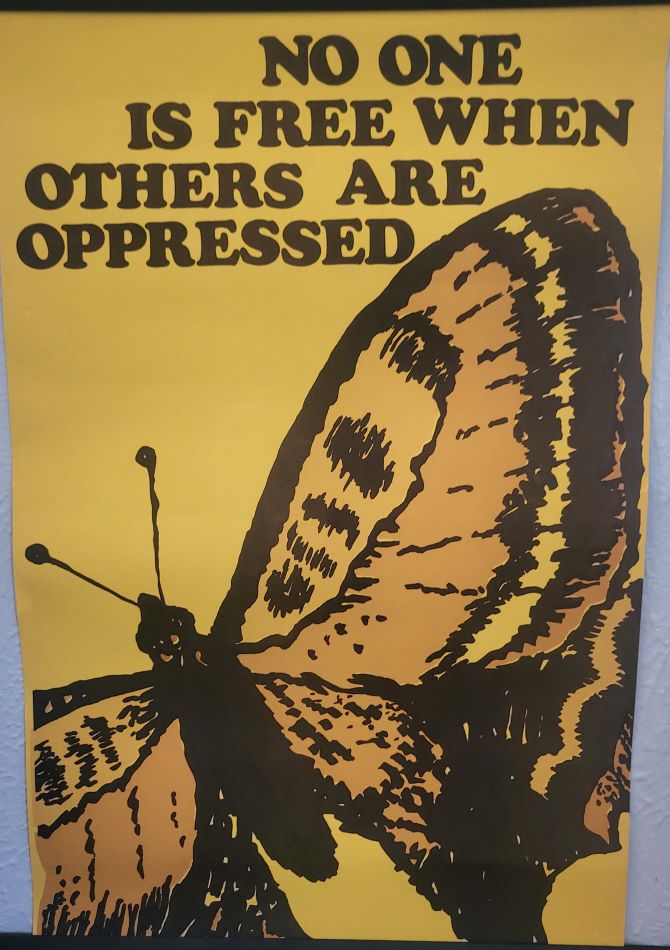
One final connection between Palestinians, the men in Attica in 1971, and me: this poster I unearthed in my basement yesterday, one I’d bought years ago (and possibly hung in my California classroom):


It’s all connected. We’re all connected.

Raising a middle finger to A.I.

After this morning’s writing session in which I sought refuge from our current reality by working (some more) on chapter 8 of my middle grade novel, I came here to check my WordPress dashboard. In my Contacts spam folder, was the following:
Edited to add this gem from another spammer on 6.5.24:
This state-of-the-art web app allows you to create captivating children’s books using advanced AI technology. It takes care of both the writing and illustration, and all you need to do is input your ideas (or let the app come up with the idea too, LOL). No writing or illustration skills needed!

Hope and grief can coexist

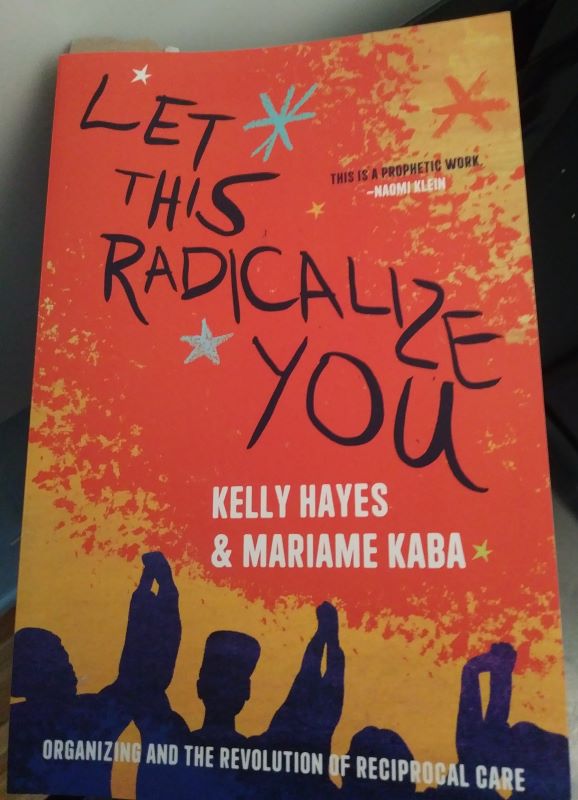
I don’t know about you, but it’s increasingly difficult for me to get out of bed in the morning. So far, I’ve been able to rally my energy rather than remain curled in the fetal position with the covers pulled over my head, but today I feel the need to return to one of my favorite resources, LET THIS RADICALIZE YOU (mentioned earlier here).

Sandhill Cranes from March 11, 2024, here representing Hope and Grief

The wise Kelly Hayes and Mariame Kaba wrote a chapter titled “Hope and Grief Can Coexist” which is filled with wisdom from their decades of organizing. The following was written in conjunction with paragraphs about climate collapse, but also applies to our broader experience (emphasis mine):

We feel deeply for those who are suffering and for the young people who have inherited this era of catastrophe. We share in their heartbreak and fury.

We also know this: hope and grief can coexist, and if we wish to transform the world, we must learn to hold and to process both simultaneously. That process will, as ever, involve reaching for community.

In a society where fellowship and connection are so lacking, where isolation and loneliness abound, we are often ill equipped to process grief. [   ]  Grief can also lead us to retreat and recoil and, too often, to abandon people to suffer in ways that we cannot bear to process and behold. 

. . . we, as people, do have power. Depending on our choices, we can turn away from injustice and let it continue, or we can confront our grief and move forward to shift the course of societal action in the face of a massive failure of leadership and institutional abandonment. Grief, after all, is a manifestation of love, and our capacity to grieve is in some ways proportional to our capacity to care. Grief is painful, but when we process our grief in community, we are less likely to slip into despair.

Personally, it helps to view my grief as a manifestation of love, maybe because it’s a reminder of my sense of humanity and connection to others, which makes the pain feel almost welcome. Maybe this perspective does the same for you. Later in the chapter, Hayes and Kaba write:

When we talk about hope in these times, we are not prescribing optimism. Rather, we are talking about a practice and a discipline–what Joanna Macy and Chris Johnstone have termed “Active Hope.” As Macy and Johnstone write,

Active Hope is a practice. Like tai chi or gardening, it is something we do rather than have. It is a process we can apply to any situation, and it involves three key steps. First, we take a clear view of reality; second, we identify what we hope for in terms of the direction we’d like to see expressed; and third, we take steps to move ourselves or our situation in that direction. Since Active Hope doesn’t require our optimism, we can apply it even in areas where we feel hopeless. The guiding impetus is intention; we choose what we aim to bring about, act for, or express. Rather than weighing our chances and proceeding only when we feel hopeful, we focus on our intention and let it be our guide.

Hayes and Kaba continue: This practice of hope allows us to remain creative and strategic. It does not require us to deny the severity of our situation or detract from our practice of grief. To practice active hope, we do not need to believe that everything will work out in the end. We need only decide who we are choosing to be and how we are choosing to function in relation to the outcome we desire and abide by what those decisions demand of us.

This practice of hope does not guarantee any victories against long odds, but it does make those victories more possible. Hope, therefore, is not only a source of comfort to the afflicted but also a strategic imperative.

Whew. Just typing out those words helped center me in my grief and to feel those stirrings of hope all over again. My wish is that they do the same for you. Solidarity, friends!

A Palestinian Girl’s Fight For Freedom

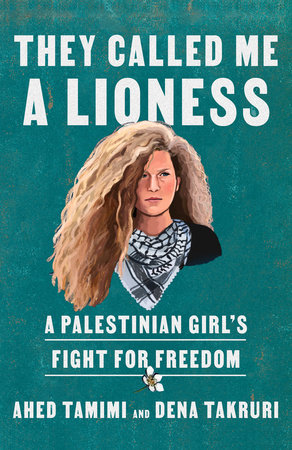
Several weeks ago, I noted a book I was reading: They Called Me a Lioness: A Palestinian Girl’s Fight for Freedom by Ahed Tamimi and Dena Takruri. (A Palestinian activist jailed at sixteen after a confrontation with Israeli soldiers illuminates the daily struggles of life under occupation in this moving, deeply personal memoir.) As mentioned, I highly recommend reading this for a deeper understanding of what it’s like to be a Palestinian living under Israeli occupation.

We in the U.S. are shielded from the brutal truths of their lived experiences and so not everyone would, for instance, recognize the significance and hypocrisy of the Zionist adjunct professor at Columbia University who this past Monday could not fathom being prevented from going where he wanted to go, when he wanted to go. How dare they stop him?! Well, in the West Bank alone (which is where Ahed Tamimi and family live), there are hundreds of checkpoints, road blocks, and walls that prevent free movement. I read somewhere recently that workers must line up at some checkpoints at 3:00 a.m. in order to get to work on time. That entitled little professor wouldn’t last a week under those circumstances.

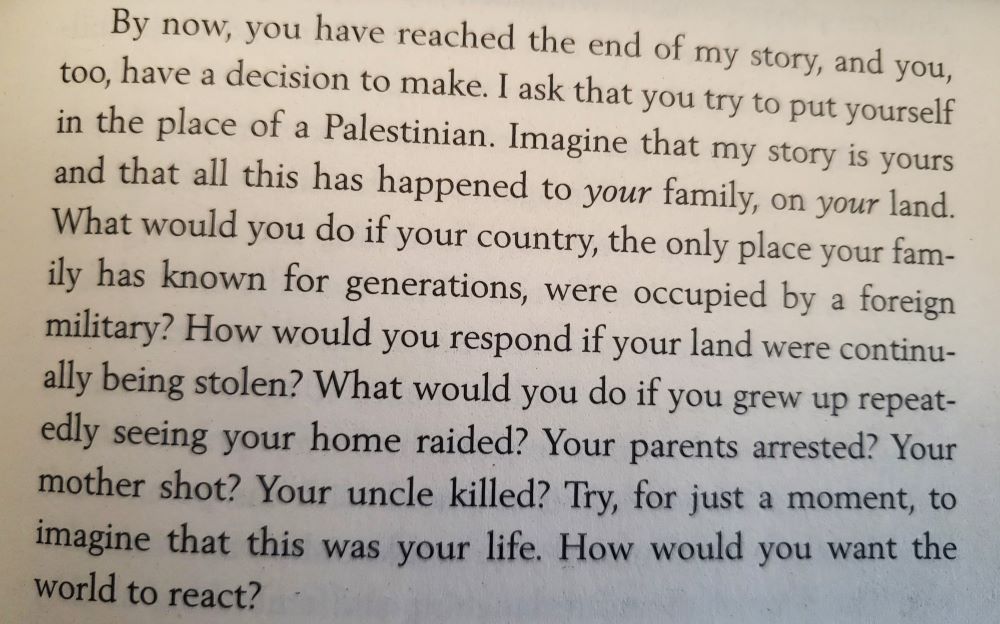
The occupation and apartheid are not only damaging to Palestinians, but also the Jewish population. Oppression is not good for anyone. This excerpt came in the final pages of They Called Me a Lioness:

We are seeing this loss of humanity and conscience in real time as Israeli soldiers post videos of themselves gleefully destroying Palestinian homes–ransacking clothing drawers and modeling lingerie, breaking toys, destroying food–and bulldozing warehouses of food and the last working bakery in a neighborhood. They are using drones that mimic the sounds of crying women and children in order to lure Palestinians from their camps in order to shoot them. Mass graves outside hospitals are being unearthed, with doctors in hospital gowns executed with their hands tied behind their backs, patients executed with catheters in them, and children executed while hands are tied. (Note: I don’t have the stomach to search for links to all these atrocities, but I assure you the info is available should you want to see it for yourself.)

Here is one more excerpt from Ahed Tamimi’s story:

I’d like to be able to report that Ahed Tamimi was able to freely continue her studies of international law after serving eight months in prison (as a 16-year-old!) for slapping an Israeli soldier who was raiding her village and harassing her family in their front yard. Unfortunately, that’s not the case. Ahed was arrested again in November 2023 and held for three weeks without being charged. She was released at the end of the month as part of the prisoner exchange, but reported that the women in Israel’s jails are beaten, and refused food and water.

The corporate media presents a very slanted perspective and we are not getting the full story, not at all. I encourage you to learn for yourself by reading  Ahed’s story.

Climate Movement Monday: lies from Big Meat via HEATED

Welcome back to Movement Mondays in which we focus on climate-related topics. I typically try to highlight an issue directly affecting a frontline community and then offer an action you can take on their behalf. Today I’m taking a different approach and using this opportunity to shine a light on a wonderful climate newsletter called HEATED.

Emily Atkin

Per their About page, HEATED is “Accountability journalism for the climate crisis,” from climate journalists Emily Atkin and Arielle Samuelson. I started out as a subscriber and am now a paid subscriber because I want to support their in-depth reporting, and I hope you’ll check them out.

Arielle Samuelson


I’ve chosen today’s story because it involves meat and  I haven’t yet addressed the climate impact of eating industrially-raised animals in Movement Mondays.  To be honest, I haven’t thought about it much as I’m a lifelong vegetarian but am guessing at least some of my readers are meat-eaters and will welcome this info as it identifies certain brands making false sustainability claims. At the heart of this story is JBS USA, an arm of the world’s largest meatpacking company, and its fraudulent promise to reach “net zero emissions by 2040,” and the New York Attorney General going after them for this claim. I’ve linked the newsletter below.

Big Meat is lying about sustainability. These media outlets are helping.
Can newsrooms really expect people to trust their reporting if they fund it by spreading misinformation?  by Emily Atkins and Arielle Samuelson. March 6, 2024

Thank you for reading and please share any thoughts or questions in the comments. Note: I scheduled this post before leaving for a national wildlife refuge to see thousands of Sandhill Cranes, so my replies will come later this week. Solidarity! ✊🏽

Day 155 of the genocidal war on Palestinians

Today is Day 155 of the brutal assault on Gaza. Over 30,000 have been killed, 70% of them women and children.  Sunset tomorrow marks the beginning of Ramadan, the Muslim holy month. Currently, 1.5 million Palestinians are crowded into Rafah, the southernmost city in Gaza, the region they fled to because the Israelis kept telling them to move south to “safe zones.” Every so-called safe zone has been bombed and destroyed and now those traumatized, starving, desperate people are facing the imminent Israeli ground invasion of Rafah, an invasion fully sponsored by the United States. (Genocide Joe is an ardent Zionist and in 1982 revealed to then-Prime Minister, Menachem Begin, Biden’s willingness to slaughter Palestinian women and children, a statement so callous it stunned the militant Zionist PM.)

The situation is horrifying on every single level. PLEASE continue to contact your reps (to make them uncomfortable, if nothing else), demanding an immediate and permanent ceasefire + an end to aid to Israel. Food and supplies must be allowed in!  The performative airdrops are literally killing Palestinians, as they are either targeted by Israel while trying to retrieve the food or are crushed by a pallet.

The following artwork and poem come from POEMS FOR PALESTINE. I shared another poem and illustration from this collection here and you may go here for a free download of the entire chapbook. Publishers for Palestine encourages us to read and share widely!

Artwork: Hassan Manasrah
@hassan.manasrah.illustrations

NOTE: The poem is a screenshot because I wanted to preserve the poet’s spacing. Click on it for an easier read.

Poem from Basman Aldirawi, Gazan poet

This Bread Was Born,
This Bread Was Killed
by Basman Aldirawi

Artwork: Aly S.Elsayed
@aly.selsayed

With clean hands,
he gently sifts the flour,
and adds a handful of yeast.
He pours the warm water
for the yeast particles to live,
then rolls and kneads and rolls
and kneads the dough.
He lets the soft mass rest.
With firm but gentle hands,
he rounds it into balls,
flattens them into shape,
and handles each one
delicately into the oven.
Soon, perhaps in half an hour,
the bread rolls are born fresh,
healthy and browned.
The newborn breads breathe,
yet dust chokes the air,
searing gasses penetrate
their thin, fragile crusts.
On the day of their birth, a missile,
a bakery, a scattering
of zaatar, flesh, and blood.

***************
This poem is from a chapbook issued today by Publishers for Palestine, a global collective of publishers. From their website:
Today we announce the launch of Poems for Palestine: Recent poems by nine Palestinian poets & actions you can take to stop genocide now. Publishers for Palestine have come together to create this free booklet of poetry, artwork, and resources for action, now available for both print and online dissemination. This chapbook is made not for resale, but please read and share as widely as you please!

I encourage you to check out this beautiful book. We must never stop talking about Palestine.

Excerpt from “From the River to the Sea: Essays for a Free Palestine”

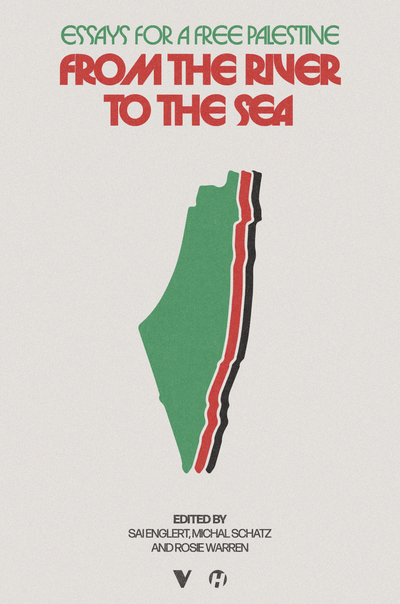
As mentioned before, Haymarket Books is offering a free ebook of “From the River to the Sea: Essays for a Free Palestine.”

I’m going to share an excerpt from the essay “No human being can exist” by Saree Makdisi (25 October 2023) which focuses on the treatment Palestinians receive when interviewed by Western journalists and the impossible task of a “[making] up for seven decades of misrepresentation and willful distortion in the time allotted to a sound bite.” 

What we are not allowed to say, as Palestinians speaking to the Western media, is that all life is equally valuable. That no event takes place in a vacuum. That history didn’t start on 7 October, 2023, and if you place what’s happening in the wider historical context of colonialism and anticolonial resistance, what’s most remarkable is that anyone in 2023 should be still surprised that conditions of absolute violence, domination, suffocation, and control produce appalling violence in turn. During the Haitian revolution in the early nineteenth century, formerly enslaved people massacred white settler men, women, and children. During Nat Turner’s revolt in 1831, insurgent enslaved people massacred white men, women, and children. During the Indian uprising of 1857, Indian rebels massacred English men, women, and children. During the Mau Mau uprising of the 1950s, Kenyan rebels massacred settler men, women, and children. At Oran in 1962, Algerian revolutionaries massacred French men, women, and children. Why should anyone expect Palestinians–or anyone else–to be different? To point these things out is not to justify them; it is to understand them. Every single one of these massacres was the result of decades or centuries of colonial violence and oppression, a structure of violence Frantz Fanon explained decades ago in The Wretched of the Earth.

What we are not allowed to say, in other words, is that if you want the violence to stop, you must stop the conditions that produced it. You must stop the hideous system of racial segregation, dispossession, occupation, and apartheid that has disfigured and tormented Palestine since 1948, consequent upon the violent project to transform a land that has always been home to many cultures, faiths, and languages into a state with a monolithic identity that requires the marginalization or outright removal of anyone who doesn’t fit. And that while what’s happening in Gaza today is a consequence of decades of settler-colonial violence and must be placed in the broader history of that violence to be understood, it has taken us to places to which the entire history of colonialism has never taken us before.

I highly recommend reading this essay in its entirety, along with the rest of the book. It’s not easy reading, but it’s vital that we acknowledge what’s happening. We must never stop talking about Palestine.

From the River to the Sea: Essays for a Free Palestine

Haymarket Books is offering an additional FREE ebook related to Palestine, a title that is very appropriate in light of today’s declaration of genocidal intent from Netanyahu: “And therefore I clarify that in any other arrangement, in the future, the state of Israel has to control the entire area from the river to the sea.”

Perhaps you’ve heard about college students losing their housing, scholarships, internships, jobs, and being doxxed for using the phrase “from the river to the sea [Palestine shall be free]”?  That’s because when that phrase is used in relation to Palestinian liberation, people have clutched their pearls and insisted they feel threatened, which has resulted in a whole lot of discriminatory actions leveled at those speaking out for Palestine. (My thoughts on that here.) But when the Israeli Prime Minister announces to the world that Palestinians will be wiped out from the river to the sea, nothing happens to him. He gets more funding, more weaponry, more intel from the U.S.

Anyway, the new FREE ebook (although you’re free to make a donation to Haymarket Books 🙂 ) is From the River to the Sea: Essays for a Free Palestine edited by Sai EnglertMichal Schatz, et al.

Here’s the info from Haymarket Books:
“From the River to the Sea: Essays for a Free Palestine collects personal testimonies from within Gaza and the West Bank, along with essays and interviews that collectively provide crucial histories and analyses to help us understand how we got to the nightmarish present. They place Israel’s genocidal campaign within the longer history of settler colonialism in Palestine, and Hamas within the longer histories of Palestinian resistance and the so-called “peace process.” They explore the complex history of Palestine’s relationship to Jordan, Egypt, and the broader Middle East, the eruption of unprecedented anti-Zionist Jewish protest in the US, the alarming escalation in state repression of Palestine solidarity in Britain and Europe, and more. Taken together, the essays comprising this collection provide important grounding for the urgent discussions taking place across the Palestine solidarity movement.”

Also, there are three other free ebooks available (scroll down to the bottom of page). One of them, LIGHT IN GAZA, I’ve highlighted here, here, and here. It’s an incredible collection of essays and poems about life in occupied Gaza, and I highly recommend it.

Thank you for caring enough about Palestinian people to learn about their lives, hopes, and dreams. Please continue making those calls and sending emails demanding a permanent ceasefire and end to all aid to Israel. Solidarity!

From the river to the sea, Palestine will be free!

Deprogramming ourselves

Today I’m deviating from my usual Climate Movement Monday post to offer some info regarding what’s happening now between Palestine and Israel. We in the United States, whose government gives Israel’s military $3.8 billion per year, have been fed a narrative about the conflict between Israel and Palestine. We have been programmed to believe it’s a complex situation rather than clear-cut apartheid akin to South Africa. It can be intimidating to speak out on behalf of Palestinians because of the knee-jerk charges of anti-semitism, but the morality of the situation demands we do just that.

A boy waves a Palestinian flag, at the Israel-Gaza border, during clashes with Israeli troops, at a protest where Palestinians demand the right to return to their homeland, east of Gaza City, April 1, 2018.
(Reuters /Mohammed Salem)

I encourage you to read this October 7 piece from Haggai Matar “Gaza’s shock attack has terrified Israelis. It should also unveil the context. The dread Israelis are feeling after today’s assault, myself included, has been the daily experience of millions of Palestinians for far too long.”

Here’s an excerpt: “In Gaza, meanwhile, the ongoing siege is continuously destroying the lives of over two million Palestinians, many of whom are living in extreme poverty, with little access to clean water and about four hours of electricity a day. This siege has no official endgame; even an Israeli State Comptroller report found that the government has never discussed long-term solutions to ending the blockade, nor seriously considered any alternatives to recurring rounds of war and death. It is literally the only option this government, and its predecessors, have on the table.”

And for more background on the situation, Indigenous organizer, Kelly Hayes of Truthout, had an in-depth conversation with Palestinian American  organizer, Lea Kayali, on Kelly’s “Movement Memos” podcast (transcript provided) in May 2021. The title of this episode is “What the Mainstream Media Never Told You About Palestine.”

Here’s an excerpt, a quote from Lea Kayli: “Our resistance will actually always be called violence, even if no physical human beings are actually being harmed and I think the characterizations of, for example, the Boycott, Divestment and Sanction movement, sort of clarifies how that can happen, but that really, forces us to ask this question about what is violence? In the Palestinian context, Israel has one of the world’s largest and most well-financed military, bankrolled by of course, that 3.8 billion dollars of U.S. tax money a year. When we ask ourselves, what is violence, I’d highlight that life expectancy in Israel is 10 years higher than it is the West Bank and Gaza. The infant mortality rate in Gaza is more than five times higher than it is in Israel and several times higher than it is in the U.S.. Palestinians … and obviously, within the U.S. there’s massive disparities in those numbers as well, when we look at racial breakdown. And to me, this characterization is essential, because all of these things are forms of violence and Palestinians in every corner of historic Palestine are facing violent dispossession. So the reality is that the State of Israel does not want Palestinians to live. That is the core violence. Population control and demographic supremacy is literally baked into the idea of Zionism, as with any ethnostate, and it’s written into the laws of the country, as we talked about earlier.”
All of us who attended public schools in the United States are in need of deprogramming (on this and many other issues), and I hope you’ll take the time to read and think about how you might react if you and your ancestors had “endured 73 years of brutal colonization, brutal racial oppression and ongoing ethnic cleansing.”
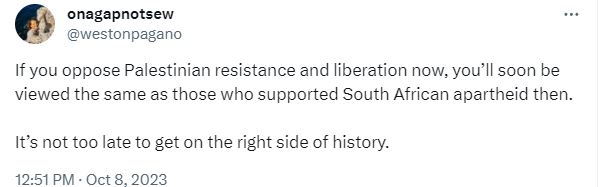
One way to show solidarity with Palestinian people’s fight for freedom, justice, and equality is to check out the BDS Movement (Boycott, Divest, Sanctions). Another is to have conversations with friends and families, especially those who believe the situation is too complex for them to hold an opinion. This tweet from a couple days ago really resonated with me:
Wishing you all a good week! We’re headed out for a camping trip and will be without internet connection, but I’d love to engage with you on this upon my return. Until then, solidarity! ✊🏽

Climate Movement Monday: resources

Welcome back to Movement Mondays! Today’s post isn’t focused on a specific frontline community, but is instead a collection of resources you might be interested in perusing. The intensifying climate-related weather around the world made me feel a bit wobbly about my role on the planet this morning, so I’ve been reading the excellent LET THIS RADICALIZE YOU: ORGANIZING AND THE REVOLUTION OF RECIPROCAL CARE by Kelly Hayes & Mariame Kaba.

The title comes from something Mariame Kaba has said over the years, “Let this radicalize you rather than lead you to despair,” a sentiment that resonates deeply with me. The book is about building community and organizing for the collective good. Here’s one snippet that made me feel a whole lot less wobbly this morning:

That quote is a good reminder that the smallest action can be revolutionary. The example that came to mind as I read was masking. Every time I wear a mask I’m saying “Our govt may not care about us, but I refuse to abandon you or you or you.” 

I admire both authors immensely, not only for their ongoing efforts on behalf of people and planet, but for their graciousness in welcoming others into the fight. Let This Radicalize You isn’t only for aspiring organizers, but also for anyone wanting stronger connections in their communities, along with those who might need a little pep talk to get them out of bed in the morning.  🙂  Haymarket Books is offering the book for 40% off right now (only $10.77 for the paperback!) and you can get that here.

My second resource recommendation is also new to me and I wanted to share while it’s on my radar. INHERITED is a storytelling podcast about young climate activists from around the world. They’ve produced two seasons of episodes and Season 3 will drop later this month.  You can access episodes here.

Third, an op-ed from Christiana Figueres who is a Costa Rican diplomat who served as Executive Secretary of the United Nations Framework Convention on Climate Change 2010-2016. The title of her piece: I thought fossil fuel firms could change. I was wrong. The piece opens with this:

“More than most members of the climate community, I have for years held space for the oil and gas industry to finally wake up and stand up to its critical responsibility in history.

I have done so because I was convinced the global economy could not be decarbonised without their constructive participation and I was therefore willing to support the transformation of their business model.

But what the industry is doing with its unprecedented profits over the past 12 months has changed my mind.

Let’s remember what the industry could and should be doing with those trillions of dollars: stepping away from any new oil and gas exploration, investing heavily into renewable energies and accelerating carbon capture and storage technologies to clean up existing fossil fuel use. Also, cutting methane emissions from the entire production line, abating emissions along their value chain and facilitating access to renewable energy for those still without electricity who number in their millions.

Instead, what we see is international oil companies cutting back, slowing down or, at best, painfully maintaining their decarbonisation commitments, paying higher dividends to shareholders, buying back more shares and – in some countries – lobbying governments to reverse clean energy policies while paying lip service to change.

On top of that, the industry as a whole is making plans to explore new sources of polluting fossil fuels and, in the United States, intimidating stakeholders who have been moving towards environmental, social and governance responsibility.”

You can read the piece in its entirety here. I wasn’t aware of Christiana Figueres or her willingness to give fossil fuel corporations the benefit of the doubt, but I’m glad she’s seen the light and is now using her substantial platform to voice her opinion. Good news!

As always, I’d love to hear what’s happening in your part of the world + any good news/bad news + book/article/podcast recommendations you might have. Basically, I want to feel more connected with YOU.

Solidarity! ✊🏽


Timely book recommendations

I’m joining a book discussion tomorrow that will be facilitated by activist, organizer, and educator Mariame Kaba as part of Project NIA. We’re reading The Fearless Benjamin Lay: The Quaker Dwarf Who Became the First Revolutionary Abolitionist. As I tweeted earlier today, “Lay didn’t try to “reform” slavery, but treated it as the absolute horror it was, calling out ALL who participated in the system. Inspiring! Solidified my stance on PIC abolition.”

I highly recommend reading this book about an extraordinary man who fought against slavery for 40 years (during the 1700s), “suffering endless persecution, ridicule, and repression, without a movement to support and sustain him.”

This book feels especially timely as we mourn Tortuguita (forest defender/climate justice warrior, and abolitionist) who was murdered by the police for defending against Cop City in Atlanta AND the murder of Tyre Nichols by Memphis police (not going to link because don’t want to inadvertently include video). Also? This book is timely because in 2022, the police killed more people than ever (1,176) which is nearly 100 people killed every single month.

We cannot reform state sanctioned violence. We must defund the police. We must abolish the police. Then, all those billions of dollars must go to communities so that people are housed, fed, and receiving health care. Police do not keep us safe. We keep us safe.

Benjamin Lay pushed back against a system that many considered inevitable and here-to-stay. Back then, people thought it was futile to oppose slavery and we’re currently facing that same mindset regarding the police. Do you know how/why we have police in the United States? They started as slave patrols, men hired to hunt down enslaved people who ran away. Policing has nothing to do with public safety and everything to do with protecting capital.

I’m tired and upset, and possibly not writing very eloquently, so if you’re interested in learning more about prison industrial complex (PIC) abolition, I highly recommend Mariame Kaba’s We Do This ‘Til We Free Us. She and the other contributors do a stellar job getting across their information and perspectives.

I’m currently working to find an agent to represent my middle grade novel about two kids in a small town divided over the presence of a for-profit prison, and was able to write the ending I wanted for that story. In the meanwhile, a whole lot of people are fighting for the creation of a safer reality in the here and now. Benjamin Lay would be proud.

Climate Movement Monday: Indigenous Peoples’ Day reading list

Welcome back to Movement Mondays in which I share info in support of frontline communities that are enduring the greatest impact of the climate crisis. Today is Indigenous Peoples’ Day and I’d like to honor them by acknowledging the disproportionate climate effects indigenous people face as a result of colonialism. A recent seven-year study found “As a result of the near-total loss of their tribal lands, [ ], Indigenous people are forced to live in areas that are, on average, more exposed to climate change hazards like extreme heat and decreased precipitation.” 

So, thanks to an email from bookshop.org  that put many of these titles on my radar, here’s a list of newly released books written by Indigenous authors. I hope you’ll check them out.

Fresh Banana Leaves: Healing Indigenous Landscapes Through Indigenous Science
by Jessica Hernandez, PhD.

“In Fresh Banana Leaves, Jessica Hernandez weaves personal, historical, and environmental narratives to offer us a passionate and powerful call to increase our awareness and to take responsibility for caring for Mother Earth.” A must-read for anyone interested in Indigenous environmental perspectives.”


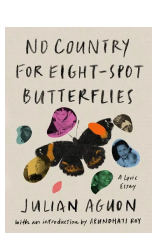
No Country for Eight-Spot Butterflies: A Lyric Essay
by Julian Aguon (introduction by Arundhati Roy)
Part memoir, part manifesto, Chamorro climate activist Julian Aguon’s No Country for Eight-Spot Butterflies is a collection of essays on resistance, resilience, and collective power in the age of climate disaster; and a call for justice—for everyone, but in particular, for Indigenous peoples.


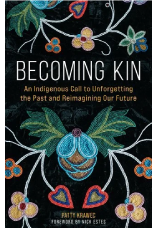
Becoming Kin: An Indigenous Call to Unforgetting the Past and Reimagining Our Future
by Patty Krawec, Nick Estes (Foreward)
Settlers dominated and divided, but Indigenous peoples won’t just send them all home. Weaving her own story with the story of her ancestors and with the broader themes of creation, replacement, and disappearance, Krawec helps readers see settler colonialism through the eyes of an Indigenous writer.

And here’s one last title that’s next on my TBR pile:

Night of the Living Rez
by Morgan Talty
In a brash, irreverent story collection, “Night of the Living Rez,” Morgan Talty illuminates life and death on the Penobscot Indian Nation reservation.


Thank you for reading and I wish you all a good week.
Solidarity! ✊🏽

Independent reading from Haymarket Books

So-called Independence Day is hitting harder than usual today as there are now fewer rights for the people and more rights for corporatists and authoritarians than a year ago. If you’re feeling overwhelmed/angry/scared/powerless, I highly recommend buying a book from Haymarket Books during their “Summer of Struggle” 40% off sale.

Haymarket Books is an independent, nonprofit organization that publishes books for changing the world, and now through August 15, ALL Haymarket books are 40% off. I’ve learned so much by reading Haymarket books and in addition to educating myself, I always feel less alone in the struggle. Do yourself a favor and buy one book. Read that book and expand your worldview, compassion, and commitment to a better life for all people. And if you feel like sharing, I’d love to know what you’re reading.

Solidarity!

Hello, again

It’s cold and snowy outside, and toasty-warm in my home. For this, I am grateful. We’ve  replenished the various bird feeders and cleaned/refilled the bath for the many feathered visitors doing their best to keep warm and healthy during this latest snowstorm. This Woodhouse’s Scrub Jay visited the feeder last month and maybe has shown up again today. Hello, is that you?

February 2, 2022

And I’ve seen Dark-eyed Juncos out there today. Perhaps this one is also a return visitor?

February 2, 2022

Right now, I’m reading-reading-reading a critique partner’s manuscript in preparation for our group’s zoom session this evening. It’s a wonderful story and I’m happy to be part of the process and glad to be connecting with my friends again. And that’s not all. Tomorrow evening, I’ll be on a call with our local Sunrise Movement hub to reboot the group. Two social events in two days!

Okay, just wanted to pop in to say hello again and to say I’ve missed interacting with people here. When I’ve caught my breath after my whirlwind social life, I’ll try to catch up on what I’ve missed.  Stay warm! Stay healthy! Remember: March is when we really start gaining daylight! 🌞

O Monday where art thou?

Here it is nearly 5:30 of the p.m., sun gone for the day as temperatures drop and daylight slips away. I’ll admit, this is my least favorite time of winter days because of the increased risk of gloomy feelings that often involve beating myself up. As in, “you squandered those precious hours and what do you have to show for yourself now that it’s cold, dark, and dreary?”

Not playing those reindeer games today.

Bouquet from BB. February 2, 2022

Right now I’m basking in the glow of my accomplishments: Coffee and Wordle. Exercise.  Smoothing out trouble spots in my middle-grade novel, revising chapter 8, and falling in love with the manuscript all over again. A thoughtful phone conversation with Zebu. Laughter. Laundry. Email plus research for climate action meeting later this week. Finishing the excellent We Are All Birds of Uganda by Hafsa Zayyan. Healthy eating. Sharing snuggles with dog and cats (with special shout-out to Loki for lying down next to me while I did foam roller stretching).

It is true I respond best to blue skies and sunshine glinting off snow. But on this Monday evening, I’m content.