Some timely reading

The Democratic National Convention has begun in Chicago and I’d like to share links to a couple pieces that resonated with me.

The first is from the incomparable Sarah Kendzior who writes a newsletter on Substack. It was published yesterday and is titled Distant Vibes: Welcome to the era of the No Information Voter.

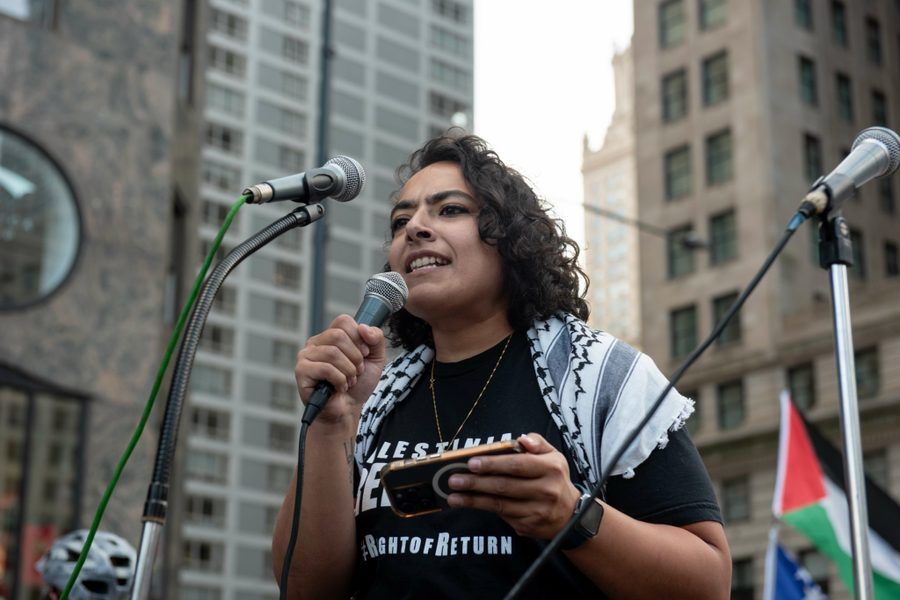
The other is the speech delivered by Eman Abdelhadi (“And now they want our votes”) at the massive demonstration in Chicago yesterday.

Eman Abdelhadi speaks at the Bodies Against Unjust Laws march in Chicago on Sunday, August 18.
Photo by Steel Brooks

If you’re interested in independent coverage of the DNC, I highly recommend signing up for emails from In These Times / The Real News Network. You can do that HERE.

Please leave a comment if you have other reading/sources to recommend!

Gaza, Harris, and an arms embargo

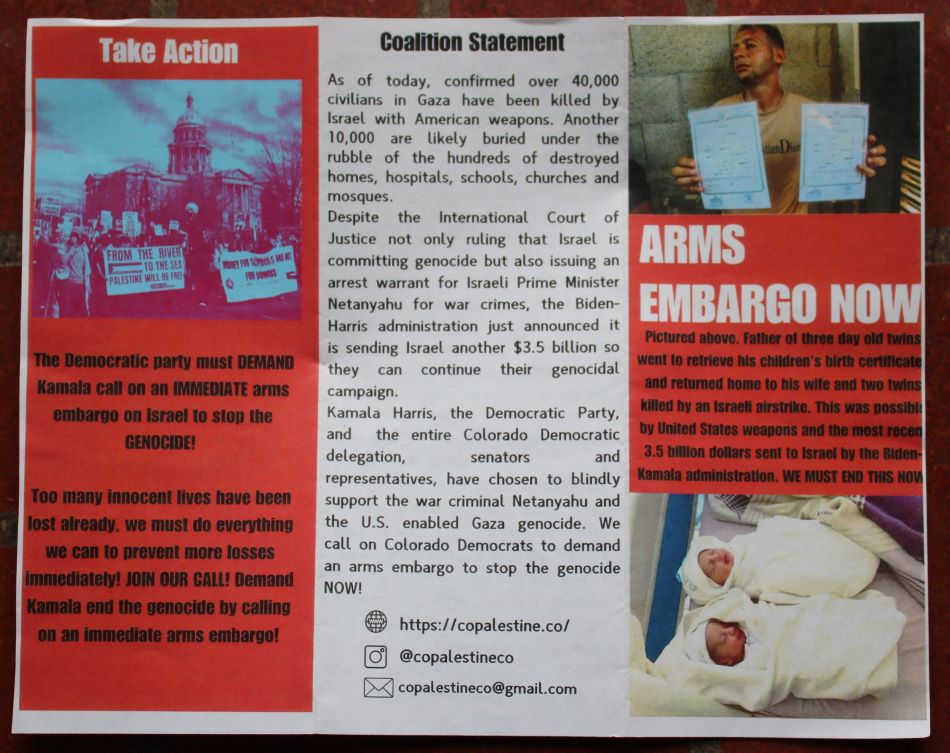
This morning Zippy and I went to City Park in Denver to attend a Colorado Palestine Coalition teach-in at the “dash for democracy” running/walking event sponsored by the Denver Democrats to raise funds for the Kamala Harris campaign. Our intent was to get the Democrats to understand that many of us will not vote for Harris/Walz in November if they do not call for an immediate arms embargo on Israel. It is no longer enough to call for a CEASEFIRE NOW (even though our sign remains in our front yard, faded and battered by nine-plus months of weather). The White House pretends to be negotiating in good faith toward a ceasefire, but it’s all theater. There cannot be a lasting ceasefire when the U.S. keeps supplying Israel with bombs. As was succinctly stated here, “If you say you want a ceasefire while sending the bombs that keep shredding children, you don’t really want a ceasefire. That’s all there is to it.”

The only way to end the carnage is to immediately stop arming Israel with U.S.-made bombs. The good news is that several weeks ago “…seven unions representing six million workers published an open letter to President Biden demanding that he cut off military aid to Israel until it ends its brutal assault on Gaza.” A demand for an arms embargo does not allow wiggle-room for weasel words from the White House and Harris.

Here’s the flier CPC handed out today (click on images to enlarge):


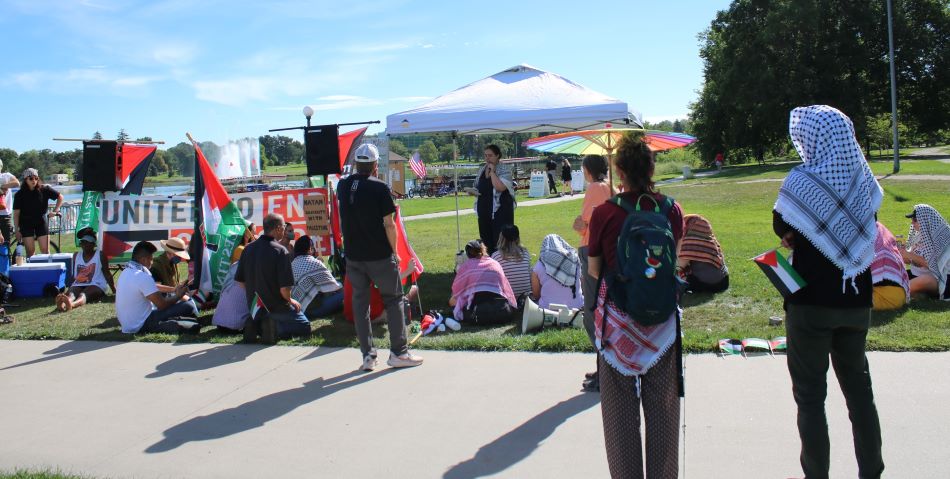
Okay, so what did I learn at the teach-in? Unfortunately, not as much as I’d hoped to learn due to an unhinged person who yelled and shook a cowbell while the speakers spoke. I admit to feeling so much anger I couldn’t focus on what was being said. Several times, I attempted to reason with Cowbell Karen who kept telling us to “educate yourselves” while doing everything in her power to make that impossible. When I finally aimed my camera at her, she gleefully sneered at me.
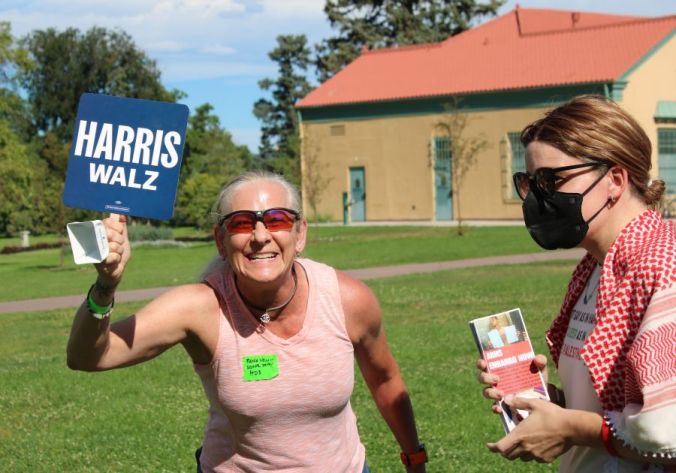
The masked person in the keffiyeh has been at many pro-Palestine events, often serving as a marshal to keep us safe while we march in the streets. They remained calm throughout Cowbell Karen’s rampage, and I am not only grateful for their presence but also in awe of their composure. Speaking for me, my blood pressure was running pretty high. The situation sidetracked my learning and I only caught snippets here and there, including:

A Palestinian man spoke about those who insist the situation in Palestine is incredibly complex and that the only way forward is a “two-state solution.” He reiterated that the situation is actually quite simple and that two states isn’t tenable, especially now because of the absolute and total destruction of Gaza. He offered a succinct response to those who cynically demand “well, then what’s your solution?” which is One state with equal rights for all. As he pointed out, it’s pretty hard to argue against that.
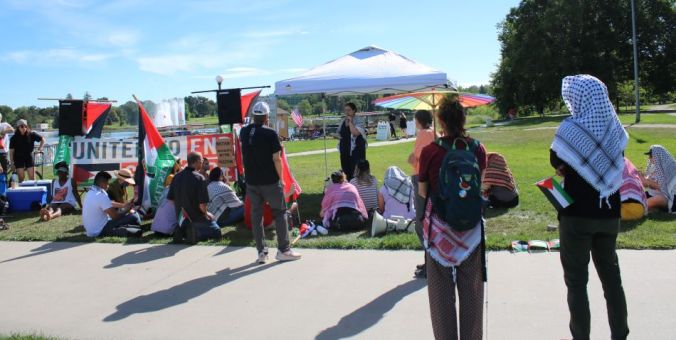
The speaker beneath the tent in the above photo is Indigenous and she spoke on the history of solidarity between Natives and Palestinians. I learned there was once an official U.S. Army regulation that required army helicopters to be named after Native tribes. Tomahawks, Apaches, Black Hawks. I didn’t catch much of what else she said, but was stunned to realize I’d never thought about the Army using those names.

Another speaker was a Black woman who works as a youth defender. She quoted from Ruha Benjamin’s Spelman Convocation 2024 (emphasis mine):
Remember too, that despite the social media slogan, trust black women, you too have to be trustworthy. Black faces in high places are not going to save us.

Just look at the black proponents of Cop City in Atlanta’s leadership class. Black faces in high places are not going to save us. Just look at the black woman, Tan, ambassador at the UN, voting against a ceasefire in Gaza. That is, our blackness and our womanness are not in themselves trustworthy if we allow ourselves to be conscripted into positions of power that maintain the oppressive status quo.

There’s a huge effort now on social media to drive a wedge between Black people and Gaza/Palestine, to fracture the solidarity, so it was really good to hear her reiterate the importance of the shared struggle against oppression.

Despite the disruptions and the glazed-over expressions from many of the Denver Dems volunteers who made it clear they were not interested in new perspectives or pushing their candidate to do the right thing, I’m still glad we went. It always feels good to be in solidarity with others.

If you are still making calls and sending emails to your representatives in regards to Gaza, please push for an arms embargo. If you don’t want to vote for candidates who enable genocide, please let them know you will withhold your vote unless they push for an arms embargo. Remember, if those in power truly want a ceasefire, they must immediately stop sending bombs that shred children.

It’s really that simple.
Climate Movement Monday: COP28

Welcome back to Movement Mondays in which we discuss all things climate. In these posts, I share information and typically offer an action you can take on behalf of people and planet, with a focus on frontline communities that are enduring the worst effects of the climate crisis. Today, I’m not offering an action but am sharing information that’s just as much for me as my readers. The topic is “COP28” which I’ve been avoiding learning about because the particulars make my head want to explode. We’ll get into those specifics, but first: what is COP28?

The United Nations Climate Change Conferences are the world’s highest decision-making body on climate issues and one of the largest international meetings in the world. The 28th United Nations Climate Change Conference, or Conference of the Parties (COP28) is happening right now, hosted by be the UAE (United Arab Emirates).

Okay, I mentioned avoiding this whole topic because it stressed/angered me. Why? Well, as climate writer Emily Atkin points out [COP28 is ] “being run by a literal fossil fuel baron: Sultan Ahmed Al Jaber, the head of the state-run Abu Dhabi National Oil Company (Adnoc), which also happens to have one of the biggest oil and gas expansion plans in the world.”

Atkin further writes: “. . . Al Jaber’s self-proclaimed “game-changing plan” to achieve progress at COP28 is to give oil and gas companies more influence over the climate change summit, despite warnings from the U.N.’s former climate chief that the approach is “dangerous” and “a direct threat to the survival of vulnerable nations.”

Atkin shares other more damning conflicts of interest and I encourage you to read the entire piece from Atkin: COP28 sucks. Pay attention anyway. The fossil fuel interests attempting to corrupt the high-stakes summit would love nothing more than for us to look away.

Why should we pay attention? Because whenever we avert our gaze from the climate crisis, it most dramatically affects those in the Global South. People living in that part of the world have been facing the effects of climate change for decades already and they cannot afford to look away –think low-lying islands and rising sea levels– and their very survival depends on what’s decided at COP28. As Atkin writes: “For the nations most threatened by that future, negotiations over how to structure a Loss and Damage fund to compensate for damages, as well as negotiations over how to mend previously broken climate finance pledges by the Global North, are too consequential to be ignored.” Go here for the opening plenary statement delivered by the Indigenous Peoples’ Caucus.

International Indigenous Peoples Forum on Climate Change Opening Elder Ceremony. Photo by Willi White for NDN Collective.

It might not feel meaningful to learn about COP28 via Atkin’s piece or this by Bill McKibben, but knowledge is power. Even if there’s no direct action connected to our reading, by educating ourselves we’re forging a connection with the planet’s most vulnerable populations. We’re acknowledging their worth and implying our solidarity with their struggles.

Thank you for being here. I appreciate and welcome all thoughts, so please share in the comments. Until then, solidarity! ✊🏽

Kufiya/Keffiyeh, the Palestinian scarf

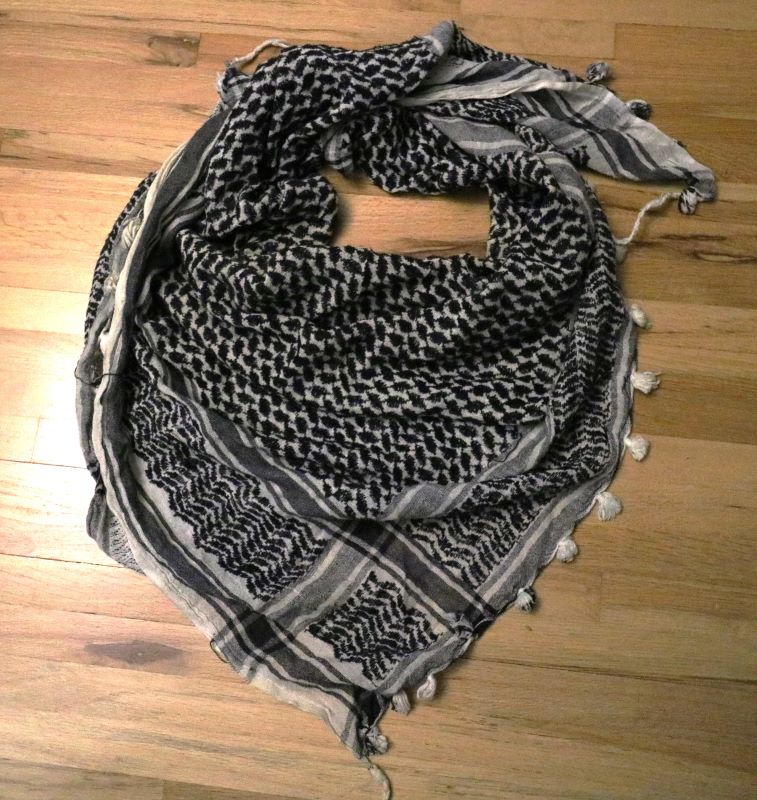
Years and years ago, a friend gifted me a kufiya* that’s kept my neck warm every winter since. (Hello, Rebecca!) *I’m using this spelling because that’s the spelling used in the info below.

Mine is the traditional black and white, but they’re made in other colors. This brief video shows a kufiya being made at Hirbawi, the last kufiya factory in Palestine.

@hirbawikufiya

The last Kufiya factory in Palestine is keeping busy!🇵🇸 We are working hard to complete the packaging process for all your orders and dispatch them from Palestine. The factory and its workers are all doing well, and we thank each and every one of you for the overwhelming love and support we are receiving. Additionally, we want to advise you to keep an eye on your email, as we will be restocking very soon!❤️ @M #hirbawi #kufiyah #keffiyeh #kufiyeh

♬ Ala Dalouna – Sakher Hattar

And here’s a video explaining the cultural significance of the kufiya.

@hirbawikufiya

How the Kufiya became Palestine’s symbol of resistance🇵🇸 Thank you @nowthis for this informative video and for talking about Hirbawi, the last remaining Kufiya factory in Palestine❤️ #hirbawi #kufiyah #kufiyeh #keffiyeh

♬ original sound – Hirbawi

I have no way of knowing whether my kufiya is authentic or a knock-off (good chance it’s inauthentic) and would love to support Hirbawi by ordering another. They’re sold out at this time but I gave my email address so that I’ll receive notification when kufiyas are in stock again. Here’s the HirbawiUSA online store where you can see the variety of kufiyas (also sold out). And in case you’re wondering if it’s cultural appropriation to wear a kufiya if not Palestinian, read HERE. (Spoiler alert: as long as the kufiya is worn respectfully, it’s considered a sign of solidarity.)

If you’re interested in learning more, Hirbawi has posted many other videos HERE.

On another note, per Marjorie Cohn at TRUTHOUT, Palestinians File Emergency Motion to Block U.S. Aid for Israel’s Genocide in Gaza (The federal lawsuit accuses Biden, Blinken and Austin of failure to prevent genocide and complicity in genocide.)

These are hard, hard days. Please take good care.

Finding our shared humanity: LIGHT IN GAZA

I’m taking advantage of the many resources on offer right now to help people such as myself become more educated on the Palestinian experience and the history of Palestine. As mentioned earlier, Haymarket Books has made three Palestine-related ebooks free to download.

One of those books, Light In Gaza: Writings Born of Fire is an anthology of Palestinian writers and artists sharing their lived experiences. Reading about daily life in Gaza helps me better understand their lives while also broadening my perspective.

“Let Me Dream” by Israa Mohammed Jamal begins with an exchange with her third-grade daughter as they worked on a school lesson together about tourist sites in northern Palestine. The daughter exclaims, “What beautiful places we have in our country. Let’s go there, Mama! Please!” The mother/author had never been to any of those places, either, and has to explain to her daughter that because Israel occupies the West Bank and blockades Gaza, they cannot go to those tourist attractions.

As someone who heavily relies on nature to maintain my emotional and mental health, I can barely imagine a life in which I was prevented from not only traveling freely, but seeking out the calming influence of the natural world. My body literally constricts at the thought.  The author’s essay moves from that exchange with her young daughter to some of her childhood and adult experiences, such as various family members leaving Gaza and the ensuing loneliness that enveloped her. She also writes of the party plans for her firstborn daughter’s first birthday in 2009 made in defiance of the fact that Israel was bombing Gaza then, plans that had to be abandoned when the bombs targeted their neighborhood, forcing them to flee to a relative’s house where they watched the news on their mobile phones because the electricity had been cut.

The essay ends with the author’s dreams for her children, including this excerpt:
I wish to witness the miracle of the liberation of all our occupied lands. Then, I can go to our home villages with our children so they can feel where they originate and belong and feel ownership of their homeland. I hope to erase “refugee” from their vocabulary, because this word is full of disappointment and weakness. They will go to every place in our country. They will see the beautiful places on the West Bank, without fear from armed soldiers, and will have peace of mind without being restricted in their movements inside and outside our ancestral land. They will discover those places by themselves and will live the adventure of traveling to new places such as cities and forests. Gaza doesn’t have mountains or forests, so we have never gone on safari and enjoyed the glory of nature.

Everyone on this glorious planet should have access to nature. Everyone deserves freedom of movement and, after reading “Let Me Dream,” I’m more grateful than ever for the ability to come and go as I please.

But the truth is, none of us are truly free while others are oppressed.

Climate Movement Monday: carbon capture & storage

Welcome back to Climate Movement Mondays in which we discuss all things climate. Today I want to share info regarding carbon capture and storage which is touted as a viable “solution” to climate catastrophe. But before I get into that, I want to state that Israel’s current “collective punishment” bombing campaign against the Palestinian people is not only an act of genocide, but also an attack on a frontline community already enduring massive drought as a result the climate crisis. Per Palestinian Environmental NGOs Network Coordinator, Abeer Butmeh“We will see these effects on soil, water, marine habitat, air and, most importantly, on human health. Currently, Israel has cut off the water resources in Gaza and Gaza has run out of drinkable water. Palestinians live under two threats: Israeli occupation and climate change.”

PLEASE continue to call and email Biden plus your two Senators and one Representative, demanding a CeasefireNOW if you object to your tax dollars funding a genocide.

This post is about educating ourselves on carbon capture and storage (CCS) which I don’t know much about but keeps showing up for me lately. For instance, I just learned there was a proposed $3.5 billion, 1,300-mile CO2 pipeline to transport[ing] CO2 from ethanol and fertilizer plants to be sequestered underground in Illinois.” The project was named Heartland Greenway and would span “parts of South Dakota, Nebraska, Minnesota, Iowa, and Illinois. Grassroots opposition to these projects has been intense, with farmers, landowners and environmentalists raising questions about their feasibility and safety.”  Last week, Navigator CO2 Ventures announced it was cancelling the project due to regulatory processes in South Dakota and Iowa. I’d venture a guess that opposition from those groups made it more difficult to continue. Here’s a press release from Food & Water Watch regarding the cancellation: “While the federal government keeps trying to waste billions of dollars to promote these massive carbon pipelines, grassroots organizing is winning the fight to stop these egregious handouts to corporate polluters. These carbon pipelines will not reduce emissions – they are dangerous, wasteful schemes to prolong and expand polluting industries. Instead of throwing away money supporting polluters, the government should invest in proven clean energy solutions, not carbon capture pipe dreams.”

I also learned there’s an organization called PipelineFighters.org and they have a map showing proposed pipelines around the country. Go HERE for an interactive map.

If you’re interested in learning about CCS, Yale Climate Connections published an article by Cameron Oglesby earlier this month: “What’s the deal with carbon capture and storage?” It’s lengthy, but well worth the read. The one issue that jumps out at me is that CCS requires a lot of water, so it seems incredibly unwise to pin hopes on a process that will further deplete our already scarce groundwater.

Thank you for reading this far. I know there’s lot of info out there on CCS so if you come across other articles and perspectives, please share in the comments. Also, if you take a look at that Pipeline Fighters map and see a proposed project in your state, I’d love to hear your thoughts on that. In the meanwhile, take care. Solidarity! ✊🏽

Climate Movement Monday: Indigenous Peoples’ Day reading list

Welcome back to Movement Mondays in which I share info in support of frontline communities that are enduring the greatest impact of the climate crisis. Today is Indigenous Peoples’ Day and I’d like to honor them by acknowledging the disproportionate climate effects indigenous people face as a result of colonialism. A recent seven-year study found “As a result of the near-total loss of their tribal lands, [ ], Indigenous people are forced to live in areas that are, on average, more exposed to climate change hazards like extreme heat and decreased precipitation.” 

So, thanks to an email from bookshop.org  that put many of these titles on my radar, here’s a list of newly released books written by Indigenous authors. I hope you’ll check them out.

Fresh Banana Leaves: Healing Indigenous Landscapes Through Indigenous Science
by Jessica Hernandez, PhD.

“In Fresh Banana Leaves, Jessica Hernandez weaves personal, historical, and environmental narratives to offer us a passionate and powerful call to increase our awareness and to take responsibility for caring for Mother Earth.” A must-read for anyone interested in Indigenous environmental perspectives.”


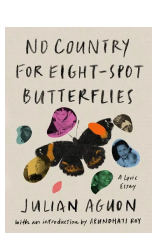
No Country for Eight-Spot Butterflies: A Lyric Essay
by Julian Aguon (introduction by Arundhati Roy)
Part memoir, part manifesto, Chamorro climate activist Julian Aguon’s No Country for Eight-Spot Butterflies is a collection of essays on resistance, resilience, and collective power in the age of climate disaster; and a call for justice—for everyone, but in particular, for Indigenous peoples.


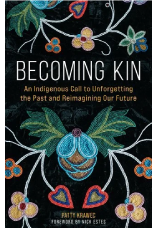
Becoming Kin: An Indigenous Call to Unforgetting the Past and Reimagining Our Future
by Patty Krawec, Nick Estes (Foreward)
Settlers dominated and divided, but Indigenous peoples won’t just send them all home. Weaving her own story with the story of her ancestors and with the broader themes of creation, replacement, and disappearance, Krawec helps readers see settler colonialism through the eyes of an Indigenous writer.

And here’s one last title that’s next on my TBR pile:

Night of the Living Rez
by Morgan Talty
In a brash, irreverent story collection, “Night of the Living Rez,” Morgan Talty illuminates life and death on the Penobscot Indian Nation reservation.


Thank you for reading and I wish you all a good week.
Solidarity! ✊🏽

Independent reading from Haymarket Books

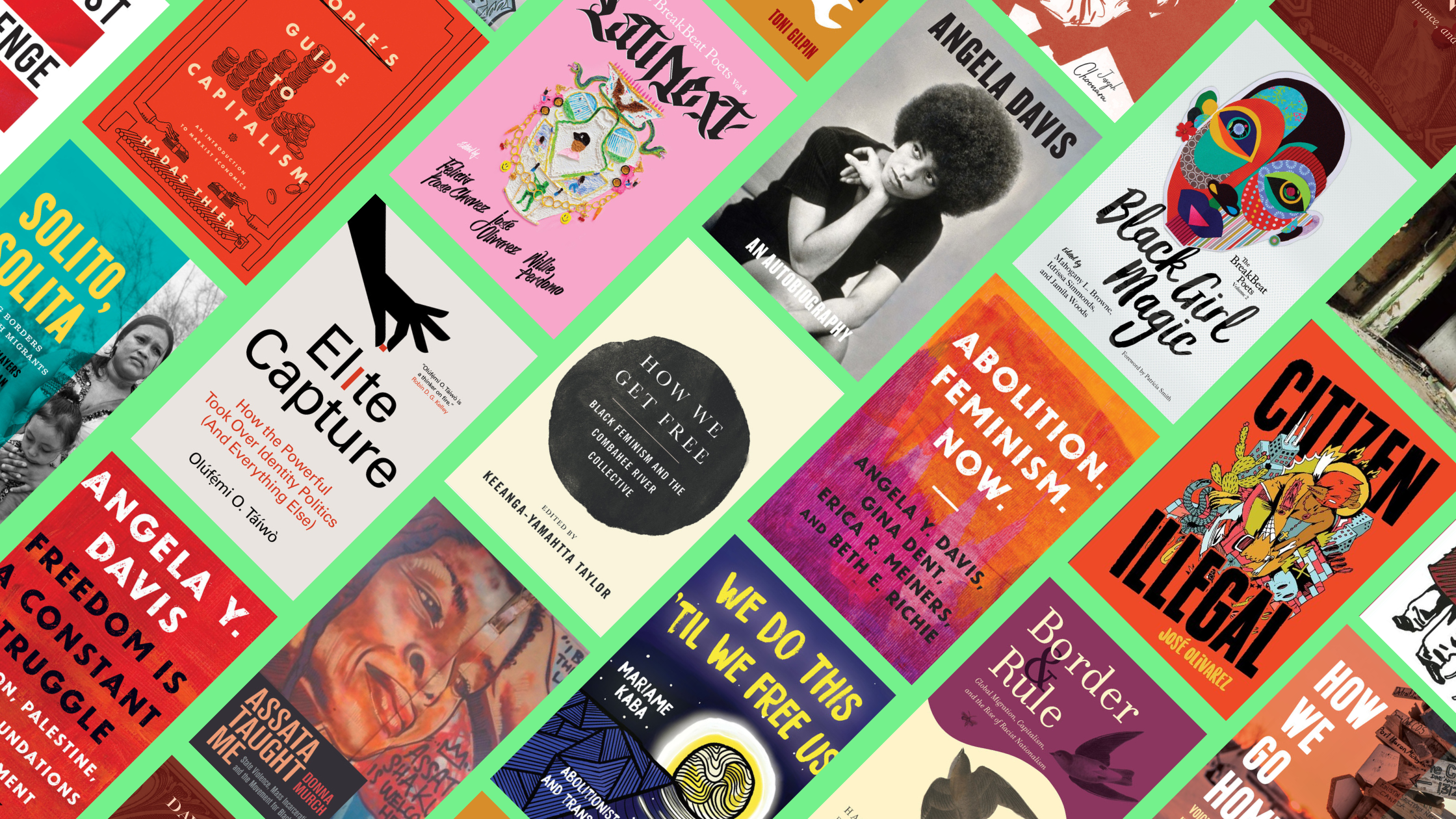
So-called Independence Day is hitting harder than usual today as there are now fewer rights for the people and more rights for corporatists and authoritarians than a year ago. If you’re feeling overwhelmed/angry/scared/powerless, I highly recommend buying a book from Haymarket Books during their “Summer of Struggle” 40% off sale.

Haymarket Books is an independent, nonprofit organization that publishes books for changing the world, and now through August 15, ALL Haymarket books are 40% off. I’ve learned so much by reading Haymarket books and in addition to educating myself, I always feel less alone in the struggle. Do yourself a favor and buy one book. Read that book and expand your worldview, compassion, and commitment to a better life for all people. And if you feel like sharing, I’d love to know what you’re reading.

Solidarity!

Happy day to me

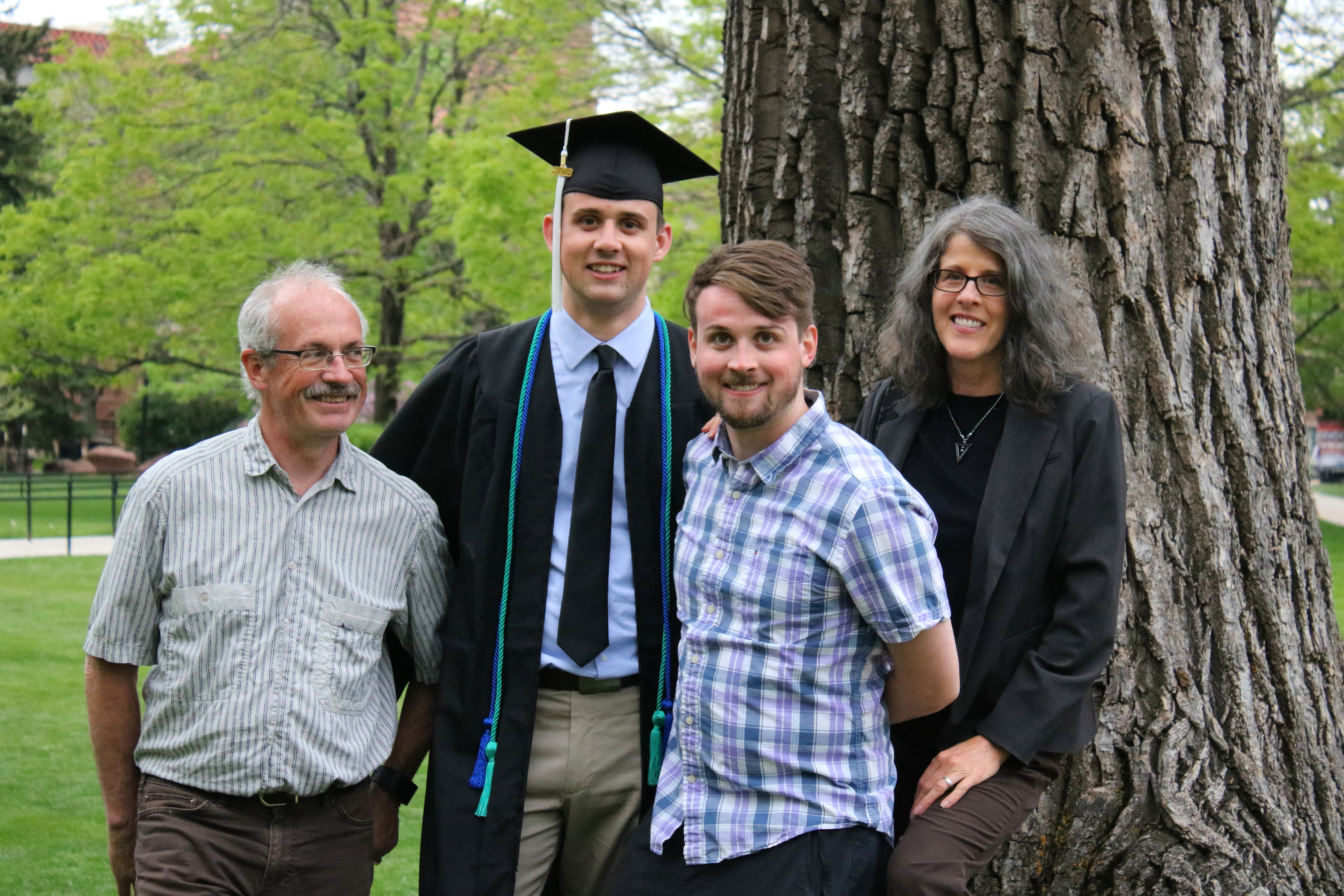
I’m so happy Zebu’s graduation weekend coincided with Mother’s Day because Wildebeest came back to help celebrate his brother’s milestone. We haven’t all been together since January.

Here we were on Friday.  The sun didn’t shine much that afternoon, but the happy, proud, and goofy smiles from everyone on the CU-Boulder campus lit up the place.

This may or may not be evidence

Zebu has completed two years of college and is getting ready to study abroad for the next year. He just finished sorting through an accumulation of notebooks, folders, and binders filled with paper from high school and the last two years.

He came across personal notes that made him cringe, Calculus test scores he’d rather forget, and class notes from his all-time favorite class so far, a Latin American history course.

Here’s something I rescued from the recycle pile:
Zebu vocab notes

He believes it’s from a high school English class and as he held it out for me to see he said:

“This may or may not be evidence of me cheating on a vocab test.
I honestly don’t remember.”

Know what?
I honestly don’t care.

Gaining perspective is a beautiful thing.

.