On this Nakba Day: “the Palestinian soul has no weight in this colonial world”

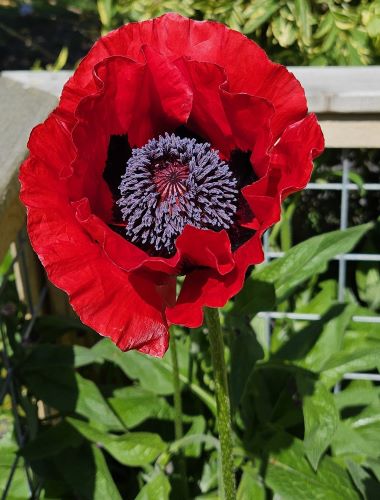
On my garden patio, May 11, 2026

Today is Nakba Day, marking 78 years of ethnic cleansing visited upon Palestinians since the establishment of the State of Israel.

It began in 1948 with the destruction of villages, massacres, forced displacement, and the theft of their homes and land. At that time, more than 750,000 Palestinians were expelled or forced to flee, and hundreds of Palestinian villages were destroyed.

The Nakba of 1948 was followed by Naksa, the 1956 war, the First Intifada, Second Intifada, six wars between 2008 and 2023, and the current genocide being livestreamed for the entire world to see. Dr. Mohammed Khattab, born in 1945, was three during the initial Nakba and has experienced that entire list of atrocities. Rather than suffering from Post Traumatic Stress Disorder (PTSD), it’s more apt to label the Palestinian experience Continuous Traumatic Stress (CTS) as their stress is generational and ongoing.

Per Abdallah Abo Shamla, a 29-year-old supervising psychologist, “Trauma is deep-seated, yet there is no time to live it fully or move on from it. So we are forced into resilience.”

Much of the above (including my post’s subtitle “the Palestinian soul has no weight in this colonial world”) came from “For Palestinians, the Nakba Isn’t Just History. It’s Also Our Present” by Hend Salama Abo Helow (published in Truthout). It isn’t an easy read, but it’s essential we acknowledge the ongoing trauma of the Palestinian experience. By doing so, we give weight to the Palestinian soul in this colonial world.

If you have the capacity to further lend your attention and voice to Palestinians, please contact your representative to ask them to co-sponsor Rep. Rashida Tlaib’s resolution recognizing the Nakba and calling for an end to U.S. complicity in Israel’s violence against the Palestinian people. A letter template is in place which you may send as-is or personalize.

On this Nakba Day and every other day, my heart and convictions remain with the people of Palestine.

From the river to the sea, Palestine will be free.

On this Nakba Day

Hello, again. I’ve been absent from these parts as we continue the many efforts involved in our move to Washington and am looking forward to resuming my WordPress friendships and making more connections with folks in the very near future. In the meanwhile, I can’t let Nakba Day pass without acknowledgement.

I know I’m not alone in carrying the heavy grief that comes from the ongoing genocide in Palestine, a genocide enabled by the U.S. with full support from both Democrats and Republicans. As my son Wildebeest recently said, Palestine is the one consistent bi-partisan effort from our government. Palestinians are considered disposable.

I received the following from MPower Change this morning and while I know it’s bad form to ask for action when I haven’t been engaging with anyone else’s posts here lately, I want to share this information. Anything you can do on behalf of Palestine is greatly appreciated! Solidarity!

Today is a heavy day.

It is Nakba Day — a day of mourning and resistance, marking 77 years since the violent displacement and ethnic cleansing of Palestinians by Israel. Known as the Palestinian Catastrophe, the 1948 Nakba saw over 750,000 Palestinians driven from their homes and hundreds of villages wiped out. Since then, Israel has relentlessly continued its occupation and destruction of Palestinian land and people. 

On this day of remembrance, here are four urgent actions you can take for Palestine: 

    1. Email your Members of Congress to demand an end to Israel’s blockade on Gaza. Over 2 million Palestinians are being forcibly starved, with over 70,000 children being hospitalized due to severe malnutrition.
    2. Urge Members of Congress to call for the immediate release of Mahmoud Khalil and all others targeted by the administration for expressing their First Amendment rights. We have seen the recent releases of Dr. Badar Khan Suri, Rümeysa Öztürk, and Mohsen Mahdawi — but our fight doesn’t stop. Take action now for those still unlawfully detained.
    3. Tell university leadership to say NO to repressing and targeting students on campus.  Students speaking out against genocide are facing ongoing repression, police harassment, ICE abductions, and the threat of visa revocations. Together, we’ve sent nearly 800,000 letters to university presidents and administrators. They still need to hear from us.
    4. Tell Microsoft to stop partnering with Israel’s genocide. Microsoft’s AI and cloud support are core to Israel’s military operations in Gaza. Microsoft workers are boldly calling on the company to stop using their labor to commit genocide and enforce apartheid. Tell Microsoft leaders to listen to their workers, adhere to their own human rights policies, and stop partnering with the Israeli military. 

We cannot stay idle as Israel wages yet another Nakba on the Palestinian people. Take action now — speak out, show up, and demand justice.

In solidarity,

Linda, Granate, Yasmine, Ishraq, and the team at MPower Change


On this Nakba Day

Today is Nakba Day. What is Nakba Day? A Brief History 

There are many, many heartbreaking stories of what Palestinians endured as a result of that ethnic cleansing and displacement. One of the faculty members who spoke at the Auraria Campus encampment commencement ceremony on Sunday told us of their father and grandparents’ Nakba experience in which they walked to Syria, only to be told they weren’t welcome, then walked to Lebanon where they were forbidden entrance, and finally ended up in Nazareth. According to the speaker, their father refused to accept life as a “refugee” and later came to the U.S.

Image from Wikimedia Commons

These stories are painful and filled with heartache and injustice, but we cannot pretend Nakba didn’t happen (or that it isn’t playing out again right now). Many in the Jewish community refuse to stay silent and are in solidarity with Palestinians. The following email came this morning from If Not Now and, in the final paragraph, has links to further resources about the Nakba, along with a link for Gaza donations:

Today we mark 76 years since the Nakba, or catastrophe, when over 750,000 Palestinians were ethnically cleansed from their homes and countless villages were wiped off the map during the establishment of the State of Israel. The Israeli government has continued the Nakba by carrying out a policy of land expropriation and deprivation of Palestinians’ fundamental rights from 1948 through today.

As we bear witness to the continuation of the Nakba over the decades, we recognize the chilling parallels between 1948 and today’s catastrophe in Gaza, as the Israeli military slaughters tens of thousands of Palestinians and forces over a million people from their homes – the largest displacement of Palestinians since 1948. 

This history — together with our history as Jews of facing ethnic cleansing and mass slaughter — compels us to call for an end to the Israeli military’s genocidal assault on Gaza and to work towards an equal, just, and thriving future for all Palestinians and Israelis, free from ethnic cleansing, violence, apartheid, and oppression that reckons with and addresses the Nakba and other injustices.

You can listen to the stories of Palestinians who lived through the Nakba at the Nakba Archive. Learn more about the history and its consequences at Zochrot. Follow, amplify, and contribute to @gazafunds on Twitter/X.

In Solidarity,
Em, IfNotNow

It’s Tracy again. If you’ve read this far, thank you.
Free Palestine!