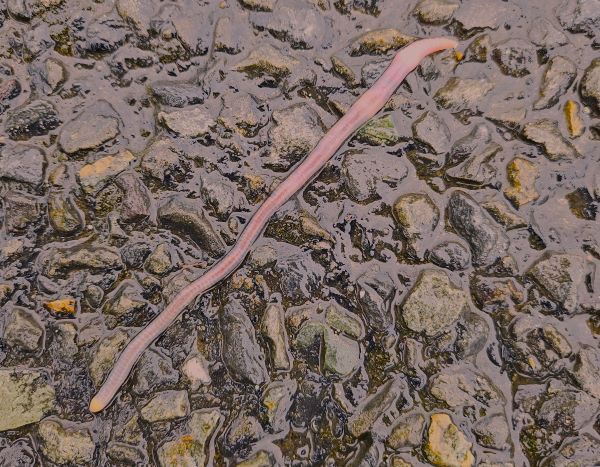
returned to the soil
true grassroots activism
mission: worm rescue
returned to the soil
true grassroots activism
mission: worm rescue

nature’s lost and found
entangled human impact
forgive us, mother
December 28, 2025
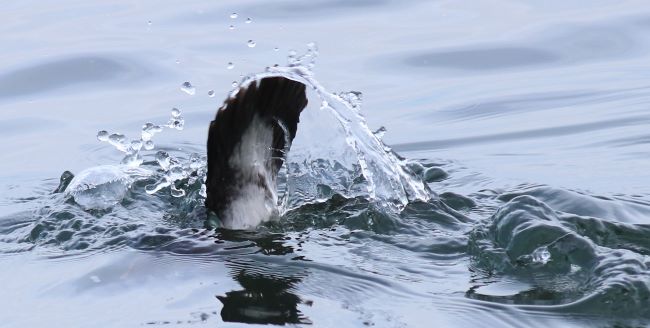
arc of a diver
duck photography challenge
butt end of the deal
As we walked Emma in the rain earlier today, I felt a sudden urgency to post about Gaza. Zippy asked, “What will you say about Gaza?” My reply, “Maybe an excerpt from Refaat Alareer’s “If I Must Die.”
Just now, I opened the book to page 107 and what I read on that page feels very apt in these days of censorship and fascism, guidance for all of us, no matter where we reside on the planet.
An Introduction to Poetry.
Edited excerpt from a spoken lecture delivered to students in Advanced English Poetry at the Islamic University, Gaza
2021
We all know Fadwa Tuqan, the Palestinian poet. And please don’t introduce her a “Ibrahim Tuqan’s sister.” Let’s talk about Fadwa Tuqan as Fadwa Tuqan.
We always fall into this trap of saying, “she was arrested for just writing poetry!” We do this a lot, even us believers in literature. “Why would Israel arrest somebody or put someone under house arrest, she only wrote a poem?”
So, we contradict ourselves sometimes. We believe in the power of literature changing lives, as a means of resistance, a means of fighting back–and then at the end of the day, we say, “She just wrote a poem!” We shouldn’t be saying that.
Moshe Dayan, an Israeli general, said that, “the poems of Fadwa Tuqan were like facing twenty enemy fighters.” Wow. She didn’t throw stones, she didn’t shoot at the invading Israeli jeeps, she just wrote poetry. And I’m falling for that again–I said she just wrote poetry . . .
And the same thing happened to Palestinian poet Dareen Tatour. She wrote poetry, celebrating Palestinian struggle, encouraging Palestinians to resist, not to give up, to fight back. She was put under house arrest, she was sent to prison for years.
That excerpt of the published excerpt from “If I Must Die,” highlights two courageous Palestinian women resisting oppression and occupation through their poetry. In 2023, I shared Fadwa Tuqan’s “Hamza” and today I offer another of her poems, “Enough For Me.”

And let’s also honor poet Dareen Tatour, a Palestinian citizen of Israel who was sentenced by Israel (“the only democracy in the Middle East!”) to nearly three years of house arrest and five months in prison for a poem.
Detaining a Poem
One day,
they stopped me,
shackled me,
tied up my body, my soul,
my everything…
Then they said: search her,
we’ll find a terrorist within her!
They turned my heart inside out—
my eyes as well,
rummaged through even my feelings.
From my eyes they drew a pulse of inspiration;
from my heart, the ability to sketch out meanings.
Then they said: beware!
She’s hiding weapons deep in her pockets.
Search her!
Root out the explosives.
And so they searched me…
Finally, they said, accusing me:
We found nothing
in her pockets except letters.
We found nothing except for a poem.
Translated from the Arabic by Andrew Leber
June 19, 2022
Today I thank all who are resisting, whether that resistance is via literature, visual arts, music, photography, mutual aid, whistle brigade, immigrant court observer, caring for your neighbor’s children, putting food in a Little Free Pantry, or making a donation to crips for esims for gaza. Remember, every act of kindness is an act of resistance.
Free Palestine.

traumatized children
pawns in genocidal plan
their eyes say it all
Please consider donating to Hot meals 4 Starved Palestinian Kids in north Gaza
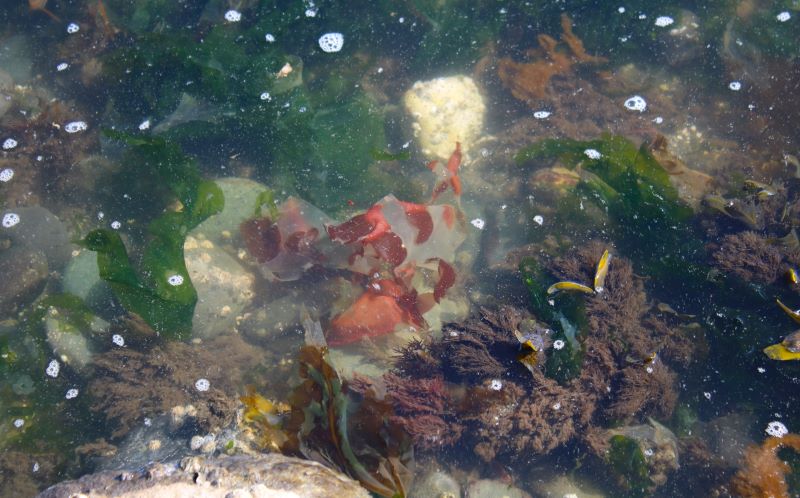
incoming tide
undulating seaweed
aquatic still life
look closely
who-who do you see
one great horned owl
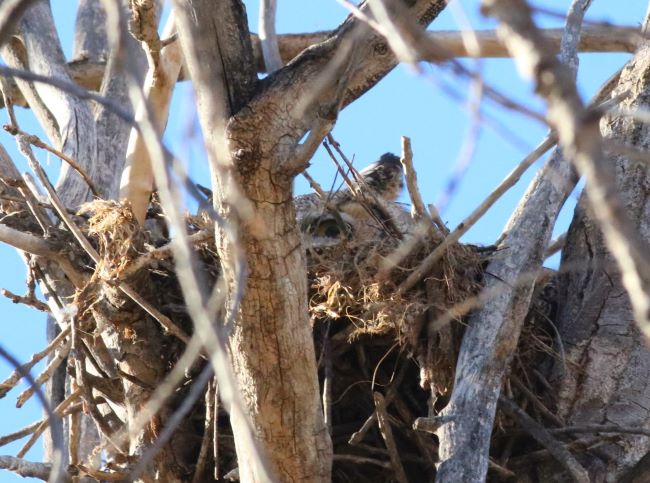
Bear Creek Greenbelt Park. February 28, 2025
Thank you, Amy Law, for showing me the owl nest. While we didn’t see American Dippers, it was still a lovely walk and talk.

new administration
billionaire’s Nazi salute
believe what you see
NOTES:
1) The above shows Elon Musk at Trump’s inaugural parade on January 20, 2025. (Photo by ANGELA WEISS / AFP)
2) The American Defamation League (ADL) which supposedly exists to combat antisemitism, responded to Musk’s Nazi salute with this [emphasis mine]:
“This is a delicate moment. It’s a new day and yet so many are on edge. Our politics are inflamed, and social media only adds to the anxiety,” the ADL wrote in a Monday post on Musk’s social platform X. “It seems that @elonmusk made an awkward gesture in a moment of enthusiasm, not a Nazi salute, but again, we appreciate that people are on edge.”
In case you’ve forgotten, last year the ADL decried the “antisemitism” of college students (many of them Jewish) who protested their tuition and taxes being used to fund the genocide in Palestine. Notably, the ADL url for their “Campus Crisis Daily” contains the words “no tolerance for antisemitism.” Apparently, ADL can tolerate Nazi salutes from white supremacist billionaires, but draws the line at Jewish students speaking out against genocide.
3) It’s not only the ADL tripping over themselves to excuse a Nazi salute, a TV weather forecaster from Milwaukee, Wisconsin, was fired after calling out Musk’s Nazi salute on social media.
4) NBC News edited their footage to remove the Nazi salute while the Washington Post referred to Musk’s appearance as “exuberant.”
5) Religion Dispatches breaks down the media coverage in the U.S. and around the world: While Global Media Are Clear on Musk’s Nazi Salute US Media Engage in ‘Nazi-Washing’
6) This is a very good time to remember George Orwell’s book 1984:

For above graphic: h/t to @thelazycanuck.bsky.social
Take them at their words and actions. Believe what you see. Reject the gaslighting.
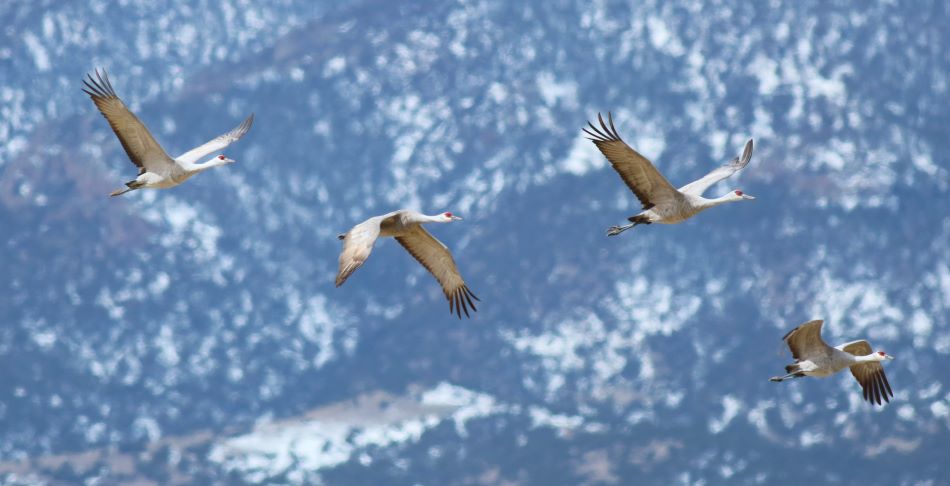 synchronized flight
deceptively effortless
sky ballet
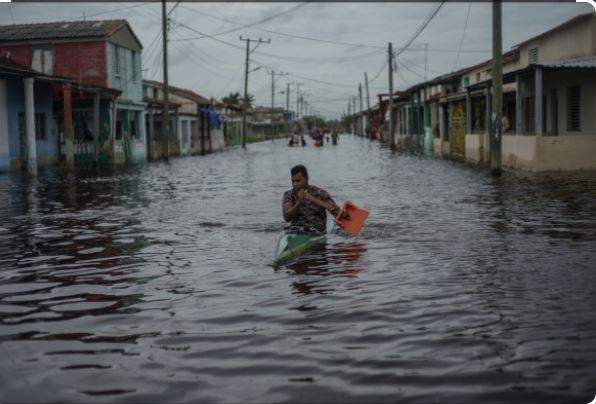
AP Photo / Ramon Espinosa
streets filled with water
millions without power
climate catastrophe

towhee conundrum
abundance of insects
but only one mouth
your turn
hit me with a haiku
please
 self-conscious youngster
hiding in shadow
bad hair day
eta: photo by Zippy, July 7, 2024
Welcome back to Movement Mondays in which we discuss all things climate. And guess what? Climate is connected to every other issue we’re facing for the simple reason that everyone and everything on this planet is connected. No one and nothing exists in isolation.
As I write this, much of the western U.S. is under a heatdome while Hurricane Beryl continues to wreak havoc, this time in Texas. A couple days ago, the medical journal The Lancet published a report saying that a conservative death toll in Gaza is 186,000 dead–which equals 8% of the Palestinian population in the Gaza Strip–when indirect deaths (starvation, illness, disease, etc.) are taken into account. Ten days ago, the Supreme Court ruled that the constitution doesn’t protect unhoused people from cruel and unusual punishment, meaning it’s okay for cities to criminalize people for sleeping outdoors. Extreme weather is difficult even under the best of circumstances (i.e. with housing), and surviving extreme weather is much, much harder for those living on the streets. That’s where mutual aid comes in.
What is mutual aid? Mutual aid is about cooperating to serve community members. Mutual aid creates networks of care and generosity to meet the immediate needs of our neighbors. It also addresses the root causes of challenges we face and demands transformative change.
Image by Gerd Altmann from Pixabay
As it becomes increasingly clear that the powerful elite has no interest in listening to or working on behalf of we-the-people, mutual aid shines brighter as a powerful way to share our energy. I hoped to find a national database of mutual aid efforts around the country that I could link here, but was unsuccessful (many mutual aid efforts started at the beginning of the pandemic have since folded). However, if you do a search for your city + mutual aid, you will get some hits. For instance, Zippy and I help via Rocky Mountain Mutual Aid Network (RMMAN) which collaborates with Joy’s Kitchen to get “saved” food to needy households. We also carry bottled water, granola bars, and masks in our car to offer people flying signs or washing windshields at stop lights. After that disastrous Supreme Court ruling against the unhoused, I came across this very helpful thread listing specific ways to offer aid to the unhoused.
I’ll close with this beautiful poem by the incredible Joy Hargo.
Once the World Was Perfect
BY JOY HARJO

empire in decline
held hostage by duopoly
zombification
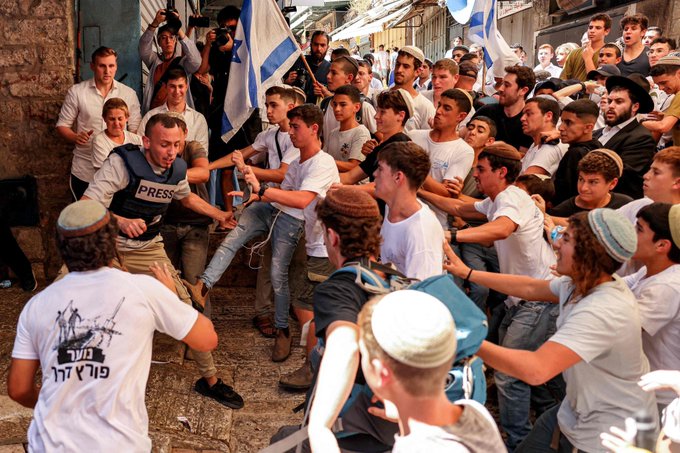
religious school mob
attacks journalist
supremacist frenzy
Note: this happened on June 5 in occupied Jerusalem during the “Flag March.” Palestinian journalist Saif Al-Qawasmi was attacked, first by students of a religious school and then beaten by Israeli police. Journalist Nir Hasson tried to protect Qawasmi and was also beaten. Hasson, who works for the newspaper Haaretz, took this photo. Other images can be seen here.

gun-wielding soldier
threatened by knowledge
scholasticide
Note: Israeli soldiers burning books at Aqsa University & posing for photos first reported here
Just got home from the Auraria Campus solidarity encampment in Denver. Students have been camping on the Tivoli Quad for, I believe, 18 days now. Despite serious fear-mongering from ace reporter Jim Hooley, Zippy and I saw no signs of weaponry or human waste today.

What we did see was lots of love and admiration for the approximately 20 young people from the encampment who received diplomas during “The People’s Graduation.” We heard from one of those graduates who was introduced as an organizing wizard (in just six hours, they organized three actions that spanned twelve hours) and also heard from faculty members who are in solidarity with the students. As always, the speeches at these pro-Palestine gatherings brought tears while also filling my heart with love and hope.
It was a wonderful way to spend this Mother’s Day and it felt very fitting that the rainy, overcast skies cleared, allowing the sun to shine down on the events. I’ll leave you with this poem shared by one of the speakers.

Solidarity on behalf of all children!
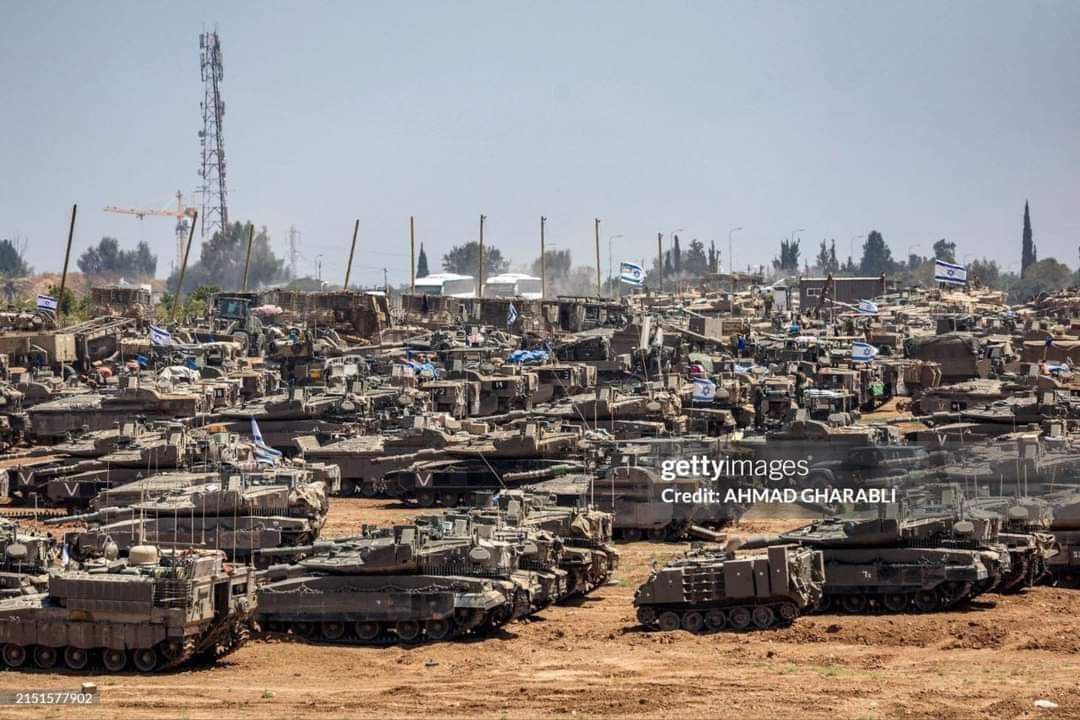
tanks east of Rafah
target: families in tents
our taxes bought this

momentary roost
six-foot wings softly rustle
off to recycle
your turn
hit me with a haiku
please
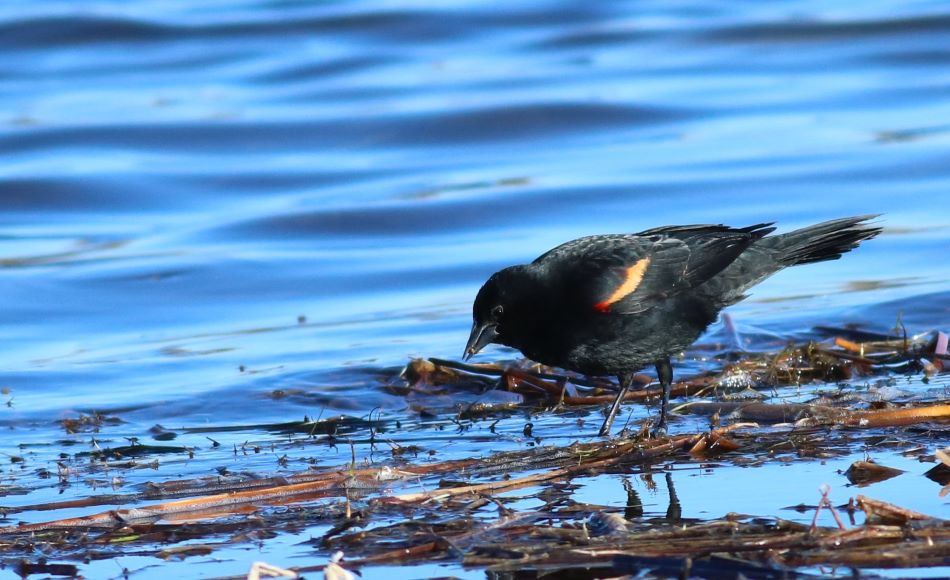 wading for breakfast
fuel for upcoming concert
cattail aria
your turn
hit me with a haiku
please
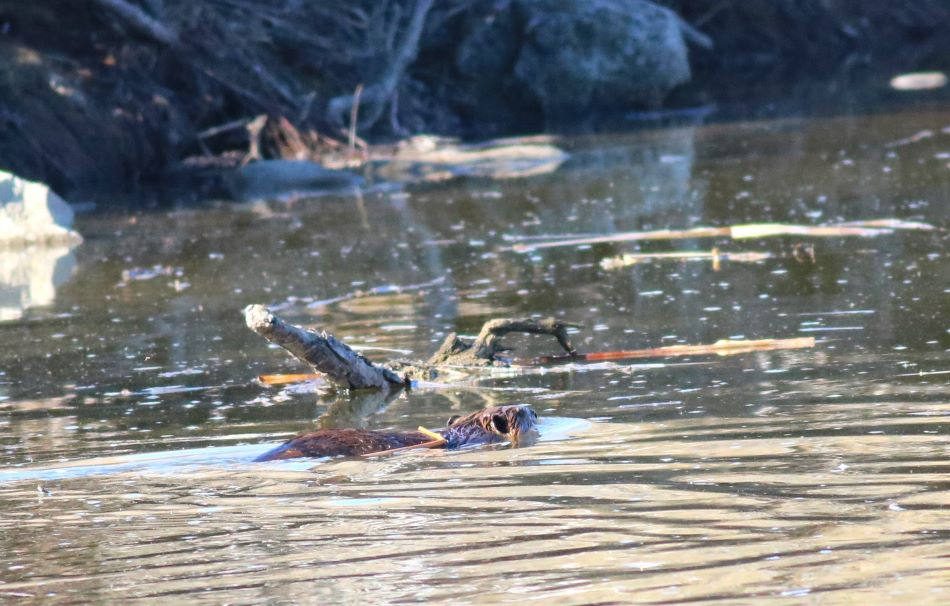
one busy beaver
broke crepuscular habit
daytime glimpse for me
your turn
hit me with a haiku
please
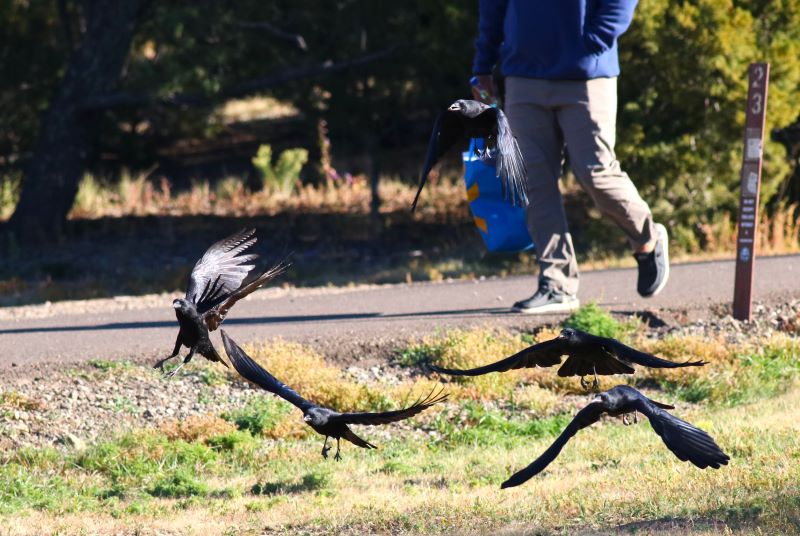
my camera ready
crows on ground man approaches
murder in motion

Hamza
by Fadwa Tuqan
Hamza was just an ordinary man
like others in my hometown
who work only with their hands for bread.
When I met him the other day,
this land was wearing a cloak of mourning
in windless silence. And I felt defeated.
But Hamza-the-ordinary said:
‘My sister, our land has a throbbing heart,
it doesn’t cease to beat, and it endures
the unendurable. It keeps the secrets
of hills and wombs. This land sprouting
with spikes and palms is also the land
that gives birth to a freedom-fighter.
This land, my sister, is a woman.’
Days rolled by. I saw Hamza nowhere.
Yet I felt the belly of the land
was heaving in pain.
Hamza — sixty-five — weighs
heavy like a rock on his own back.
‘Burn, burn his house,’
a command screamed,
‘and tie his son in a cell.’
The military ruler of our town later explained:
it was necessary for law and order,
that is, for love and peace!
Armed soldiers gherraoed his house:
the serpent’s coil came full circle.
The bang at the door was but an order —
‘evacuate, damn it!’
And generous as they were with time, they could say:
‘in an hour, yes!’
Hamza opened the window.
Face to face with the sun blazing outside,
he cried: ‘in this house my children
and I will live and die
for Palestine.’
Hamza’s voice echoed clean
across the bleeding silence of the town.
An hour later, impeccably,
the house came crumbling down,
the rooms were blown to pieces in the sky,
and the bricks and the stones all burst forth,
burying dreams and memories of a lifetime
of labor, tears, and some happy moments.
Yesterday I saw Hamza
walking down a street in our town —
Hamza the ordinary man as he always was:
always secure in his determination.
Running Orders
By Lena Khalaf Tuffaha
Image from https://darabzine.wordpress.com
Blood
By Naomi Shihab Nye
In order for me to write poetry that isn’t political
I must listen to the birds
and in order to hear the birds
the warplanes must be silent.
– Marwan Makhoul, Palestinian Poet

Image by Amy Spielmaker from Pixabay
(The following note and poem by Mosab Abu Toha were published in The Atlantic on November 9, 2023):
I wrote this poem last year, reflecting on my childhood under Israeli military occupation. I’m now staying in Jabalia, a United Nations refugee camp, with my wife and three kids. I’m reading this poem to myself and wondering if my children will be able to write poems about the bombs and explosions they are seeing. I was 8 the first time I witnessed a rocket. Now my youngest child, born in America in May 2021, is living through the third wave of Israeli bombing. Not only are he and his older brother and sister smelling death around them; but they have also lost their house in Beit Lahia 10 days ago. Luckily no one was at home. My son Yazzan, who is 8 years old, asks me, “Are our toys still alive?”
YOUNGER THAN WAR
Tanks roll through dust, through eggplant fields.
Beds unmade, lightening in the sky, brother
jumps to the window to watch warplanes
flying through clouds of smoke
after air strikes. Warplanes that look like eagles
searching for a tree branch to perch on,
catch breath, but these metal eagles
are catching souls in a blood/bone soup bowl.
No need for radio.
We are the news.
Ants’ ears hurt with each bullet
fired from wrathful machine guns.
Soldiers advance, burn books, some smoke
rolled sheets of yesterday’s newspaper, just like they did
when they were kids. Our kids
hide in the basement, backs against concrete pillars,
heads between knees, parents silent.
Humid down there, and heat of burning bombs
adds up to the slow death
of survival.
In September 2000, after I had bought bread for dinner,
I saw a helicopter firing a rocket
into a tower as far from me as my frightful cries
when I heard concrete and glass fall from high.
Loaves of bread went stale.
I was still 7 at the time.
I was decades younger than war,
a few years older than bombs.
Mosab Abu Toha is a Palestinian poet, short story writer, and essayist from Gaza. His collection Things You May Find Hidden in My Ear was a finalist for the National Book Critics Circle Award and won a Derek Walcott Poetry Prize and an American Book Award.
From the Sky
by Sara Abou Rashed
After Lorca
When I die,
bury me in the sky—
no one is fighting over it.
 Tracy Abell