You should have joy and pleasure

When reading this week’s newsletter “Organizing My Thoughts” from Kelly Hayes this morning, a quote jumped out at me. It came via the linked piece from Lewis Raven Wallace “The Right Wants Us to Submit to Nihilism. Here Is Where I’m Searching for Hope.”

“You should have joy and pleasure from being on the right side of history,” [ . . ], “not anguish and despair. Let the other people have that.”

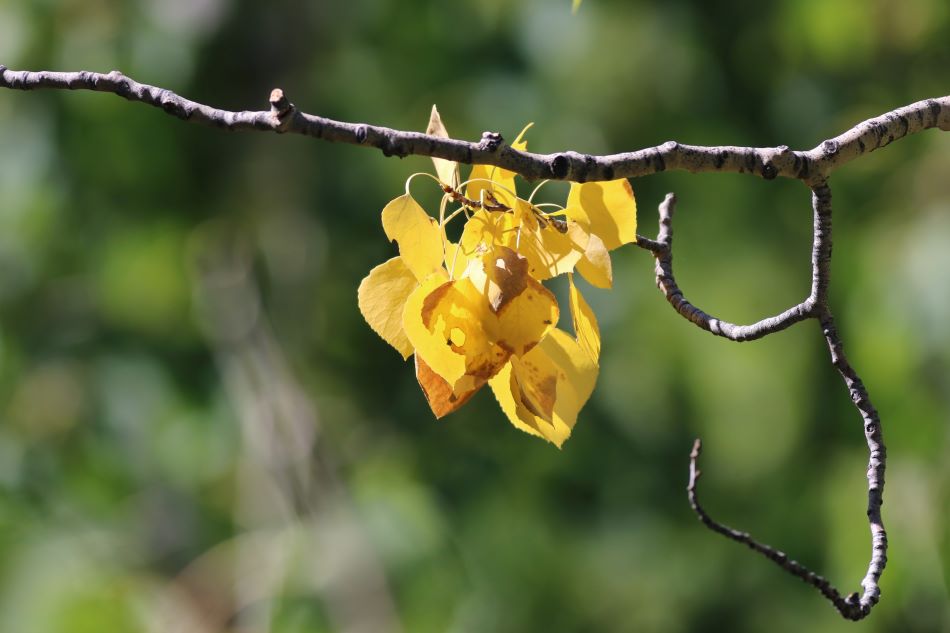
My first yellow leaves of the season. Golden Gate Canyon State Park. August 30, 2024

Wallace continues with this:
Joy is not just icing on the cake or the purview of the privileged. It is an exercise in hope that has always been rigorously practiced by people facing impossible situations of oppression. Laughter, pleasure and small acts of connection are precisely where we find our power — and the soul fuel that makes it possible to go on.

Anyway, that sentiment helped me a lot today–helped me remember who and what I am–and I wanted to share in case it could help someone here. Let’s hold onto our shared humanity and refuse to let the horrors and ugliness turn us into shells of ourselves. Let’s rejoice in nature and each other, and laugh as much as possible.

The fear-based, mean-spirited people can keep all that ugly for themselves.

Grief is the opposite of indifference

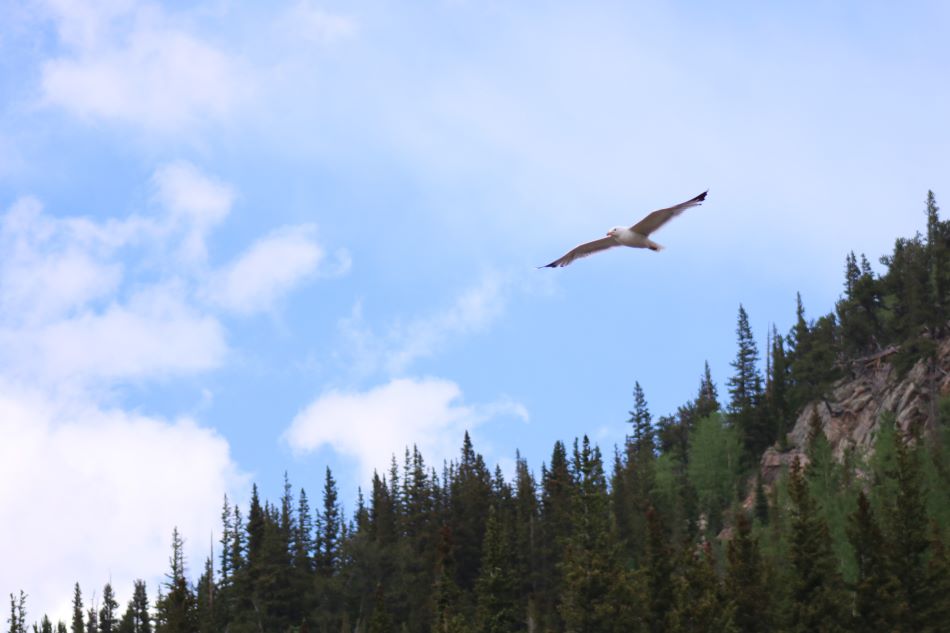
Gull gliding above Jefferson Lake, July 1, 2024

Becoming aware of grief gives us more choices about how to respond to grief and opens up possibilities to approach grief not only with compassion for self and others, but also with joy. Joy is not the opposite of grief. Grief is the opposite of indifference. Grief is an evolutionary indicator of love — the kind of great love that guides revolutionaries.
~ Malkia Devich-Cyril 

Note: I found that quote in Let This Radicalize You: Organizing and the Revolution of Reciprocal Care by Kelly Hayes & Mariame Kaba (it comes from this essay) and wanted to share it in response to my grief on many fronts: genocide in Gaza, climate collapse, political cowardice, abandonment during a global pandemic, etc. It also feels like a worthy companion to the excerpt shared in Rosaliene Bacchus’s post: Sighting the Storm which resonated with me.

Drunk on writing

On a personal level, 2024 has brought an awful lot of pain and hardship to people I love, making these first five months feel like an entire year has already passed. And when I factor in the horrors of the U.S.–sponsored genocide of Palestinians, the emotional weight of these days is almost more than I can bear. But I’m now finding consistent refuge in my writing because I’ve made it a daily priority.

Rather than trying to cram a writing session into whatever slots I could find in my days and then saying oh-well if it didn’t happen, writing is now (again) part of my morning routine. As a result, I’ve been making slow progress on the second draft of my middle grade novel. I typically work for 60-90 minutes and that’s enough to keep me (mostly) centered for the rest of the day. That routine and commitment to my creativity keep me afloat, although some days I look and feel like this disheveled Northern Shoveler.

Lake Hasty. April 2, 2024

As Ray Bradbury said, You must stay drunk on writing so reality cannot destroy you.

Hope and grief can coexist

I don’t know about you, but it’s increasingly difficult for me to get out of bed in the morning. So far, I’ve been able to rally my energy rather than remain curled in the fetal position with the covers pulled over my head, but today I feel the need to return to one of my favorite resources, LET THIS RADICALIZE YOU (mentioned earlier here).

Sandhill Cranes from March 11, 2024, here representing Hope and Grief

The wise Kelly Hayes and Mariame Kaba wrote a chapter titled “Hope and Grief Can Coexist” which is filled with wisdom from their decades of organizing. The following was written in conjunction with paragraphs about climate collapse, but also applies to our broader experience (emphasis mine):

We feel deeply for those who are suffering and for the young people who have inherited this era of catastrophe. We share in their heartbreak and fury.

We also know this: hope and grief can coexist, and if we wish to transform the world, we must learn to hold and to process both simultaneously. That process will, as ever, involve reaching for community.

In a society where fellowship and connection are so lacking, where isolation and loneliness abound, we are often ill equipped to process grief. [   ]  Grief can also lead us to retreat and recoil and, too often, to abandon people to suffer in ways that we cannot bear to process and behold. 

. . . we, as people, do have power. Depending on our choices, we can turn away from injustice and let it continue, or we can confront our grief and move forward to shift the course of societal action in the face of a massive failure of leadership and institutional abandonment. Grief, after all, is a manifestation of love, and our capacity to grieve is in some ways proportional to our capacity to care. Grief is painful, but when we process our grief in community, we are less likely to slip into despair.

Personally, it helps to view my grief as a manifestation of love, maybe because it’s a reminder of my sense of humanity and connection to others, which makes the pain feel almost welcome. Maybe this perspective does the same for you. Later in the chapter, Hayes and Kaba write:

When we talk about hope in these times, we are not prescribing optimism. Rather, we are talking about a practice and a discipline–what Joanna Macy and Chris Johnstone have termed “Active Hope.” As Macy and Johnstone write,

Active Hope is a practice. Like tai chi or gardening, it is something we do rather than have. It is a process we can apply to any situation, and it involves three key steps. First, we take a clear view of reality; second, we identify what we hope for in terms of the direction we’d like to see expressed; and third, we take steps to move ourselves or our situation in that direction. Since Active Hope doesn’t require our optimism, we can apply it even in areas where we feel hopeless. The guiding impetus is intention; we choose what we aim to bring about, act for, or express. Rather than weighing our chances and proceeding only when we feel hopeful, we focus on our intention and let it be our guide.

Hayes and Kaba continue: This practice of hope allows us to remain creative and strategic. It does not require us to deny the severity of our situation or detract from our practice of grief. To practice active hope, we do not need to believe that everything will work out in the end. We need only decide who we are choosing to be and how we are choosing to function in relation to the outcome we desire and abide by what those decisions demand of us.

This practice of hope does not guarantee any victories against long odds, but it does make those victories more possible. Hope, therefore, is not only a source of comfort to the afflicted but also a strategic imperative.

Whew. Just typing out those words helped center me in my grief and to feel those stirrings of hope all over again. My wish is that they do the same for you. Solidarity, friends!
Etiquette question

You’ve probably noticed how when someone says hello or smiles at you, your automatic reaction is to say hello or smile back. ~ Shawn Achor

January 3, 2023

Yes, but then there are situations in which that other being stares and flicks its tail. How does a tail-less individual reciprocate?

What’s the plan

Tell me, what is it you plan to do with your one wild and precious life?
~ Mary Oliver

June 22, 2022

I don’t know about you, but the events of the past weeks have cranked up my attention-deficit tendencies as my brains thinks “I need to work on that issue which affects this and this issue, and then there’s this other issue which is also connected to this that and the other issue, but they’re all so so important and need immediate attention, so where to focus?”

And that’s how they want it. They’ve intentionally created chaos and hardship in order to grind us down. A whack-a-mole world in which we’re forced to constantly swing our mallets at the problems, diluting our energies and coating us in a thick layer of despair. (Brace yourselves for an upcoming SCOTUS opinion on the EPA and the end of environmental regulations.)

But, as Mariame Kaba says “Let this radicalize you rather than lead you to despair.” [Note: one of the best books I’ve read, ever, is Kaba’s We Do This ‘Til We Free Us]. And as for my ADD thoughts about where to put my efforts, I found this Twitter thread immensely helpful:

The gist is: keep on doing what you’re doing PLUS be intentional about strengthening ties with other organizations/efforts to create more collaboration. Build on what you’re already doing.

Personally, my current plan is to continue revising my middle grade novel that’s a friendship story set against a backdrop of PIC abolition and restorative justice. Doing that work helps me avoid despair. Creativity has always brought me peace and balance, so add a pinch of radicalism in the content plus weave in some of what I’m continuing to learn, and I’m (currently) feeling solid re my focus in this one wild and precious life.

Please, reach out if you think your efforts/interests might align so that together we can build something bigger and stronger. ☀️

#Caturday truths

You can observe a lot by just watching. ~ Yogi Berra

October 9, 2021

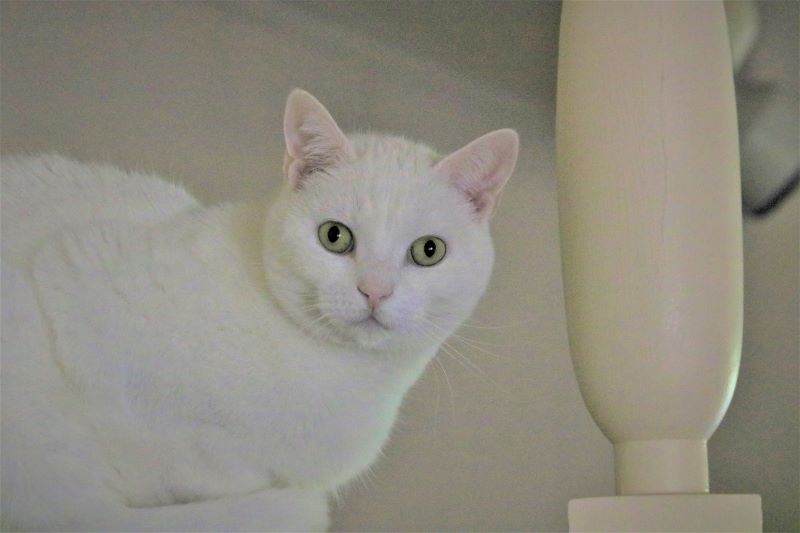
Marcel takes Yogi’s sage insight to heart, watching out the window as his brother Loki naps beside him, oblivious to the birds on the awning.

Meet Joe

This is Joe, the horse we met while walking on South Boulder Creek Trail a couple weeks back. Despite sticking out his tongue as two women approached, Joe was exceedingly friendly. And quite handsome. Not that I’ve ever encountered a not-handsome horse.

March 1, 2022

A horse is the projection of peoples’ dreams about themselves – strong, powerful, beautiful – and it has the capability of giving us escape from our mundane existence. ~ Pam Brown

Note: I’m still experiencing vision issues and have cut way back on screen time which means I haven’t been reading and commenting on posts. I hope to be back and caught up soon. Stay healthy, all!

The weakening eye of day

February 2, 2022

I leant upon a coppice gate
      When Frost was spectre-grey,
And Winter’s dregs made desolate
      The weakening eye of day.
The tangled bine-stems scored the sky
      Like strings of broken lyres,
And all mankind that haunted nigh
      Had sought their household fires.
from Thomas Hardy’s The Darkling Thrush

On death

I just learned that a neighbor died. Alone. In their home. I don’t know any details beyond that. In trying to process all this, I went in search of a quotation that might speak to me and help make sense of the situation. This, from Kurt Vonnegut, caught my eye: There is love enough in this world for everybody, if people will just look. That sentiment felt applicable because of how the neighbor had alienated others to the extent that no one could pinpoint for the police when the neighbor had last been seen. In my mind, the aloneness had been needlessly self-inflicted over the years, destroying relationships that had once thrived. Then I happened upon this quotation from Orson Welles: We’re born alone, we live alone, we die alone. Only through our love and friendship can we create the illusion for the moment that we’re not alone. Who was I to pity the neighbor when every one of us will make that final trip alone? Our neighbor was fiercely independent and very proud of that fact.

I recently read Smoke Gets In Your Eyes & Other Lessons from the Crematory which was quite helpful, not only because it put death in perspective, but also for leading me to human composting. For years, I’d been telling Zippy that when I die I wanted him to toss my body in the forest so that the crows and whatever else could feast on my remains. He patiently and repeatedly pointed out how he’d probably get in serious trouble for disposing of his wife’s body in the woods. But now I have a plan that’s legal and suits my wishes. It’s incredibly freeing to know that when I die, my body will not only return to the soil but also enrich the earth. I hope my neighbor experienced a similar peace by having a death plan in place. I also hope their death was swift and painless, and that they maintained their sense of indomitability to the very end. When your time comes to die, be not like those whose hearts are filled with fear of death, so that when their time comes they weep and pray for a little more time to live their lives over again in a different way. Sing your death song, and die like a hero going home. ~ Tecumseh

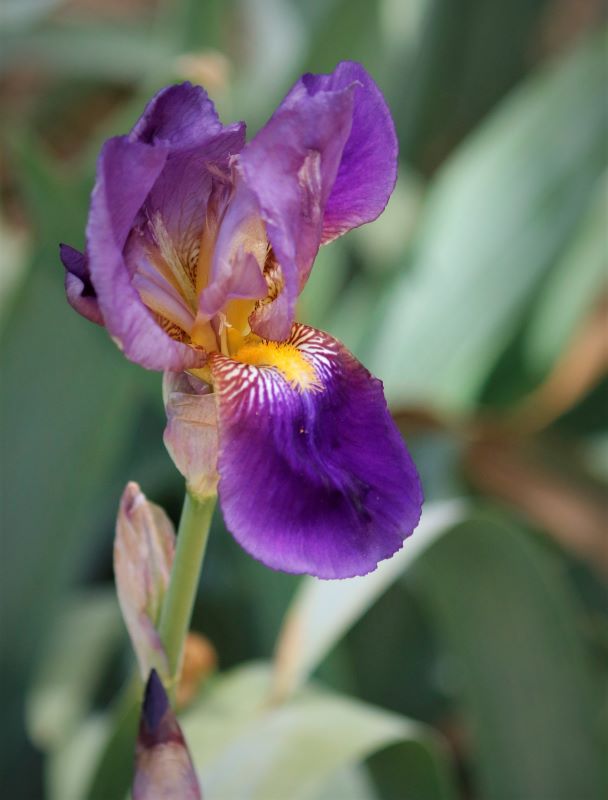
This flower from my garden is a stand-in for the photos I took years ago of my neighbor’s iris. They were out of state that spring and sad to miss their garden in bloom, so I documented the display and sent it along. Remembering that connection eases some of today’s shock.

May 13, 2020

Death forces us to think more about life and how we’re spending our finite time here. Zippy and I are grateful to have our sons visiting now and we’ve shared even more hugs than usual today. If you’ve read this far, thank you for sharing in these musings with me. I’m grateful for our connection.

Martin Luther King, Jr: all life is interrelated

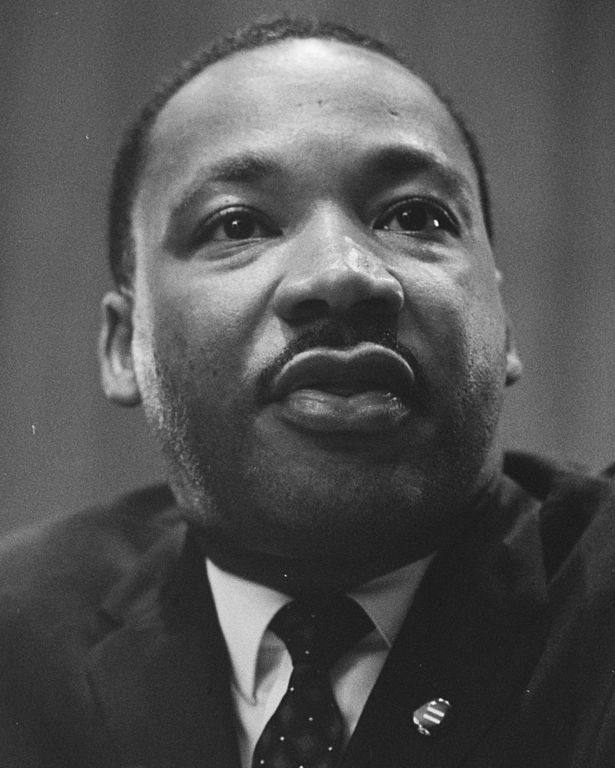
Here’s yet another prescient reminder from MLK, this from his  1965 Oberlin Commencement address (“Remaining Awake Through a Great Revolution”):

“All I’m saying is simply this: that all mankind is tied together; all life is interrelated, and we are all caught in an inescapable network of mutuality, tied in a single garment of identity. Whatever affects one directly, affects all indirectly. For some strange reason I can never be what I ought to be until you are what you ought to be. And you can never be what I ought to be until I am what I ought to be – this is the interrelated structure of reality.” 

Every single issue you can think of — global pandemic, ecological collapse, mass incarceration, wealth inequality, etc. — is addressed in that statement. ALL life is interrelated. And yet, here we are, still madly dancing to capitalism-a-go-go.

Mixed messages from March

It was one of those March days when the sun shines hot and the wind blows cold: when it is summer in the light, and winter in the shade.  ~ Charles Dickens

Exactly so, Mr. Dickens. Which is why I’m sitting in a patch of sunshine next to this geranium that’s reaching for the warm light.

March 29, 2021

The wind can’t touch us here.

Speak peace

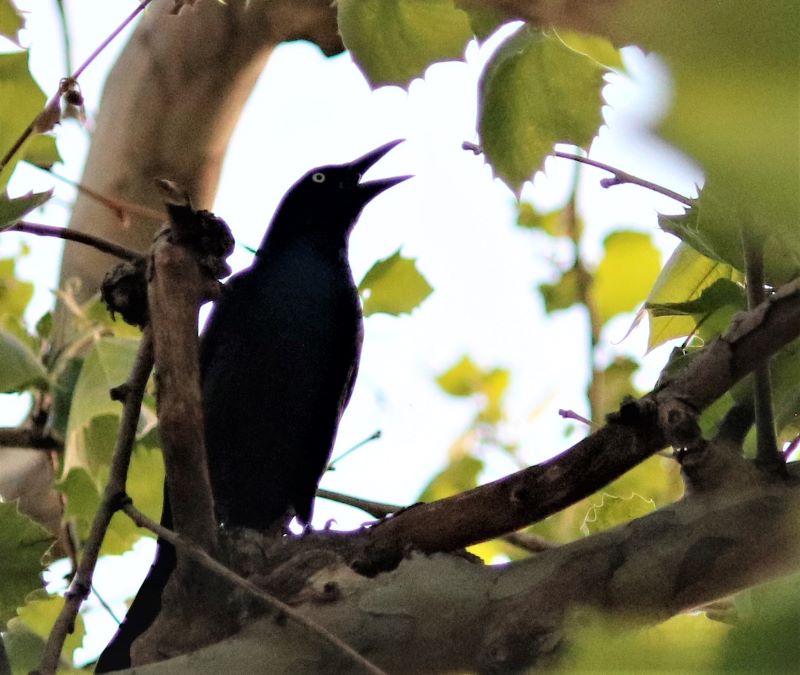
Common Grackle. Grand Island, NE. June 2, 2020

As an artist I come to sing,
but as a citizen, I will always speak for peace,
and no one can silence me in this.
~ Paul Robeson

Infinite storm of beauty

Uncompahgre National Forest, July 30, 2019.

When we contemplate the whole globe as one great dewdrop, striped and dotted with continents and islands, flying through space with other stars all singing and shining together as one, the whole universe appears as an infinite storm of beauty.  ~ John Muir

Bee wisdom

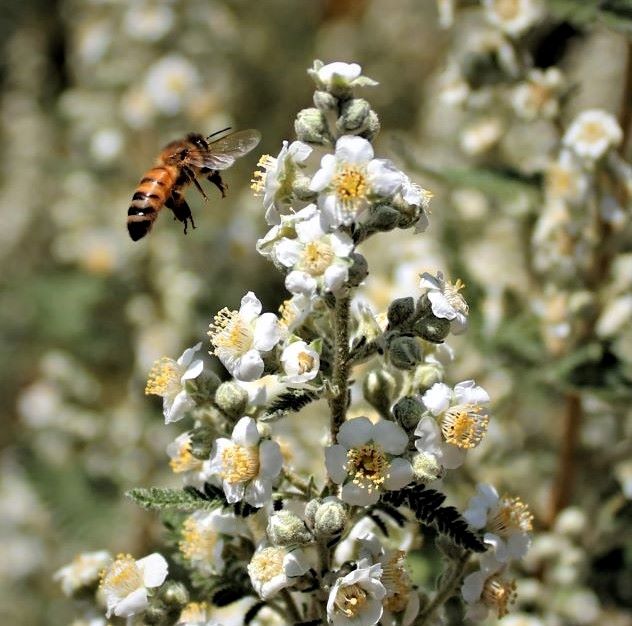
Bee and Fern Bush, August 4, 2020

The bee collects honey from flowers in such a way as to do the least damage or destruction to them, and he leaves them whole, undamaged and fresh, just as he found them. ~ Saint Francis de Sales

Today I embrace procrastination

It’s 2:30 of the p.m. in Colorado and while I have opened my Scrivener document, I haven’t done any writing. But hey, I didn’t even get that far yesterday. I’ve been in recovery and thinking mode as I sort through the wreckage of my incomplete first draft, and guilt-feelings sent me to BrainyQuote in search of insights regarding procrastination. I thought I’d find some tsk-tsk kind of quote that would be like a slap upside the head, something to “shame” me into getting back to work.

Instead, I found these two quotes from psychologist and author, Adam Grant:

Procrastinating is a vice when it comes to productivity, but it can be a virtue for creativity.

Procrastination gives you time to consider divergent ideas, to think in nonlinear ways, to make unexpected leaps.

Image by mohamed ramzee from Pixabay

And while this may sound self-serving, I have experienced a couple out-of-left-field realizations about my story. Which is all to say, I’m gonna let go of the guilt and shame, post this, and then explore those realizations more thoroughly.