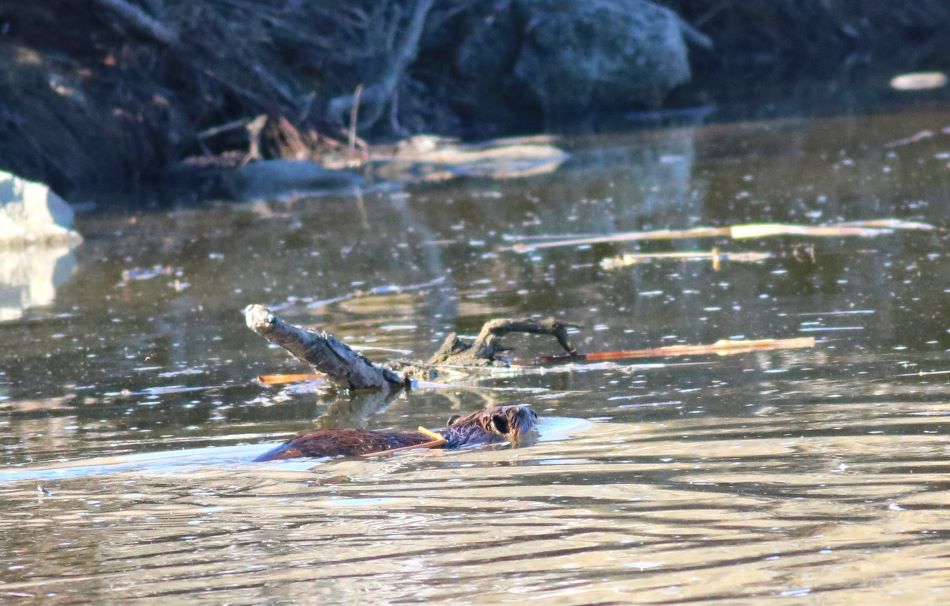
Thankful Thursday: hawk edition

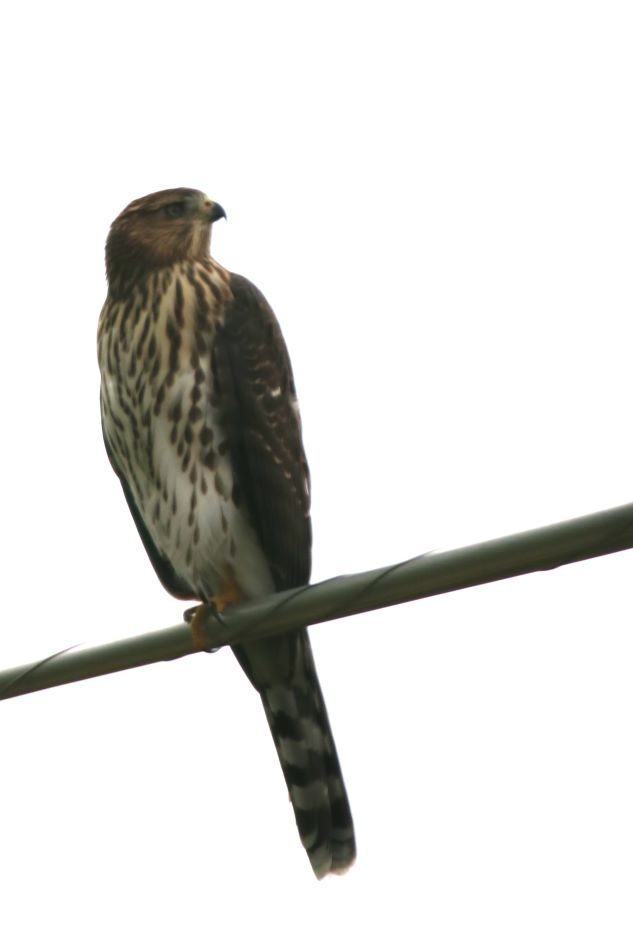
Earlier today, movement outside the window caught my eye. I turned and saw:
Emma running along the fence + a Red-tailed Hawk sitting on the wire + a squirrel jumping into the maple tree right next to the wire + another Red-tailed Hawk landing in that maple tree.

I sent up a prayer for the squirrel as I ran for the camera in the other room. By the time I returned, all I could see were the two hawks. The squirrel must’ve escaped and Emma was elsewhere in the yard, oblivious to having chased that squirrel right toward the hawks.

I photographed the one on the wire through the kitchen window and captured the hawk in the tree by sneakily pushing my big lens through the mini-blinds in Zippy’s office. I was grateful they didn’t startle at my movements and even more grateful they hung around as long as they did. Just moments after getting photos of the tree-sitter, the hawk took off from the wire and the other followed.

I receive these gifts.

Grief is the opposite of indifference

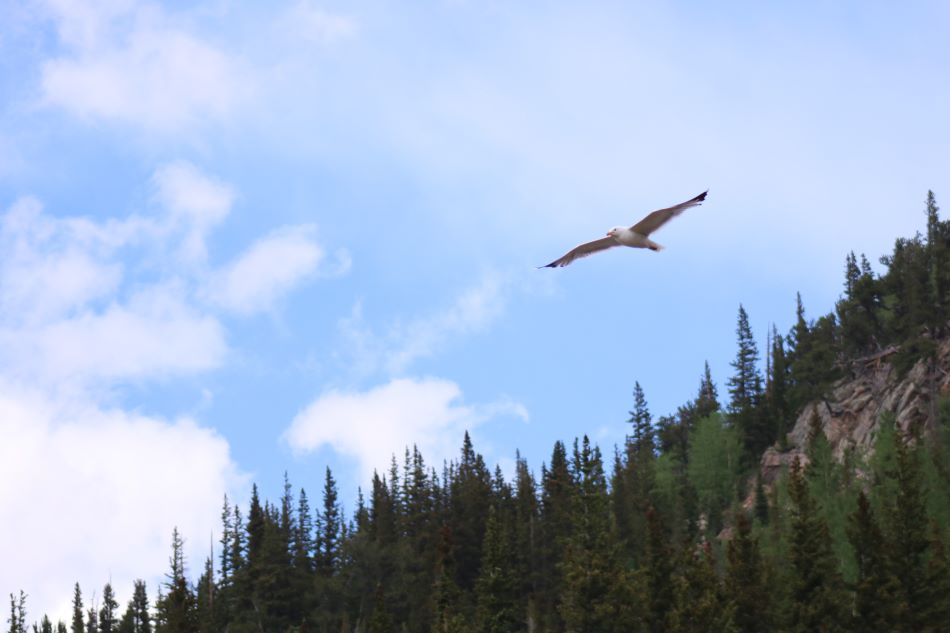
Gull gliding above Jefferson Lake, July 1, 2024

Becoming aware of grief gives us more choices about how to respond to grief and opens up possibilities to approach grief not only with compassion for self and others, but also with joy. Joy is not the opposite of grief. Grief is the opposite of indifference. Grief is an evolutionary indicator of love — the kind of great love that guides revolutionaries.
~ Malkia Devich-Cyril 

Note: I found that quote in Let This Radicalize You: Organizing and the Revolution of Reciprocal Care by Kelly Hayes & Mariame Kaba (it comes from this essay) and wanted to share it in response to my grief on many fronts: genocide in Gaza, climate collapse, political cowardice, abandonment during a global pandemic, etc. It also feels like a worthy companion to the excerpt shared in Rosaliene Bacchus’s post: Sighting the Storm which resonated with me.

Thankful Thursday: trailrunning

Just over three weeks ago, I took a pretty hard fall while running on the trails in the open space. I’ll spare you the image of my left knee that I texted to my sons after limping home (an image that prompted Wildebeest to reply, “Ewwwww. Mother I am squeamish”), and will only say that the last bits of scabbing came off two days ago (to which everyone reading is probably thinking, “Ewwwww, Tracy. We’re squeamish!”) The point is, my knee is healed and while I’d already resumed running on the streets, I was very nervous about trail running again.

I got up at six this morning knowing I needed to run early in order to beat the heat, and checked in with my intuition: run on the trails or run on the streets? Trails. Okay, then. In an attempt to feel slightly more protected, I put on leggings despite temperatures already in the 60s.

Not gonna lie: it’s always scary to run on those rocky trails after a fall and today was no different. It was hard to fully relax and I had to intentionally push images of tripping and falling out of my mind. I talked myself through the run (“You are strong. You are resilient. You are mindful. Feet on the ground, feet on the ground, feet on the ground,”) and tried very hard to be in the moment. Whenever my brain jumped to catastrophe, I reminded it to “be in this moment, with these steps.” [Note: I’m sharing these details to document the experience for myself, but also in case this approach might be helpful for anyone dealing with a trauma.]

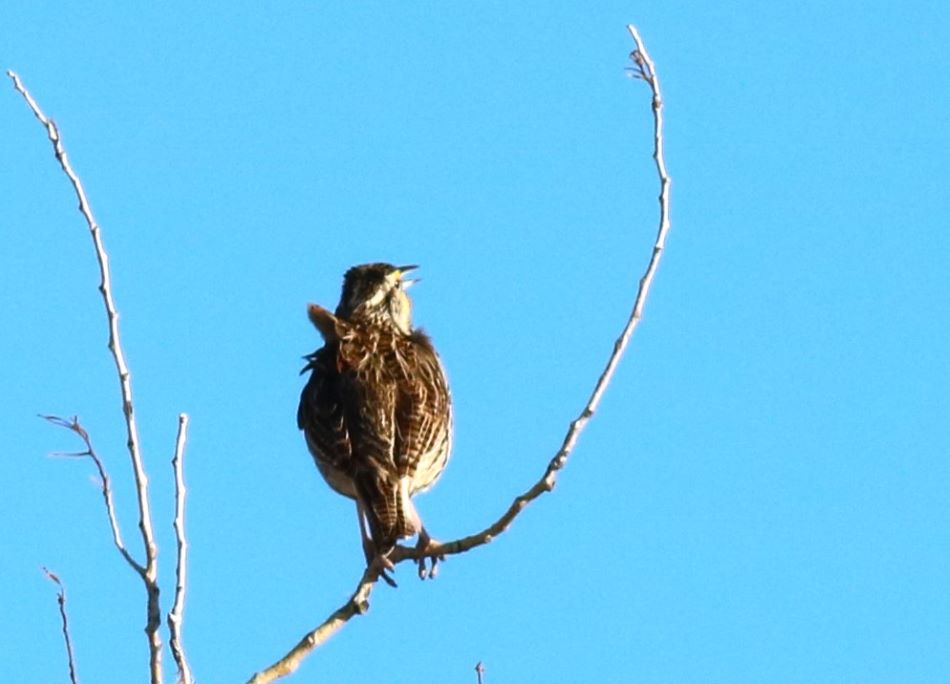
I wasn’t alone out in the open space. A large dark butterfly flew right in front of me, bringing a grin. Birds sang (lots of Spotted Towhees with their sweet sweet teeeeea) and when I paused to stretch at the top of the slog, I heard the liquid song of a Western Meadowlark.

Not a great photo but this was my very first Western Meadowlark sighting of the year at Lake Hasty on 4.3.24

While I avoided a particularly rocky segment of the trail, I knew it was imperative I run past where I’d fallen. As I got closer to the scene of the fall, all sorts of feelings and tightness showed up in my body, and I paused to allow myself to feel all of that. As I had immediately after the initial fall, I visualized my left foot hitting the rock in the trail and then rewrote the story in my mind. Instead of slamming into the hard ground, I slid into what was essentially a slip-n-slide of banana pudding (yep, that’s what my brain came up with that day). Both initially and today, I allowed my body to feel that frictionless sensation and then visualized myself laughing as I wiped pudding from my face and hands, and licked it from my fingers. I went through that exercise several times. It’s a somatic experiencing trick I learned from my therapist, and I highly recommend this for releasing trauma from your system. It works. As I walked home from the initial fall, my knee hurt but my body was already more relaxed. And over the next week, whenever the image of falling popped into my head, I reverted to my banana pudding rewrite. Pretty soon, I stopped having “flashbacks.”

Today I’m very grateful that I was able to run on my beloved trails again. I’m grateful I remained upright and I’m grateful for the tools I have to help me recover. I know from past experience that today’s run didn’t fully liberate me from my trauma and that I’ll be tentative for a bit, but facing my fear will go a long way toward getting me back to where I want to be. And where I want to be is out running on the trails. 🙂

Hiking with Emma

This is Emma after an enthusiast frolic in the snow next to the trail around Jefferson Lake last Monday.

We’re headed out now for another hike, this time in Golden Gate Canyon State Park, and I’m hoping for Emma’s sake that there’s more snow in her near future. 🙂

Wishing everyone a beautiful day!

Wordful Wednesday: flora edition

As mentioned,  I spent part of yesterday in the backyard. However, my attention wasn’t solely aimed at birds, bees, and butterflies. I also found beauty in the bindweed blooming at the base of a clump of lamb’s ear.

Backyard.   July 2, 2024


Don’t get me wrong: I’m no fan of the invasive bindweed that wraps itself around other plants, choking them off. But the flowers are pretty. I still remember my neighbor’s horror years ago when I’d said as much. The funny thing is, the neighbor who now lives in that house also thinks bindweed flowers are pretty. Still, we both try to keep it at bay. And we’re both wildly unsuccessful.

In addition to the lovely blooms, I have to admire the weed’s tenacity. Bindweed and cockroaches, man. Survival instincts like no other.

Twofer Tuesday: house wren edition

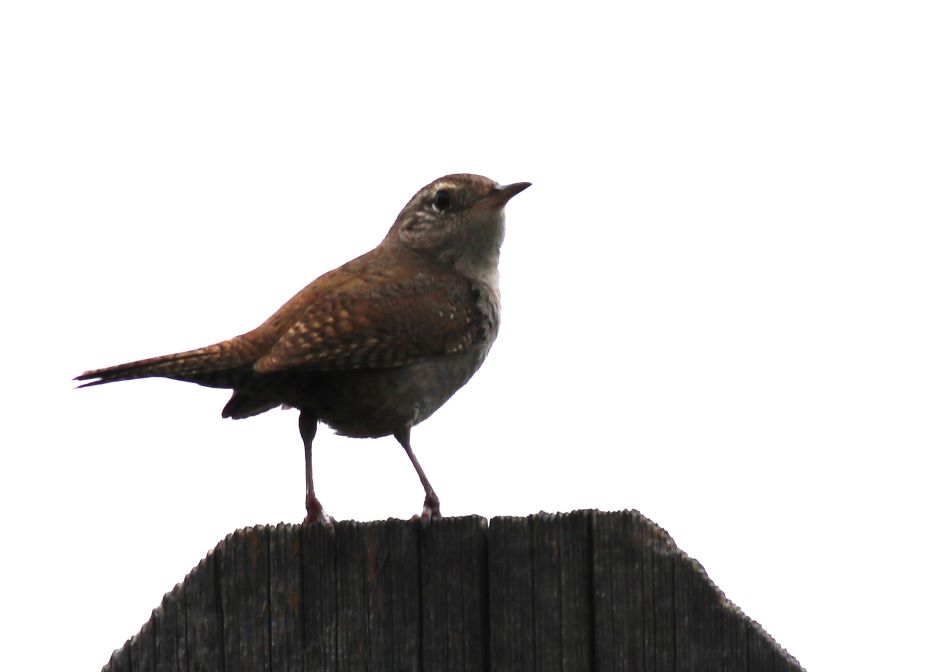
Earlier, I was feeling loads of anxiety about the state of the world and planet, and so wisely went outside to sit below the deck for a hit of nature. The lamb’s ear are abuzz with bees and a painted lady butterfly landed on the plant closest to me. A swallowtail butterfly floated past. Various birds sang and then went silent for a while. As I petted Emma who was curled up on the bench next to me, a house wren began singing again. I aimed my camera into the light to capture the songster.

Didn’t catch the wren mid-note, but they were singing their little heart out.

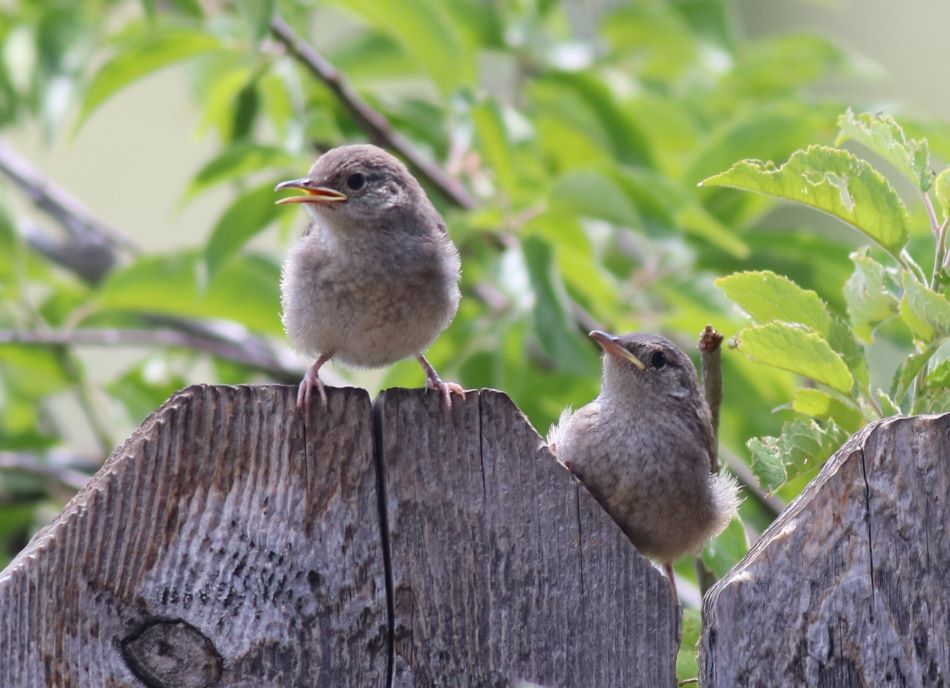
And then I became aware of another wren, this one making the churring sound. That bird was a little farther down the fence.

I took a few more photos, grinning as the first wren continued the melodious song while this one stuck to its churring call. I lowered the camera then squinted, wondering if I was seeing things. No, I wasn’t imagining it!Two wrens, side-by-side. Two fluffy wrens. The baby wrens that’d been very vocal on Saturday as their parents worked tirelessly to feed them. The baby wrens that’d left the nest on Sunday, leaving Zippy and me to wonder where they’d gone. Just minutes before they showed up on the fence, I’d asked him whether young wrens stick around or head to a whole new area on their own. Zippy said he didn’t know.

But now we do know: they stick around!For a while, at least. To learn their calls and songs, and to practice flying.


His poetry and my photo

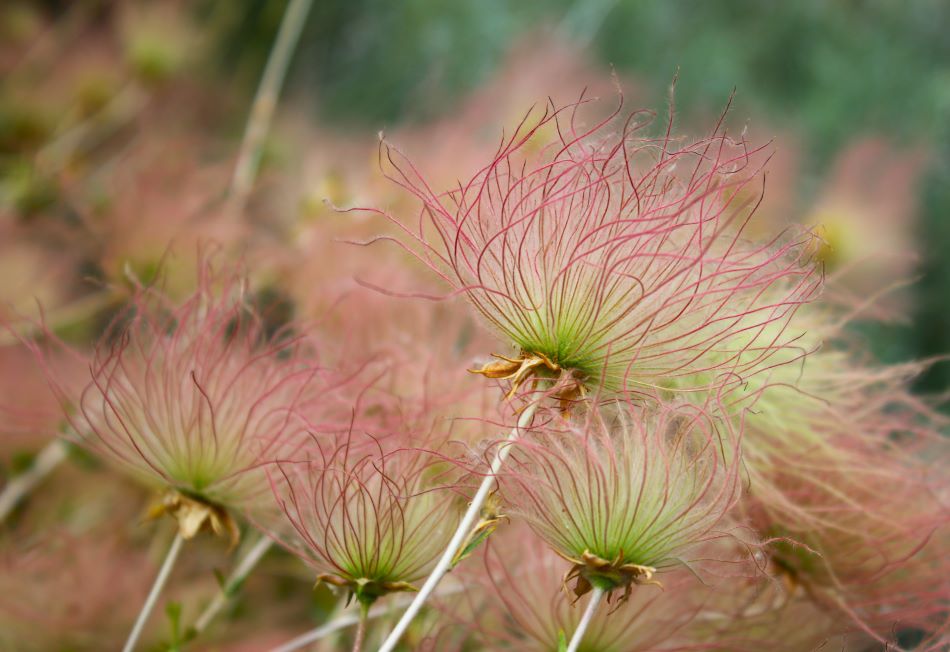
This morning I went into the backyard with the camera and came away with this image from one of our blooming Apache Plumes.

The image reminded me of dancing fairies, delicate and airy. Later, I received an update and thank-you email from a fundraising campaign, sponsored by the Gaza Poets Society, to evacuate two young children from Gaza. The email update stated that due to the continued closure of the Rafah border, the campaign is shifting from evacuation to sustainability (food and basic supplies), and donations of any amount are gratefully accepted.  The thank-you portion of the email was a PDF of the Gaza Poets Society Anthology.

As I read through the poems, Dance with Me made me think of my blooming Apache Plume, and I wanted to share the pairing here. His poetry and my photo, connected across the miles, in honor of our shared humanity.

Dance with Me – Mohammed Moussa

I’ll dance with you
under the rain
in love and pain;
on the seashore of hope
we will sing for life and joy.
We’ll dance
on behalf of absence
in the streets, and
on the outskirts of our city
we’ll flap our wings
lift joy and love
and sing
         and sing

Twofer Tuesday: out my window

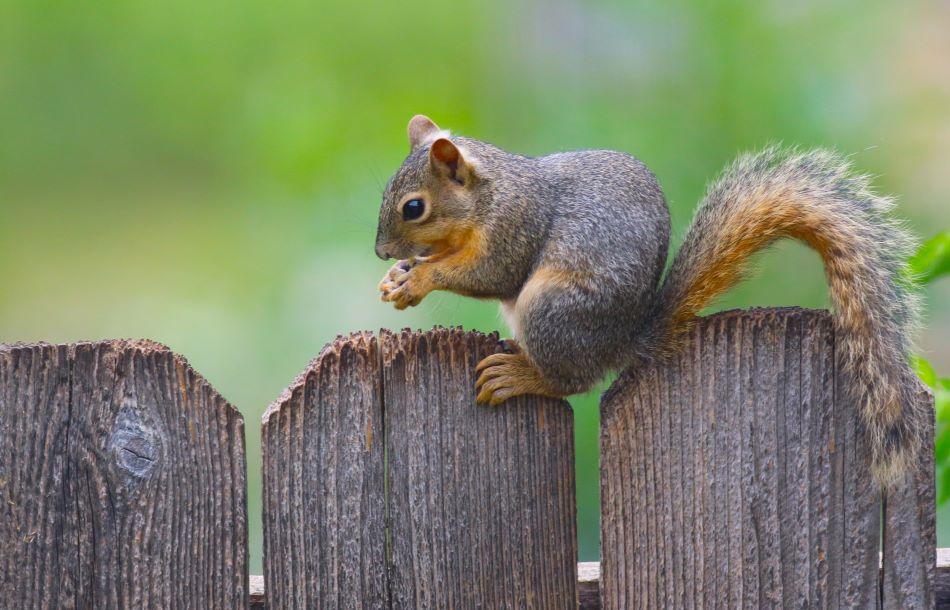
Today I’m grateful for all the activity that’s viewable from my windows. Just a while ago, I paused my laundry duties to watch house wrens at the nesting box hanging outside the window. Nothing like a little avian activity to lighten the drudgery of dealing with dirty sheets and towels.

Last week, I photographed this youngster eating the nut munch we provide for neighborhood squirrels. I smiled the entire time.

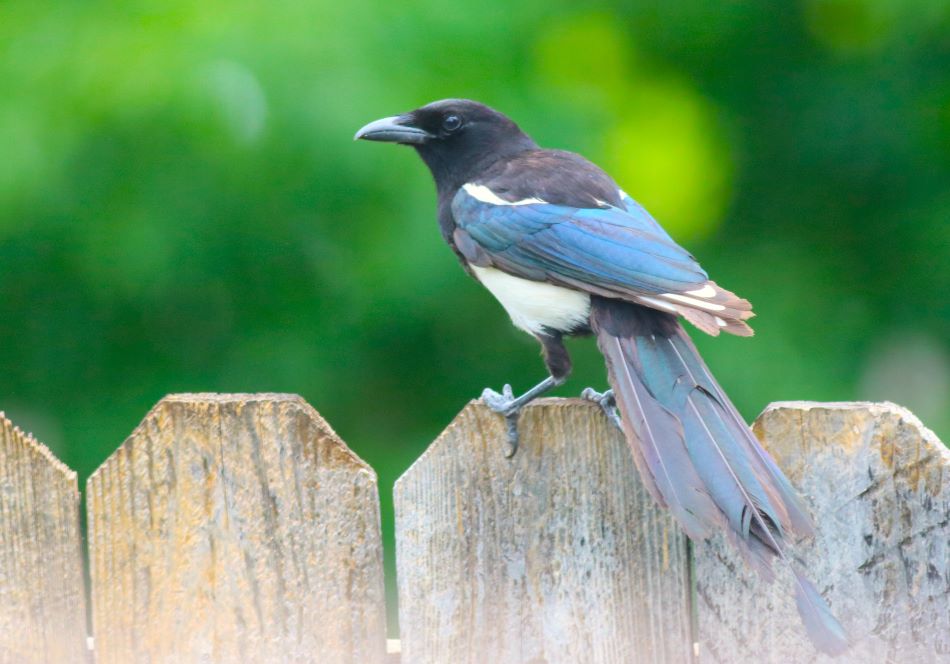
A few minutes later, I was gifted the sighting of this magpie and its colorful plumage. It wasn’t until looking at the photos that I realized a tail feather is damaged. That imperfection doesn’t detract from its beauty, but instead adds to its mystique.

It’s currently 95 degrees and I’m hunkered down inside, grateful for the swamp cooler keeping the house cool-ish and for the windows that allow glimpses of our wildlife visitors.

Poppies for Palestine

As I walked past my neighbor’s poppies today, my thoughts went to Gaza because the poppy is the national flower of Palestine.

June 10, 2024

I’m grateful for these poppies, glorious and resilient in the face of our frequent heavy winds, since mine tend to live very short lives. Every year, they’re here and then gone. But despite my poppy experience, poppies are seen as a symbol of resilience:

The poppy symbolizes the resilience and enduring spirit of the Palestinian people. This designation stems from the flower’s pervasive presence in the region and its poignant representation in various cultural and historical contexts.

The red of the poppy symbolises the blood of the martyrs within this land. The colors of the poppy also mirror the colors of the Palestinian flag with red, black, white and green.

The poppy’s vibrant red petals are often seen as a metaphor for the bloodshed and sacrifices endured in the ongoing struggle for freedom and self-determination. Its ability to thrive in adverse conditions mirrors the steadfastness and hope of the Palestinian people amidst their challenging circumstances. The choice of the poppy as a national symbol is a powerful testament to the collective memory, cultural identity, and the unyielding quest for peace and sovereignty in Palestine.

Today I post these poppies in solidarity with the people of Gaza. From the river to the sea, Palestine will be free.

Hope and grief can coexist

I don’t know about you, but it’s increasingly difficult for me to get out of bed in the morning. So far, I’ve been able to rally my energy rather than remain curled in the fetal position with the covers pulled over my head, but today I feel the need to return to one of my favorite resources, LET THIS RADICALIZE YOU (mentioned earlier here).

Sandhill Cranes from March 11, 2024, here representing Hope and Grief

The wise Kelly Hayes and Mariame Kaba wrote a chapter titled “Hope and Grief Can Coexist” which is filled with wisdom from their decades of organizing. The following was written in conjunction with paragraphs about climate collapse, but also applies to our broader experience (emphasis mine):

We feel deeply for those who are suffering and for the young people who have inherited this era of catastrophe. We share in their heartbreak and fury.

We also know this: hope and grief can coexist, and if we wish to transform the world, we must learn to hold and to process both simultaneously. That process will, as ever, involve reaching for community.

In a society where fellowship and connection are so lacking, where isolation and loneliness abound, we are often ill equipped to process grief. [   ]  Grief can also lead us to retreat and recoil and, too often, to abandon people to suffer in ways that we cannot bear to process and behold. 

. . . we, as people, do have power. Depending on our choices, we can turn away from injustice and let it continue, or we can confront our grief and move forward to shift the course of societal action in the face of a massive failure of leadership and institutional abandonment. Grief, after all, is a manifestation of love, and our capacity to grieve is in some ways proportional to our capacity to care. Grief is painful, but when we process our grief in community, we are less likely to slip into despair.

Personally, it helps to view my grief as a manifestation of love, maybe because it’s a reminder of my sense of humanity and connection to others, which makes the pain feel almost welcome. Maybe this perspective does the same for you. Later in the chapter, Hayes and Kaba write:

When we talk about hope in these times, we are not prescribing optimism. Rather, we are talking about a practice and a discipline–what Joanna Macy and Chris Johnstone have termed “Active Hope.” As Macy and Johnstone write,

Active Hope is a practice. Like tai chi or gardening, it is something we do rather than have. It is a process we can apply to any situation, and it involves three key steps. First, we take a clear view of reality; second, we identify what we hope for in terms of the direction we’d like to see expressed; and third, we take steps to move ourselves or our situation in that direction. Since Active Hope doesn’t require our optimism, we can apply it even in areas where we feel hopeless. The guiding impetus is intention; we choose what we aim to bring about, act for, or express. Rather than weighing our chances and proceeding only when we feel hopeful, we focus on our intention and let it be our guide.

Hayes and Kaba continue: This practice of hope allows us to remain creative and strategic. It does not require us to deny the severity of our situation or detract from our practice of grief. To practice active hope, we do not need to believe that everything will work out in the end. We need only decide who we are choosing to be and how we are choosing to function in relation to the outcome we desire and abide by what those decisions demand of us.

This practice of hope does not guarantee any victories against long odds, but it does make those victories more possible. Hope, therefore, is not only a source of comfort to the afflicted but also a strategic imperative.

Whew. Just typing out those words helped center me in my grief and to feel those stirrings of hope all over again. My wish is that they do the same for you. Solidarity, friends!
Bird balm for the soul

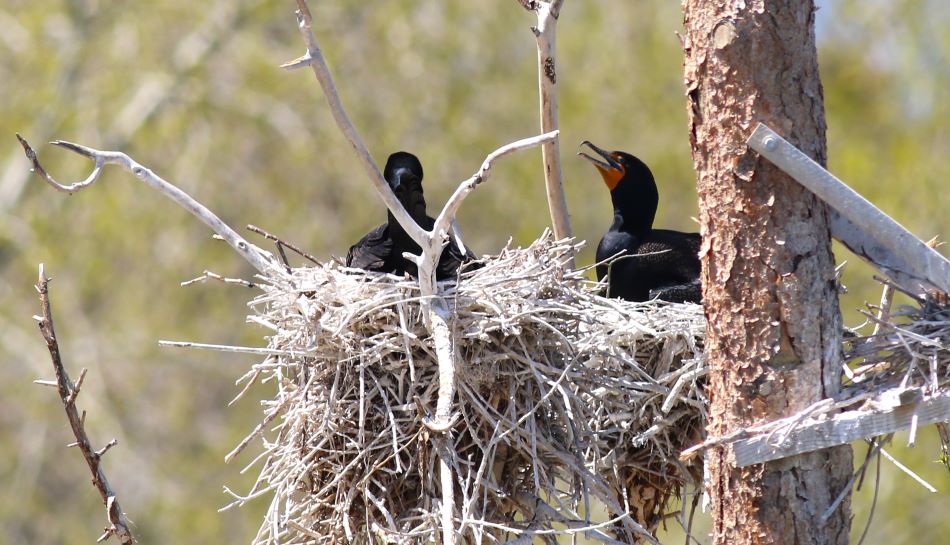
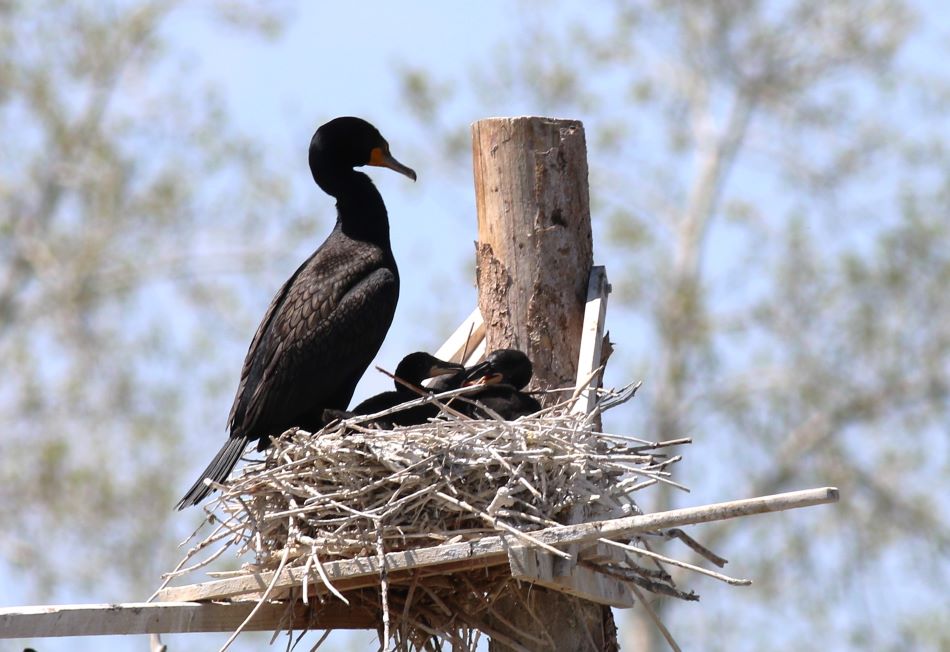
This afternoon Zippy and I went to Belmar Park for an infusion of nature, and it was just what we needed. The Double-crested Cormorants were nesting and their grunting, pig-like sounds cracked me up.

I also enjoyed the Canada Geese and after downloading my pics was pleasantly surprised to discover this photo also includes an array of sunning Painted turtles.

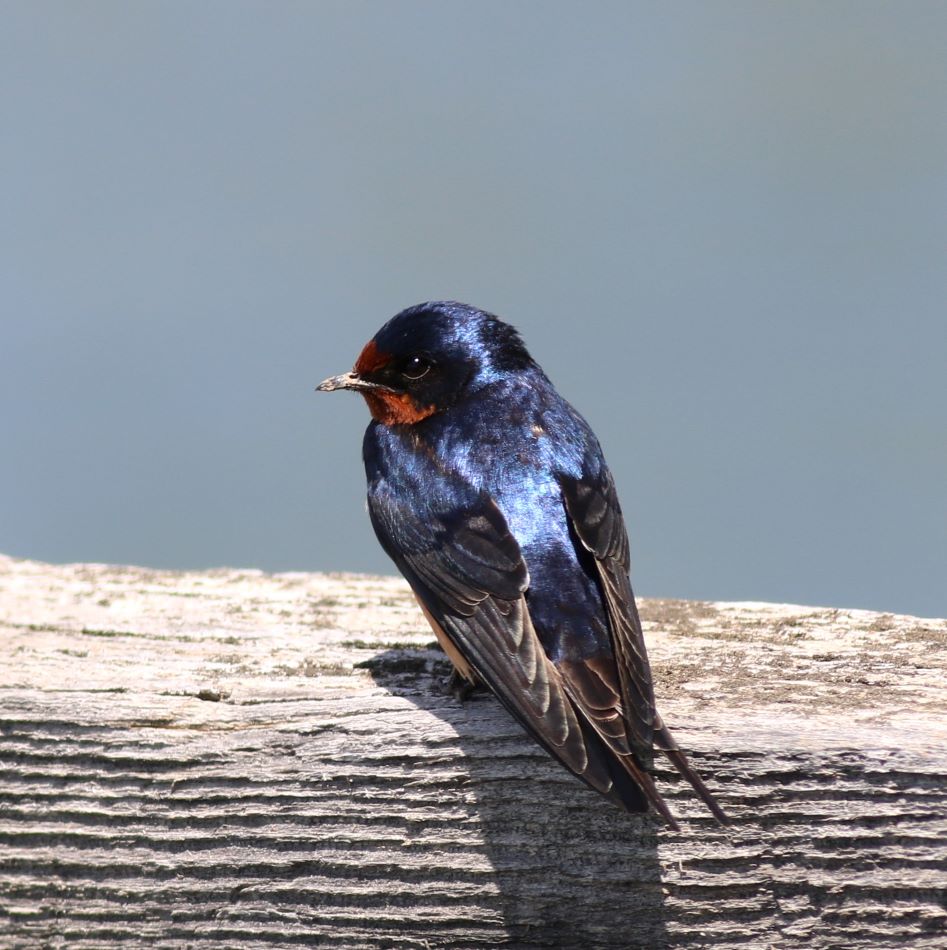
We also saw a whole lot of Barn Swallows flying above the water, catching insects. A couple times we startled at whirring sounds as they flew inches from our heads. Here’s one taking a break.

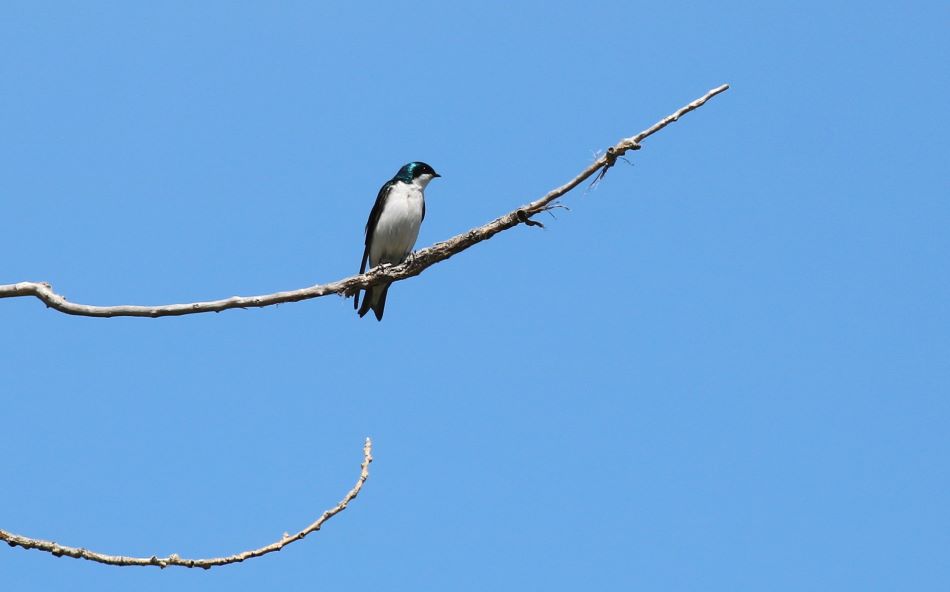
Later, I saw this Tree Swallow perched in a tree. Always a thrill when swallows (or any bird, for that matter!) sit still long enough for identification and a decent photo.

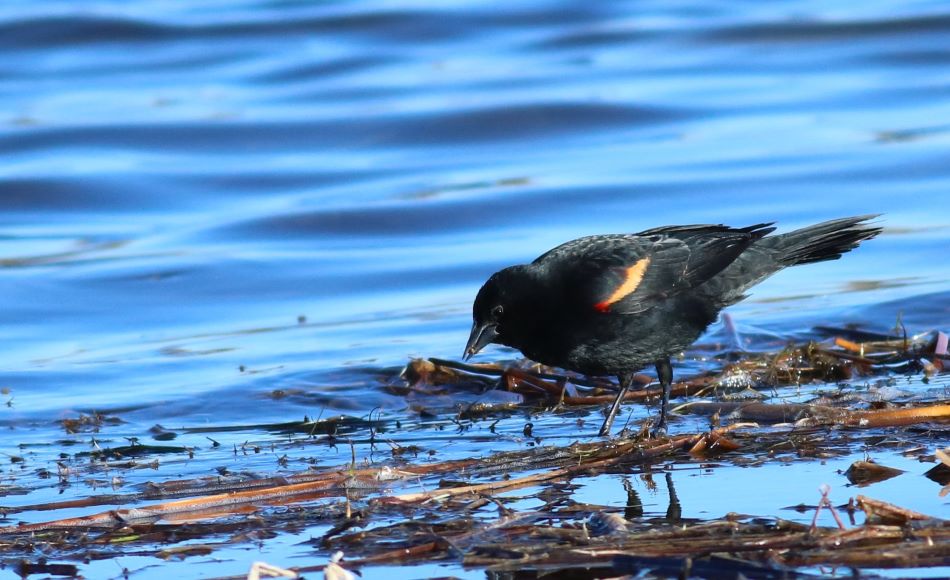
There were other sightings (Red-winged Blackbirds, American Robins, Common Grackles), but I’m losing steam so will close with this fellow:

Although I had no idea what I was seeing, Zippy informed me this is a Greater White-fronted Goose. I was particularly taken by the orange feet and legs which is quite a dapper look. However, when Zippy walked past the second time there was some hissing.

But no biting, so all was well. No harm, no fowl!