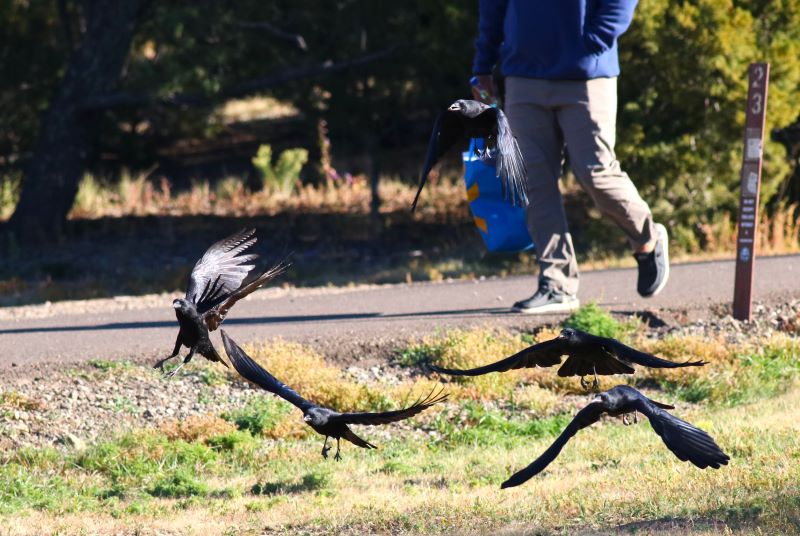
my camera ready
crows on ground man approaches
murder in motion
my camera ready
crows on ground man approaches
murder in motion
Today I learned that Dr. Refaat Alareer, along with his brother, sister, and her four children, were targeted and murdered in an Israeli airstrike. Refaat was a translator, academic, and writer who also reported on life in Gaza. These last two months I got to “know” him on Twitter/X as he shared specific details of the violence and horrors inflicted upon Gazans. Despite the death and destruction, he was funny and hopeful. He struck me as a human being comfortable in his own skin.

At the end of October, I posted a glimpse into LIGHT IN GAZA, an anthology of Palestinian writers and artists sharing their lived experiences under military occupation. But it wasn’t until today that I made the connection that the Refaat from social media was the same man with an essay in LIGHT IN GAZA. Refaat wrote “Gaza Asks: When Shall This Pass?” (Note: You may download the anthology for free from Haymarket Books). I highly recommend reading the entire piece yourself in order to better understand the gift that Refaat was to this world.
In “Gaza Asks,” he shared memories of the random violence he experienced over the years, along with that of friends and family members, and how in each instance they comforted themselves with “It shall pass.” When Refaat was older, teaching world literature and creative writing at the Islamic University in Gaza (IUG), he told stories to his three children to distract them from the twenty-three-day onslaught by Israel’s military (Operation Cast Lead). He told stories as bombs and missiles exploded in the background. Refaat wrote “As a Palestinian, I have been brought up on stories and storytelling. It’s both selfish and treacherous to keep a story to yourself–stories are meant to be told and retold. If I kept a story to myself, I would be betraying my legacy, my mother, my grandmother, and my homeland.” He went on to say “Telling stories was my way of resisting. It was all I could do. And it was then I decided that if I lived, I would dedicate much of my life to telling the stories of Palestine, empowering Palestinian narratives, and nurturing younger voices.”
When that particular onslaught ended, Refaat returned to the classroom where he told his students “Writing is a testimony, a memory that outlives any human experience, and an obligation to communicate with ourselves and the world. We lived for a reason, to tell the tales of loss, of survival, and of hope.” He began assigning and training his students to write short stories based on their realities. Those stories were collected and edited by Refaat and published as GAZA WRITES BACK.
But that wasn’t all Refaat did in the classroom. As so succinctly expressed by his friend Dan Cohen, Refaat “used English-language literature and poetry to teach his students the difference between Judaism and Zionism, equipping them with the mental tools to resist Zionist propaganda that seeks to conflate the two.” You can read more about those classroom experiences in “Gaza Asks.”
Later in the essay, in regards to Israel later destroying the administration building at IUG, Refaat wrote “. . . to me, IUG’s only danger to the Israeli occupation and its apartheid regime is that it is the most important place in Gaza to develop students’ minds as indestructible weapons. Knowledge is Israel’s worst enemy. Awareness is Israel’s most hated and feared foe. That’s why Israel bombs a university: it wants to kill openness and determination to refuse living under injustice and racism.”
I’ll stop there because I can’t do justice to the eloquence of Refaat’s essay, and I hope you’ll forgive me for already revealing so much. It’s just that this entire essay touched my heart and I felt compelled to share.
I do want to highlight this poem that follows his essay in LIGHT IN GAZA. Refaat also posted the poem on his Instagram account one week ago:

I’ll end with this poem he’d pinned at the top of his Twitter/X account on November 1: “If I must die, let it be a tale.”

Rest in power and peace, Dr. Refaat Alareer.
Running Orders
By Lena Khalaf Tuffaha

Image from https://darabzine.wordpress.com
Blood
By Naomi Shihab Nye
In order for me to write poetry that isn’t political
I must listen to the birds
and in order to hear the birds
the warplanes must be silent.
– Marwan Makhoul, Palestinian Poet

Image by Amy Spielmaker from Pixabay
(The following note and poem by Mosab Abu Toha were published in The Atlantic on November 9, 2023):
I wrote this poem last year, reflecting on my childhood under Israeli military occupation. I’m now staying in Jabalia, a United Nations refugee camp, with my wife and three kids. I’m reading this poem to myself and wondering if my children will be able to write poems about the bombs and explosions they are seeing. I was 8 the first time I witnessed a rocket. Now my youngest child, born in America in May 2021, is living through the third wave of Israeli bombing. Not only are he and his older brother and sister smelling death around them; but they have also lost their house in Beit Lahia 10 days ago. Luckily no one was at home. My son Yazzan, who is 8 years old, asks me, “Are our toys still alive?”
YOUNGER THAN WAR
Tanks roll through dust, through eggplant fields.
Beds unmade, lightening in the sky, brother
jumps to the window to watch warplanes
flying through clouds of smoke
after air strikes. Warplanes that look like eagles
searching for a tree branch to perch on,
catch breath, but these metal eagles
are catching souls in a blood/bone soup bowl.
No need for radio.
We are the news.
Ants’ ears hurt with each bullet
fired from wrathful machine guns.
Soldiers advance, burn books, some smoke
rolled sheets of yesterday’s newspaper, just like they did
when they were kids. Our kids
hide in the basement, backs against concrete pillars,
heads between knees, parents silent.
Humid down there, and heat of burning bombs
adds up to the slow death
of survival.
In September 2000, after I had bought bread for dinner,
I saw a helicopter firing a rocket
into a tower as far from me as my frightful cries
when I heard concrete and glass fall from high.
Loaves of bread went stale.
I was still 7 at the time.
I was decades younger than war,
a few years older than bombs.
Mosab Abu Toha is a Palestinian poet, short story writer, and essayist from Gaza. His collection Things You May Find Hidden in My Ear was a finalist for the National Book Critics Circle Award and won a Derek Walcott Poetry Prize and an American Book Award.
From the Sky
by Sara Abou Rashed
After Lorca
When I die,
bury me in the sky—
no one is fighting over it.
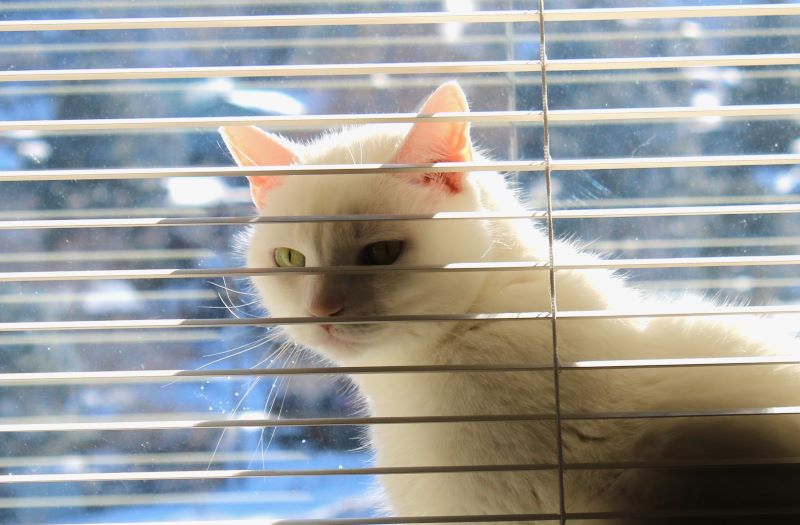
This slightly menacing photo was actually taken in December of 2022 and I’m using it because both Marcel and his brother Loki are napping right now and I don’t want to risk waking them for a Caturday photo shoot. I’m drafting my new manuscript and it’s hard to write when Loki is draped over my right shoulder, which is what he’ll demand upon waking. Years ago, Zebu gifted me a sling for holding/carrying a feline but neither one likes it. They prefer the undivided attention that comes with me holding them in my arms.
So, I’m doing a drive-by posting and then going back to work on my project while the little terrorists are asleep.
*whisper-shouts* Happy Caturday!

Update: Just as I was about to hit PUBLISH, Loki sauntered into my writing room. Crying for attention.

on top of the world
one thistle seed dancing free
species dispersal
your turn
hit me with a haiku
please
As I revise my middle-grade manuscript today, I’ve been visited by both cats. Marcel came up on the table next to my laptop, sniffing around, wondering why I wasn’t reading on the couch where he could nap in my lap.

Still, his presence was much less of an annoyance than his brother Loki’s many visits throughout the day when he’s either cried to be fed some more or demanded I pet him (some more), and nipped at my hand when I stopped.
I haven’t been around the blogging community as much as I’d like this month because I’ve been working hard to make this manuscript shine and after hours on the computer, my eyes need a rest. I hope to catch up with everyone after sending off my revisions. In the meanwhile, I’ll have to settle for the company of my two feline friends and their tag-team visits.
Wishing everyone a wonderful weekend. Happy #Caturday!

ample evidence
nature’s engineers were here
damn, missed them again
your turn
hit me with a haiku
please
Feeling a kinship with this Spotted Towhee and its red eyes.

In my backyard. July 20, 2023
Just spent the last couple hours staring at my manuscript on my laptop as I made revision notes in the margins. My agent sent me a whopping seven pages of editorial thoughts/questions at the beginning of the week and after spending several days mulling over her email, I’m now plotting how to implement the changes I want to make. I’ll be honest: today’s session was harder than yesterday’s when optimism was high and I actually allowed myself to think “This isn’t going to take as long as I’d thought!”
But the cool thing about the writing process is that none of the emotions I feel last forever. Not the positive or the negative. So, I’m going to step away from the manuscript and rest my eyes, knowing that tomorrow will bring its own set of emotions. Whatever they are, I’ll be ready (but hopefully, not reddy). Sorry, not sorry. 🙂
After talking (in very general terms) with a friend/critique partner today about my work-in-progress, I had an epiphany. I realized it was possible to slightly expand the primary setting for my story in a way that will allow me to more deeply explore some elements/themes I’d like to include. And yes, I realize that last sentence is pretty cryptic, but until I have a complete first draft I always err on the side of “keep your mouth shut, Tracy.”
But now I’ve now got a whole bunch of questions I must answer before implementing that change in the setting. As in, I need to know the how and why behind the expansion of the setting. Does the property I want to add belong to the protagonist’s family or a neighbor? Is that property already in good shape or is it in need of restoration? Would money change hands or could it be a barter system?
I’m very excited about this new idea. I’m also feeling bombarded by the many possibilities bouncing around my brain. Overwhelm alert!

Here, in solidarity on this #Caturday, is Marcel looking equally overwhelmed (although I’m pretty sure he’s not drafting a novel and is merely plotting how to move that heavy brick currently sitting on top of the kibble bin ). May the two of us settle down and find clarity in the not-too-distant future. Well, one of us, at least.

Verdict’s in (again)
Supreme Court = cow pie
illegitimate
your turn
hit me with a haiku
please
For a whole lot of reasons (*gestures widely*), my climate anxiety is elevated today, so I picked up my copy of Not Too Late: Changing the Climate Story from Despair to Possibility and opened it in search of some grounding wisdom. I found that in Gloria Walton’s essay “Shared Solutions Are Our Greatest Hope and Strength.”
Capitalistic values have promoted individualistic mindsets and made us believe our resources are finite and competitive. But that doesn’t have to be our reality. We have the power to tap into abundance and collaboration. It’s our collective responsibility to envision and create the world we want together. We need bold, sustainable solutions that benefit many, not just the few. We can also hold community and grassroots values that nurture a regenerative, healthy, and equitable planet–the values that connect us to our family, our communities, and ultimately to each other.
Yes, yes, and yes!

Wild Rose. June 16, 2023
And now I’m off to continue drafting my middle grade novel centered on a bold and sustainable solution that will benefit many, not just the few.
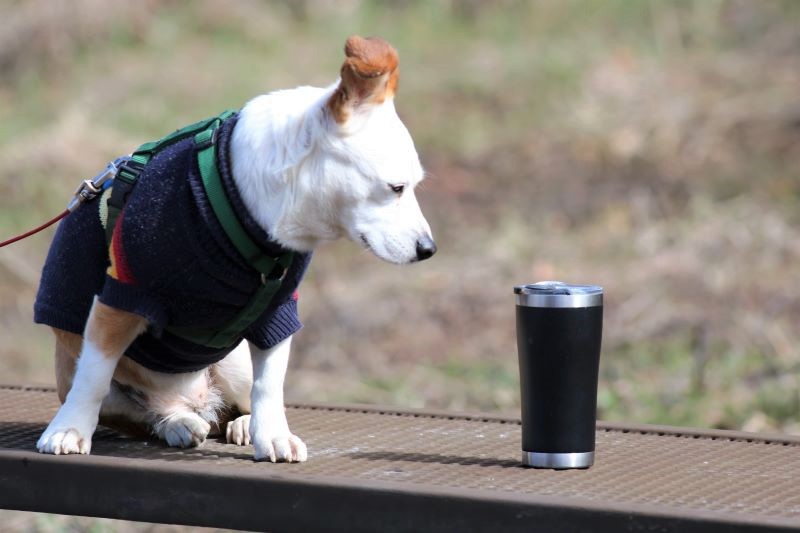
bleary-eyed morning
caffeine is just outta reach
trouble’s a brewin’
your turn
hit me with a haiku
please
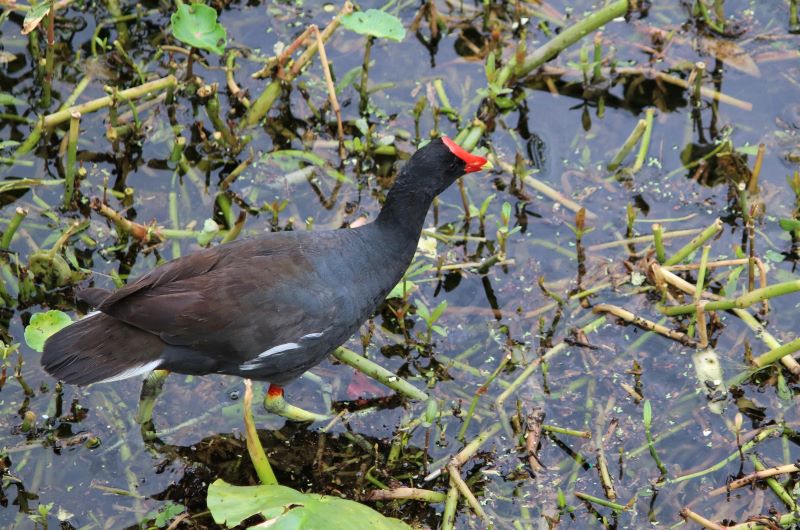
with long slender toes
walks atop vegetation
quite miraculous
Does this Common Gallinule inspire your own haiku? If so, please leave one in the comments.

pastoral portrait
barely concealed ill intent
bovine assassin
your turn
hit me with a haiku
please
As I often do on Fridays, I went in search of a photo to use as a haiku prompt and landed on one from a visit to the Rocky Mountain Arsenal National Wildlife Refuge in August of 2021. This image reminded me of childhood when our mother tried to wrangle the five kids for a decent photo that was inevitably ruined by someone flashing bunny ears behind a sibling or making a face or turning away from the camera. Clearly, these cormorants couldn’t care less about me getting a good shot.

And so I wrote this haiku:
many cormorants
but majority headless
group photo challenge
Before posting it I took a closer look, zooming in on the birds nearest the center of the photo, and decided to crop the image to only show those four cormorants. And that’s when I discovered something I’d missed. Do you see it?

A skull!
Holy guacamole. This calls for a whole new haiku:
glossy birds sunbathe
pronghorn antelope keeps watch
sprinting days over
Please join in the fun and comment with your own haiku for this photo!
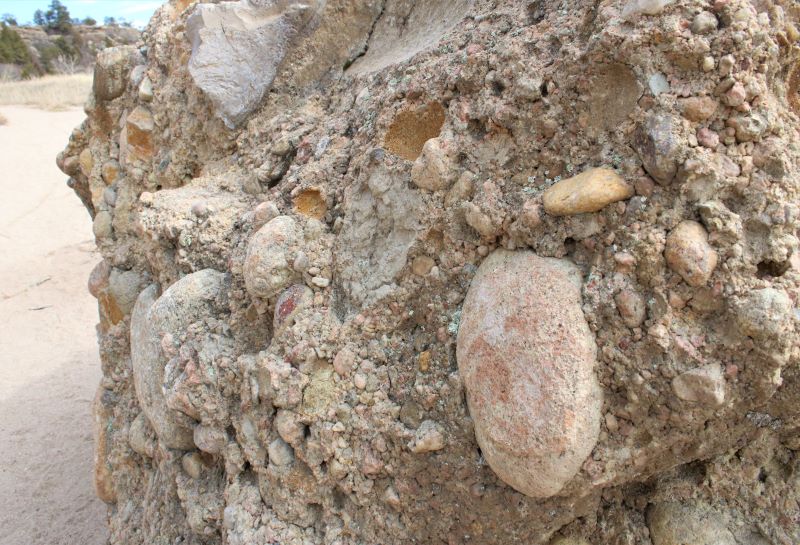
concrete lookalike
ancient river creation
conglomerates rock!
your turn
hit me with a haiku
please
Things can fall apart, or threaten to, for many reasons, and then there’s got to be a leap of faith. Ultimately, when you’re at the edge, you have to go forward or backward; if you go forward, you have to jump together. ~ Yo-Yo Ma

Okay, mourning dove.
It’s just you and me.
One . . . two . . . three . . . JUMP!
profile in courage
confident outside burrow
until whistle blows

South Boulder Creek Trail. March 1, 2022
your turn
hit me with a haiku
please
swiveling for sound
lucky rabbit ears hear all
hold your secrets close

July 3, 2022
your turn
hit me with a haiku
please
 gravity defied
or watery illusion
either way magic
your turn
hit me with a haiku
please
For the past couple months, I’ve been struggling with my new middle grade project idea, trying to land on the “correct” tone and approach. I’ve written a bunch of scenes, but knew I was missing the mark. Today in desperation, I turned to the google and asked a convoluted question about how to write a first draft when wandering around in the dark inside your head, clueless about how to find the right approach to the story. And this came up!
None of this approach is new to me, but the way J. Elle framed the info resonated, plus the timing was just right. This afternoon, I was in the right head space to take in the info and think about my project in these terms. I now have a short pitch and tent pole moments, although those may still change. I’m mostly just excited to have a solid-ish foundation upon which to build. No matter what happens next, I feel as if I’m moving in the right direction.
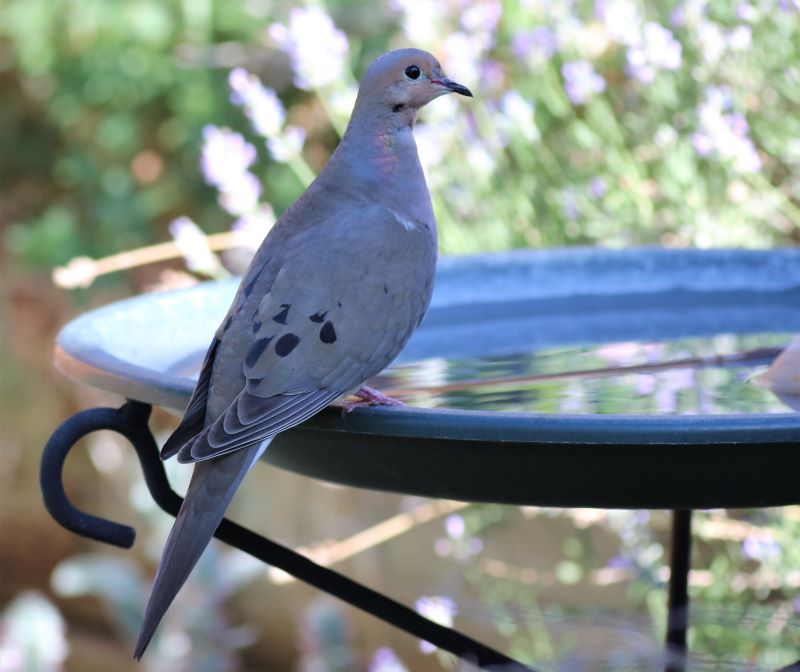
Mourning Dove. July 20, 2022
No more sad, mopey mourning for me. This project is finally on its way and for that, I am grateful.
 desolate landscape
sudden flamboyant display
color me surprised
Your turn
hit me with a haiku
please
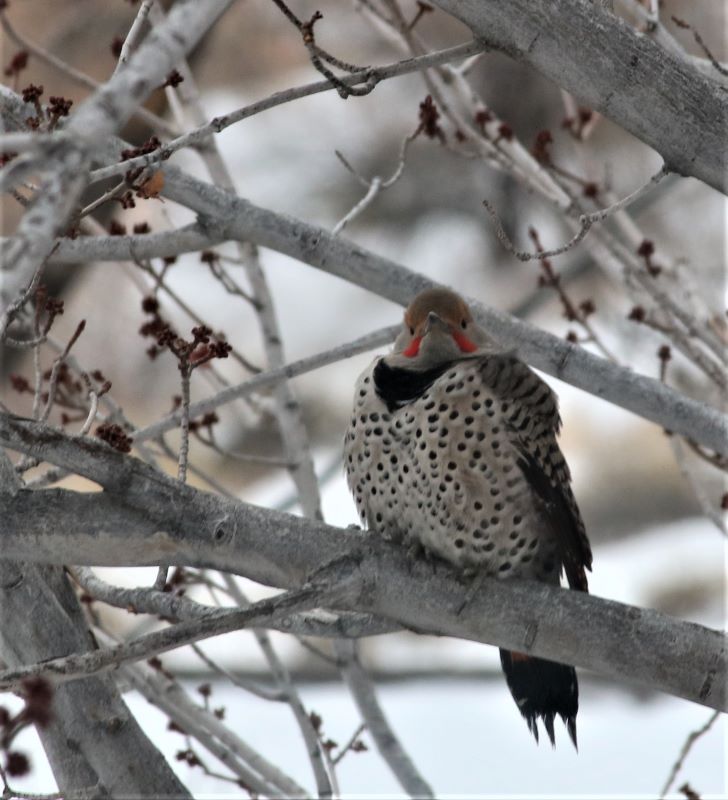 and what have we here
red mustachioed species
bird incognito
Your turn
hit me with a haiku
please
I’m tiptoeing into a new project. And because I haven’t added anything to the draft in two days, I’m experiencing that panicked sensation of “what if the words don’t come today?”
What if I fail? What if today’s the day I’m exposed as the imposter I am?
Well, those feelings are exactly why I must get to work in order to disrupt that fear and show it to the door. To quote (in translation) Gabriel García Márquez:
“Necessity has the face of a dog.”

I must do what needs to be done. But, don’t worry, Emma. I’m fairly confident neither of us will be harmed during the writing of those words.
 Tracy Abell