Death and war. War and death.

Every day, my inbox is populated with emails about Gaza. Those messages come from people and organizations that refuse to cede ground to apartheid Israel. Today’s emails include updates from fundraisers for Palestinian families and UNRWA (United Nations Relief and Works Agency for Palestine Refugees) whose subject line read: 800 killed in Gaza just trying to get food. Yes, starving people assassinated by Israel and its chief sponsor, the United States taxpayer, for the crime of needing food for their families.

Heartbroken and enraged, I turned to If I Must Die: Poetry and Prose by Refaat Alareer. Refaat was murdered by Israel on December 6, 2023, and his work published posthumously with support from the global community.


The following excerpt is from “In Gaza, We Have Grown Accustomed to War” (October 19, 2023):

Death and war. War and death. These are two persona non grata, yet we can’t force them to leave. To let us be.

Palestinian poet Tamim Barghouti summarizes the relationship between death and the Palestinians that war brings (my translation):

It was not wise of you, Death, to draw near.

It was not wise to besiege us all these years.

It was not wise to dwell this close,

So close we’ve memorized your visage

Your eating habits

Your time of rest

Your mood swings

Your heart’s desires

Even your frailties.

O, death, beware!

Don’t rest that you tallied us.

We are many.

And we are still here

[Seventy] years after the invasion

Our torches are still alight

Two centuries

After Jesus went to his third grade in our land

We have known you, Death, too well.

O, Death, our intent is clear:

We will beat you,

Even if they slay us, one and all.

Death, fear us,

For here we are, unafraid.

Here’s a link to buy If I Must Die (paperback is also available for pre-order).
Here’s a link to donate to UNRWAUSA.org (and yes, they’re still operating in Gaza). This from their email: Our 12,000 UNRWA colleagues in Gaza are still distributing food, water, and medical care, as best they can, every day, under unimaginable circumstances.

Even after more than 320 of our UNRWA colleagues have been killed. Even after dozens of UNRWA shelters have been hit. Even after borders are blocked and bombs continue to drop.

Thank you for reading. Thank you for caring.
From the river to the sea, Palestine will be free.

Ceasefire has arrived

There is a ceasefire! It’s the very same deal that was on the table in May but that Biden allowed Netanyahu to torpedo as the U.S. continued to send billions of dollars of weaponry and political cover to Israel.

Jeremy Scahill of Drop Site News is on YouTube now discussing the situation with two Palestinian guests. I’m going to add to this post but want to share the Live link now.

Today, just minutes after receiving If I Must Die: Poetry and Prose by Refaat Alareer in the mail, I learned that a ceasefire was reached.

It’s horrific it took this long. It’s horrific that Refaat Alareer (and members of his family) were murdered by Israel before this day came, along with the thousands and thousands of other Palestinians (the majority of them children). It’s horrific that it took Trump’s upcoming inauguration to rein in Netanyahu.

Jeremy Scahill’s Drop Site News piece from yesterday, “The Trump Factor: Gaza Ceasefire Deal Appears Close” outlines how Biden refused to use his power to stop Israel’s genocide of the Palestinian people.

The fact that Trump emerged as the decisive player in pushing a potential ceasefire forward is evidence that Biden never used the full powers available to a sitting U.S. president to seal the deal in the summer. While Trump has publicly repeated his threat that he will “unleash hell” on Hamas if the Israeli hostages are not freed, his pressure has not been solely focused on Hamas; Trump and his aides have made clear to Netanyahu that the president-elect expects Israel to comply with his demands, too.

In case you’re unable to join the Live discussion, here’s a video link to a discussion of the ceasefire deal from this morning.

I also want to link to Ryan Grim’s piece: Kamala Harris Paid the Price for Not Breaking With Biden on Gaza, New Poll Shows (subtitle: Twenty-nine percent of non-voters who supported Biden in 2020 said U.S. support for the genocide was the top reason they sat the 2024 election, according to a survey by YouGov).

I’ve been listening to the Live discussion as I write this (so my concentration is fractured in both directions), but one of the Palestinian guests talked about a “Trump gift bag to Netanyahu” which includes allowing Israel to unleash more violence against Palestinians after a momentary ceasefire. Unfortunately, that wouldn’t be a shock. I’m trying to think about the upcoming release of thousands of Palestinians who have been in detention for years and years, held without charge, as they are starved, beaten, and raped. Their release alone is worth massive celebration.

I’ll stop here.

Rest in power, Refaat Alareer.
Free Palestine!
From the river to the sea, Palestine will be free.

Edited to add additional info via an email from US Campaign for Palestinian rights:

Did you see the news? An official ceasefire deal has been reached, and the first of the three-phase plan is due to go into effect on Sunday, Jan. 19

We want to be very clear: this is good news. We’ve advocated for a permanent ceasefire as the bare minimum demand from the very beginning. This news is an urgently needed relief for Palestinian people in Gaza fighting to survive each day of this horrific genocide, as we see live scenes of their joyful celebrations. 

At the same time, you may have noticed that midway through last year, we shifted our focus from a permanent ceasefire to our long-held North Star goal to end military funding to Israel from the U.S. war machine. 

This was very intentional. We know the genocide doesn’t end when the bombs stop dropping. The genocide ends when UNRWA can operate freely. When every destroyed hospital is rebuilt. When unfettered aid, food, water, and gasoline can enter Gaza. 

Even then, true Palestinian liberation—essential for the collective liberation of all oppressed peoples globally—only comes when Israel’s apartheid regime, supported by tens of billions in military funding from the U.S., comes to an end. 

I wish those changes were possible in the next few months and that I could share a roadmap with you for it, but that would be a lie.

So today, we keep fighting against another $8 billion in weapons to Israel.

And tomorrow—through power building, organizing, and investing in our infrastructure, we will continue the long-term work to force a U.S. arms embargo on Israel and end U.S. complicity in Israel’s apartheid regime once and for all.

UPDATE on Let’s make “If I Must Die” a Bestseller

On December 6, I posted Let’s Turn Refaat Alareer’s “If I Must Die” into a Bestseller, amplifying the campaign from Ryan Grim at Drop Site News, and I’m thrilled with the traffic my post received along with many clicks on the Bookshop.org link to purchase the book. That original post also includes the following important info:

UPDATE 12.17.24: DO NOT order from Amazon as scammers took note of the situation and are selling non-authentic books. PLEASE order from bookshop.org at above link.

Tracy here again: I’m editing to add that you can also request your library system purchase the book. In my system, “Suggest a purchase” tab is located under SERVICES. 

Edited to add: all proceeds will go to Refaat’s remaining family.


Today’s update comes again from Ryan Grim at Drop Site News. Here’s what he wrote:

Refaat Alareer’s “If I Must Die” is officially a national bestseller

It didn’t happen the way we expected: The book has not yet made the New York Times bestseller list, but the other list the industry tracks is USA Today’s “Booklist.” And there, it settled in at #20 in its first week out.

The amount of attention a book gets during its launch has much to do with where it lands in our cultural landscape, which is the best part about all the energy around it the past few weeks. My hope is that Refaat’s book will be taught and read for years to come and is treated like the political and literary masterpiece it truly is.

The goal of hitting the Times list is still achievable, meanwhile, for two reasons. The Times list is opaque, but a publishing industry source told me that my initial understanding – that the paper counts orders as sales even if the book is out of stock – is probably not correct, and it’s more likely they count orders when they ship.

The book sold more than 20,000 copies but only 7,500 had been printed. That means that when the new printing arrives in January, at least 12,500 will be shipped, and in a typical January week, that number of sales is more than enough to make the bestseller list. So if you haven’t ordered one yet but still want to, your order will still count toward that effort.

I’ve heard from some people who’ve gotten notes from Amazon or other booksellers saying that the estimated ship date for the book is as late as March. That’s not true. The publisher has a very big print run going in January, so you’ll get your copy much sooner. If all of those books ship the same week, it should still make the NYT bestseller list. A huge thank you to everyone who bought a book, and I hope you’re glad that you did.

If you ordered a copy of Refaat Alareer’s beautiful book, thank you thank you thank you for putting it on the USA Today’s Booklist!!! And if you haven’t yet ordered a book for yourself, a friend, or requested your library system purchase copies, please do so (if you can) as it will still affect the New York Times bestseller ranking! PLEASE ORDER FROM BOOKSHOP.ORG TO AVOID BEING SCAMMED

It’s incredibly significant that a Palestinian who was targeted and murdered for using his voice on behalf of his people is still reaching the world with his voice that will never be silenced. This is what is meant by “don’t stop talking about Palestine.” Those in power are doing all they can to erase Palestinians from this world, but the people are standing with the oppressed and uplifting Refaat Alareer’s voice.

FREE PALESTINE!

Let’s Turn Refaat Alareer’s “If I Must Die” into a Bestseller

One year ago today, Palestinian writer, poet, and educator Refaat Alareer was targeted and murdered by an Israeli airstrike. I wrote about him here. Today, I received a text message from Ryan Grim and Jeremy Scahill of independent Drop Site News regarding the posthumous publication of Refaat’s poetry and prose collection on December 10. Here is that message:

Today marks one year since Israel assassinated Palestinian Poet, Writer, and Educator Refaat Alareer in a targeted airstrike. On December 10th, Refaat’s book, “If I Must Die,” a collection of his poetry and prose compiled by his friend and former student, Yousef Ajamal, will be published by OR Books.

We’re asking all of our readers, if they can, to pre-order the book in an effort to drive it on to the best seller rankings. Not only is it a truly magnificent piece of writing, a book you’ll be glad to own and/or gift, seeing Refaat’s book at the top of the charts will be a small sign to Palestinians facing genocide that the world has not forgotten them – and it will send a message to his assassins that we haven’t forgotten them either. For our part, we will be buying 535 copies and hand-delivering them to each member of the House and Senate.

Pre-order Refaat’s book here: https://bookshop.org/p/books/if-i-must-die-poetry-and-prose/21530923?ean=9781682196212

UPDATE 12.17.24: DO NOT order from Amazon as scammers took note of the situation and are selling non-authentic books. PLEASE order from bookshop.org at above link.

Tracy here again: I’m editing to add that you can also request your library system purchase the book. In my system, “Suggest a purchase” tab is located under SERVICES. In “additional information we might need,” you can include EAN/UPC 9781682196212 and “the book will be released on December 10, 2024.”

Edited to add: all proceeds will go to Refaat’s remaining family.

UPDATE: see my December 29 post for good news!!!

When I read that message, so many emotions came up. Grief over Refaat’s death, outrage that the genocide continues, and gratitude for this plan to show the besieged Palestinian people that we care. If you’re able, I hope you’ll consider helping this effort by pre-ordering the book. Just yesterday, I wrote about the orchestrated efforts to shut down pro-Palestinian speech and actions. Elevating “If I Must Die” to the bestseller list would be a huge middle finger to those desperately trying to normalize genocide, starvation, destruction, and land theft.

Drop Site also sent a lengthier, more detailed email about Refaat, the targeting of poets and intellectuals, and the ins and outs of the publishing industry’s bestseller “process.” The following is that email:

Today marks one year since Israel assassinated Palestinian writer, poet and educator Refaat Alareer with a targeted airstrike on the second floor apartment where he was taking refuge with extended family. The strike also killed his brother, his brother’s son, his sister and her three children.

Israel’s targeting of poets and intellectuals was not new, but his killing struck a chord around the world, as Refaat had committed his life to the study and practice of the English language, believing it to be a tool of liberation and empowerment. Through his work and his interviews, he gathered a global audience of admirers.

After he was killed, his poem “If I Must Die” became a worldwide viral sensation, a window into the soul of the man who’d been ripped from the world.

On December 10, Refaat will posthumously publish a book“If I Must Die,” a collection of his poetry and prose, which also includes excerpts of important interviews he gave, compiled by his friend and student Yousef Aljamal.

As a small measure of justice, we want to turn Refaat’s book into what it desperately deserves to be: an international bestseller. We need your help and we have just five days to make it happen.

First, sign this pledge to buy the book this coming TuesdayWe’ll send you an email to remind you to do it that day. Enter your phone number if you want a text reminder too, but it’s not necessary. We won’t sell or share your contact info. The royalties from the book go to Refaat’s family. But more importantly, pre-order it now at bookshop.org or Amazon.

SIGN THE PLEDGE TODAY!

Here’s the background: The publishing industry cares most about the Amazon ranking and the New York Times best seller list. Depending on the day, a book can hit the top of the charts on Amazon with as few as 10,000 copies sold. But they cannot be bulk orders: Anything more than nine probably gets flagged as a bulk order. If you do want to make a bulk order, do it from an independent bookstore online, not from Amazon. (Amazon will certainly flag it as bulk.)

The NYT list is an opaque combination of in-person and online sales from Amazon, big retailers like Barnes and Noble, and indie stores.

Paid pre-orders count toward the rankings.

So here’s what to do: If you can only buy one book, pre-order it either from bookshop.org or Amazon, whichever is your preference. If you can buy three, buy one from each.

Initially, we had urged people to buy it on the date it comes out, and not pre-order, but so many people have pledged that OR Books, which is a small publisher, is now worried it will sell out on Tuesday. The way around that problem is to get your pre-order in now.

If you can throw a few hundred dollars at this effort, buy up to nine from each of those platforms and give them away. (That would cost you about $650.)

If you really want to do a bulk order of more than nine and maximize the chance it gets counted in the rankings, do it through an independent bookstore and not Amazon (which will flag it as a bulk order).

If you buy it from a bookstore in person on Tuesday, ask the manager if they report sales to the bestseller lists. Most stores do, but if they don’t report sales, then your purchase won’t get counted.

The poem “If I Must Die” is addressed to his daughter Shaymaa Refaat Alareer, and is a plea to her and all of us to keep hope for a better world alive. “If I must die/you must live/to tell my story/to tell my story/to sell my things/to buy a piece of cloth/and some strings/(make it white with a long tail)/so that a child, somewhere in Gaza/while looking heaven in the eye/awaiting his dad who left in a blaze—and bid no one farewell/not even to his flesh/not even to himself—sees the kite/my kite you made/flying up above/and thinks for a moment an angel is there/bringing back love.”

He then concludes:

If I must die
let it bring hope
let it be a tale

In April, Israel struck and killed Shaymaa, her husband, and their two-month-old son. It is up to us to let Refaat’s life be a tale. We at Drop Site have nothing to do with his book, which is published by OR Books, but we want to help make it a bestseller. It is, on the one hand, a true masterwork, and a rich and poignant read you will return to again and again.

Yet we want you to purchase it for another reason, too: To let it fly to the top of the rankings like a kite. Seeing Refaat’s book flying there will be a small sign to Palestinians facing genocide that the world has not forgotten them – and it will send a message to his assassins that we haven’t forgotten them either. Nothing can bring back Refaat or his family but this is one small dose of justice we can dole out.

At Drop Site, we’ll be buying 535 copies and distributing them to each member of Congress after they’re sworn-in in January.

If you live in the Washington, DC area and can help be part of the hand-out effort, please email contact@dropsitenews.com with the subject line “I will help hand out Refaat’s book.” (The publisher is giving us a bulk discount, and our readers were tremendously generous to us on Giving Tuesday, so thank you for helping make this happen.)

Collectively, we have the capacity to do this. Let it be a tale.

Sign the pledge! Let it be a tale.

If you’ve read this far, thank you thank you thank you. Free Palestine!
Climate Movement Monday: turning the fossil fuel narrative on its head

Welcome back to Movement Mondays in which we discuss all things climate. Today I’m returning to Not Too Late: Changing the Climate Story from Despair to Possibility (edited by Rebecca Solnit & Thelma Young Lutunatabua) in order to offer my readers another lens to look at our climate reality while also imagining a better world.

At the start of the chapter “Different Ways of Measuring: On Renunciation and Abundance” (a conversation between Solnit and Lutunatabua), there’s this quote from Dr. Elizabeth Sawin:

“It is some very effective marketing that has convinced so many of us that getting off of fossil fuels is a sacrifice as opposed to a money-saving, peace-promoting, water-protecting, health-improving, technological leap forward.”

This jumped out at me because whenever I (foolishly) read comments about various climate actions (and it doesn’t matter if it’s folks politely demanding better of their government or Climate Defiance interrupting fossil fuel executives as they’re being celebrated), there are always people who ridicule the activists for imagining a world without fossil fuels. Those naysayers insist the many negative consequences  we’re experiencing in real-time are a given and that there’s no way forward that doesn’t include fossil fuels. A frequent commenter “gotcha” is “Did you drive your car to that action?” which reveals a complete lack of imagination in regards to our woefully inadequate public transportation, connected biking routes, etc.

Directly following Sawin’s quote, Solnit eloquently presents a different perspective that I’d love to copy and paste in reply to those cynical comments.

What if the climate crisis requires us to give up the things we don’t love and the things that makes us poorer, not richer? What if we have to give up the foul contamination around fossil-fuel extraction, the heavy metals people inhale when coal is burned around them, the oil refineries that contaminate the communities of color around them from the Gulf of Mexico to California? What if the people of Richmond in my own home region, the Bay Area, didn’t have emergency alerts where they were supposed to seal their homes because of a refinery leak? What if the incidence of asthma in kids went way down, and we stopped losing almost nine million people a year to pollution worldwide? What if that moment when the pandemic shut down so much fossil-fuel burning that people in parts of northern India saw the Himalayas for the first time in decades became permanent?   

I don’t know about you, but reading those words expanded my mind and heart, while reaffirming my belief in a better world. Kicking our fossil fuel addiction won’t set us back, but will instead liberate us to live healthier, happier lives.

If you’re interested, here’s an article about the visible Himalayas, including grateful social media posts:  Peaks of Himalayas visible from parts of India for first time in decades as pollution drops amid lockdown. And if these quotations resonated with you and you’re interested in reading more, Not Too Late is available through Haymarket Books and is currently offered at a discount.

Thank you for reading this far and please know I welcome all thoughts and comments below (spoiler: no, I did not drive my car to this post). Until next time, solidarity! ✊🏽

Hope and grief can coexist

I don’t know about you, but it’s increasingly difficult for me to get out of bed in the morning. So far, I’ve been able to rally my energy rather than remain curled in the fetal position with the covers pulled over my head, but today I feel the need to return to one of my favorite resources, LET THIS RADICALIZE YOU (mentioned earlier here).

Sandhill Cranes from March 11, 2024, here representing Hope and Grief

The wise Kelly Hayes and Mariame Kaba wrote a chapter titled “Hope and Grief Can Coexist” which is filled with wisdom from their decades of organizing. The following was written in conjunction with paragraphs about climate collapse, but also applies to our broader experience (emphasis mine):

We feel deeply for those who are suffering and for the young people who have inherited this era of catastrophe. We share in their heartbreak and fury.

We also know this: hope and grief can coexist, and if we wish to transform the world, we must learn to hold and to process both simultaneously. That process will, as ever, involve reaching for community.

In a society where fellowship and connection are so lacking, where isolation and loneliness abound, we are often ill equipped to process grief. [   ]  Grief can also lead us to retreat and recoil and, too often, to abandon people to suffer in ways that we cannot bear to process and behold. 

. . . we, as people, do have power. Depending on our choices, we can turn away from injustice and let it continue, or we can confront our grief and move forward to shift the course of societal action in the face of a massive failure of leadership and institutional abandonment. Grief, after all, is a manifestation of love, and our capacity to grieve is in some ways proportional to our capacity to care. Grief is painful, but when we process our grief in community, we are less likely to slip into despair.

Personally, it helps to view my grief as a manifestation of love, maybe because it’s a reminder of my sense of humanity and connection to others, which makes the pain feel almost welcome. Maybe this perspective does the same for you. Later in the chapter, Hayes and Kaba write:

When we talk about hope in these times, we are not prescribing optimism. Rather, we are talking about a practice and a discipline–what Joanna Macy and Chris Johnstone have termed “Active Hope.” As Macy and Johnstone write,

Active Hope is a practice. Like tai chi or gardening, it is something we do rather than have. It is a process we can apply to any situation, and it involves three key steps. First, we take a clear view of reality; second, we identify what we hope for in terms of the direction we’d like to see expressed; and third, we take steps to move ourselves or our situation in that direction. Since Active Hope doesn’t require our optimism, we can apply it even in areas where we feel hopeless. The guiding impetus is intention; we choose what we aim to bring about, act for, or express. Rather than weighing our chances and proceeding only when we feel hopeful, we focus on our intention and let it be our guide.

Hayes and Kaba continue: This practice of hope allows us to remain creative and strategic. It does not require us to deny the severity of our situation or detract from our practice of grief. To practice active hope, we do not need to believe that everything will work out in the end. We need only decide who we are choosing to be and how we are choosing to function in relation to the outcome we desire and abide by what those decisions demand of us.

This practice of hope does not guarantee any victories against long odds, but it does make those victories more possible. Hope, therefore, is not only a source of comfort to the afflicted but also a strategic imperative.

Whew. Just typing out those words helped center me in my grief and to feel those stirrings of hope all over again. My wish is that they do the same for you. Solidarity, friends!

Solidarity on Land Day

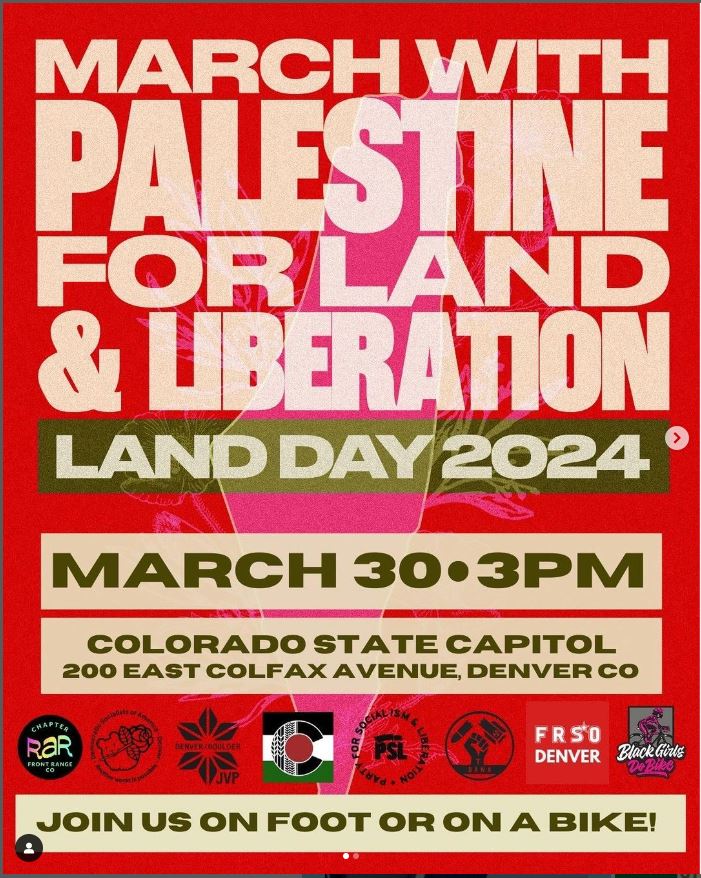
Yesterday (March 30) was the 48th anniversary of Land Day. Per BDS Movement: “On this day in 1976, Israel’s apartheid forces murdered six Palestinians (all “citizens”) as they took part in non-violent protests against the relentless settler-colonial theft of their land. Every March 30th, Indigenous Palestinians everywhere commemorate Land Day in honor of the struggle against Israeli settler-colonial oppression and for liberation.”

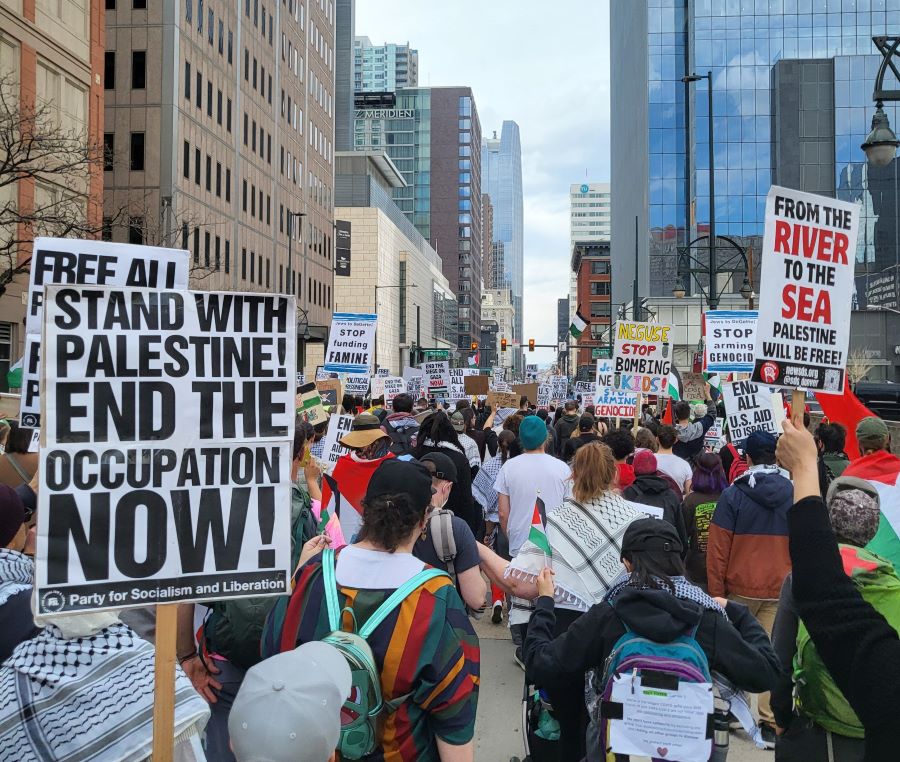
Colorado Palestine Coalition organized a rally and march yesterday which Zippy and I attended. We hadn’t been able to attend any rallies/marches for a bit so it felt good to be back with like-minded folks who refuse to remain silent as our government ignores our calls for an immediate and permanent ceasefire, and continues to send billions of dollars and bombs so that Israel may continue its campaign of death, disability, and destruction in Gaza. It’s cathartic to march through the streets, (loudly) chanting in unison on behalf of Palestinians and to call out our so-called representatives for their complicity in the genocide.

People were also there on bicycles in solidarity with Gaza Sunbirds (The Gaza Sunbirds are a para-cycling team, consisting of 20 athletes, based in the Gaza Strip. The team was founded in 2018 when Alaa al-Dali, an Olympic hopeful cyclist, was shot in the leg by an Israeli sniper. They are currently distributing aid.). Donations can be made HERE.

One of the speakers said that while the turnout in Denver wasn’t the largest they’d seen, it was still incredibly gratifying to have that many people show up for Palestine on a spring Saturday. Another speaker asked people to raise their hand if they’d just learned about Palestine last year and LOTS of people raised hands which felt incredible on two levels: incredible in that so many people had now joined the movement(!) but also incredible in that they were ignorant of the situation due to the pro-Israel/anti-Palestinian filter through which we in the U.S. receive our information.

The tide is changing. Israel’s brutal assault, which has killed more than 33,000 Palestinians (70% of them women and children), the forced starvation, the destruction of hospitals, universities, neighborhoods, the assassination of journalists, academics, poets, healthcare workers, and aid workers, along with the dropping of white phosphorous with the intent of destroying the agricultural  land and making that land uninhabitable, all of this brutality (and more) is on display for the entire world to see. We see this gleeful brutality and there will be no returning to the status quo.

Please, if you haven’t yet spoken up on behalf of Gaza and all Palestinians, it’s not too late. And if you don’t feel as if you understand the situation enough, I highly recommend They Called Me a Lioness: A Palestinian Girl’s Fight for Freedom” by Ahed Tamimi and Dena Takruri. (A Palestinian activist jailed at sixteen after a confrontation with Israeli soldiers illuminates the daily struggles of life under occupation in this moving, deeply personal memoir.) I just started reading it (after seeing this blog post) and find the memoir highly accessible and engrossing.

The Palestinian people have been resisting for decades and millions of us around the world are also resisting on their behalf. Palestine will be free.

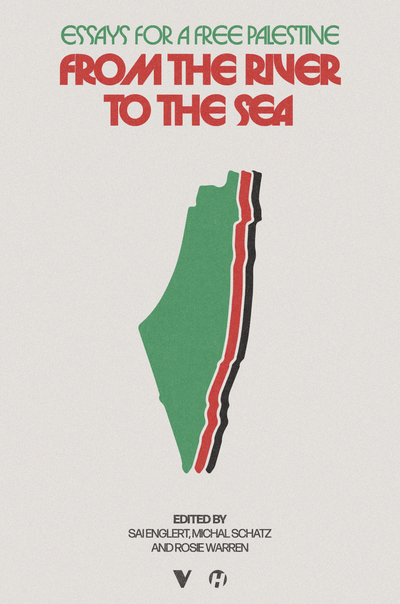
Excerpt from “From the River to the Sea: Essays for a Free Palestine”

As mentioned before, Haymarket Books is offering a free ebook of “From the River to the Sea: Essays for a Free Palestine.”

I’m going to share an excerpt from the essay “No human being can exist” by Saree Makdisi (25 October 2023) which focuses on the treatment Palestinians receive when interviewed by Western journalists and the impossible task of a “[making] up for seven decades of misrepresentation and willful distortion in the time allotted to a sound bite.” 

What we are not allowed to say, as Palestinians speaking to the Western media, is that all life is equally valuable. That no event takes place in a vacuum. That history didn’t start on 7 October, 2023, and if you place what’s happening in the wider historical context of colonialism and anticolonial resistance, what’s most remarkable is that anyone in 2023 should be still surprised that conditions of absolute violence, domination, suffocation, and control produce appalling violence in turn. During the Haitian revolution in the early nineteenth century, formerly enslaved people massacred white settler men, women, and children. During Nat Turner’s revolt in 1831, insurgent enslaved people massacred white men, women, and children. During the Indian uprising of 1857, Indian rebels massacred English men, women, and children. During the Mau Mau uprising of the 1950s, Kenyan rebels massacred settler men, women, and children. At Oran in 1962, Algerian revolutionaries massacred French men, women, and children. Why should anyone expect Palestinians–or anyone else–to be different? To point these things out is not to justify them; it is to understand them. Every single one of these massacres was the result of decades or centuries of colonial violence and oppression, a structure of violence Frantz Fanon explained decades ago in The Wretched of the Earth.

What we are not allowed to say, in other words, is that if you want the violence to stop, you must stop the conditions that produced it. You must stop the hideous system of racial segregation, dispossession, occupation, and apartheid that has disfigured and tormented Palestine since 1948, consequent upon the violent project to transform a land that has always been home to many cultures, faiths, and languages into a state with a monolithic identity that requires the marginalization or outright removal of anyone who doesn’t fit. And that while what’s happening in Gaza today is a consequence of decades of settler-colonial violence and must be placed in the broader history of that violence to be understood, it has taken us to places to which the entire history of colonialism has never taken us before.

I highly recommend reading this essay in its entirety, along with the rest of the book. It’s not easy reading, but it’s vital that we acknowledge what’s happening. We must never stop talking about Palestine.

From the River to the Sea: Essays for a Free Palestine

Haymarket Books is offering an additional FREE ebook related to Palestine, a title that is very appropriate in light of today’s declaration of genocidal intent from Netanyahu: “And therefore I clarify that in any other arrangement, in the future, the state of Israel has to control the entire area from the river to the sea.”

Perhaps you’ve heard about college students losing their housing, scholarships, internships, jobs, and being doxxed for using the phrase “from the river to the sea [Palestine shall be free]”?  That’s because when that phrase is used in relation to Palestinian liberation, people have clutched their pearls and insisted they feel threatened, which has resulted in a whole lot of discriminatory actions leveled at those speaking out for Palestine. (My thoughts on that here.) But when the Israeli Prime Minister announces to the world that Palestinians will be wiped out from the river to the sea, nothing happens to him. He gets more funding, more weaponry, more intel from the U.S.

Anyway, the new FREE ebook (although you’re free to make a donation to Haymarket Books 🙂 ) is From the River to the Sea: Essays for a Free Palestine edited by Sai EnglertMichal Schatz, et al.

Here’s the info from Haymarket Books:
“From the River to the Sea: Essays for a Free Palestine collects personal testimonies from within Gaza and the West Bank, along with essays and interviews that collectively provide crucial histories and analyses to help us understand how we got to the nightmarish present. They place Israel’s genocidal campaign within the longer history of settler colonialism in Palestine, and Hamas within the longer histories of Palestinian resistance and the so-called “peace process.” They explore the complex history of Palestine’s relationship to Jordan, Egypt, and the broader Middle East, the eruption of unprecedented anti-Zionist Jewish protest in the US, the alarming escalation in state repression of Palestine solidarity in Britain and Europe, and more. Taken together, the essays comprising this collection provide important grounding for the urgent discussions taking place across the Palestine solidarity movement.”

Also, there are three other free ebooks available (scroll down to the bottom of page). One of them, LIGHT IN GAZA, I’ve highlighted here, here, and here. It’s an incredible collection of essays and poems about life in occupied Gaza, and I highly recommend it.

Thank you for caring enough about Palestinian people to learn about their lives, hopes, and dreams. Please continue making those calls and sending emails demanding a permanent ceasefire and end to all aid to Israel. Solidarity!

From the river to the sea, Palestine will be free!

Finding our shared humanity: LIGHT IN GAZA

I’m taking advantage of the many resources on offer right now to help people such as myself become more educated on the Palestinian experience and the history of Palestine. As mentioned earlier, Haymarket Books has made three Palestine-related ebooks free to download.

One of those books, Light In Gaza: Writings Born of Fire is an anthology of Palestinian writers and artists sharing their lived experiences. Reading about daily life in Gaza helps me better understand their lives while also broadening my perspective.

“Let Me Dream” by Israa Mohammed Jamal begins with an exchange with her third-grade daughter as they worked on a school lesson together about tourist sites in northern Palestine. The daughter exclaims, “What beautiful places we have in our country. Let’s go there, Mama! Please!” The mother/author had never been to any of those places, either, and has to explain to her daughter that because Israel occupies the West Bank and blockades Gaza, they cannot go to those tourist attractions.

As someone who heavily relies on nature to maintain my emotional and mental health, I can barely imagine a life in which I was prevented from not only traveling freely, but seeking out the calming influence of the natural world. My body literally constricts at the thought.  The author’s essay moves from that exchange with her young daughter to some of her childhood and adult experiences, such as various family members leaving Gaza and the ensuing loneliness that enveloped her. She also writes of the party plans for her firstborn daughter’s first birthday in 2009 made in defiance of the fact that Israel was bombing Gaza then, plans that had to be abandoned when the bombs targeted their neighborhood, forcing them to flee to a relative’s house where they watched the news on their mobile phones because the electricity had been cut.

The essay ends with the author’s dreams for her children, including this excerpt:
I wish to witness the miracle of the liberation of all our occupied lands. Then, I can go to our home villages with our children so they can feel where they originate and belong and feel ownership of their homeland. I hope to erase “refugee” from their vocabulary, because this word is full of disappointment and weakness. They will go to every place in our country. They will see the beautiful places on the West Bank, without fear from armed soldiers, and will have peace of mind without being restricted in their movements inside and outside our ancestral land. They will discover those places by themselves and will live the adventure of traveling to new places such as cities and forests. Gaza doesn’t have mountains or forests, so we have never gone on safari and enjoyed the glory of nature.

Everyone on this glorious planet should have access to nature. Everyone deserves freedom of movement and, after reading “Let Me Dream,” I’m more grateful than ever for the ability to come and go as I please.

But the truth is, none of us are truly free while others are oppressed.

Climate Movement Monday: resources

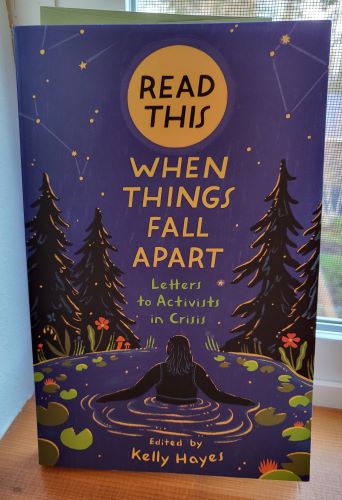
Welcome back to Movement Mondays! Today’s post isn’t focused on a specific frontline community, but is instead a collection of resources you might be interested in perusing. The intensifying climate-related weather around the world made me feel a bit wobbly about my role on the planet this morning, so I’ve been reading the excellent LET THIS RADICALIZE YOU: ORGANIZING AND THE REVOLUTION OF RECIPROCAL CARE by Kelly Hayes & Mariame Kaba.

The title comes from something Mariame Kaba has said over the years, “Let this radicalize you rather than lead you to despair,” a sentiment that resonates deeply with me. The book is about building community and organizing for the collective good. Here’s one snippet that made me feel a whole lot less wobbly this morning:

That quote is a good reminder that the smallest action can be revolutionary. The example that came to mind as I read was masking. Every time I wear a mask I’m saying “Our govt may not care about us, but I refuse to abandon you or you or you.” 

I admire both authors immensely, not only for their ongoing efforts on behalf of people and planet, but for their graciousness in welcoming others into the fight. Let This Radicalize You isn’t only for aspiring organizers, but also for anyone wanting stronger connections in their communities, along with those who might need a little pep talk to get them out of bed in the morning.  🙂  Haymarket Books is offering the book for 40% off right now (only $10.77 for the paperback!) and you can get that here.

My second resource recommendation is also new to me and I wanted to share while it’s on my radar. INHERITED is a storytelling podcast about young climate activists from around the world. They’ve produced two seasons of episodes and Season 3 will drop later this month.  You can access episodes here.

Third, an op-ed from Christiana Figueres who is a Costa Rican diplomat who served as Executive Secretary of the United Nations Framework Convention on Climate Change 2010-2016. The title of her piece: I thought fossil fuel firms could change. I was wrong. The piece opens with this:

“More than most members of the climate community, I have for years held space for the oil and gas industry to finally wake up and stand up to its critical responsibility in history.

I have done so because I was convinced the global economy could not be decarbonised without their constructive participation and I was therefore willing to support the transformation of their business model.

But what the industry is doing with its unprecedented profits over the past 12 months has changed my mind.

Let’s remember what the industry could and should be doing with those trillions of dollars: stepping away from any new oil and gas exploration, investing heavily into renewable energies and accelerating carbon capture and storage technologies to clean up existing fossil fuel use. Also, cutting methane emissions from the entire production line, abating emissions along their value chain and facilitating access to renewable energy for those still without electricity who number in their millions.

Instead, what we see is international oil companies cutting back, slowing down or, at best, painfully maintaining their decarbonisation commitments, paying higher dividends to shareholders, buying back more shares and – in some countries – lobbying governments to reverse clean energy policies while paying lip service to change.

On top of that, the industry as a whole is making plans to explore new sources of polluting fossil fuels and, in the United States, intimidating stakeholders who have been moving towards environmental, social and governance responsibility.”

You can read the piece in its entirety here. I wasn’t aware of Christiana Figueres or her willingness to give fossil fuel corporations the benefit of the doubt, but I’m glad she’s seen the light and is now using her substantial platform to voice her opinion. Good news!

As always, I’d love to hear what’s happening in your part of the world + any good news/bad news + book/article/podcast recommendations you might have. Basically, I want to feel more connected with YOU.

Solidarity! ✊🏽


Climate Movement Monday: Not Too Late

Welcome back to another edition of Movement Mondays in which I typically highlight a frontline community that’s bearing the brunt of the climate crisis and then offer an action you can take on behalf of that community. Today, I’m taking a different approach and offering a choose-your-own-adventure. Here is Earthjustice’s Action Alert page listing a number of topics for which you can write a quick letter, such as getting chemicals out of water OR saving the endangered Gulf of Mexico whale from extinction OR supporting Green Energy for Puerto Rico. Remember: brief and to-the-point letters are absolutely fine.

I also want to share an excerpt from a book that arrived in the mail today.

From Rebecca Solnit’s opening essay:
To hope is to accept despair as an emotion but not as an analysis. To recognize that what is unlikely is possible, just as what is likely is not inevitable. To understand that difficult is not the same as impossible. To plan and to accept that the unexpected often disrupt plans–for the better and for the worse. To know the powerful have their weaknesses, and we who are supposed to be weak have great power together, power to change the world, have done so before and will again. To know that the future will be what we make of it in the present. To know that joy can appear in the midst of crisis, and that a crisis is a crossroads. 

NOT TOO LATE: Changing the Climate Story from Despair to Possibility (edited by Rebecca Solnit & Thelma Young Lutunatabua) is available for purchase through Haymarket Books at 30% off.

I always love to hear when you’ve taken action, read something inspiring, or just want to high-five across the miles, so please share in the comments.

Here’s to a world in which there’s truly justice for all. Solidarity! ✊🏽

Timely book recommendations

I’m joining a book discussion tomorrow that will be facilitated by activist, organizer, and educator Mariame Kaba as part of Project NIA. We’re reading The Fearless Benjamin Lay: The Quaker Dwarf Who Became the First Revolutionary Abolitionist. As I tweeted earlier today, “Lay didn’t try to “reform” slavery, but treated it as the absolute horror it was, calling out ALL who participated in the system. Inspiring! Solidified my stance on PIC abolition.”

I highly recommend reading this book about an extraordinary man who fought against slavery for 40 years (during the 1700s), “suffering endless persecution, ridicule, and repression, without a movement to support and sustain him.”

This book feels especially timely as we mourn Tortuguita (forest defender/climate justice warrior, and abolitionist) who was murdered by the police for defending against Cop City in Atlanta AND the murder of Tyre Nichols by Memphis police (not going to link because don’t want to inadvertently include video). Also? This book is timely because in 2022, the police killed more people than ever (1,176) which is nearly 100 people killed every single month.

We cannot reform state sanctioned violence. We must defund the police. We must abolish the police. Then, all those billions of dollars must go to communities so that people are housed, fed, and receiving health care. Police do not keep us safe. We keep us safe.

Benjamin Lay pushed back against a system that many considered inevitable and here-to-stay. Back then, people thought it was futile to oppose slavery and we’re currently facing that same mindset regarding the police. Do you know how/why we have police in the United States? They started as slave patrols, men hired to hunt down enslaved people who ran away. Policing has nothing to do with public safety and everything to do with protecting capital.

I’m tired and upset, and possibly not writing very eloquently, so if you’re interested in learning more about prison industrial complex (PIC) abolition, I highly recommend Mariame Kaba’s We Do This ‘Til We Free Us. She and the other contributors do a stellar job getting across their information and perspectives.

I’m currently working to find an agent to represent my middle grade novel about two kids in a small town divided over the presence of a for-profit prison, and was able to write the ending I wanted for that story. In the meanwhile, a whole lot of people are fighting for the creation of a safer reality in the here and now. Benjamin Lay would be proud.

Climate Movement Monday: Indigenous Peoples’ Day reading list

Welcome back to Movement Mondays in which I share info in support of frontline communities that are enduring the greatest impact of the climate crisis. Today is Indigenous Peoples’ Day and I’d like to honor them by acknowledging the disproportionate climate effects indigenous people face as a result of colonialism. A recent seven-year study found “As a result of the near-total loss of their tribal lands, [ ], Indigenous people are forced to live in areas that are, on average, more exposed to climate change hazards like extreme heat and decreased precipitation.” 

So, thanks to an email from bookshop.org  that put many of these titles on my radar, here’s a list of newly released books written by Indigenous authors. I hope you’ll check them out.

Fresh Banana Leaves: Healing Indigenous Landscapes Through Indigenous Science
by Jessica Hernandez, PhD.

“In Fresh Banana Leaves, Jessica Hernandez weaves personal, historical, and environmental narratives to offer us a passionate and powerful call to increase our awareness and to take responsibility for caring for Mother Earth.” A must-read for anyone interested in Indigenous environmental perspectives.”


No Country for Eight-Spot Butterflies: A Lyric Essay
by Julian Aguon (introduction by Arundhati Roy)
Part memoir, part manifesto, Chamorro climate activist Julian Aguon’s No Country for Eight-Spot Butterflies is a collection of essays on resistance, resilience, and collective power in the age of climate disaster; and a call for justice—for everyone, but in particular, for Indigenous peoples.


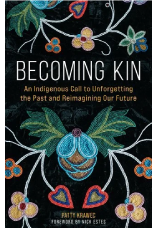
Becoming Kin: An Indigenous Call to Unforgetting the Past and Reimagining Our Future
by Patty Krawec, Nick Estes (Foreward)
Settlers dominated and divided, but Indigenous peoples won’t just send them all home. Weaving her own story with the story of her ancestors and with the broader themes of creation, replacement, and disappearance, Krawec helps readers see settler colonialism through the eyes of an Indigenous writer.

And here’s one last title that’s next on my TBR pile:

Night of the Living Rez
by Morgan Talty
In a brash, irreverent story collection, “Night of the Living Rez,” Morgan Talty illuminates life and death on the Penobscot Indian Nation reservation.


Thank you for reading and I wish you all a good week.
Solidarity! ✊🏽

Independent reading from Haymarket Books

So-called Independence Day is hitting harder than usual today as there are now fewer rights for the people and more rights for corporatists and authoritarians than a year ago. If you’re feeling overwhelmed/angry/scared/powerless, I highly recommend buying a book from Haymarket Books during their “Summer of Struggle” 40% off sale.

Haymarket Books is an independent, nonprofit organization that publishes books for changing the world, and now through August 15, ALL Haymarket books are 40% off. I’ve learned so much by reading Haymarket books and in addition to educating myself, I always feel less alone in the struggle. Do yourself a favor and buy one book. Read that book and expand your worldview, compassion, and commitment to a better life for all people. And if you feel like sharing, I’d love to know what you’re reading.

Solidarity!

O Monday where art thou?

Here it is nearly 5:30 of the p.m., sun gone for the day as temperatures drop and daylight slips away. I’ll admit, this is my least favorite time of winter days because of the increased risk of gloomy feelings that often involve beating myself up. As in, “you squandered those precious hours and what do you have to show for yourself now that it’s cold, dark, and dreary?”

Not playing those reindeer games today.

Bouquet from BB. February 2, 2022

Right now I’m basking in the glow of my accomplishments: Coffee and Wordle. Exercise.  Smoothing out trouble spots in my middle-grade novel, revising chapter 8, and falling in love with the manuscript all over again. A thoughtful phone conversation with Zebu. Laughter. Laundry. Email plus research for climate action meeting later this week. Finishing the excellent We Are All Birds of Uganda by Hafsa Zayyan. Healthy eating. Sharing snuggles with dog and cats (with special shout-out to Loki for lying down next to me while I did foam roller stretching).

It is true I respond best to blue skies and sunshine glinting off snow. But on this Monday evening, I’m content.

On death

I just learned that a neighbor died. Alone. In their home. I don’t know any details beyond that. In trying to process all this, I went in search of a quotation that might speak to me and help make sense of the situation. This, from Kurt Vonnegut, caught my eye: There is love enough in this world for everybody, if people will just look. That sentiment felt applicable because of how the neighbor had alienated others to the extent that no one could pinpoint for the police when the neighbor had last been seen. In my mind, the aloneness had been needlessly self-inflicted over the years, destroying relationships that had once thrived. Then I happened upon this quotation from Orson Welles: We’re born alone, we live alone, we die alone. Only through our love and friendship can we create the illusion for the moment that we’re not alone. Who was I to pity the neighbor when every one of us will make that final trip alone? Our neighbor was fiercely independent and very proud of that fact.

I recently read Smoke Gets In Your Eyes & Other Lessons from the Crematory which was quite helpful, not only because it put death in perspective, but also for leading me to human composting. For years, I’d been telling Zippy that when I die I wanted him to toss my body in the forest so that the crows and whatever else could feast on my remains. He patiently and repeatedly pointed out how he’d probably get in serious trouble for disposing of his wife’s body in the woods. But now I have a plan that’s legal and suits my wishes. It’s incredibly freeing to know that when I die, my body will not only return to the soil but also enrich the earth. I hope my neighbor experienced a similar peace by having a death plan in place. I also hope their death was swift and painless, and that they maintained their sense of indomitability to the very end. When your time comes to die, be not like those whose hearts are filled with fear of death, so that when their time comes they weep and pray for a little more time to live their lives over again in a different way. Sing your death song, and die like a hero going home. ~ Tecumseh

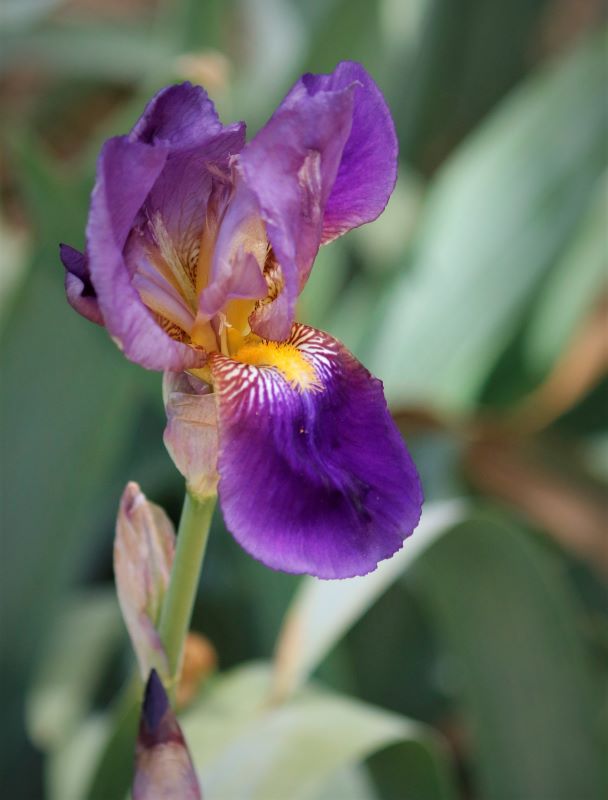
This flower from my garden is a stand-in for the photos I took years ago of my neighbor’s iris. They were out of state that spring and sad to miss their garden in bloom, so I documented the display and sent it along. Remembering that connection eases some of today’s shock.

May 13, 2020

Death forces us to think more about life and how we’re spending our finite time here. Zippy and I are grateful to have our sons visiting now and we’ve shared even more hugs than usual today. If you’ve read this far, thank you for sharing in these musings with me. I’m grateful for our connection.

Twofer Tuesday: Eagle eye edition

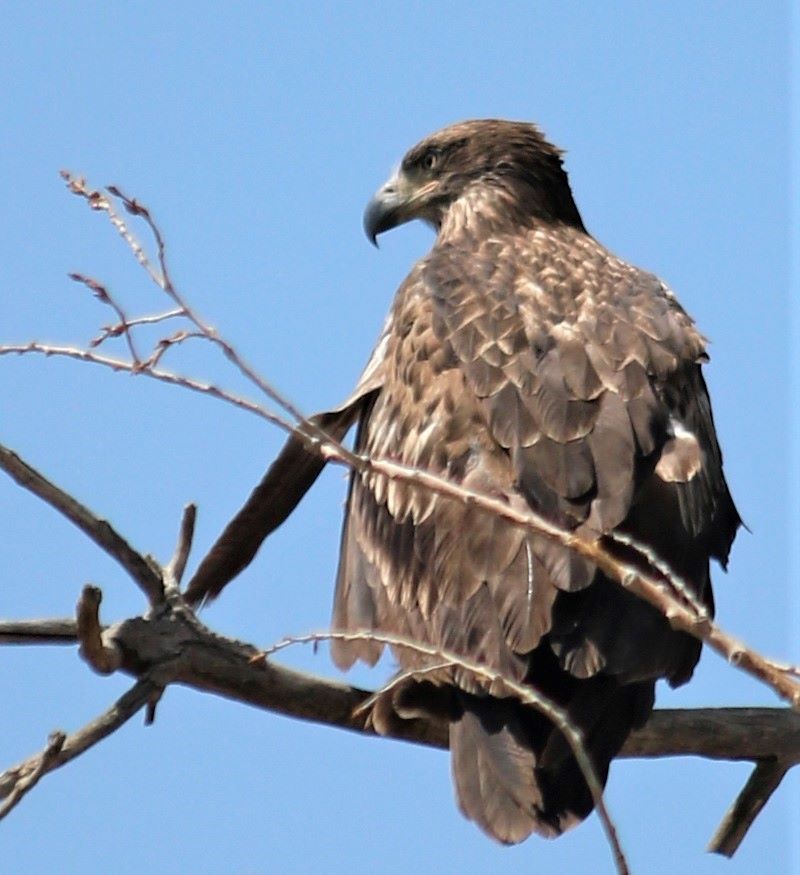
My friend spotted a large bird in a tree off in the distance as we walked around the Rocky Mountain Arsenal National Wildlife Refuge last month. Was it a hawk? Too big. What was it?

We slowly and quietly moved closer to the tree. This not-great quality photo was taken from quite a ways away.

August 20, 2021

My friend thought maybe a Golden Eagle, which seemed like a very good guess. We very carefully moved a bit farther on the trail until we were on the other side of the tree.

Hello there, regal raptor with the sharp beak and talons! Thank you for allowing us to gawk.

When I returned home and got the photos up on my computer screen, Zippy suggested it wasn’t a Golden Eagle, but a juvenile Bald Eagle. After a little more research, we decided he was correct.

I recently wrote a work-for-hire book about birds around the world and was limited to 100 birds. I didn’t include the Bald Eagle in the Birds of Prey section because I figured kids were already pretty familiar with them. Apparently, the editor felt differently because when my author copies arrived, there was a Bald Eagle on the cover. I checked inside and discovered the Black-thighed Falconet, which weighs 1.23 ounces and is one of the smallest birds of prey in the world, had been replaced by the mighty Bald Eagle. I admit to being disappointed by that switch.

However, I was not at all disappointed by this Bald Eagle sighting. Also? My friend could not have spotted a sparrow-sized falconet from that distance. Amateur birders such as ourselves definitely benefit when the sightings weigh in at close to 14 pounds of pure fierceness.

The more things change

ONE. As Haiti is devastated by another earthquake, I think back to a blog post from 2010 in  which I wrote:

Haiti has always struggled mightily
to survive on her own terms.
She’s strong, I know.
I just wish the universe would quit testing her.

And here the Haitian people are again, facing more death, destruction, and heartbreak.

TWO. As the Taliban moves closer to regaining control in Afghanistan, I think back to those days of feeling completely enraged/overwhelmed/defeated by how easily Bush/Cheney & Co fear-mongered the U.S. into invading and occupying Afghanistan. I distinctly remember sitting on my patio, drinking a beer, and laughing/crying as I read David Rees’s GET YOUR WAR ON.**

The one good constant in all this is that my patio table remains the same

The clip-art strips were and continue to be profane, hysterical, and spot-on in the framing of how we lost our collective minds after September 11, 2001. (**Lather. Rinse. Repeat. for the invasion/occupation of Iraq, covered in GET YOUR WAR ON II)

THREE. Once again, I’m feeling enraged, overwhelmed, and defeated. There’s so much good we could be doing for one another on a massive scale and yet, people continue to think the military is the answer to every issue, despite all evidence to the contrary.

FOUR. So here I am (again) turning to nature to soothe my soul.

August 14, 2021

When the going gets tough

We woke in the middle of the night to the smell of wildfire smoke. Zippy shut off the swamp cooler and closed all windows. It’s only June and wildfire season has begun.

Image by Steve Buissinne from Pixabay

Since early May, I’ve run every other day and that routine has been crucial for my mental health. I haven’t yet missed a running day and when I got up this morning, I felt so many emotions about the climate crisis and the lack of political will to do anything about it. My despair mounted and, more than ever, I needed to run. The good news is we have a 20+ year-old treadmill (that’s gone through multiple running belts over the years) and I ran on that for 25 minutes. I pounded out the miles, my mind clearing as sweat slicked my skin.

This afternoon I made the mistake of going on Twitter where I came across this tweet:

And I began to spin some more, the anxiety and rage building. So, did I hop on the treadmill again? Nope. This time I began rereading one of my very favorite books:

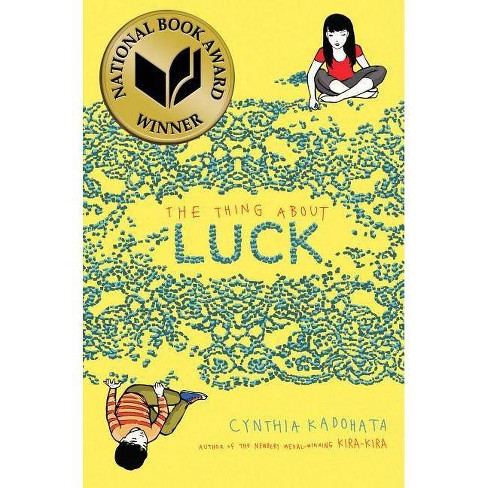
I highly recommend any book by Cynthia Kadohata, but especially THE THING ABOUT LUCK which is funny and tender and makes my heart sing. *happy sigh*

I have to keep reminding myself that electoral politics is not going to save us. We the people must rise up as one and stand together against the rich and powerful. In the meanwhile, I’m focusing on mutual aid in my community in addition to lots and lots of running and reading.

This day’s been hard, but I’m still standing.

Kindred spirits

“Not much goes on in the mind of a squirrel.

Huge portions of what is loosely termed “the squirrel brain” are given over to one thought: food.

The average squirrel cogitation goes something like this: I wonder what there is to eat.”
― Kate DiCamillo, Flora & Ulysses: The Illuminated Adventures


Twofer Tuesday: goat therapy

I gave myself the day off and spent it in bed reading adult fiction (Tana French’s THE WITCH ELM). Self-care without guilt. Write my 1,000 words? Only if it felt right. I wasn’t going to butt heads with myself and turn it into a negative situation.

Photo by Hans Lindgren from Pexels

I’m happy to say I’m now in the head-space to crank out my daily word count. Thank you to these adorable goats for their role in helping me get there. And now I’m off to write . . .

Who’s a good girl?

Emma. September 14, 2020

Here’s my happy doggo to perk up anyone in need of perking (not to be confused with twerking, although, if twerking makes you feel better, by all means do that!)  The photographic quality is low and Emma’s smile is slightly blurred, but the emotions shine through.

As Charles M. Schulz famously wrote, happiness is a warm puppy.

Wishful thinking

I spent the day in bed reading a Nero Wolfe/Archie Goodwin detective novel. A wise choice for my physical and mental health, I think. Why? The wildfires continue to rage in Colorado and when I checked my phone at one point today, the weather alert said “91 degrees. Smoky.”

So, it’s no shock that when I dipped into Pixabay just now in search of an image that resonated, I landed on this:

Image by Muhammad Ridha from Pixabay

Tonight I shall dream of rain.