Raising a middle finger to A.I.

After this morning’s writing session in which I sought refuge from our current reality by working (some more) on chapter 8 of my middle grade novel, I came here to check my WordPress dashboard. In my Contacts spam folder, was the following:
Edited to add this gem from another spammer on 6.5.24:
This state-of-the-art web app allows you to create captivating children’s books using advanced AI technology. It takes care of both the writing and illustration, and all you need to do is input your ideas (or let the app come up with the idea too, LOL). No writing or illustration skills needed!

Drunk on writing

On a personal level, 2024 has brought an awful lot of pain and hardship to people I love, making these first five months feel like an entire year has already passed. And when I factor in the horrors of the U.S.–sponsored genocide of Palestinians, the emotional weight of these days is almost more than I can bear. But I’m now finding consistent refuge in my writing because I’ve made it a daily priority.

Rather than trying to cram a writing session into whatever slots I could find in my days and then saying oh-well if it didn’t happen, writing is now (again) part of my morning routine. As a result, I’ve been making slow progress on the second draft of my middle grade novel. I typically work for 60-90 minutes and that’s enough to keep me (mostly) centered for the rest of the day. That routine and commitment to my creativity keep me afloat, although some days I look and feel like this disheveled Northern Shoveler.

Lake Hasty. April 2, 2024

As Ray Bradbury said, You must stay drunk on writing so reality cannot destroy you.

Climate Movement Monday: human composting

Welcome back to Movement Mondays in which we discuss all things climate. Today also happens to be Earth Day which, to be honest, I’d like to ignore rather than get caught up in overly-optimistic and/or downright dishonest rhetoric (I’m looking at you, Biden, as you supply tens of thousands of tons of explosives so that Israel may continue blowing up Palestinians, their residences, infrastructure, and farmland). Those in power are not honoring the earth and its inhabitants, and they should all keep “Earth Day” out of their mouths. Okay, Tracy. *deep breaths*

Instead, let’s talk about human composting, otherwise known as Natural Organic Reduction! I’m interested in this topic for two reasons: (1) I plan to be composted upon my death and (2) because my work-in-progress is a middle grade novel about a girl and her family’s funeral home that pivots from conventional death care (embalming, burial in ornate coffins, flame cremation) to green burial and natural organic reduction. Fortunately for me, in March of 2023, I was able to (virtually) attend the very first human composting conference ever (organized by Seth Viddal of The Natural Funeral)! I learned so much and could talk your ear off about all this, but today will only provide a brief overview along with some resources.

Recompose vessel

In early 2021, Recompose became the first human-composting funeral home in the U.S. Katrina Spade is the founder of Recompose, and the person most responsible for spearheading the human composting  movement. Thanks to her efforts and those of advocates around the country, human composting is now legal not only in Washington, but also Colorado, Oregon, Vermont, California, New York, Nevada, and Arizona. Legislation has been introduced in another sixteen states (scroll down for list/links).

Why is human composting a climate matter? For every person who chooses Recompose over conventional burial or cremation, one metric ton of carbon dioxide is prevented from entering the atmosphere. In addition, our approach to human composting requires 1/8 the energy of conventional burial or cremation. Recompose allows you to choose an end-of-life option that strengthens the environment rather than depleting it. (This info came from Recompose, but the same applies for human composting via any funeral home’s process.)

From that same page: Current funerary practices are environmentally problematic. Each year, 2.7 million people die in the U.S., and most are buried in a conventional cemetery or cremated. Cremation burns fossil fuels and emits carbon dioxide and particulates into the atmosphere. Conventional burial consumes valuable urban land, pollutes the soil, and contributes to climate change through resource-intensive manufacture and transport of caskets, headstones, and grave liners. The overall environmental impact of conventional burial and cremation is about the same.

Not only does human composting avoid those environmental costs, the process produces soil! Why does that matter? Again, from Recompose: The breakdown of organic matter is an essential component in the cycle that allows the death of one organism to nurture the life of another. Soil is the foundation of a healthy ecosystem. It filters water, provides nutrients to plants, sequesters carbon, and helps regulate global temperature.

Human composting produces about a truck-bed full of soil. Families of the deceased are given the option of taking some or all of that soil OR donating it to land conservation and restoration sites. I’m not sure about other states, but know that here in Colorado the law prohibits the sale of the soil or using it on plants grown for food. The Colorado Burial Preserve in Florence, CO, accepts human composting soil for land restoration (in addition to being a green burial site).

I learned during the conference that many who choose human composting don’t make that choice based on climate concerns, but because it just feels right to be returned to the earth after death. One of the other human composting vendors said that people want more choice for their deaths and that natural organic reduction appeals to them on a “freedom” level. A while back, I wrote about death and how my decision to be composted has given me incredible peace of mind. Everyone should have the freedom to make a death-care choice that speaks to their values. There’s much more to be said about the grief process and how natural organic reduction allows for participation by family and friends, along with a timeline that supports gentle grieving as opposed to an abrupt “that’s-that” burial practice, but I’ll save that conversation for another post.

In the meanwhile, I’d like to offer resources:

  • Go here to learn more about pending legislation and how you can get involved in bringing human composting to your state
  • Visit “The Order of the Good Death” for lots of information about death care, including Calls to Action in support of a “good death” (Note: Founder Caitlin Doughty is an incredibly smart, funny, and compelling speaker/writer on this issue)

I’ll stop here, but PLEASE don’t hesitate to ask questions! As stated, I love talking about this issue and if I don’t have answers, I can point you in the right direction. It’s an exciting development in death care and I hope by sharing this information, some of you might experience a ping of recognition (as in, that’s what I want for me!)

Thank you for reading. Solidarity! ✊🏽

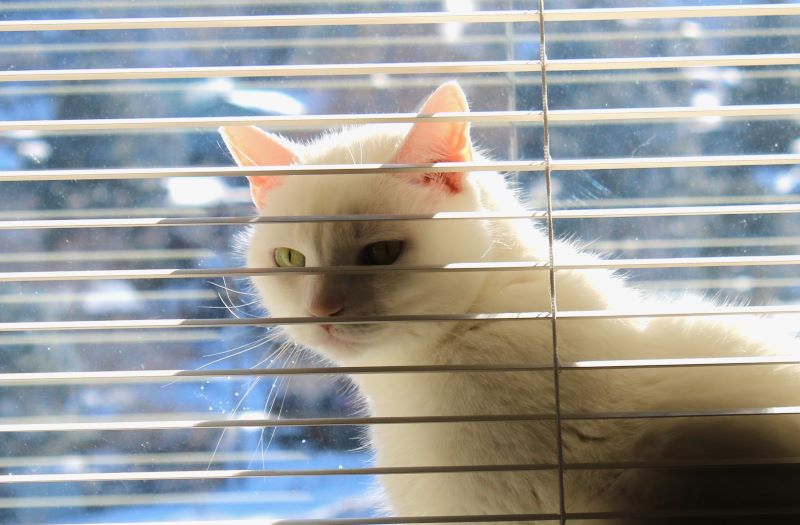
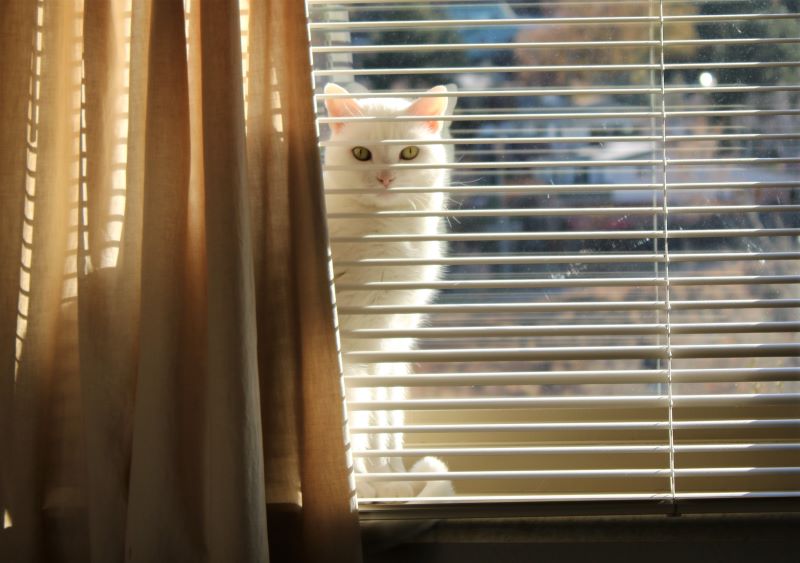
Happy Caturday from Marcel

This slightly menacing photo was actually taken in December of 2022 and I’m using it because both Marcel and his brother Loki are napping right now and I don’t want to risk waking them for a Caturday photo shoot. I’m drafting my new manuscript and it’s hard to write when Loki is draped over my right shoulder, which is what he’ll demand upon waking. Years ago, Zebu gifted me a sling for holding/carrying a feline but neither one likes it. They prefer the undivided attention that comes with me holding them in my arms.

So, I’m doing a drive-by posting and then going back to work on my project while the little terrorists are asleep.

*whisper-shouts* Happy Caturday!


Update: Just as I was about to hit PUBLISH, Loki sauntered into my writing room. Crying for attention.

Fauna and flora

I spent the last couple hours working on my work-in-progress and decided to reward myself by looking through photos from this past week’s camping trip. Here’s a Steller’s Jay that did me a solid by posing long enough for a decent photo :

Such a handsome bird. And here’s a Yellow-rumped Warbler that also visited a nearby tree:

Gotta appreciate a bird with such an obvious marking AND a name that directly corresponds to said marking. Kudos to the ornithologist!

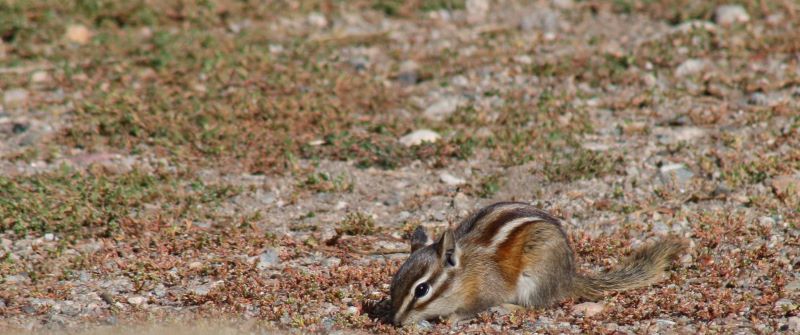
Here’s one of the many chipmunks that drove Emma to distraction:

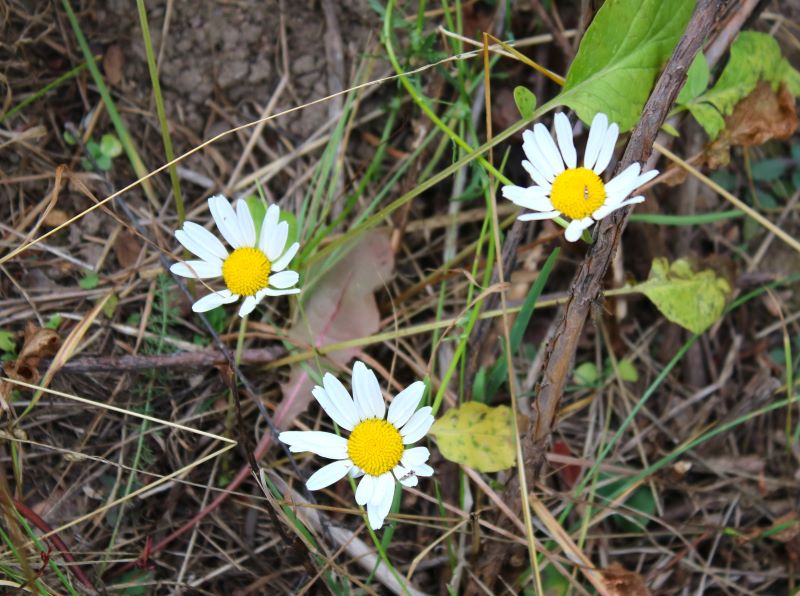
Finally, here’s a sampling of some late-blooming wildflowers spotted while we hiked around Lower Cataract Lake:

My research says these flowers are called Mayweed / Stinking Chamomile / Dog Fennel which don’t really seem like names that suit the flowers. Granted, I didn’t give them a sniff but surely there’s another name that would better represent their appearance/demeanor. [Oops, just saw that they’re officially listed as a noxious weed here in Colorado, so maybe “Stinkin’ Chamomile” was just the most polite term available.]

Pondering and plotting

After talking (in very general terms) with a friend/critique partner today about my work-in-progress, I had an epiphany. I realized it was possible to slightly expand the primary setting for my story in a way that will allow me to more deeply explore some elements/themes I’d like to include. And yes, I realize that last sentence is pretty cryptic, but until I have a complete first draft I always err on the side of “keep your mouth shut, Tracy.”

But now I’ve now got a whole bunch of questions I must answer before implementing that change in the setting. As in, I need to know the how and why behind the expansion of the setting. Does the property I want to add belong to the protagonist’s family or a neighbor? Is that property already in good shape or is it in need of restoration? Would money change hands or could it be a barter system?

I’m very excited about this new idea. I’m also feeling bombarded by the many possibilities bouncing around my brain. Overwhelm alert!

Here, in solidarity on this #Caturday, is Marcel looking equally overwhelmed (although I’m pretty sure he’s not drafting a novel and is merely plotting how to move that heavy brick currently sitting on top of the kibble bin  ). May the two of us settle down and find clarity in the not-too-distant future. Well, one of us, at least.

We have the power

For a whole lot of reasons (*gestures widely*), my climate anxiety is elevated today, so I picked up my copy of Not Too Late: Changing the Climate Story from Despair to Possibility and opened it in search of some grounding wisdom. I found that in Gloria Walton’s essay “Shared Solutions Are Our Greatest Hope and Strength.”

Capitalistic values have promoted individualistic mindsets and made us believe our resources are finite and competitive. But that doesn’t have to be our reality. We have the power to tap into abundance and collaboration. It’s our collective responsibility to envision and create the world we want together. We need bold, sustainable solutions that benefit many, not just the few. We can also hold community and grassroots values that nurture a regenerative, healthy, and equitable planet–the values that connect us to our family, our communities, and ultimately to each other.

Yes, yes, and yes!

Wild Rose. June 16, 2023

And now I’m off to continue drafting my middle grade novel centered on a bold and sustainable solution that will benefit many, not just the few.


Standing at the edge

Things can fall apart, or threaten to, for many reasons, and then there’s got to be a leap of faith. Ultimately, when you’re at the edge, you have to go forward or backward; if you go forward, you have to jump together. ~ Yo-Yo Ma

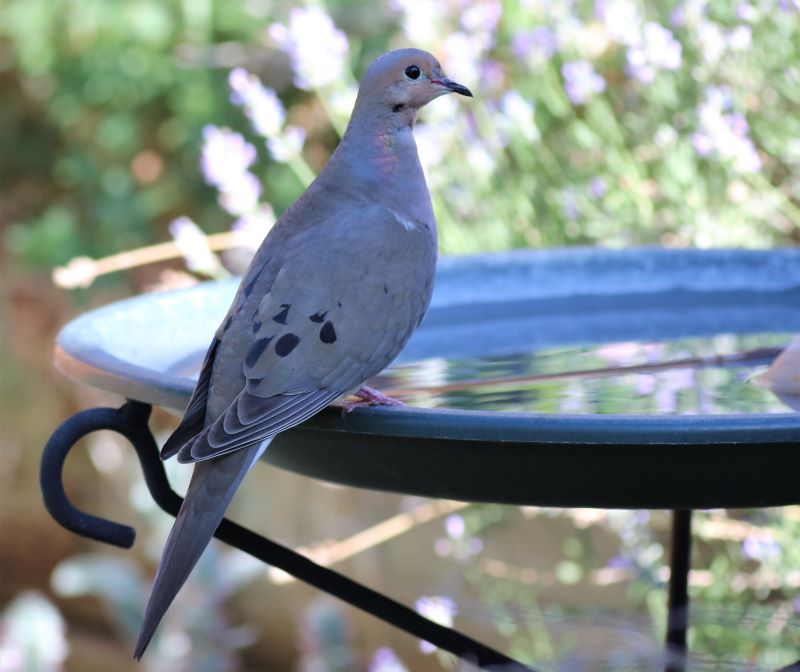
Okay, mourning dove.
It’s just you and me.
One . . . two . . .  three . . . JUMP!

No more mourning

For the past couple months, I’ve been struggling with my new middle grade project idea, trying to land on the “correct” tone and approach. I’ve written a bunch of scenes, but knew I was missing the mark. Today in desperation, I turned to the google and asked a convoluted question about how to write a first draft when wandering around in the dark inside your head, clueless about how to find the right approach to the story. And this came up!

None of this approach is new to me, but the way J. Elle framed the info resonated, plus the timing was just right. This afternoon, I was in the right head space to take in the info and think about my project in these terms. I now have a short pitch and tent pole moments, although those may still change. I’m mostly just excited to have a solid-ish foundation upon which to build. No matter what happens next, I feel as if I’m moving in the right direction.

Mourning Dove. July 20, 2022

No more sad, mopey mourning for me. This project is finally on its way and for that, I am grateful.

The face of a dog

I’m tiptoeing into a new project. And because I haven’t added anything to the draft in two days, I’m experiencing that panicked sensation of “what if the words don’t come today?”

What if I fail? What if today’s the day I’m exposed as the imposter I am?

Well, those feelings are exactly why I must get to work in order to disrupt that fear and show it to the door. To quote (in translation) Gabriel García Márquez:

“Necessity has the face of a dog.”

I must do what needs to be done. But, don’t worry, Emma. I’m fairly confident neither of us will be harmed during the writing of those words.

Thankful Thursday

Today I am thankful for:

  • My home that is warm while outside, much-needed snow is falling. Take that, extreme drought!
  • A feeling of buoyancy as I return to a new project idea I began outlining in Scrivener last month.
  • Twenty minutes of joyful hoop-dancing that brings me closer to the year-end goal of 24+ hours of hoop-dancing in 2022.
  • My weird friend, Marcel, who greeted me with this stare when I walked into Zippy’s office a couple days ago.

  • Anyone who took the time to read this post. 🌻