Welcome back to Movement Mondays in which I share information, including how to take action on behalf of the frontline communities suffering the worst effects of climate change.
As I write this, COP27 (United Nations Climate Change Conference) is taking place in Egypt. António Guterres, the Secretary-General of the UN understands the gravity of the situation. This morning he tweeted:
I have just warned global leaders at #COP27: We are on a highway to climate hell with our foot on the accelerator. Our planet is fast approaching tipping points that will make climate chaos irreversible. We need urgent #ClimateAction.
Urgent climate action means all fossil fuels must remain in the ground!
That’s why today’s action is aimed at the Bureau of Land Management (BLM). Because of the “poison pills” in the Inflation Reduction, the BLM is currently preparing oil and gas lease sales in Wyoming, New Mexico, and Kansas.
PLEASE use this form to let the BLM know you strongly oppose the proposed lease sales. There’s a letter template in place. You can send as-is or personalize. I kept my message brief and to the point.
Thank you for efforts on behalf of the planet’s most vulnerable. Solidarity! ✊🏽
Welcome back to another edition of Movement Mondays in which I offer info on how we can support frontline communities who are enduring the worst effects of climate change. Today, we’re revisiting the Willow Project.
Caribou, geese, loons, salmon, polar bears, whales & 13 communities all call the Western Arctic home. Any threat to this robust ecosystem puts all its inhabitants at risk.
Last summer, a federal judge in Alaska rejected permits for the project. In response, the Biden administration is writing a supplemental impact statement. Once that’s completed, it will decide whether to approve the project. The decision is expected by the end of the year.
If approved, the Willow Project would pump more than 500 million barrels of oil over 30 years from a fragile Arctic ecosystem. This would release more than 250 million metric tons of carbon dioxide, according to the analysis and estimates by the Interior Department’s Bureau of Land Management.
My ask this week: write to President Biden here and Interior Secretary Deb Haaland here, asking them to “Stop the Willow Project.”
Welcome back to Movement Mondays in which I share info on how to support frontline communities that are bearing the brunt of the climate crisis. Before I give you the specifics on this week’s ask, I wanted to share some good news.
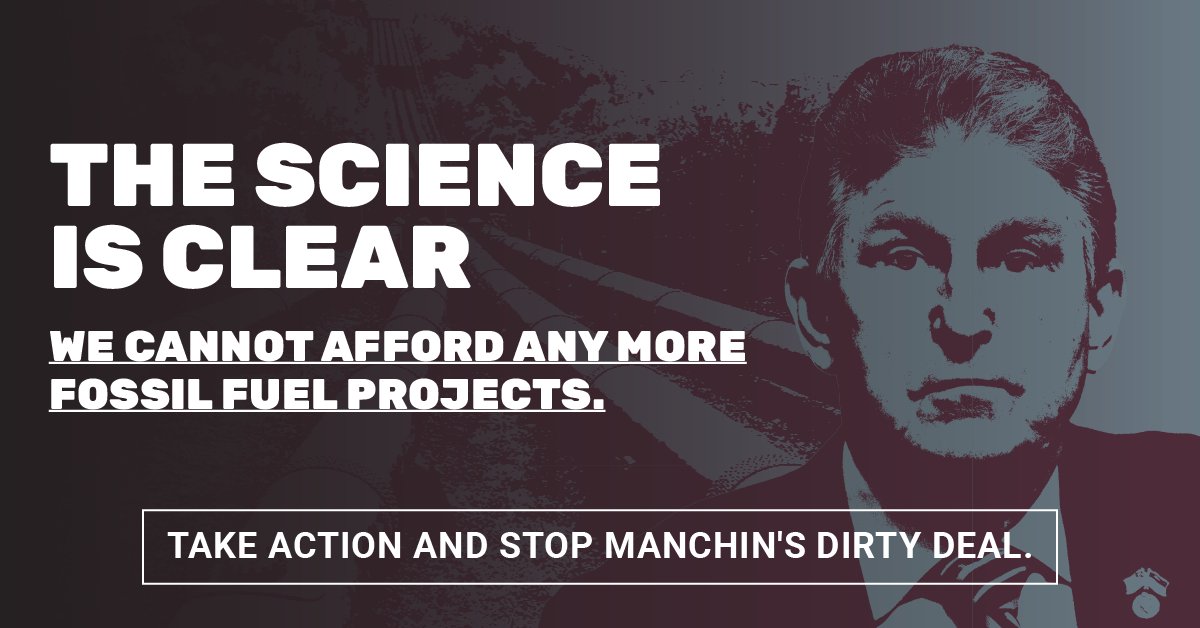
Mountain Valley Pipeline (MVP) has dropped all eminent domain proceedings in North Carolina! This is due to the work of Indigenous and Black communities that fought back. However, the MVP fight continues in Virginia and West Virginia, although it was dealt a serious blow when Sen. Joe Manchin was forced to pull his “Dirty Deal” permitting reform legislation last month. Organizing works!
Today’s action comes via 350.org and I’m asking for short notes of solidarity for nine climate protestors facing prison time as they fight to #StopEACOP (East African Crude Oil Pipeline). As someone who was briefly jailed for climate protest, I know how important it is to feel supported by those on the outside. Here’s the background via 350.org:
French oil giant Total and the China National Offshore Oil Corporation are building the world’s longest, heated, crude oil pipeline – right through the heart of Africa. This pipeline will devastate communities in Uganda and Tanzania and tip the world closer to climate disaster. If completed, the pipeline will displace 100,000 people from their land and threaten the water 40 million people depend on.
Image Source: Fridays for Future/ Twitter
This year, the UN climate talks – COP27 – will take place in Africa. Now is the perfect time to show world leaders the fight communities in East Africa are leading against this pipeline and for the climate.
Here’s the link for signing onto the letter of support. If you can add a short note of support, it will be greatly appreciated. You can find more information about the pipeline and the international fight against the project PLUS sign up for one daily action re EACOP this week here.
Welcome back to another Climate Movement Monday in which I provide info on how we can support frontline communities (typically BIPOC and poor people) who are suffering the greatest effects of climate change. I’m not going to lie, my climate anxiety is very high these days as we learn the crisis is accelerating beyond earlier predictions. But this does NOT mean it’s foregone and that we can give up. To the contrary, it’s vital we all push for a just transition to renewables.
Below, I’ve pasted an entire Op-Ed (in The Hill) from the climate political director of the Center for Biological Diversity Action Fund that lays out the multiple dangers of being at the mercy of OPEC and relying on fossil fuels. My ask today is that you contact President Biden:
1) demand he re-instate the ban on crude oil exports 2) demand he declare a climate emergency
Comment line (11A-3P, Tues-Thurs): 1-202-456-1111
TTY/TTD: 1-202-456-6213 Email:Here
Solidarity! ✊🏽TO END PRICE SPIKES AND CLIMATE CATASTROPHE, BAN CRUDE OIL EXPORTSBY KASSIE SIEGEL, OPINION CONTRIBUTOR – 10/12/22
The multidimensional threats from fossil fuels are evident in everything from intensifying superstorms, wildfires and heatwaves to toxic pollution and spiraling energy prices. OPEC’s production cut just before our midterm elections demonstrates how petrostate power threatens both economies and democracy.
Congress lifted the 40-year-old ban on crude oil exports at the behest of the oil industry, right as the Paris climate talks drew to a close in 2015. Big Oil wanted the ban lifted so it could reap greater profits from the oil and gas production boom enabled by fracking — the ultra-hazardous extraction technique that exploits new oil and gas sources at the expense of our climate, health and wildlife habitat.
At the time, oil companies promised that the production boom and lifting of the export ban would lead to energy security and lower gas prices. Surprise, surprise — the oil industry lied. Despite record-high U.S. production, Americans face painful prices at the pump, along with record-high inflation driven in large part by fossil fuel energy prices.
OPEC’s announcement that it will cut production to further spike prices shows how deference to oily oligarchs not only sustains fossil-fueled greed but enables petrostate aggression. Putin’s brutal invasion of Ukraine was only possible due to fossil fuel production revenues. Now, in a world already destabilized by that war, Russia, OPEC and its allies, all but openly aim to influence the tremendously consequential midterm elections by manipulating oil prices.
The way for Biden to protect people from price spikes and profiteering is to accelerate the transition to clean renewable energy and end the fossil fuel era once and for all.
As a life-on-Earth-saving bonus, reinstating the crude oil export ban will help end the fracking free-for-all that has supercharged greenhouse gas pollution and the climate crisis. In fact, 85 percent of planet-warming pollution comes from oil, gas and coal. Scientists have been crystal clear that new fossil fuel production is “moral and economic madness.”
Next Biden must direct his executive branch agencies to comply with existing U.S. environmental law and stop approving new fossil fuel infrastructure and extraction projects — none of which serve the public interest. Most major fossil fuel projects require permits from one or more federal agencies. Just as the Biden administration denied the disastrous Keystone Pipeline as contrary to the public interest, other unsustainable and financially risky fossil fuel ventures should be denied.
The oil, gas and coal in fields and mines that are already in production, or where the capital has already been invested, are more than enough to get us to the other side of the clean energy transition. Indeed, the world cannot afford to burn all the fossil fuels in already developed reserves globally — doing so would push us way past the 1.5 degrees Celsius limit agreed to in the Paris climate treaty to avoid the worst impacts of climate change.
Kassie Siegel is climate political director at the Center for Biological Diversity Action Fund.
Welcome back to Movement Mondays in which I share info in support of frontline communities that are enduring the greatest impact of the climate crisis. Today is Indigenous Peoples’ Day and I’d like to honor them by acknowledging the disproportionate climate effects indigenous people face as a result of colonialism. A recent seven-year study found “As a result of the near-total loss of their tribal lands, [ ], Indigenous people are forced to live in areas that are, on average, more exposed to climate change hazards like extreme heat and decreased precipitation.”
So, thanks to an email from bookshop.org that put many of these titles on my radar, here’s a list of newly released books written by Indigenous authors. I hope you’ll check them out.
Fresh Banana Leaves: Healing Indigenous Landscapes Through Indigenous Science
by Jessica Hernandez, PhD. “In Fresh Banana Leaves, Jessica Hernandez weaves personal, historical, and environmental narratives to offer us a passionate and powerful call to increase our awareness and to take responsibility for caring for Mother Earth.” A must-read for anyone interested in Indigenous environmental perspectives.”
No Country for Eight-Spot Butterflies: A Lyric Essay by Julian Aguon (introduction by Arundhati Roy) Part memoir, part manifesto, Chamorro climate activist Julian Aguon’s No Country for Eight-Spot Butterflies is a collection of essays on resistance, resilience, and collective power in the age of climate disaster; and a call for justice—for everyone, but in particular, for Indigenous peoples.
Becoming Kin: An Indigenous Call to Unforgetting the Past and Reimagining Our Future by Patty Krawec, Nick Estes (Foreward) Settlers dominated and divided, but Indigenous peoples won’t just send them all home. Weaving her own story with the story of her ancestors and with the broader themes of creation, replacement, and disappearance, Krawec helps readers see settler colonialism through the eyes of an Indigenous writer.
And here’s one last title that’s next on my TBR pile:
Night of the Living Rez by Morgan Talty In a brash, irreverent story collection, “Night of the Living Rez,” Morgan Talty illuminates life and death on the Penobscot Indian Nation reservation.
Thank you for reading and I wish you all a good week.
Solidarity! ✊🏽
Welcome back to Climate Movement Mondays in which I highlight frontline communities in need of our support as the climate crisis worsens. Last week, Hurricane Ian hit southwest Florida with Category 4 strength (150 mph winds). As of this writing, the death toll is at 100 while the search continues for survivors. Many are without power or drinking water. Here are some organizations to support (remember, any amount helps!):
Community Emergency Operations Center (CEOC) is a grassroots disaster relief effort. We serve the most vulnerable populations food, water and assist with restoring resilience after man-made and natural disasters. We believe that your neighbor is your 1st responder. Our goal is to ensure we have all the necessary tools and protocols in place when disaster strikes via emergency mobilization with a rapid response. Donate here
World Central Kitchen is already in place, serving hot meals.Staging Relief Teams ahead of landfall, WCK and our local partners were ready to begin serving fresh meals as soon as it was safe to do so. Within hours of the storm’s passing, we began distributing sandwiches and cooking hot, nourishing meals at our Relief Kitchen. Additionally, we have built partnerships with restaurants ready to help us scale immediately. Donate here
Team Rubicon is a veteran-led humanitarian organization that serves global communities before, during, and after disasters and crises. Your donations go directly to our Ready Reserve Fund which increases the efficiency and capacity of Team Rubicon’s response to crises like this. Donate here
Farm Share is a Florida nonprofit that sources leftover fruits and vegetables from farms and distributes them to people across the state. Established in 1991 as a food bank, Food Share partners with 2,000 food pantries, churches, schools, and other nonprofits throughout Florida to distribute food every single day. Donate here
Vehicles sit in flood water at the Palm Isle apartments in the aftermath of Hurricane Ian, Sept. 29, 2022, in Orlando, Fla. (AP Photo/John Raoux)
Thank you in advance for your support! And I wanted to share a good-news update: California Governor Newsom signed the Agricultural Labor Relations Voting Choice Act! This means farmworkers, those hardworking individuals who feed ALL OF US, can now vote for or against a union without interference from their employers. This is the second good-news update for Climate Movement Mondays!
Please note: the climate crisis is worsening and the hurricane season is NOT over yet. The best thing we can do as a society is keep all fossil fuels in the ground and make a just and equitable transition to renewable energy. We need YOU in the fight.
This morning started out rough as the weight of all we’re enduring hit me. Sometimes I wish I could live in a happy state of denial (“the pandemic is over and X, Y, Z aren’t happening, either!”), and eagerly greet each new day. Alas, I’m not wired that way.
The good news is, I’m feeling better now.
The birds are singing and the sun is shining.
Gratitude!
Happy news, people! The organizing power of 600+ environmental organizations and frontline community groups has won the day. Because of our calls and emails in opposition to the dirty side deal that would have gutted bedrock environmental laws, eliminate public input, and fast-track fossil fuel projects, Senator Joe Manchin asked Senator Schumer to delete the permitting language from the Continuing Resolution (which is the funding to keep government running) that will be voted on this evening.
Why did he do this? Because his dirty deal did NOT have the votes to pass.
Welcome back to Movement Mondays! Today my time-sensitive ask is that you make quick phone calls to your representatives AND/OR send emails regarding Senator Manchin’s side deal portion of the Inflation Reduction Act that would gut environmental regulations (Clean Water Act!) and accelerate the federal permitting process for energy projects. This legislation is a gift to the fossil fuels industry and Manchin’s #1 project priority is the Mountain Valley Pipeline. [NOTE: more background info and links below.]
Basic message: Vote NO to this side deal that will accelerate the climate crisis and is just a gift to the fossil fuel industry.
CALL 917-791-2257 will give you a brief script then connect you to your Senators (thanks to the People vs. Fossil Fuels Coalition).
202-224-3121 is the Capitol Switchboard where you can ask to be connected to your senators and representative.
You may also, of course, call directly to your representatives’ DC and local offices
EMAIL If you aren’t comfortable making phone calls, you may use your representatives’ email contact form to send your message.
BACKGROUND INFO:
Senator Schumer has attached Manchin’s side deal to the government funding vote which must happen by September 30 in order to keep the government running. This means there’s no debate on the side deal, only a vote.
This action is VERY important and phone calls from constituents carry a lot of weight. PLEASE take the time to urge your representatives: NO to the permitting side deal!
Welcome back to Climate Movement Monday in which I highlight frontline communities in need of support. The climate crisis is on full display this week with hurricanes and typhoon-related storms causing mass destruction. I’m listing local organizations that accept donations. Every bit helps, no amount too small.
WESTERN ALASKA was hit on Friday and Saturday by the remnants of Typhoon Merbock with hurricane-force winds that put coastal villages and towns underwater.
A massive storm battering Western Alaska brought floodwaters to the steps of the local school in Golovin on Saturday. (Courtesy Josephine Daniels)
PUERTO RICO which still hasn’t recovered from Hurricane Maria (exactly five years ago) is now flooded after Hurricane Fiona caused mudslides that knocked out the power grid. Much of the island has no power (it was privatized one year after Maria) and people are in desperate need of drinking water.
Also? PAKISTAN continues to suffer from flooding after torrential monsoon rains. The people are bearing the brunt of climate change and must receive climate reparations. “Pakistan, the world’s fifth most populous country, accounts for less than 1% of global carbon emissions but ranks as the eighth most vulnerable to climate change, according to the “Global Climate Risk Index 2021,” published by the nongovernmental organization Germanwatch.”
Aghosh USA is the org I donated through right after the flooding began.
Donate here
Okay, if you’ve read this far, I thank you! If you can donate a few dollars, I thank you again. As you can see, the climate crisis is here and certain vulnerable communities will suffer more than others. We need a just energy transition to an equitable world, and that means fossil fuels MUST remain in the ground.
Today I’m posting to raise awareness about the plight of farm workers who are greatly affected by the climate crisis. They toil in extreme heat in order for us to have food to eat.
Workers harvest green kale at Ratto Bros. farm west of Modesto, on Friday, July 24, 2020. Photo by Andy Alfaro, Modesto Bee
Here are a few recent updates from agricultural fields in California, via the United Farm Workers’ twitter account.
Amadeo sent this photo of him working in the bell peppers in Oxnard California on Friday. It was 95°. Average temps in this coastal town are usually 10-20° lower, so it's hard for workers to acclimate. #CALOR#WeFeedYou#AB2183pic.twitter.com/5ggdbrUzHb
Carmelita shared this photo from where she was working in the grapes in McFarland CA. It was 106° when this photo was taken at around 1 pm and the high was predicted to reach 111° that day. #WeFeedYou#Calor#AB2183pic.twitter.com/8BTfhN9GJb
I lived in Bakersfield for two years and can tell you the San Joaquin Valley is HOT. I struggled living there because of the heat and dusty air, and would not have been able to handle working in the fields. These workers perform back-breaking labor under extreme circumstances (hello, Covid!) and deserve our gratitude, respect, and support.
Right now, there’s legislation waiting for Governor Newsom’s signature. The Agricultural Labor Relations Voting Choice Act (AB 2183) would allow workers to vote for or against a union without interference from their employers.
SUMMARY This bill amends the Agricultural Labor Relations Act to facilitate the ability of farmworkers to vote for or against unionization. The bill expands voting options for farmworkers by allowing them to choose if they want to vote at a physical location, or vote by mailing or dropping off a representation ballot card to the Agricultural Labor Relations Board (ALRB) office. Farmworkers would be able to receive assistance in filling out and returning their representation ballot card as long as the person assisting them co-signs it, and it is returned to the ALRB office in a sealed and signed envelope.
President Biden has come out in support of AB 2183: I strongly support California’s Agricultural Labor Relations Voting Choice Act (AB 2183), which will give California’s agricultural workers greater opportunity to organize and collectively bargain for better wages, benefits, and working conditions. (full statement here)
Some of the workers marched 335 miles last month in blistering heat to gather outside the capitol in Sacramento to urge Newsom to sign the bill. Please call Governor Newsom’s office (916-445-2841) OR email to demand he do right by the people who feed us. Do it for Maria and the others.
Maria shared this photo from where she was working in the grapes in Bakersfield CA. She said it was 101° when the picture was taken and the high that day was supposed to reach 110°. #CALOR#WeFeedYou#AB2183pic.twitter.com/NdxM9K8wiZ
Jackson is the capital city of Mississippi. The population is 82% Black and, for decades, politicians have kicked the “water” can down the road in terms of financial investment to upgrade the crumbling infrastructure. On August 28, heavy rainfall caused the Pearl River to overflow its banks. The water treatment facility failed and 150,000 people are now without water.
No drinking water.
No cooking water.
No bathing water.
No water to flush toilets.
No water to put out fires.
Flooding on Dr. Martin Luther King Jr. Drive in Canton. wjtv.com
This is a classic example of environmental racism. This type of precarious water situation is happening around the country and will continue to happen to frontline communities in the climate crisis. We need an immediate energy transition that is just and equitable!
Right now, we can all pitch in to help the people of Jackson.
CooperationJackson.org: Donate here. Immigrant Alliance for Justice and Equity: Donate here. Mississippi Rapid Response Coalition–Water Fund: Donate here.
Thank you in advance for standing in solidarity with the people of Jackson. ✊🏽
Today is the 17th anniversary of Hurricane Katrina and the 1-year anniversary of Hurricane Ida. These devastating storms destroyed Gulf communities that are still struggling to rebuild. The storms were climate-induced, but the negligent government response was 100% man-made. [Note: Below is a Twitter thread re Katrina along with an article that includes profiles of people in Louisiana coastal parishes fighting to rebuild after Ida. I highly recommend reading both.]
Photo by Jerry Brown (HUD) aerial view of impact of Hurricane Katrina 9/12/2005
Healthy Gulf is a coalition of five states along the Gulf of Mexico. Their core values include Environmental Health: We believe that supporting the environmental health and ecosystem richness of the Gulf region is necessary to secure quality of life, sense of place, economic vitality, and social justice within all Gulf communities.
Today’s climate action is to send a letter demanding no new oil and gas leases in the Gulf. As always, the template is there for you to send as-is, or personalize. The most important thing is to lend your name and voice to this fight.
Thank you in advance for standing in solidarity with coastal communities. We can and must protect them from further needless pollution and catastrophe. ✊🏽
READ BELOW for eye-opening & heart-breaking personal accounts of living through Hurricanes Katrina and Ida.
On the anniversary of Hurricane Katrina (8/29), I’m reminded of not only the destruction of my home and community, but also that the experience radicalized me. I was 17 at the time. These events below, personally and systemic, shook my worldview.
Welcome to the second “Movement Monday” post in which I provide info on how to take quick and direct action in support of frontline communities. As I posted here, the Inflation Reduction Act includes “poison pills” that adversely affect poor communities of color and Indigenous people. It’s vital that privileged people such as myself lend support and voice to their fights. I hope you’ll join me.
Today’s climate action is in solidarity with Sovereign Iñupiat for a Living Arctic (SILA) in their fight against the Willow Project, a massive oil project pushed by ConocoPhillips in Alaska’s fragile western Arctic. (Here’s more background info on the Willow Project).
More then an oil reserve. This land is rich with what has sustained the Iñupiat Peoples since time immortal. Photo by Keri Oberly
What I’m asking today is for you to take a couple minutes to demand the Bureau of Land Management (BLM) revoke ConocoPhillips’s permits. Here’s where you can find the letter template to submit your comments. As always, it’s okay to send the letter as-is! It’s also much appreciated if you can personalize the letter a bit. (Note: I often rework the first paragraph or two, and then leave the other wording as is or delete it. The point is, you want your message to be “NO to the Willow Project!”)
Thank you in advance for taking climate action on behalf of a frontline community!! ✊🏽
“This project being pushed in our current climate crisis is devastating. The Bureau of Land Management continues to be the yes-people for oil and gas exploitation, no matter the cost to health or our climate. Although oil companies are making record profits, the message being pushed is our administration needs to open more leases to reduce gas prices. We do not have time to debate overseas or domestic oil extraction, we have to transition away from new fossil fuel projects. Biden made a promise to the people who voted him in and is failing at keeping his word. Biden can still be on the right side of history, someone who stood up for a livable earth for future generations.”
– Siqiñiq Maupin; Sovereign Iñupiat for a Living Arctic
Welcome to the first “Movement Monday” post in which I’ll provide info on how to take quick and direct action in support of frontline communities. As I posted here, the Inflation Reduction Act includes “poison pills” that adversely affect poor communities of color and Indigenous people. It’s vital that privileged people such as myself lend support and voice to their fights. I hope you’ll join me.
The Mountain Valley Pipeline under construction in Virginia. Courtesy of Wild Virginia
In the past several months, two separate federal permits were revoked, but they’re expected to be resubmitted to Biden for approval. This is where we come in.
Here’s a link for contacting the Biden administration. A draft letter is supplied and you can add your name and send that letter as-is. You can also rework the letter to personalize it. The most important messages to send:
Cancel Mountain Valley Pipeline’s federal permits
NO to Mountain Valley Pipeline
Thank you in advance for your time and energy on this! Solidarity!
**More info available from the POWHR coalition (Protect Our Water, Heritage, Rights)
In case you hadn’t heard, this past weekend the Senate voted to approve the Inflation Reduction Act which contains climate policy. There are good components to that policy, but there are also horrific pieces. No surprise there since coal-baron Senator Joe Manchin of West Virginia and his fossil fuel buddies pretty much wrote the policy that has Exxon, Shell, and BP executives jumping for joy. A “climate” bill that makes oil and gas happy is not a good deal for the planet.
For instance: solar and wind projects are contingent upon expanding oil and gas drilling . . . millions of acres on and offshore. That’s right, the very thing driving the climate crisis — fossil fuels –will be expanded.
And who will suffer most? The frontline communities. The people already impacted by fossil fuel projects are completely abandoned by this climate policy. It is absolutely vital that all of us who care about people and planet show up for them in their fights.
So. Starting next Monday, I’m going to institute “Movement Mondays” in which I post a climate action we can take in solidarity with communities around the country. This might be making a phone call or contributing to public comments about a proposed project. Whatever these communities need, we must add our voices to theirs. Everyone deserves clean air and clean water.
If you’ve read this far . . . solidarity! I hope to see you in the fight.
P.S. Here’s a Twitter thread that contains many of the concerns from many of the impacted communities around the country.
I can’t stop thinking abt this whole 🧵. Ppl happy abt the IRA, I see you. I know how hard it was. We got more green capitalism to go w/our ff capitalism; we can build from there. But ppl who say *everyone* shld be happy, I’m afraid you’re not listening. That does not bode well. https://t.co/skkHtRPVhM
P.P.S. Here’s a bit from Kate Aronoff in The New Republic: Multiple things can be true at the same time. The Inflation Reduction Act—the first piece of climate policy to pass the Senate ever—is a historic achievement and vitally important given that Democrats may not get to govern again for a decade. It also consigns more people to living next to more fossil fuel infrastructure for longer; in many cases, that means consigning more people—predominantly poor people, Black people, and brown people—to disease and death. We don’t fully know what the bill will do. The IRA’s passage doesn’t close the book on U.S. climate policy so much as open it. As ever, the best guides to navigating what comes next will likely be the people who won it in the first place, and who’ll have to live the closest to its consequences.
Tell me, what is it you plan to do with your one wild and precious life?
~ Mary Oliver
June 22, 2022
I don’t know about you, but the events of the past weeks have cranked up my attention-deficit tendencies as my brains thinks “I need to work on that issue which affects this and this issue, and then there’s this other issue which is also connected to this that and the other issue, but they’re all so so important and need immediate attention, so where to focus?”
And that’s how they want it. They’ve intentionally created chaos and hardship in order to grind us down. A whack-a-mole world in which we’re forced to constantly swing our mallets at the problems, diluting our energies and coating us in a thick layer of despair. (Brace yourselves for an upcoming SCOTUS opinion on the EPA and the end of environmental regulations.)
But, as Mariame Kaba says “Let this radicalize you rather than lead you to despair.” [Note: one of the best books I’ve read, ever, is Kaba’s We Do This ‘Til We Free Us]. And as for my ADD thoughts about where to put my efforts, I found this Twitter thread immensely helpful:
If you’re already doing important work but it’s not specifically repro justice focused, now is not the time to drop what you *are* doing— which can happen unintentionally when you start taking on more work.
The gist is: keep on doing what you’re doing PLUS be intentional about strengthening ties with other organizations/efforts to create more collaboration. Build on what you’re already doing.
Personally, my current plan is to continue revising my middle grade novel that’s a friendship story set against a backdrop of PIC abolition and restorative justice. Doing that work helps me avoid despair. Creativity has always brought me peace and balance, so add a pinch of radicalism in the content plus weave in some of what I’m continuing to learn, and I’m (currently) feeling solid re my focus in this one wild and precious life.
Please, reach out if you think your efforts/interests might align so that together we can build something bigger and stronger. ☀️
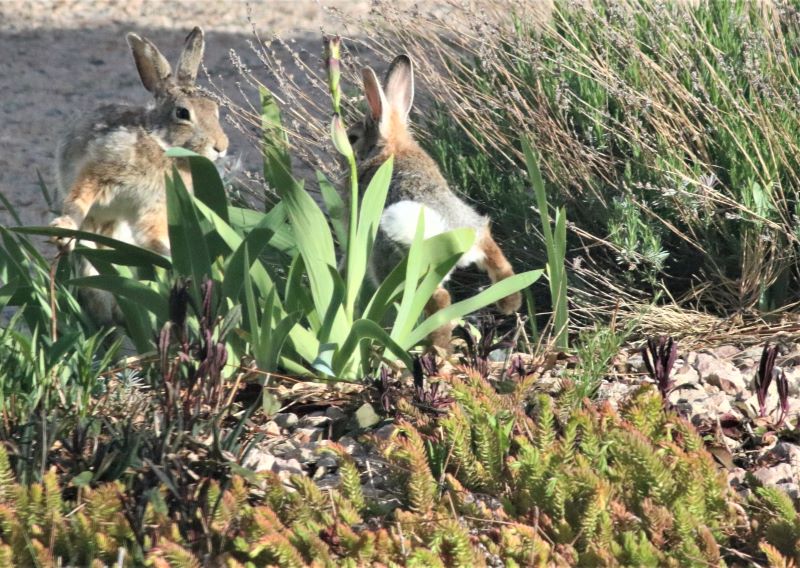
When glancing out my window the other day, I briefly thought someone had tossed a rabbit carcass in our yard. Happily, this bunny was very much alive. The same can’t be said for our “lawn.”
May 15, 2022
The neighborhood has been bunny-rich for the past several years and they’re slowly eating away the grass, leaving behind larger and larger bare spots. Fine by me. Colorado is in extreme drought (I learned this morning that the current statewide snowpack is 53 percent of median) and none of us should be dumping water into lawns. The good news? We’re supposed to get rain (and snow!) on Friday. I’m hoping for more rain than snow because the trees and shrubs are leafed out and that extra weight will break limbs. Still, let it rain OR snow! Whatever needs to fall from the skies is one hundred percent welcome here!
Here’s one more bunny pic to calm the climate anxiety. These two started fussing with each other and became so aggressive they frightened the above dirt-lounger into hiding. They chased and tussled all over the place, including in the iris fans and lavender.
Here’s hoping they’ll be tucked away somewhere warm and dry during Friday’s storm.
Today the Intergovernmental Panel on Climate Change (IPCC) issued what is basically its final warning to governments (“it’s now or never” regarding greenhouse gas emissions), and my heart is pounding as I type those words. We the people need to rise up and demand radical action. Unfortunately, here in the U.S. our so-called leadership is actually talking about ramping up fossil fuel production. It’s insanity.
And when reality gets to be too much, I turn to nature. Today, it’s birds. Here’s a Limpkin I had the honor of communing with at Kapok Park in Florida:
May 6, 2019
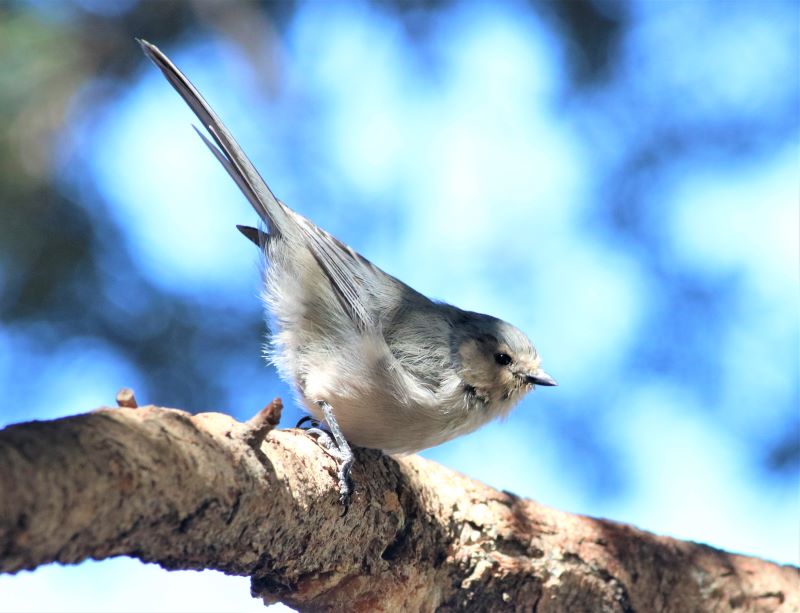
Here’s a petite Bushtit outside my Colorado window:
September 24, 2021
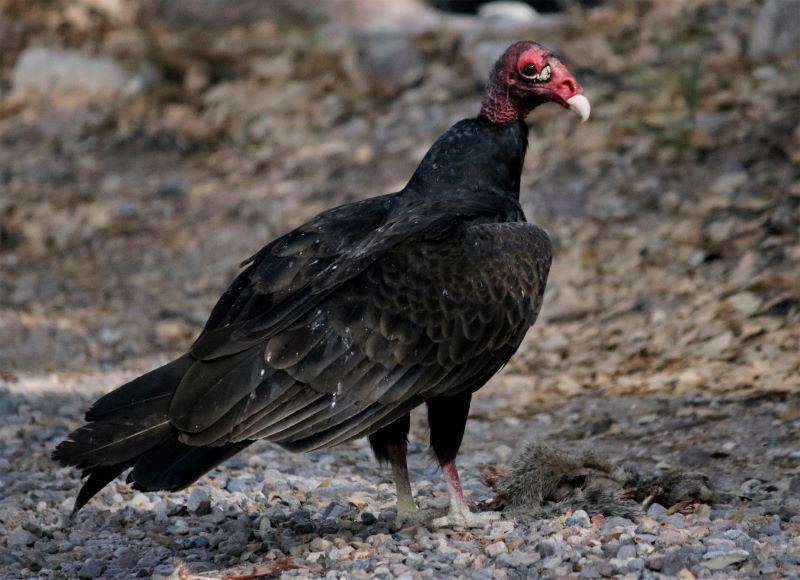
Here’s a Turkey Vulture doing its important clean-up work in Cave Creek Canyon in Arizona:
May 15, 2019
Finally, here’s a Common Grackle singing its song in Nebraska clover:
June 2, 2020
And now I’m going to use the energy I’ve borrowed from those wonderful birds and head out for a run on the trails where I’ll drink up more of this glorious world.
Another wildfire in Boulder, Colorado.
In March.
Following the Marshall Fire in December.
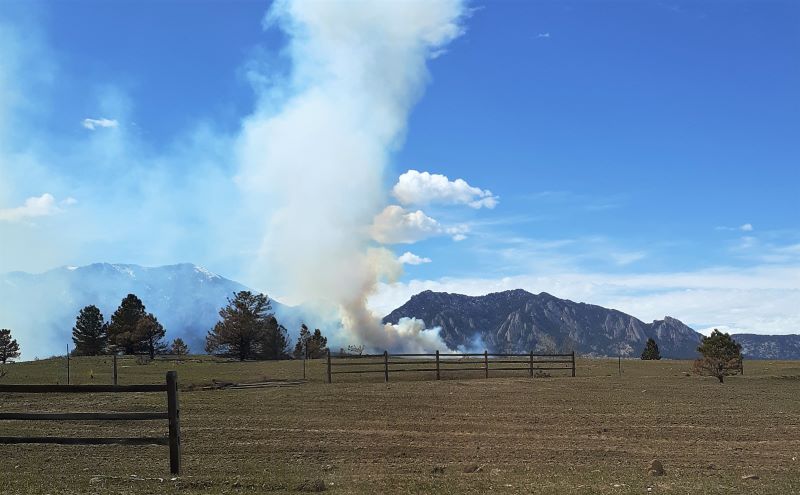
NCAR Fire on March 26, 2022
Zippy and I were heading out of a very windy Boulder this afternoon when he saw the smoke and exclaimed, “Wildfire!” As I drove, he took the above photo at 2:30 (about 30 minutes after it started.) At times, we could see the bright red-orange flames. As we continued driving south on Highway 93 with our windows rolled up, smoke odors permeated the car. The air was hazy. Our beautiful afternoon was suddenly filled with anxiety.
This was our first time in Boulder since the Marshall Fire and our appointment had taken us past areas devastated by that fire. Blackened trees reaching for the blue sky next to homes that were nothing but smoke-stained brick and concrete foundations. Rubble. We’d gotten emotional at those sights and then, an hour later, saw the smoke of yet another wildfire. It was happening again.
The climate crisis is a collective trauma for everyone, but especially those who just three months ago experienced a wildfire. My heart is with the people of Boulder. I’m not sure what it’s going to take for those in power to make radical changes to avert the worst of what’s to come. So far, the crisis has accelerated to wildfires any time of year.
As Congresspeople return from vacation to their well-paying jobs today, there are actions around the country in support of #SealTheDeal for the full $3.5 trillion reconciliation bill. Because I’m unable to join the others on the streets today, I want to say this:
and this:
and this:
and remind Congress of this:
Lastly, in regards to the Parliamentarian spewing nonsense about not being able to fund items in that reconciliation bill:
It’s fitting that smoke obscured this photo of a coal plant I took as we drove past on Saturday.
Craig Station. August 7, 2021
We’d been camping at Rifle Falls State Park and woke to the valley filled with wildfire smoke. We quickly packed up and left. Turned out, the entire western half of Colorado was (and continues to be) choked with smoke from wildfires in the northwest. There was no escaping it.
I’ve spent much of the past several days closed off in my bedroom with an air purifier. My climate anxiety was already high and then the UN released its climate report yesterday. (Just typing those words sent a surge of anxiety throughout my system.)
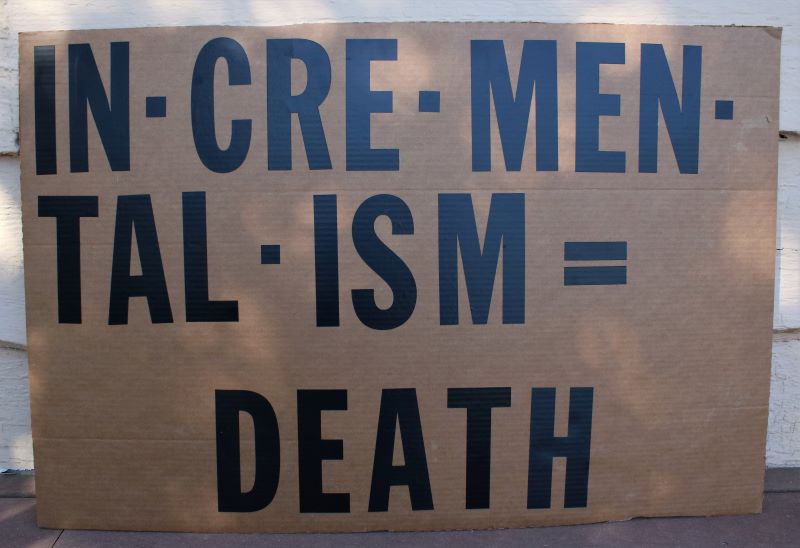
I called my Senators and Representative today, all wealthy white men from Colorado which has been experiencing the worst air pollution in the world, to urge them to drop their incrementalism and vote to save humanity. The Democrats stuck us with a bi-partisan infrastructure bill (something the loathsome yet highly disciplined Republicans would never, ever have done) and we desperately need the reconciliation bill that addresses climate and poverty. The Progressive Caucus in the House is saying #NoClimateNoDeal if climate is stripped from the reconciliation bill and I can only hope they, for once, hold firm. However, I’m not naive enough to believe they’ll use their power to do the right thing. Time and again, they go along with the status quo that’s currently killing us.
Still, I think it’s well-worth a couple minutes of everyone’s time to call their representatives to demand they vote for the people and planet. Demand they keep the reconciliation bill intact. The Capitol switchboard (202) 224-3121
#NoClimateNoDeal
I struggled to get out of bed this morning, knowing air quality was abysmal and that temperatures would (again) reach the high 90s. I finally hauled myself upright and for the second run in a row, ran inside on the treadmill. While I’m grateful to have that option, it’s unnerving to run inside during the summer.
I’ve dipped into the photo archives from the days of yore, when wildfire smoke didn’t choke the air and I could spend hours outdoors. Here are two of the many American White Pelicans I saw paddling around at Barr Lake State Park last April:
April 8, 2021
I find them quite stately despite those bumps on their bills. I hope they continue to do well, wherever they are.

 : We are on a highway to climate hell with our foot on the accelerator. Our planet is fast approaching tipping points that will make climate chaos irreversible. We need urgent #ClimateAction.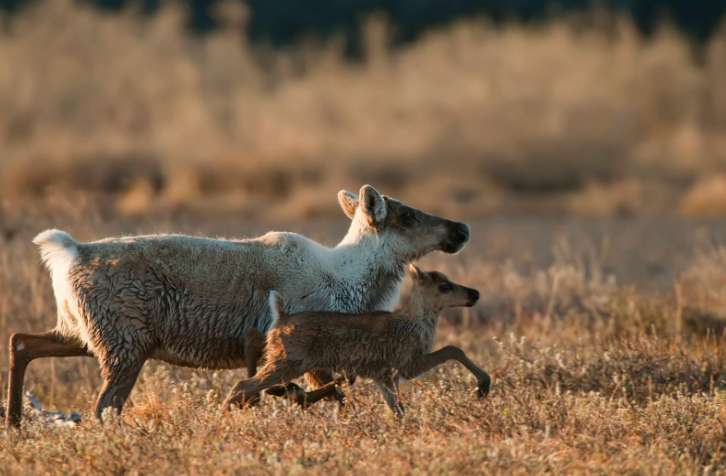




















 Tracy Abell