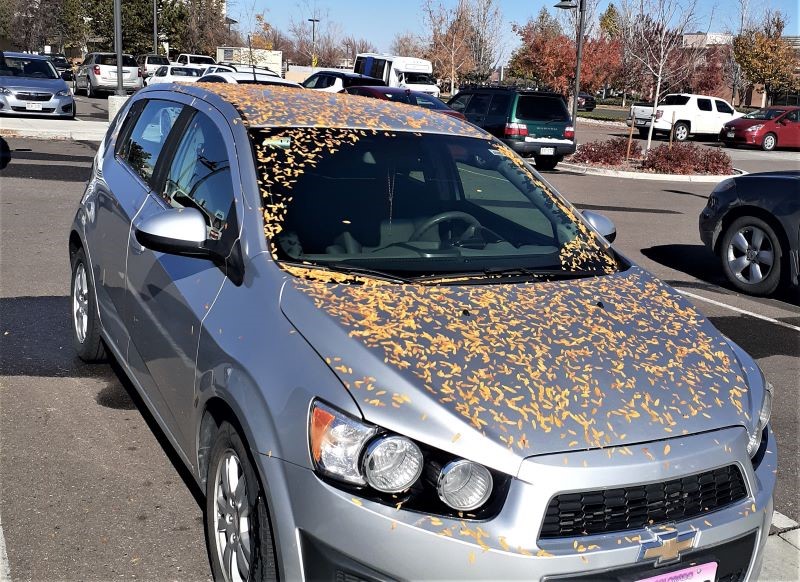
Gift from locust tree
autumn ornamentation
auto detailing
Author: Tracy Abell
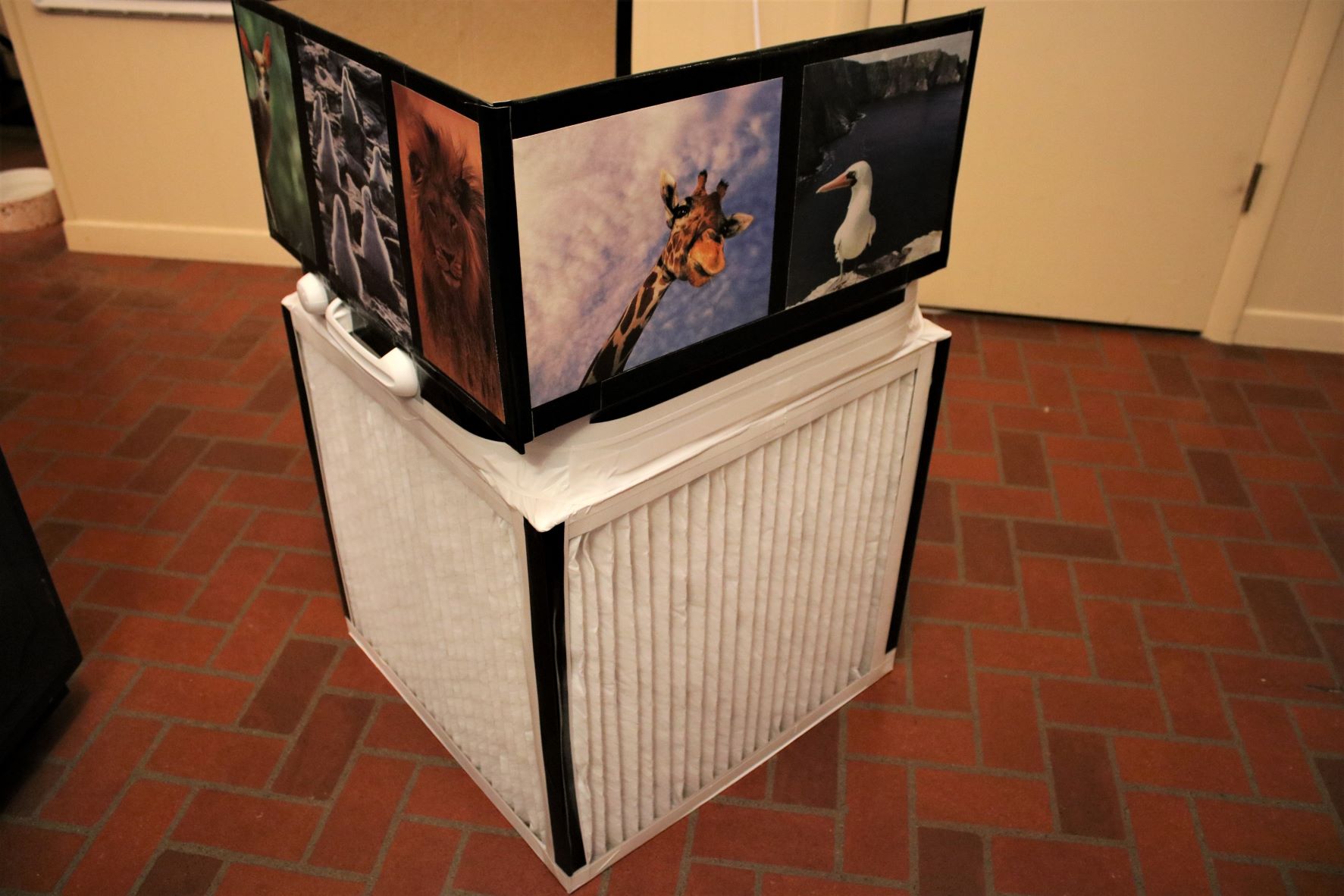
Our first Corsi-Rosenthal Box
A while back we offered to build a #CorsiRosenthal Box for my sister-in-law’s 2nd-grade classroom because Covid is airborne and we wanted them to stay healthy. After she figured out where she could put it in her classroom, she gave us the go-ahead. There’s a rush on furnace filters so it took a while to find some in stock and then we had to wait a bit for them to arrive.
And then we got to work. Zippy did most of the main construction and I took over when it came time to pretty-ify the device. I wanted it to look less like an invasive machine and more like a welcome member of the classroom.
I used our kids’ old ZooBooks magazines (and yes, I absolutely did get lost in looking at photos and reading some captions) to create three panels. They should also lower the noise a bit, too. It feels good knowing they’ll have clean air in their classroom and I’m hoping other teachers will see this and want one of their own.
We’re going to build one for us next, but we learned something we hadn’t foreseen: cats want to scratch on the box. I had to chase Marcel away as I worked, so maybe we’ll have to place ours higher, on a table or something. After I got him to stop scratching, he got busy climbing in and out of the box the filters arrived in. But that’s kitty behavior I can get behind.
For Vanessa
Climate Movement Monday: NO to the Willow Project
Welcome back to another edition of Movement Mondays in which I offer info on how we can support frontline communities who are enduring the worst effects of climate change. Today, we’re revisiting the Willow Project.

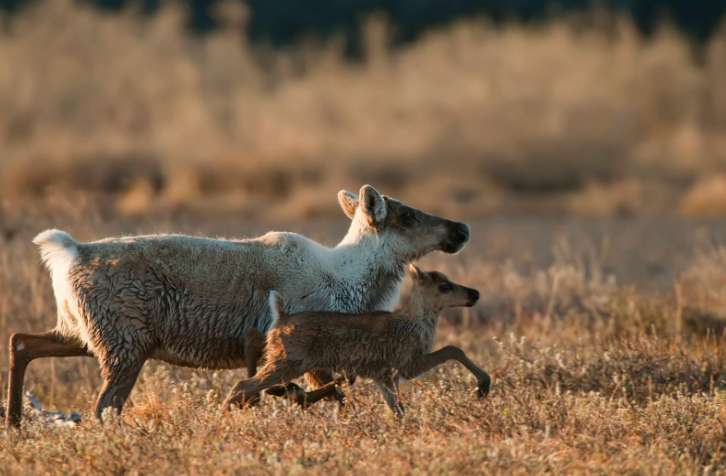
Caribou, geese, loons, salmon, polar bears, whales & 13 communities all call the Western Arctic home. Any threat to this robust ecosystem puts all its inhabitants at risk.
Last summer, a federal judge in Alaska rejected permits for the project. In response, the Biden administration is writing a supplemental impact statement. Once that’s completed, it will decide whether to approve the project. The decision is expected by the end of the year.
If approved, the Willow Project would pump more than 500 million barrels of oil over 30 years from a fragile Arctic ecosystem. This would release more than 250 million metric tons of carbon dioxide, according to the analysis and estimates by the Interior Department’s Bureau of Land Management.
My ask this week: write to President Biden here and Interior Secretary Deb Haaland here, asking them to “Stop the Willow Project.”
Solidarity! ✊🏽
Don’t forget the joy
One of those pandemic days
This day started off pretty well — among other things, added 20 minutes to my yearly hoop-dancing total — and then Zippy and I went out to deliver food boxes to people via Rocky Mountain Mutual Aid Network. And I think that’s where the day began to feel not-so-good, when we were out and about, and saw that the vast majority of people were unmasked in indoor spaces. It wasn’t news: this is how it’s been for months and months. For some reason, it hit me harder today. How can we as a society normalize mass death and disability? How can we sacrifice our health for “freedom”? What will we do when our healthcare system collapses beneath the weight of our selfishness?emot
Anyway, here’s a pretty flower.
Wishing you and yours a safe and healthy weekend.
Thankful Thursday: ungulate edition
We camped at Mueller State Park last week and were gifted with this view out the back windows of our campervan:
It’d started out as “Hey, look! There’s a deer. Wait, there’s another one.” And then we lost count of them browsing and moving through the trees. Zippy saw two bucks with their antlers locked, but I missed that sighting. Still, I’m grateful to have seen these beautiful creatures.
Wordless Wednesday
Twofer Tuesday: Gray Jay edition
One of the friendliest bird species out there, here are two Gray Jays at our campsite in Mueller State Park. I know they have a reputation as “camp robbers,” but I enjoyed their presence and was glad whenever I had another sighting or heard them making their assortment of sounds off in a tree somewhere.
While running on the trails one morning, I nearly had to come to a full stop to avoid running over a jay in the middle of the trail. Not even my 9,000-feet-elevation huffing and puffing could scare it away.
A friendly and self-assured species, those Gray Jays.
Climate Movement Monday: in solidarity with East African protestors
Welcome back to Movement Mondays in which I share info on how to support frontline communities that are bearing the brunt of the climate crisis. Before I give you the specifics on this week’s ask, I wanted to share some good news.
Mountain Valley Pipeline (MVP) has dropped all eminent domain proceedings in North Carolina! This is due to the work of Indigenous and Black communities that fought back. However, the MVP fight continues in Virginia and West Virginia, although it was dealt a serious blow when Sen. Joe Manchin was forced to pull his “Dirty Deal” permitting reform legislation last month. Organizing works!
Today’s action comes via 350.org and I’m asking for short notes of solidarity for nine climate protestors facing prison time as they fight to #StopEACOP (East African Crude Oil Pipeline). As someone who was briefly jailed for climate protest, I know how important it is to feel supported by those on the outside. Here’s the background via 350.org:
French oil giant Total and the China National Offshore Oil Corporation are building the world’s longest, heated, crude oil pipeline – right through the heart of Africa. This pipeline will devastate communities in Uganda and Tanzania and tip the world closer to climate disaster. If completed, the pipeline will displace 100,000 people from their land and threaten the water 40 million people depend on.
This year, the UN climate talks – COP27 – will take place in Africa. Now is the perfect time to show world leaders the fight communities in East Africa are leading against this pipeline and for the climate.
Here’s the link for signing onto the letter of support. If you can add a short note of support, it will be greatly appreciated. You can find more information about the pipeline and the international fight against the project PLUS sign up for one daily action re EACOP this week here.
Solidarity! ✊🏽
Wordless Wednesday
A squirrel tale
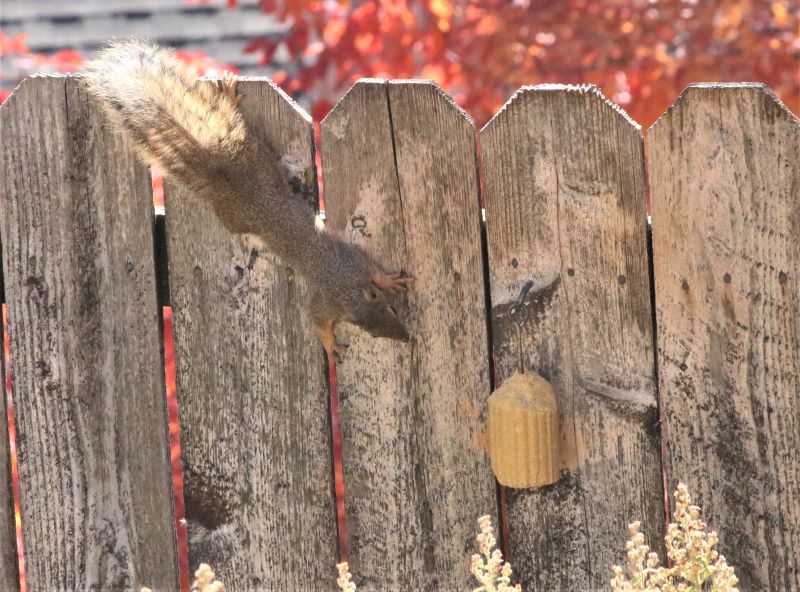
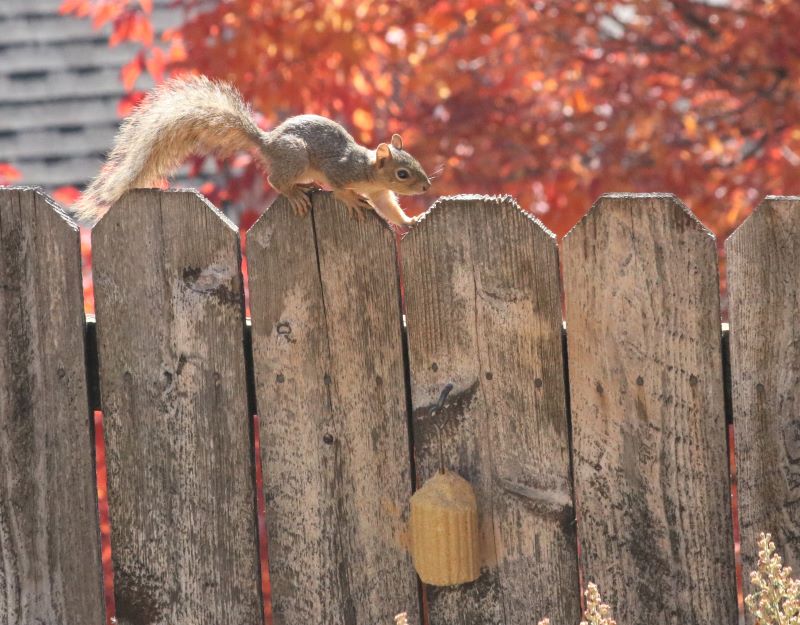
Yesterday I spotted what I thought was a chipmunk on the back fence. But when I got out the binoculars, realized it was a very small squirrel. And when I saw how tentatively it moved on the uneven fence pickets, guessed it was maybe a youngster.
Then I saw this:
Definitely a youngster.
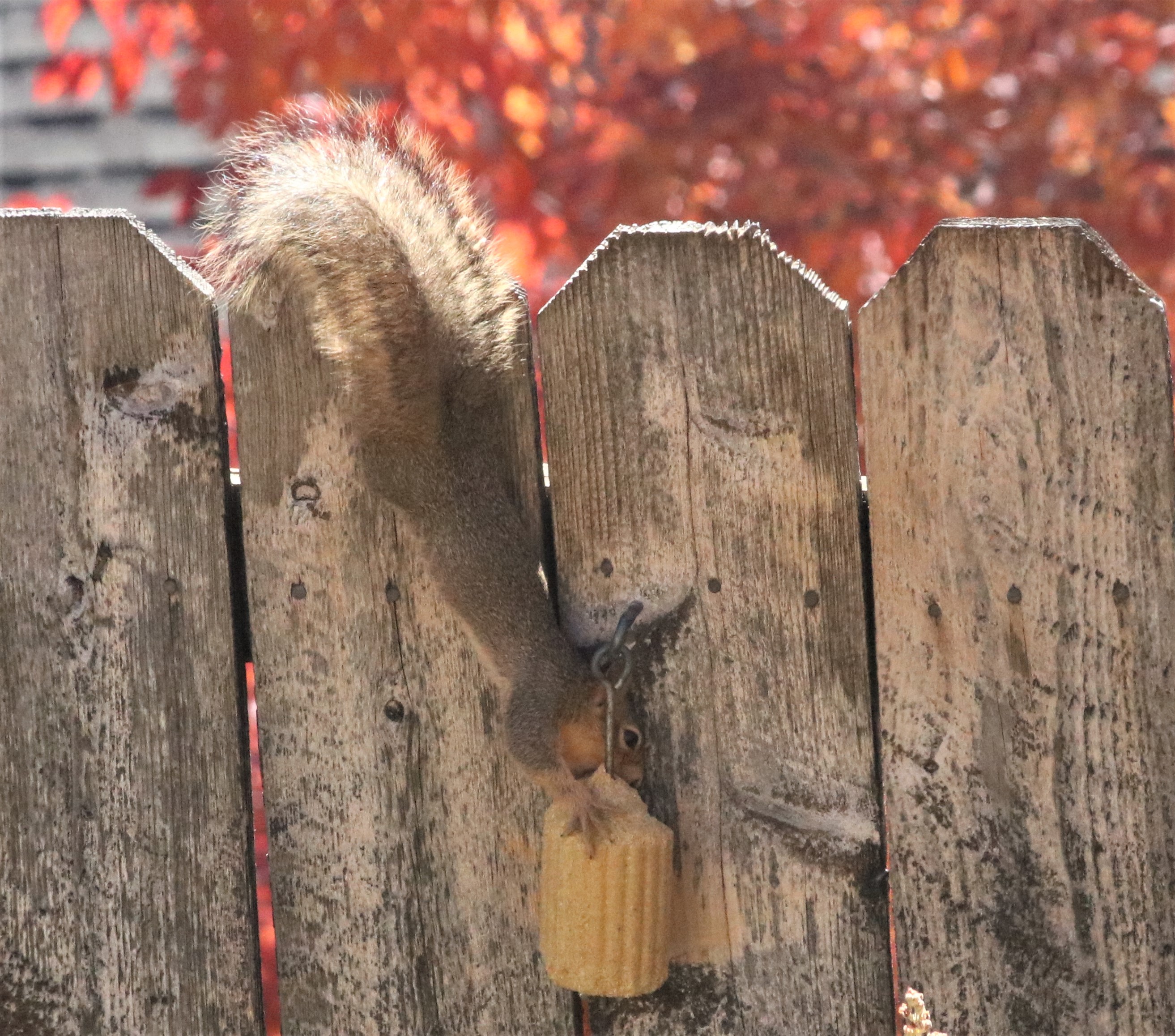
Nut-Munch veterans know exactly how to get at the food. This young one made several failed attempts, sometimes moving even farther from the destination. Eventually, they figured it out and moved closer.
And then . . . success.
Hooray!
Climate Movement Monday: re-instate ban on crude oil exports
Welcome back to another Climate Movement Monday in which I provide info on how we can support frontline communities (typically BIPOC and poor people) who are suffering the greatest effects of climate change. I’m not going to lie, my climate anxiety is very high these days as we learn the crisis is accelerating beyond earlier predictions. But this does NOT mean it’s foregone and that we can give up. To the contrary, it’s vital we all push for a just transition to renewables.
Below, I’ve pasted an entire Op-Ed (in The Hill) from the climate political director of the Center for Biological Diversity Action Fund that lays out the multiple dangers of being at the mercy of OPEC and relying on fossil fuels. My ask today is that you contact President Biden:
1) demand he re-instate the ban on crude oil exports
2) demand he declare a climate emergency
Comment line (11A-3P, Tues-Thurs): 1-202-456-1111
TTY/TTD: 1-202-456-6213
Email: Here
On the same day that the Organization of the Petroleum Exporting Countries (OPEC) and its oil-exporting allies, which include Russia, agreed to raise oil prices with a major supply cut, President Biden was touring Hurricane Ian’s damage in Florida, declaring that it “ends discussion” on the climate crisis. Both show why Biden needs to reinstate the U.S. ban on crude oil exports.
The multidimensional threats from fossil fuels are evident in everything from intensifying superstorms, wildfires and heatwaves to toxic pollution and spiraling energy prices. OPEC’s production cut just before our midterm elections demonstrates how petrostate power threatens both economies and democracy.
Congress lifted the 40-year-old ban on crude oil exports at the behest of the oil industry, right as the Paris climate talks drew to a close in 2015. Big Oil wanted the ban lifted so it could reap greater profits from the oil and gas production boom enabled by fracking — the ultra-hazardous extraction technique that exploits new oil and gas sources at the expense of our climate, health and wildlife habitat.
At the time, oil companies promised that the production boom and lifting of the export ban would lead to energy security and lower gas prices. Surprise, surprise — the oil industry lied. Despite record-high U.S. production, Americans face painful prices at the pump, along with record-high inflation driven in large part by fossil fuel energy prices.
The way for Biden to protect people from price spikes and profiteering is to accelerate the transition to clean renewable energy and end the fossil fuel era once and for all.
As a life-on-Earth-saving bonus, reinstating the crude oil export ban will help end the fracking free-for-all that has supercharged greenhouse gas pollution and the climate crisis. In fact, 85 percent of planet-warming pollution comes from oil, gas and coal. Scientists have been crystal clear that new fossil fuel production is “moral and economic madness.”
Next Biden must direct his executive branch agencies to comply with existing U.S. environmental law and stop approving new fossil fuel infrastructure and extraction projects — none of which serve the public interest. Most major fossil fuel projects require permits from one or more federal agencies. Just as the Biden administration denied the disastrous Keystone Pipeline as contrary to the public interest, other unsustainable and financially risky fossil fuel ventures should be denied.
The oil, gas and coal in fields and mines that are already in production, or where the capital has already been invested, are more than enough to get us to the other side of the clean energy transition. Indeed, the world cannot afford to burn all the fossil fuels in already developed reserves globally — doing so would push us way past the 1.5 degrees Celsius limit agreed to in the Paris climate treaty to avoid the worst impacts of climate change.
Kassie Siegel is climate political director at the Center for Biological Diversity Action Fund.
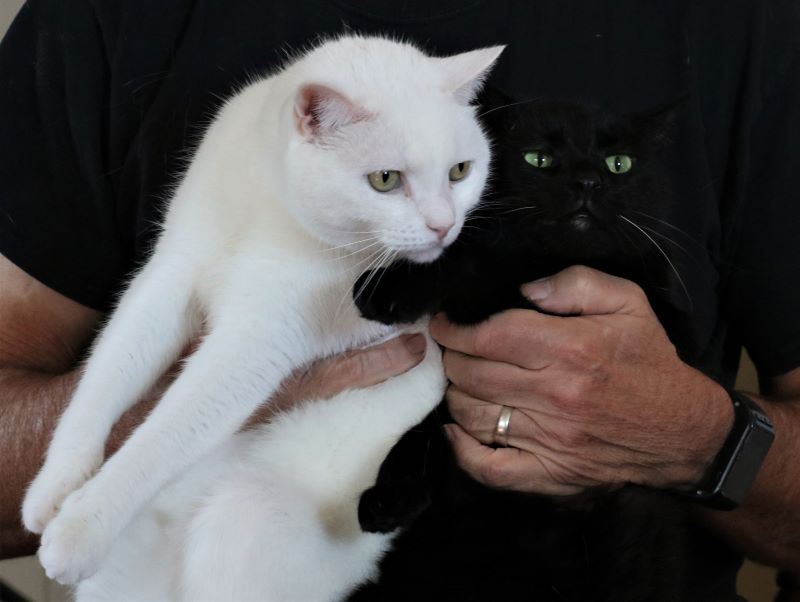
#Caturday with Loki
It’s a banner day on this #Caturday!
For once, it’s Loki rather than his brother Marcel taking center stage.
It’s a challenge to get a good photo of a black cat, but yesterday Zippy did a fine job capturing the double-boxed cat (with his crappy phone-camera, no less!)
Wishing everyone a wonderful weekend!
Friday Haiku
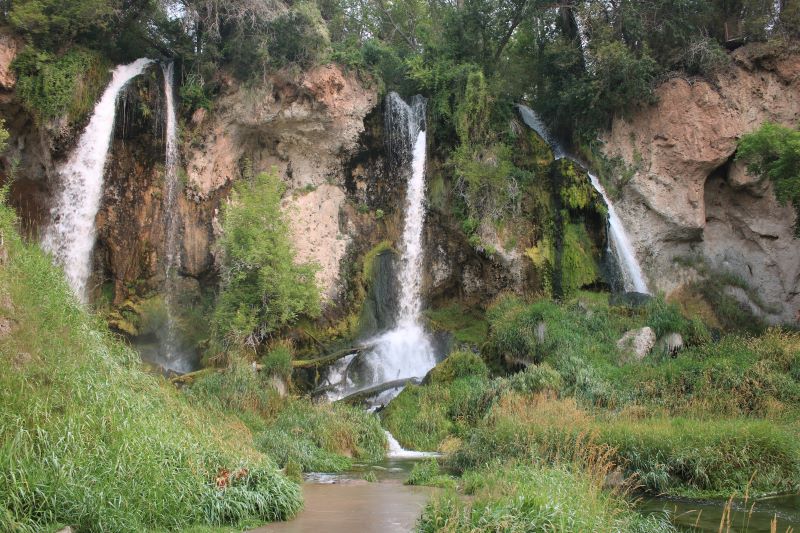
Wordless Wednesday: waterfall edition
I researched so you wouldn’t have to
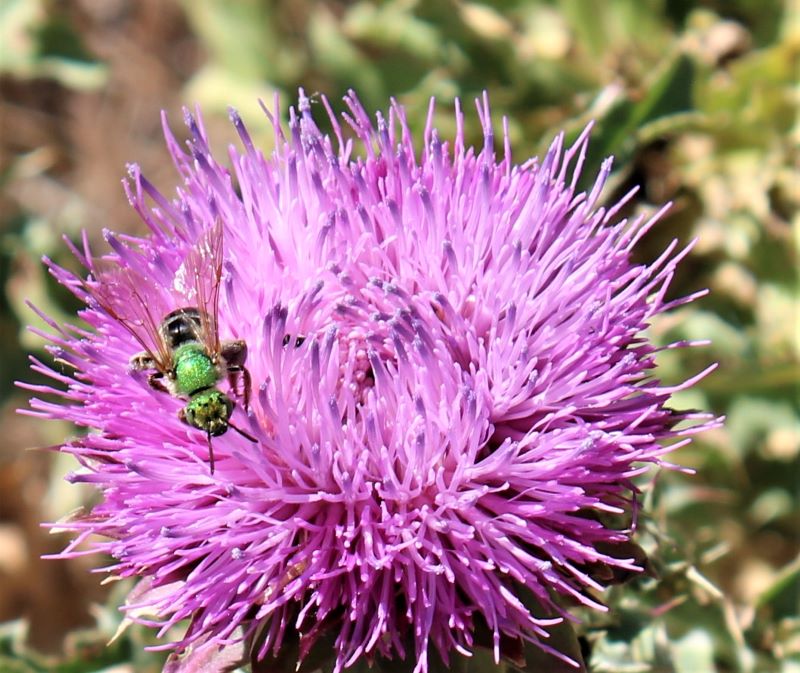
I photographed this bee in the open space in early July and hadn’t looked at the image since. But I was intrigued enough just now to go down the online research rabbit hole. “Green bee” gave me too many hits, but “metallic green bee” narrowed the responses.
I’m pretty darned sure this is a Hymenoptera-Halictidae-Agapostemon melliventris, otherwise known as the Honey-tailed Striped Sweat Bee.
Oh, and that pink thing is a thistle. Just kidding . . . it’s a Musk Thistle (Nodding Thistle).
You’re welcome.
Climate Movement Monday: Indigenous Peoples’ Day reading list
Welcome back to Movement Mondays in which I share info in support of frontline communities that are enduring the greatest impact of the climate crisis. Today is Indigenous Peoples’ Day and I’d like to honor them by acknowledging the disproportionate climate effects indigenous people face as a result of colonialism. A recent seven-year study found “As a result of the near-total loss of their tribal lands, [ ], Indigenous people are forced to live in areas that are, on average, more exposed to climate change hazards like extreme heat and decreased precipitation.”
So, thanks to an email from bookshop.org that put many of these titles on my radar, here’s a list of newly released books written by Indigenous authors. I hope you’ll check them out.
Fresh Banana Leaves: Healing Indigenous Landscapes Through Indigenous Science
by Jessica Hernandez, PhD.
“In Fresh Banana Leaves, Jessica Hernandez weaves personal, historical, and environmental narratives to offer us a passionate and powerful call to increase our awareness and to take responsibility for caring for Mother Earth.” A must-read for anyone interested in Indigenous environmental perspectives.”
No Country for Eight-Spot Butterflies: A Lyric Essay
by Julian Aguon (introduction by Arundhati Roy)
Part memoir, part manifesto, Chamorro climate activist Julian Aguon’s No Country for Eight-Spot Butterflies is a collection of essays on resistance, resilience, and collective power in the age of climate disaster; and a call for justice—for everyone, but in particular, for Indigenous peoples.
Becoming Kin: An Indigenous Call to Unforgetting the Past and Reimagining Our Future
by Patty Krawec, Nick Estes (Foreward)
Settlers dominated and divided, but Indigenous peoples won’t just send them all home. Weaving her own story with the story of her ancestors and with the broader themes of creation, replacement, and disappearance, Krawec helps readers see settler colonialism through the eyes of an Indigenous writer.
And here’s one last title that’s next on my TBR pile:
Night of the Living Rez
by Morgan Talty
In a brash, irreverent story collection, “Night of the Living Rez,” Morgan Talty illuminates life and death on the Penobscot Indian Nation reservation.
Thank you for reading and I wish you all a good week.
Solidarity! ✊🏽
Sunday Confessional: I, too, dislike the synopsis
I find myself without literary representation after nearly five years working with my former agent. We parted ways in August because her list has changed and she no longer feels well-connected with children’s lit editors and publishers. She worked very hard on behalf of me and my stories, but now I’m agentless. That’s the bad news. The good news is that I have a brand-new, shiny middle grade manuscript ready to query other agents. Unfortunately, the querying process often requires the inclusion of a one-page synopsis of the entire work.
Have you ever tried distilling a 48,000-word novel down to 500 words? It ain’t easy.
However, a writer friend reminded me of Susan Dennard’s 2012 post on the Pub(lishing) Crawl site: How to Write a 1-Page Synopsis so I’m using that format. Still, it’s not fun and I keep finding other stuff to do instead. Such as writing this blog post which is basically me complaining about how I’d really rather not have to write a synopsis! And searching for a fun goat photo to make me smile!

Image by Christel SAGNIEZ from Pixabay
So, aside from announcing I share the near-universal dislike for writing a synopsis, what’s my confession here? Well, it’s that I keep learning and relearning how different my writing brain is from many other writers. I don’t think in Three Acts or even Beginning, Middle, and End. I write more on an instinctual level. That’s fine, but it also means it takes me longer to pinpoint my novel’s Plot Points and the story’s Midpoint (which doesn’t refer to whatever happens on the exact middle page of the manuscript). No doubt I’ll figure it out as soon as I stop procrastinating. After all, I’ve written synopses before and can do it again. Still, it’s kinda a bummer to realize after all this time that it’s still a struggle to write the darn things.
Autumnal glory
Wordless Wednesday: serenity edition
Climate Movement Monday: offering support after Hurricane Ian + update re farmworkers
Welcome back to Climate Movement Mondays in which I highlight frontline communities in need of our support as the climate crisis worsens. Last week, Hurricane Ian hit southwest Florida with Category 4 strength (150 mph winds). As of this writing, the death toll is at 100 while the search continues for survivors. Many are without power or drinking water. Here are some organizations to support (remember, any amount helps!):
- Community Emergency Operations Center (CEOC) is a grassroots disaster relief effort. We serve the most vulnerable populations food, water and assist with restoring resilience after man-made and natural disasters. We believe that your neighbor is your 1st responder. Our goal is to ensure we have all the necessary tools and protocols in place when disaster strikes via emergency mobilization with a rapid response.
Donate here - World Central Kitchen is already in place, serving hot meals.Staging Relief Teams ahead of landfall, WCK and our local partners were ready to begin serving fresh meals as soon as it was safe to do so. Within hours of the storm’s passing, we began distributing sandwiches and cooking hot, nourishing meals at our Relief Kitchen. Additionally, we have built partnerships with restaurants ready to help us scale immediately.
Donate here - Team Rubicon is a veteran-led humanitarian organization that serves global communities before, during, and after disasters and crises. Your donations go directly to our Ready Reserve Fund which increases the efficiency and capacity of Team Rubicon’s response to crises like this.
Donate here - Farm Share is a Florida nonprofit that sources leftover fruits and vegetables from farms and distributes them to people across the state. Established in 1991 as a food bank, Food Share partners with 2,000 food pantries, churches, schools, and other nonprofits throughout Florida to distribute food every single day.
Donate here

Vehicles sit in flood water at the Palm Isle apartments in the aftermath of Hurricane Ian, Sept. 29, 2022, in Orlando, Fla. (AP Photo/John Raoux)
Thank you in advance for your support! And I wanted to share a good-news update: California Governor Newsom signed the Agricultural Labor Relations Voting Choice Act! This means farmworkers, those hardworking individuals who feed ALL OF US, can now vote for or against a union without interference from their employers. This is the second good-news update for Climate Movement Mondays!
Please note: the climate crisis is worsening and the hurricane season is NOT over yet. The best thing we can do as a society is keep all fossil fuels in the ground and make a just and equitable transition to renewable energy. We need YOU in the fight.
Solidarity! ✊🏽
Friday Haiku
Gratitude
This morning started out rough as the weight of all we’re enduring hit me. Sometimes I wish I could live in a happy state of denial (“the pandemic is over and X, Y, Z aren’t happening, either!”), and eagerly greet each new day. Alas, I’m not wired that way.
The good news is, I’m feeling better now.
The birds are singing and the sun is shining.
Gratitude!
And I’m forever grateful that sunflowers exist.