Breaking Bad in Downton Abbey, Yo

I have a long-time habit of coming late to television shows. Recently, I began watching both BREAKING BAD and DOWNTON ABBEY. I can’t imagine two shows more wildly different yet I find them both quite compelling (and sometimes imagine Carson the butler cooking meth in the servants’ quarters).
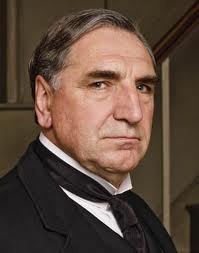
Carson from Downton Abbey

Me enjoying a violent contemporary program and a feel-good period piece might indicate a split personality, but the truth is, I have about as much admiration and respect for the British aristocracy as meth cookers/dealers; neither would make my birthday party list. However, I’ve grown fond of these characters (although, In the case of DOWNTON ABBEY, I’m much more invested in the servants than the pampered, with the exception of Maggie Smith’s Dowager Countess who is a rude delight).

I jumped into DOWNTON ABBEY in season three, and have had no real difficulty easing into the characters’ lives and their story lines. While I wouldn’t want to spend time with any of the aristocracy, it’s not a huge stretch for me to (mostly) root for them or, at least, not wish them any ill will. BREAKING BAD is a whole other premise.  I’m watching it from the start (am halfway through season two), and am so glad I went back to the beginning.
The writers do a phenomenal job making me care about those characters. I could easily loathe Walter and Jesse if I hadn’t gotten glimpses of their lives before they broke out the beakers and masks. But not only do I not loathe them, I root for them. As in, last night I caught myself being glad for them as I watched sale after street sale of their crystal meth. Whoa.Meth lab from Breaking Bad

At the same time, Walt’s character is becoming less and less sympathetic (and I’m so glad Skyler is giving him a taste of his own attitude!), but there’s no way I’ll stop watching. And from the rave reviews, no one else stopped, either. DOWNTON ABBEY, on the other hand, has pissed off plenty of viewers by killing off the second major character of the season and may well slip in the ratings.

What does it all mean? Hell if I know. I’m just filtering everything through my writerly perspective while pondering how to apply these same can’t-turn-it-off principles to my own storytelling.

How Do You Know When to Let Go?


Cross-posted from From the Mixed-Up Files . . . of Middle-Grade Authors

According to Thomas A. Edison, “Our greatest weakness lies in giving up. The most certain way to succeed is always to try just one more time.”

I’m not sure to what Mr. Edison was referring with that statement, but I do know much writer-ly advice disagrees with the sentiment. How many times have we heard that writers should stuff our unsold manuscripts beneath the bed and start something new? Fellow writers, agents, and editors caution against obsessing over one manuscript. They tell us to let go and move on. Give it up, already!

I wholeheartedly agree with that advice in regard to a first manuscript.  And maybe even the second. Write those books, learn all you can in the process, test them in the market, and move on. In fact, I’ve pretty much subscribed to the Write Your Next Book approach since I began writing novels. I’d give the manuscript my best shot and then put it away to write another. In fact, I’ve been so concerned with writing the next book I have two drafted novels I haven’t looked at in a couple years; it’s as if I’ve convinced myself whenever I’m not creating brand new work I’m treading literary water.

But I’ve recently realized the Write Your Next Book advice doesn’t always ring true. I wrote and polished a book I love (my fifth) and while writing my next book (a story I was exceedingly excited about, one that’s high concept and has a bigger hook) received editorial input on that fifth book.  Conventional wisdom says I should continue with the hook-y work in progress.  Exploit the commercial potential and finish that shiny, new book!

Instead, I set it aside and went back to the old. Am I obsessed? Delusional? Clinging to the past?  Maybe. But thanks to the editor’s comments I now understand where the story was lacking. I understand why readers weren’t connecting with the main friendship and why they didn’t believe the protagonist’s fear. And because I’ve written a whole bunch more since that fifth book went out, I have faith in my abilities to make the revisions work. I want the story to shine the way it always has in my head and heart.    

So I’m going to offer my advice:

  • It Is Okay to Revisit a Manuscript if your love for the story hasn’t wavered.
  • It is Okay to Revisit a Manuscript if working on it helps you learn more about the writing process.
  • It is Okay to Revisit a Manuscript if the changes you’re making aren’t merely a superficial editing but represent a significant revision.

That's my thinking, but I’d love to hear your take on all this.  How do you know whether it’s time to move on or take a step back?


Friday Five: The Round-and-Round Edition

1)  As mentioned before, I’ve had to circle back and work on opening chapters some more  and have been mostly pleased with my progress.

2)  Then yesterday I hit a bump and realized I needed to circle back yet again to tweak a scene so brainstormed characterization and plot issues to prepare myself for today’s work.

3)  This afternoon I revised and revised, then printed out the pages and congratulated myself on a job well done.

4)  Except when I began jotting notes about a tangential issue on my enormous whiteboard, I started doubting myself regarding the characterization and plot line I’d supposedly just wrestled to the ground.

5)  So I went outside and shoveled very heavy snow while talking out loud about all this stuff and came up with this answer: there’s such a thing as over-thinking a story and it would be wise to relax and enjoy the ride. 

image from morguefile.com

Wishing everyone a whirly-twirly, fun-filled weekend!

Friday Five: The Round-and-Round Edition


1)  As mentioned before, I've had to circle back and work on opening chapters some more
 and have been mostly pleased with my progress. 

2)  Then yesterday I hit a bump and realized I needed to circle back yet again to tweak a scene
so brainstormed characterization and plot issues to prepare myself for today's work.  

3)  This afternoon I revised and revised, then printed out the pages and congratulated myself on a job
well done.

4)  Except when I began jotting notes about a tangential issue on my enormous whiteboard
I started doubting myself regarding the characterization and plot line I'd supposedly just wrestled to the ground.

5)  So I went outside and shoveled very heavy snow while talking out loud about all this
stuff and came up with this answer: there's such a thing as over-thinking a story
and it would be wise to relax and enjoy the ride. 


                                                             image from morguefile.com

Wishing everyone a whirly-twirly, fun-filled weekend!


Revising in Circles

My awesome new critique partner read the first seven chapters of my book
last week along with chapter summaries of the remainder.
He was the first person to read this new project.

Waiting for his response was flutter-inducing,
and when it came, it was like an AHA! explosion in my head
because he put into words stuff that’d been simmering in the dim regions of my consciousness.

So now I’m reworking the opening of my story – again.
Revising chapters just a week ago I thought were grand while
battling feelings I’m not making any progress
because
I
keep
circling
back
to
the
beginning.

But when I went to morguefile.com and put “circle” into the search,
this is what jumped out at me:

So, hey! It’s cool I’m back at the beginning! (okay, maybe “cool” is a stretch).
However, it IS completely truthful to say this circling back represents
an opportunity to create a stronger core.

Today I am weaving words I hope will sustain those that follow.

Revising in Circles


My awesome new critique partner read the first seven chapters of my book
last week along with chapter summaries of the remainder.
He was the first person to read this new project.

Waiting for his response was flutter-inducing,
and when it came, it was like an AHA! explosion in my head
because he put into words stuff that'd been simmering in the dim regions of my consciousness.

So now I'm reworking the opening of my story – again.
Revising chapters just a week ago I thought were grand while
battling feelings I'm not making any progress
because
I
keep
circling
back
to
the
beginning.

But when I went to morguefile.com and put "circle" into the search,
this is what jumped out at me:

So, hey!  It's cool I'm back at the beginning! (okay, maybe "cool" is a stretch).
However, it IS completely truthful to say this circling back represents
an opportunity to create a stronger core.

Today I am weaving words I hope will sustain those that follow.


Everybody Dance Now


Yesterday I printed out the first eleven chapters (about 80 pages)
from the second draft of my middle-grade,
and am quite pleased with how it's coming together.

It's the first book I've written from an outline
and I must say it's a more civilized approach to writing a novel.
Ahem.

Anyway, because this sense of well-being will certainly fade
in the not-so-distant future, I'm documenting my current emotional state.

Please join Batman and me as we do the
Check-Me-Out-I'm-Feeling-Pretty-Damned-Good-Dance!

(And yes, that is red lace. Thanks for noticing.)


Friday Five: The Comes and Goes Edition

1)  Yesterday as I revised (again) Chapters One and Two it felt like a losing battle to make this book what I hoped it could be, and I experienced despair

2)  but when I read those revisions right before bed, I realized I’d made huge progress and found the tone of the story amidst all that rubble, and I felt rejuvenated.

3)  Yesterday morning Wildebeest was crabby and negative as I drove him to school

4)  but this morning he was laughing and happy with life and the day ahead.

5)  Today I’m grateful for the knowledge that the Good and Not-So-Good come in waves, and that whatever rolls in eventually rolls out only to replaced by something else that just might be Very Good or even Excellent.

                                           image from morguefile.com

I wish everyone, at minimum, a Very Good weekend!

In Search of the Aha Moment


I'm working with a premise I think is timely and thought-provoking
but cannot seem to wrap my head around the story's tone.

I'm on the second draft and have written and rewritten
the first two chapters a whole bunch of times,
each version feeling incrementally closer to
what the story needs yet not close enough for that Aha moment.

Part of the problem is I'm used to writing funny 
and this premise doesn't easily lend itself to humor
although it could probably be done; I'm just not sure I want that tone.

Another issue is maybe this story would be better told
as a young adult novel rather than middle-grade.

So.
I've already switched from first-person to third
and now I'm thinking maybe go full-blown creepy dystoptian YA
rather than slightly funny middle-grade.

Sigh.
I need to focus, dammit.

                                                             image from morguefile.com

Because I spent MANY hours in pool halls, I'm channeling my inner shark 
in hopes of zeroing in in on what needs to be done.

However, if anyone has sage advice on how to successfully wrangle a story idea,
I'm happy to put down the cue and listen.


Friday Five: The Time-for-a-New-Plan Edition


1)  Last weekend I read I the first draft of my latest middle-grade novel after letting it sit awhile.

2) All week I've jotted notes and zeroed in on characters' motivations and reconfigured the plot.

3) I followed editor Kendra Levin's Five-Step Revision Plan, and created a
"one paragraph summary" that inexplicably mushroomed into multiple paragraphs.

4) I swing between moods of exhilaration and freak-outs about my chances of pulling this one off.

5)  And then today I realized that, despite the first draft being written in first-person,
the story needs to be told in third-person.

Here, Tracy, gaze upon the starling to calm your nerves:

                                                                                                 © Tracy Abell 2009

I wish everyone a wonderful weekend filled with epiphanies and maybe a few feathered friends! 


PSA: Use Paper!


As mentioned here and here, I've been using Scrivener to write a first draft
and while I love the program for many reasons,
I got caught up in my chapters being (easily accessible) separate files
and so never printed out anything.

As a result, I got a wee bit confused on plot issues
and came to a screeching halt when I felt overwhelmed by the whole process.

This past weekend I printed out all I'd written and read it again.
Wow.
Hard copies are awesome. 
And helpful.
And absolutely vital to the writing process.

So, friends, don't scrimp on your paper usage just because it's better for the planet.
The planet does need our love and care, but so does our mental health.                                                                                                                                                                       
                                                                                                                            © Tracy Abell 2009      

Bwak!
What she said!


Slow Down, Little Missy


Yesterday I wrote and rewrote
the opening pages to my new project
and by the time I went to bed,
felt pretty good about those pages.

Today I picked up where I left off
but almost immediately ran into trouble.
After a few moments of panic
and several choruses of
"Why did I ever think I could write this story?!," 
I remembered something.

My notebook.

It’s there to help me sort out the characterization

and sticky plot issues 
that always, always raise their knotty little heads
as I write a first draft.
 
So now I’ve taken my foot off the gas pedal
and am investing a little more time 
in the Hows and Whys of my story.

                                                                                                               image from morguefile.com


Today I refuse to be in a rush.


Unlocking the Story


One night last August as I was falling asleep,
a story idea popped into my head.
I turned on the light and jotted it down.
The next day I wrote a couple pages of notes 
and set it aside to continue working on another project.

The other night the same thing happened as I fell asleep;
the same story idea came into my head, whispering a little louder.
But this time as I turned on the lights to write more notes,

my pulse quickened and I realized this was the story for me.
 
In a very un-Tracy like fashion, I’ve stopped working on my other project
and am now taking lots of notes on this idea that won’t let me go.
An idea that’s nothing like anything I’ve written before.
A story that intimidates me just a little bit.
 
                                                                                 image from morguefile.com 
 
Once I unlock the story, I’ll begin to put it down on paper.    


Epiphany!


While on the plane flying to Hawaii, I jotted notes for a new project as I reread highlighted bits from
EMOTIONAL STRUCTURE: CREATING THE STORY BENEATH THE PLOT by Peter Dunne.

And I finally, finally understood what writers mean when they say they have to know the ending
before they can write the story.
I always thought knowing the ending meant I had to know the "plot" ending, the action ending,
and I never understood how writers already knew whether their books would end with a car chase or picnic in the park.

 
But what knowing the ending really means is to know the "story" ending, the book’s emotional ending.
 
As Peter Dunne says:  
The whole idea of beginning at the end is to create a target at which you aim all your action and emotion."
 
I get it now!
 
If I map out the emotional terrain ahead of time, I’ve mapped out the heart of my story,
and the action is just there to support those emotions, whether it’s a chase scene or picnic.
 
Emotions rule!


Coming Unstuck


From WORD PAINTING by Rebecca McClanahan:
When Broadway composer Stephen Sondheim was asked about his creative process, he replied, "If you asked me to write a love song tonight, I’d have a lot of trouble.  But if you tell me to write a love song about a girl with a red dress who goes into a bar and is on her fifth martini and is falling off her chair, that’s a lot easier, and it makes me free to say anything I want."  As we’ve already noted, it’s hard to write effectively about a large abstract subject – grief or anger or love – without first "sweating the small stuff."

I’ve come to the realization that I need to sweat the small stuff 
a bit more before continuing to draft my new project.
I don’t know enough truths about the characters and their lives.
Yet.

So it’s off to my notebook for further discovery . . . 

I’m curious about the rest of you:
how do you know when you know enough about your story to begin writing?


Listening to My Broccoli


From Anne Lamott’s BIRD BY BIRD:

It [listening to your broccoli] means, of course, that when you don’t know what to do,
when you don’t know whether your character would do this or that, you get quiet
and try to hear that still small voice inside.  It will tell you what to do.  The problem is
that so many of us lost access to our broccoli when we were children.  When we
listened to our intuition when we were small and then told the grown-ups what we
believed to be true, we were often either corrected, ridiculed, or punished.  
God forbid you should have your own opinions or perceptions — better to have head lice.

I realized yesterday that I am, indeed, listening to my broccoli.
I don’t yet have an entire first chapter of my new project,
but I’m taking my time with what I have written and, so far, love it.

Every book I’ve written has followed a different process,
and I’m hoping this one will be slow, steady, and broccoli-guided.

300
                                                image from morguefiles.com

And it just so happens broccoli is my favorite vegetable.
                       

Where I Write


I’ve been thinking about my writing process lately,
and how I need to be in different spaces/places
at different points in a project.

A while back,  wrote about walking on the beach
and how that inspires her writing.
I commented that I was currently working in a closed room, 
back to the window, 
facing my whiteboard,
earplugs inserted.

It felt a bit pathetic to admit that,
but it was what I needed at that point in my BIRD BRAIN revisions.

No distractions.
Just me inside my head,

But for the past week, I’ve been sitting in my chair in front of the
sliding glass door, watching as 
birds fly past,
land on the wires,
or hop about the plum tree branches. 


Eurasian Collared Doves                                                                                         © Tracy Abell 2010

I’m still doing BIRD BRAIN revisions
but maybe it’s because I’m so much closer to being done
that I need the visual inspiration that got me started on this project.

I need birds.
A couple weeks ago, I did not.
And I’m not sure why.

Do you have different work spaces for each stage of your projects?
          

Transition


On Sunday I worked for hours cleaning up my flower beds, but took time out to aim my camera at the lovely fall foliage
and the backdrop of blue, blue sky.


These leaves are neither fully here nor there in coloration, but are in transition.

Just like me and my project.

BIRD BRAIN is so much closer to being ready to face the world than it was a few weeks ago, 
but there is still work to be done. 

Right now BIRD BRAIN is a healthy and happy green, but I hope to crank up the intensity
and also bring out those glorious yellows and brilliant reds.

Hokey, but true.


Plot Revealing Itself?


A couple weeks ago I wrote about my panic over
characters revealing themselves.

Wise writer-friends weighed in on how they enjoy this aspect
of novel-writing because it means (among other things) that
my characters are still speaking to me,
and that I’m getting to know them just as I get to know people in real life,
and that I should bask in those little revelations because they add an element of surprise to the process.

Such wise friends.

I’m now hip to (and content with) the character revelation thing,
but am now wondering how you all feel about plot points revealing themselves.

What I’m struggling with is that I have basic plot points figured out,
but I have to keep tweaking and tweaking to fine-tune them.

Do you all have this issue with plotting?
(I’m not even sure if I’m making sense here so will try one last description):

It’s as if I know the plot points but it turns out that’s not enough to write this draft;
I have to keep rethinking/reworking the plot points to get where the story wants/needs to go.

I was making such headway but in the last couple days have gotten bogged down
in figuring out what I thought was already figured out!

Anyone have insights?
               

Characters Revealing Themselves


I’m trying not to panic about all this,
but as I work on BIRD BRAIN, 
I keep going back and adding bits and pieces of characterization.
Stuff I just recently discovered about the characters.

I’ve been working on this project off and on
(with lots of OFF), since April of 2008.
You’d think by now I’d know the characters inside and out.

What’s it like for the rest of you?
Do you continue to get glimmers of understanding as you write?
Or do you figure out all the basic, most important stuff beforehand?

Or, like me, have you ever thought you knew all the basic, most important stuff
only to discover you did not really know those characters?

As I said, trying not to panic . . .
                   

My Process


I’m about 110 pages into my revision,
and am officially in love with this story.
Often when writers love their projects,
they go into some euphoric state in which they crank out words and revise like mad.

I’m not that kind of writer.

For the past week or so, I’ve been fine-tuning a couple chapters
in order to strike the perfect emotional balance.
These chapters are pivotal and are very different from the original,
so I’m charting new territory here.

I told Zippy it’s as if I’m sneaking up on my story,
getting one part "just right," and then tiptoeing up to the next moment
that needs to be just right.

Lots of times I stop at the point of decision, and do something else.
Nap, work on a crossword puzzle, watch birds.  Watch clouds.
That break gives my middle mind a chance to do its thing,
so that when I get back to it, I know how to strike the emotional balance.

Revision truly is a thing of beauty.


(Crocus from my front yard)                                                          © 2010 Tracy Abell


Adding Scenes


It’s official.
I simply loathe adding scenes during revision.

That’s what I’m working on now, and yesterday
it took The Grackle’s penetrating gaze to keep me on task.

I’ve been thinking about why writing new scenes is so hard for me,
and the best I can come up with is that this manuscript has already been worked so much,
the storyline and characterization feel set in stone.  Solid.
(Note: solid does not preclude shitty-in-places).

So even though I know the story will be stronger with the additional scenes,
it still requires a huge shift in my writing brain to insert new stuff into my characters’ lives.

My friend, Pam Mingle, recently told me
she loves writing new scenes during revision.
And that she prefers new scenes to tinkering with what’s already there.

Clearly, opinions run the gamut from Loathe to Love.
Where do you fall on the spectrum?
         

Dorothy, whaddya think?

While waiting for mentor feedback,
I have gone back to another project.

Not having much fun.
It’s hard getting back in this story’s flow.

I feel exceedingly rusty
and wonder if I need a jolt from the oil can,
 

a bit of courage,

or maybe just a little faith in the journey.


Not-so-new habits


I used to smoke.
I know, I know.
Dumb.

And even though it’s been a looong time
since I stuck one of those in my mouth,
I’ve realized I haven’t completely lost my oral fixation.

The whole time I’ve been working on revisions,
I’ve had my trusty pack of gum next to me:

And every time I reach for a new piece
(full disclosure, I chew a half-stick at a time),
I have an overwhelming sense of deja vu.
See, I used to buy cigarettes in the hard pack.

Back in the day, my desktop would’ve contained this:

But now, I’ve got this:

Old habits die hard, I guess.